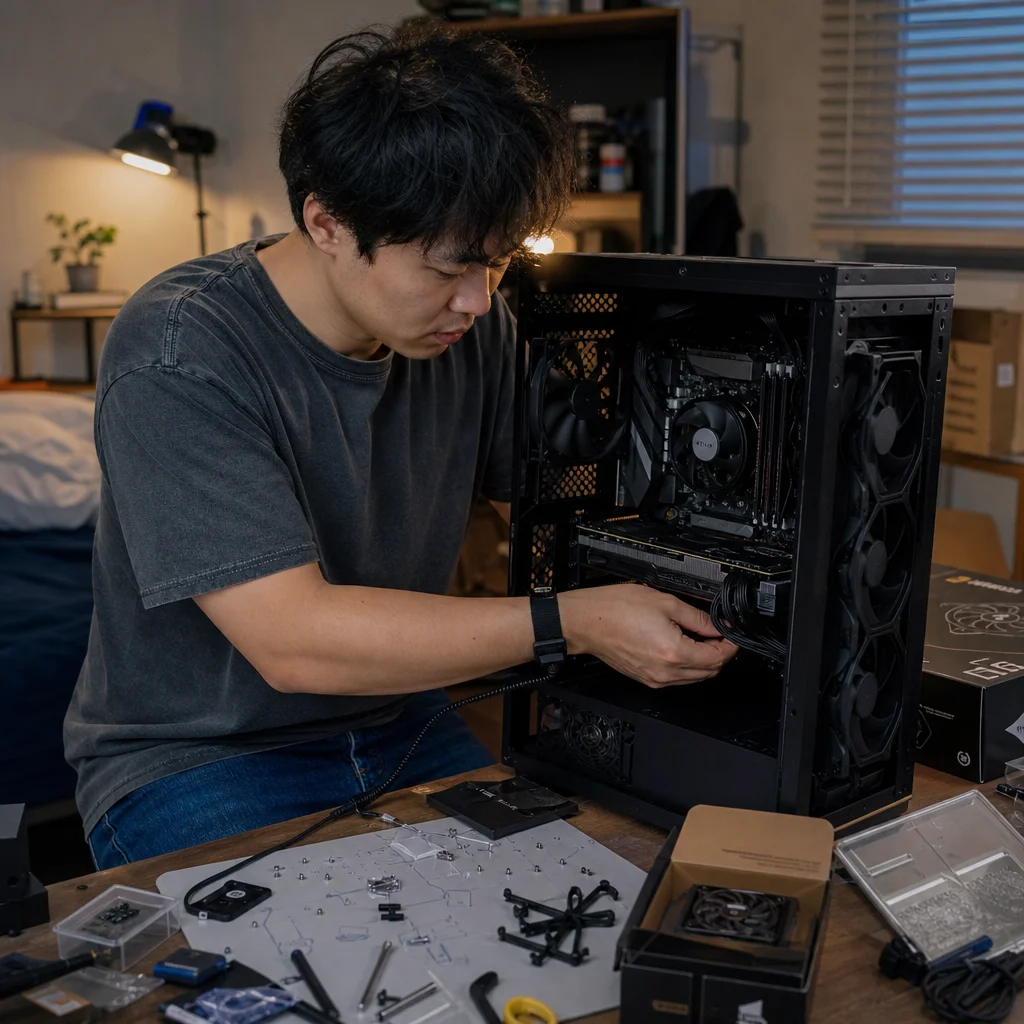
Frequent component swaps punish cases that look good but obstruct basic access. I’ll explain which panels, brackets, cable routes, filters, and clearances reduce handling damage and make a test system safer to change repeatedly.
Read article →
I’ll compare a dedicated capture device with a second graphics card for streaming or recording from another computer or console, focusing on latency, software support, heat, power, compatibility, and the system complexity each option adds.
Read article →
A graphics card’s slot width affects more than whether it fits: it can change airflow, connector access, motherboard clearance, and future service. I’ll explain how to weigh a two-slot card against a thicker design when building in a compact case in Japan or South Korea.
Read article →
Small quiet PCs simplify placement and can reduce dust, noise, and power use, while larger expandable systems make future repairs and upgrades easier. I’ll help you weigh those priorities so your choice remains reliable after the initial build.
Read article →
I’ll help you compare mesh, solid, and hybrid case panels so you can avoid choosing a case based only on appearance. You’ll see how room conditions, workload, noise tolerance, lighting, dust, and cleaning habits should shape the decision.
Read article →
I’ll compare the real value of a current processor socket with a mature platform, including upgrade potential, memory and motherboard costs, connectivity, firmware support, and the European used-market trade-offs that can change the answer.
Read article →
Rear-panel ports, internal headers, expansion lanes, and networking options shape how easily a PC can grow. I’ll show you how to weigh built-in connectivity against add-in cards when choosing a motherboard for a home office or creator system in Australia or New Zealand.
Read article →
When a 1080p monitor can refresh faster than your current PC can render, choosing a graphics card becomes a balance of frame rate, settings, processor limits, and longevity. I’ll help you match those factors without paying for performance your display or system can’t use.
Read article →
A high-speed kit isn't automatically the best fit for a full set of DIMMs or a particular processor. I’ll show you how to check capacity, module layout, firmware, motherboard documentation, and CPU limits before you buy.
Read article →
I’ll compare the internal USB header types found on motherboards, explain how front-panel cables are keyed and limited, and show you safe, cost-conscious alternatives when a case port doesn’t have a matching connection.
Read article →