Choose Between Mesh, Solid, and Hybrid Case Panels
I’ll help you compare mesh, solid, and hybrid case panels so you can avoid choosing a case based only on appearance. You’ll see how room conditions, workload, noise tolerance, lighting, dust, and cleaning habits should shape the decision.
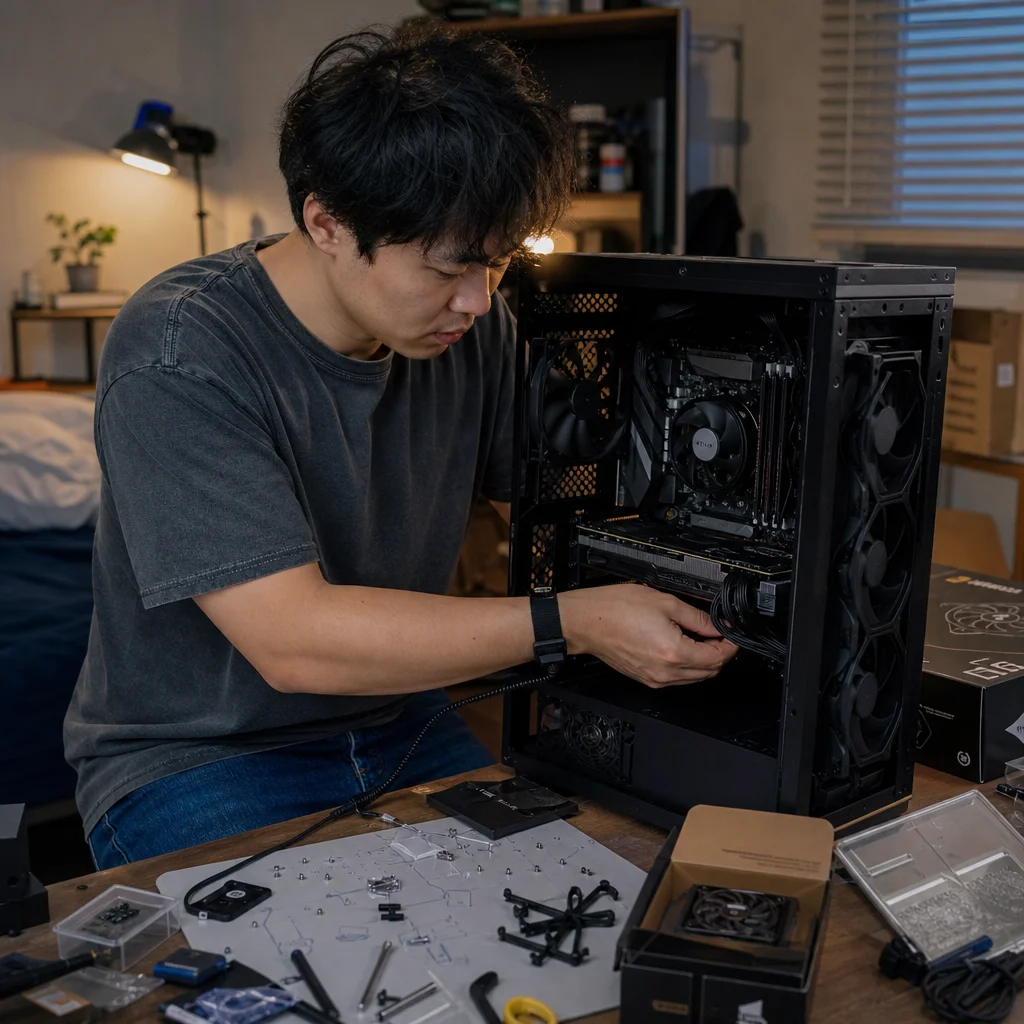
Choosing a case panel is easy to reduce to one slogan: mesh for cooling, solid for quiet, or hybrid for compromise. That advice points in the right direction, but it can still lead you to the wrong case. A well-ventilated mesh case may be unnecessarily noisy in a quiet room, while a solid-front case may work perfectly well for a modest system with carefully placed fans.
The better choice depends on how much heat your components produce, where the computer will sit, how often you’re willing to clean it, and what kind of noise you notice. The panel is one part of the airflow system, not a complete verdict on the case.
What the three panel styles actually change
A mesh panel uses a perforated surface that allows air to pass through relatively freely. On a typical modern case, this usually means cooler air can reach the front fans and warm air can leave the case with less resistance. Mesh can be especially useful when you’re building around a power-hungry processor or graphics card, or when you expect long gaming, rendering, or other sustained workloads.
A solid panel blocks direct airflow through that side of the case. A solid front often relies on intake openings along the sides, bottom, or another part of the enclosure. Those openings can still provide adequate airflow, but the path is less direct. Solid panels can also make a case look cleaner and can reduce the amount of fan sound traveling straight toward you. They don’t make a computer silent, though; fans, hard drives, vibration, and restricted airflow can all remain audible.
A hybrid case combines different approaches. It may include interchangeable mesh and solid front panels, a solid side panel with a mesh front, or a design that uses mesh in one area and a more enclosed panel elsewhere. Hybrid cases are appealing when your needs may change, but check whether the alternate panel is included. Some cases sell it separately, and a theoretical option isn't useful if you won’t actually buy or install it.
The important detail is the complete airflow path. A mesh panel paired with a cramped front fan mount, a restrictive dust filter, or a poorly ventilated case interior may perform worse than a solid-front case with generous side intake channels. Look at the fan locations, radiator support, filter design, internal clearance, and exhaust openings together.
Match the panel to your workload
For a basic office computer, school system, media machine, or modest gaming build, you usually have more flexibility. These systems may not produce enough sustained heat for a highly open front panel to make a large practical difference. A solid or hybrid case can be a sensible choice if you value a restrained appearance and lower direct fan noise.
A gaming system with a midrange or high-end graphics card deserves closer attention. The graphics card often produces the most heat inside the case during extended play, and that heat needs a reliable route out. A mesh front is often the safer starting point, particularly if the case will sit under a desk, against a wall, or in a warm room where airflow around the enclosure is already limited.
The same principle applies to sustained processor workloads such as video encoding, 3D rendering, software compilation, and data processing. You don’t necessarily need mesh, but you should be cautious about a solid-front design that depends on narrow side vents. Check independent testing when available, or at least examine whether the case has enough intake area and room for sensible fan placement.
For a low-power system, a closed or hybrid design may provide a better overall balance. If the fans can run slowly most of the time, the system may remain cool without the open intake area that a hotter build needs. This is where choosing a panel solely because it is advertised as “better airflow” can waste money or create noise without solving a real problem.
Cooling and noise are connected trade-offs
Mesh generally makes it easier for fans to move air, but easier airflow doesn’t mean the computer will automatically be quieter. If the system produces substantial heat, mesh may let the fans maintain lower speeds than they would behind a restrictive panel. That can reduce noise during demanding work. On the other hand, an open front also gives fan noise a more direct path into the room.
Solid panels can soften or redirect some high-frequency fan noise, but they can also force fans to work harder if the intake path is restrictive. A computer that sounds quiet while idle may become noticeably louder during a game or workload because the fans need to spin faster to compensate. The result depends on the panel, the fans, the fan curve, the cooler, and the components inside.
Your location matters. On a desk beside your monitor, direct fan noise may be more noticeable than it would be under a desk. In a shared room, a solid or hybrid arrangement may be attractive if the system’s heat output is moderate. In a quiet recording or sleeping area, consider the entire noise profile rather than assuming one panel type will solve it.
Don’t overlook vibration and component noise. A solid panel won’t eliminate a noisy graphics card, a mechanical hard drive, pump noise, or a rattling fan. Likewise, replacing a solid panel with mesh won’t fix a poor fan curve. If noise is a priority, choose quality fans, use appropriate control settings, and avoid buying more cooling capacity than the system needs.
Check the complete airflow path: Before choosing the panel, look at the case’s intake openings, dust filters, exhaust locations, included fans, and clearance around the computer. A large mesh panel can't compensate for blocked vents or poor placement.
Dust depends on the room and the filter
Mesh is often blamed for making a computer dusty, but the panel itself isn’t the whole explanation. A more open intake can allow more air—and potentially more airborne dust—into the case. Properly fitted filters and positive internal air pressure can reduce that problem, but filters need to be accessible and cleaned.
Solid cases aren’t dust-proof. Air still has to enter somewhere, and narrow openings can collect dust quickly. If the case has only small side vents, those areas may become clogged, increasing restriction and fan noise. A solid front can also make it harder to see that dust is accumulating behind or around the intake path.
Room conditions should influence your choice. Homes with pets, carpets, open windows, workshop activity, or frequent dust may favor a design with removable filters and easy access, regardless of whether the visible panel is mesh or solid. A cleaner room gives you more freedom, but every air-cooled computer benefits from occasional inspection.
The common mistake is treating dust as an argument for a sealed case. Instead, look for filters on the main intake locations, a bottom filter for the power supply, and a design that lets you remove those filters without dismantling the computer. A case that is simple to clean is often more reliable than one that merely appears enclosed.
Lighting and appearance should follow the room
Mesh affects how lighting is seen. With a mesh front, illuminated fans may be visible but softened by the pattern and filter. A solid front can hide front lighting almost completely, which may suit a restrained build. A tempered-glass side panel is a separate consideration: it shows internal lighting regardless of whether the front panel is mesh or solid, while an opaque side panel keeps the interior less visually demanding.
Think about where the case will live before choosing a style. A mesh front with bright fans may look appealing in a product photo but distracting in a bedroom or shared workspace. Conversely, a solid or hybrid case can make a component-heavy build look calmer, especially if the computer is placed in an open living area.
Lighting shouldn't be used to justify a poor airflow decision. You can usually disable or reduce lighting later, but changing the case’s airflow arrangement may be difficult. Choose thermal and acoustic characteristics first, then decide how much of the hardware you want to display.
Cleaning is part of the ownership cost
Every case needs maintenance, but the effort varies. Mesh surfaces and removable filters make dust visible sooner, which can be useful because they show you when cleaning is needed. They may need attention more often in a dusty room, but the work is usually straightforward if the filters are accessible.
Solid panels can hide dust buildup for longer. That doesn’t mean less dust is entering; it may simply be less noticeable until temperatures or fan noise change. A case with a difficult-to-remove front panel can turn a simple filter cleaning into an irritating chore, and neglected filters eventually restrict airflow.
Before buying, check how the front panel attaches, where the intake filter is located, and whether you can remove it without excessive force. Magnetic filters are convenient, but a secure slide-out filter can work just as well. Also consider whether the case has enough space to clean around the graphics card, cooler, and power supply without removing major components.
Common mistakes to avoid
The first mistake is choosing mesh automatically for every build. Mesh is a strong default for hotter hardware, but it may provide little benefit in a low-power system if the case’s fans are already quiet and temperatures are comfortable. It can also expose more fan noise and require more visible cleaning.
The second mistake is assuming a solid front guarantees quiet operation. Restricted intake can increase fan speeds, and the resulting noise may be louder under load than with a more open case. Read the airflow design rather than judging the front panel by its material alone.
The third is ignoring replacement-panel details on hybrid cases. Confirm which panels come in the box, whether both support the case’s filters, and whether changing panels affects fan or radiator installation. A hybrid design is most useful when it gives you a genuine, convenient choice rather than a marketing option with extra cost or awkward installation.
The fourth is forgetting placement. A case needs breathing room around its intake and exhaust areas. Pushing a solid-front case against a wall, placing a mesh case on thick carpet, or covering vents with nearby objects can undermine either design. If your intended location is cramped, favor a case with intake openings that remain clear in that position.
A sensible way to decide
Start with the components and workload. If you’re using a hot graphics card or a processor that will run hard for long periods, prioritize a case with a proven, open airflow path; mesh is often the simplest option. If the system is modest and your room is quiet, a solid or hybrid design may better match your noise and appearance preferences.
Next, consider the room. Dusty environments call for accessible filters and easy cleaning, not necessarily a solid panel. Warm rooms and restricted placement make airflow more important. Shared spaces and visible desks may increase the value of lower direct noise and a less illuminated exterior.
Finally, compare the details that are easy to overlook: included fans, fan control, filter access, radiator clearance, graphics-card space, and the location of intake vents. If two cases meet your cooling needs, choose the one you’ll be more willing to clean and the one that fits its location properly.
For many gaming and workstation builds, a filtered mesh-front case is the safe practical choice. For cooler, quieter-running systems, a solid case can work well when its intake design is sound. A hybrid case makes the most sense when you genuinely want the ability to change priorities later. The best panel isn't the most open or the most enclosed; it’s the one that gives your particular hardware enough airflow without creating maintenance, noise, or placement problems you’ll regret.