What Case Front Panels Actually Change About Cooling and Noise
Front-panel design affects more than appearance: it changes how much air your fans can move, how quickly dust accumulates, and how hard the system must work. I’ll help you weigh solid, mesh, glass, and mixed designs so you can prioritize the trade-offs that fit your build.
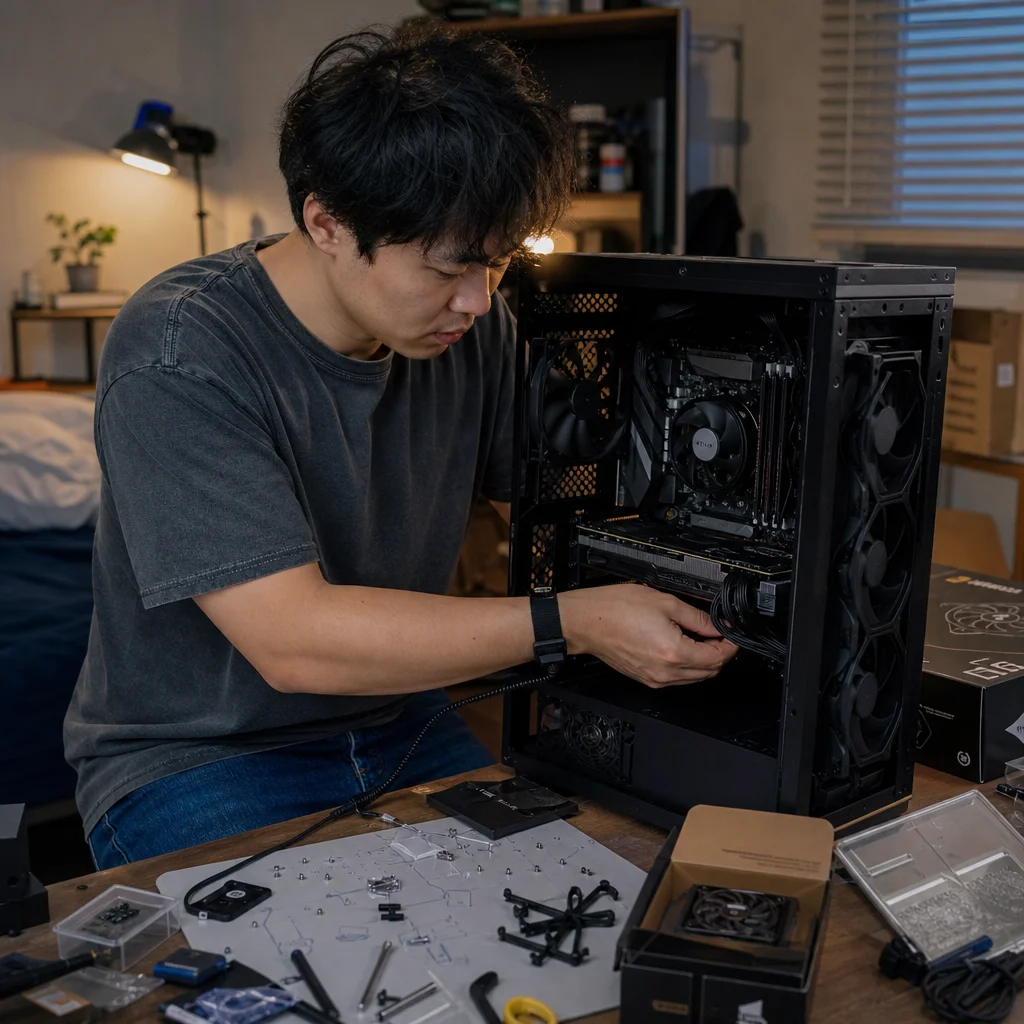
The front panel is one of the most influential parts of a case’s cooling and noise behavior, even though it rarely appears in a component comparison. A case with powerful fans can still run warm if the panel blocks their intake, while a highly open design may trade lower temperatures for more audible fan and component noise.
The useful question isn’t whether mesh or solid panels are universally better. It’s what the panel asks the rest of the system to do. You need to consider the path air takes into the case, the resistance created by the panel and filter, how fan speed responds to rising temperatures, and how easily dust can be managed. Once those factors are clear, the visual choice becomes a practical cooling decision rather than a matter of taste alone.
How the front panel controls the airflow path
Most conventional cases use front-to-back airflow. Front fans draw room air through the panel, move it across the graphics card and processor area, and exhaust it through the rear and top. The front panel sits at the beginning of that path, so any restriction there affects the entire intake system.
A fan doesn’t move its advertised maximum air volume under every condition. Its performance falls when it has to pull through a narrow opening, a dense filter, a decorative panel, or a small gap around the edges. The more restrictive the intake, the more the fan’s actual airflow depends on its ability to produce static pressure. A case fan that seems adequate in open air may be less effective behind a tightly enclosed front.
This doesn’t mean every front panel must be completely open. A well-designed solid or glass panel can work if it provides generous side, bottom, or perimeter vents and leaves enough clearance for the fans. The important detail is the total intake area and the shape of the path, not just whether the panel itself contains holes.
Solid panels: quieter in some situations, warmer in others
A solid front panel usually has a clean appearance and can reduce the direct path between the front fans and your room. That may help soften fan noise, particularly the higher-frequency sound produced by a fan motor or turbulent airflow. It can also hide dust filters and front fans, which appeals to builders who want a less visibly hardware-focused design.
The trade-off is intake restriction. If the panel has only narrow side vents, the fans must pull air through a smaller path. That can reduce the amount of cool air entering the case, especially when the system is under sustained graphics or processor load. The fans may then increase speed to maintain temperatures, and the resulting noise can cancel out the acoustic benefit of the panel.
A solid panel can be a reasonable choice for a modest system with low heat output, restrained power limits, or large, slow-spinning fans. It’s less forgiving for a high-power gaming system, a workstation that spends long periods rendering, or a compact case where every intake path is already limited. Check photos of the case from the sides and bottom rather than judging the front surface alone. A panel that looks solid from the front may have substantial ventilation around its edges.
Perforated and mesh panels: easier intake, more exposed sound
A perforated or mesh front panel generally offers the least restricted route to the intake fans. With a reasonably open filter and enough fan area, the fans can move the air they need at lower speeds. That often improves sustained temperatures and may reduce the need for sudden, noticeable fan ramps during demanding work.
Mesh doesn’t automatically make a case loud. Lower fan speed can offset the fact that the panel presents a more direct path for sound. However, an open panel also removes some of the physical barrier between you and the fans, graphics card, and other noise sources. If the fans are already loud because of their bearings, an aggressive speed curve, or turbulent airflow, mesh makes those problems easier to hear.
The pattern and construction matter as well. Very fine mesh can act like a restrictive filter, while a large-hole grille may allow airflow more freely but stop less dust. Some panels combine a rigid frame with a removable filter; others use a thin fabric or magnetic sheet that can collect debris quickly. Look at the gap between the panel and the fans, too. A fan mounted directly against a restrictive surface can create turbulence and a rougher sound even when the total open area appears adequate.
Glass panels: appearance with hidden intake compromises
Tempered glass is most often used on the side of a case, but some designs use glass or acrylic across the front. A glass front can provide a clear view of front-mounted fans and lighting, yet it usually needs vents around the sides, bottom, or top to admit air. Those openings determine whether the case behaves like an open design or a restricted one.
A glass front with narrow side channels may look sleek but force the fans to work harder. The resulting temperatures depend on the width and continuity of the vents, the filter behind them, and whether the fans can pull air without immediately encountering the glass. A glass panel with broad side intakes may perform acceptably, but it still tends to provide less direct airflow than a similarly sized mesh panel.
Glass also reflects sound rather than absorbing it. That doesn’t make it inherently noisy, because the panel can block some direct sound and the overall case design matters more than one material. But if the fans are close to the panel and the intake is narrow, reflected sound and turbulence can create a noticeable character: a low rush, whistle, or strained airflow noise rather than a simple increase in volume.
Mixed panels: a compromise that depends on the layout
Mixed designs try to separate appearance and airflow. A case might use a solid or glass center with mesh strips on both sides, a mesh lower section for the graphics card, or a removable panel that lets you choose between a cleaner look and more open intake. These designs can work well when the vents line up with the actual fan positions.
That alignment is easy to overlook. If the front fans sit behind a solid section while the open portion is above them, the case may still have a large measured intake area but an inefficient airflow path. Similarly, a lower mesh section may help a graphics card while leaving a front-mounted radiator or processor intake with limited access. Trace the path from the room, through the panel and filter, to the fans. The openings should serve the parts that produce the most heat.
A mixed front can also divide dust behavior. The open section may collect more visible dust, while narrow channels accumulate debris out of sight. Removability matters here: a panel that is easy to remove and a filter that can be cleaned without dismantling the build are practical advantages that may outweigh small differences in temperature.
Dust management is part of the cooling design
Dust filters reduce the amount of debris entering the case, but every filter also adds resistance. A clogged filter adds substantially more resistance than a clean one, so maintenance can change the case’s behavior over time. A mesh case with a neglected filter may cool worse than a more enclosed case that is cleaned regularly.
Front intake filters are particularly important because they catch dust before it reaches the fans and heatsinks. You don’t need to remove every trace of dust after each use. Instead, inspect the front filter and surrounding vents when the system begins to run warmer or the fans seem to spin faster than usual. Clean the filter according to the case manufacturer’s instructions, and let any washable filter dry completely before reinstalling it.
Air pressure affects dust as well. With slightly more intake airflow than exhaust airflow, air tends to leave through gaps rather than enter through them, provided the intakes are filtered. With more exhaust airflow, unfiltered openings can draw dust into the case. Fan count alone doesn’t determine pressure: restrictions, fan size, speed, and radiator placement all matter. You’re aiming for a sensible, filtered path, not a precise pressure number.
Check the maintenance path: Before choosing a front-panel design, confirm that its filter can be removed or cleaned easily and that the intake openings won’t be difficult to reach after the case is placed under a desk.
How the panel changes fan speed and noise
Temperature and noise are connected through the fan curve. If a restrictive panel raises internal temperatures, the motherboard or fan controller may increase fan speed. The case can then become louder even if the panel itself blocks some sound. Conversely, a mesh panel may let the fans run more slowly, but you may hear a greater share of their normal airflow and bearing noise.
This is why temperature comparisons should be read alongside noise measurements and test conditions. A small temperature advantage at maximum fan speed may not matter if you plan to use a quiet fan curve. A case that performs slightly warmer but remains stable at a lower, steady speed may be more pleasant in everyday use. Component temperatures also vary with the processor, graphics card, cooler, room temperature, and workload, so a front panel doesn’t produce one universal result.
Fan placement can reduce the penalty of a restrictive front. If the case supports a bottom intake aimed at the graphics card, or a side intake with a clear route to the GPU, that alternative path may provide useful cooling. Top exhaust can help remove rising heat, but adding exhaust fans can't fully compensate for an intake that struggles to supply air. The system still needs a low-resistance route for replacement air.
Choosing the right panel for your build
For a high-heat gaming PC or workstation, start with a front panel that provides a broad, direct intake and a serviceable dust filter. Mesh is often the simplest way to achieve that, especially when the case supports multiple front fans. You can still manage noise with larger fans, sensible speed limits, vibration isolation, and a fan curve that avoids constant ramping.
For a lower-power system, office computer, media PC, or build where appearance and reduced direct sound matter most, a solid or glass panel can be suitable. Give extra attention to the vent dimensions, fan clearance, and expected workload. A restricted panel is less concerning when the system rarely produces sustained heat, but it shouldn’t be treated as harmless by default.
A mixed panel is attractive when it places open intake exactly where your hottest components need it. Inspect the layout rather than assuming the word “hybrid” guarantees balanced performance. Also consider whether you’ll be adding a front radiator later. Radiators already resist airflow, so combining one with a narrow front intake can increase fan speed and noise more than the original case configuration suggests.
The best choice is the panel that lets your intended fans receive air without unnecessary resistance, keeps that route clean, and matches the heat your components produce. Compare the full intake path—not just the material—then plan for the fan speeds and maintenance you’re actually willing to live with. That approach gives you a quieter, more predictable system than choosing mesh, glass, or solid construction by reputation alone.