Choose Between a Dedicated Video Capture Device and a Second Graphics Card
I’ll compare a dedicated capture device with a second graphics card for streaming or recording from another computer or console, focusing on latency, software support, heat, power, compatibility, and the system complexity each option adds.
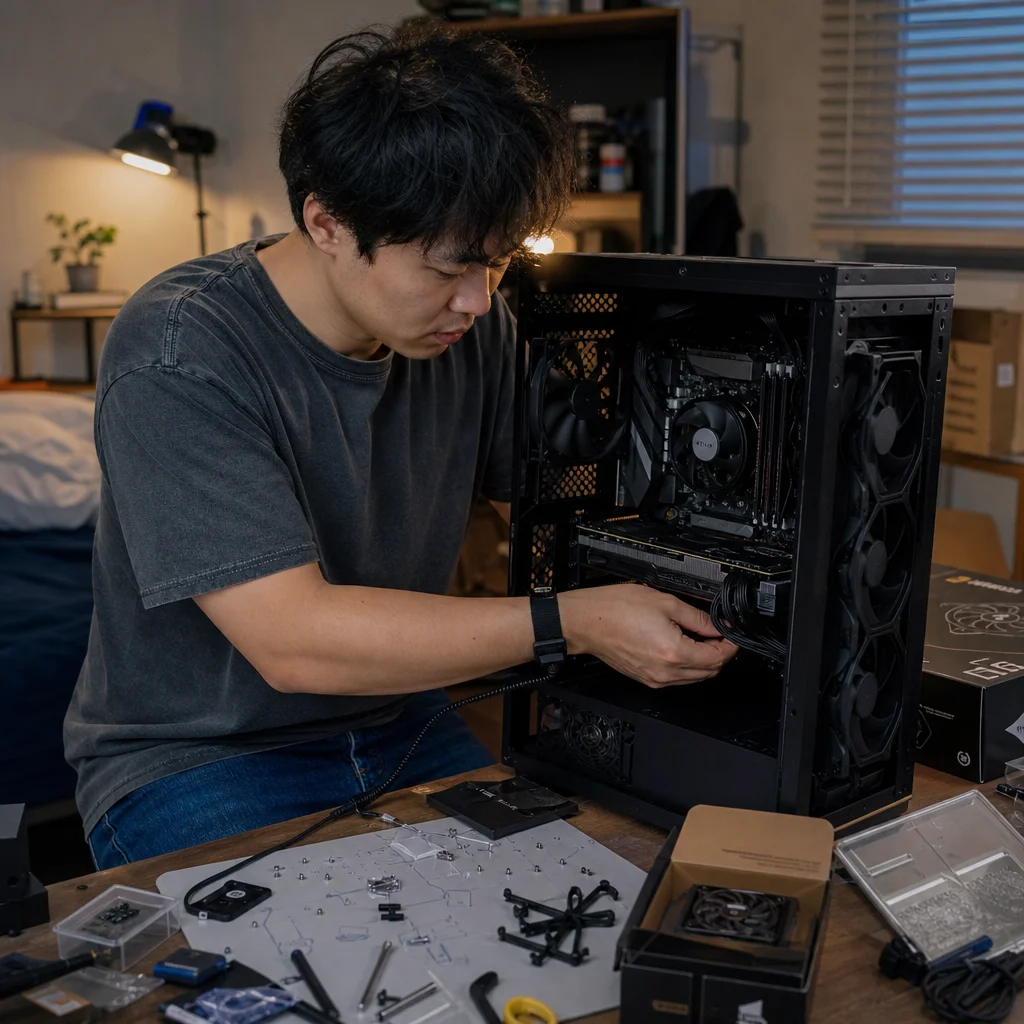
If you want to stream or record gameplay from another computer or console, a second graphics card can look like a powerful alternative to a dedicated capture device. It has graphics horsepower, multiple display outputs, and sometimes a hardware video encoder. But those strengths don’t automatically make it capable of receiving and recording an external video signal.
For most dual-system setups, the dedicated capture device is the simpler and more predictable choice. A second graphics card can make sense in narrower situations, particularly when you’re trying to divide rendering or encoding work inside one PC. The right decision depends first on where the video originates and then on how much complexity your setup can tolerate.
Start with the signal you need to capture
A capture device accepts a video signal through an input—usually HDMI—and makes that signal available to your computer as a video source. That is the important distinction. If you’re capturing a console, the console sends video to the capture device. If you’re using a gaming PC and a separate streaming PC, the gaming PC sends its output to the capture device, which passes it through to a display and sends a copy to the streaming system.
A normal graphics card is primarily an output device. Its HDMI or DisplayPort connectors send video to a monitor, television, or receiver; they generally don’t accept video from another computer or console. Installing a second graphics card therefore doesn’t, by itself, give your PC a new HDMI input. It may provide another GPU for rendering or encoding, but it isn’t a substitute for a capture input.
This makes the decision fairly direct for a two-computer or console-to-PC setup: choose a capture device unless the second graphics card will serve a separate purpose that you actually need. A capture card is also the more appropriate choice when your goal is to record a console while playing on a television, or to keep gameplay rendering and stream production on different computers.
When a dedicated capture device is the better fit
A capture device is designed for the job. Its input receives the source signal, its output can often pass that signal through to a display, and its computer connection exposes the feed to applications such as OBS Studio or other supported production software. External USB models are easy to move between systems, while internal PCIe cards can offer a tidy permanent installation and consistent bandwidth.
The main advantage is separation. The gaming PC or console renders the game, while the capture computer handles the preview, recording, overlays, alerts, and stream encoding. If the production software crashes or the capture computer is restarted, the gaming system can remain independent. That separation is valuable when you stream regularly or want to keep recording tools from competing with a demanding game.
Latency also needs to be divided into two different questions. The capture feed shown inside software may have a delay, because the signal must be transferred, processed, and displayed in a preview window. You generally shouldn’t play through that preview. A capture device with low-latency passthrough lets you play on the connected television or monitor while the computer receives a separate copy for production.
Passthrough isn’t automatically identical to direct connection, however. Features such as high refresh rates, HDR, variable refresh rate, surround audio, and newer HDMI standards can narrow your choices. The capture device must support the signal format you intend to send, and the display must accept what comes out of the passthrough port. If a feature matters to your setup, verify the complete signal path rather than looking only at the maximum resolution printed on the box.
Verify your signal path: Before choosing a capture device, check the source’s resolution, refresh rate, HDR or VRR needs, audio format, connector type, and copy-protection behavior against the manufacturer’s current input and passthrough specifications. Console support and software compatibility can change with firmware or application updates.
Software support is another strong reason to favor capture hardware. A broadly supported device may appear as a standard video source, making it usable in streaming, recording, video-call, and editing applications. Some features—such as hardware scaling, multichannel audio, HDR handling, or low-latency modes—may still depend on the device’s driver, utility, or the application you use.
What a second graphics card can and can’t do
A second GPU can be useful when both cards have a defined workload. For example, one card might render a game while another handles a supported encoding or compute task. A multi-GPU arrangement can also provide additional display outputs or support specialized software that benefits from more than one graphics processor.
That doesn’t mean every streaming application will use the second card automatically. Game rendering, compositing, scaling, and video encoding are separate operations, and software must explicitly support the arrangement. Some applications may select the wrong GPU, copy frames between cards, or gain little performance because the work is limited by the CPU, storage, network, or the first card’s rendering pipeline.
A second GPU also won’t capture a console’s HDMI output unless you add separate video-input hardware. Nor will it normally capture a second PC’s output simply because both cards are installed in the same computer. You still need a way to bring that external signal into the system.
There is one scenario where a second GPU may be considered: a single computer that both runs the game and produces the stream. In that case, the second card might be assigned to encoding or parts of the production workload, if the operating system, drivers, game, and streaming application cooperate. Modern GPUs may already include dedicated encoders, so a second card can be unnecessary when the primary card’s encoder handles the stream with acceptable performance.
Before buying a second GPU for this purpose, test or research the exact software path. “The card has an encoder” isn't enough. You need to know whether your streaming application can use that encoder, whether the game’s frames can reach it efficiently, and whether the result improves your actual frame times and stream quality. A capture device is usually more certain when the source is external.
Compare the practical trade-offs
Latency and image handling
A dedicated capture device can provide low-latency passthrough while delivering a separate feed to the production computer. This is usually the cleanest arrangement for competitive play, where even a small delay in the display path is unwelcome. The preview window remains useful for checking framing and audio, but it shouldn’t be treated as the primary gameplay display unless you’ve confirmed its delay is acceptable.
A second GPU doesn’t automatically introduce capture latency because it isn’t necessarily capturing anything. If it is used for frame sharing or encoding, though, the software path can add overhead. The result depends on the application and the way frames move between GPUs. You should judge it by measured frame pacing and responsiveness, not by the theoretical performance of the card.
Software support and troubleshooting
Capture devices have their own compatibility questions, but the workflow is familiar: connect the source, select the device in the production software, configure audio, and check the passthrough display. You may still encounter driver, firmware, USB bandwidth, or application issues, but the hardware’s role is clear.
A second GPU creates more variables. You may need to manage driver versions, GPU assignment, display connections, power settings, application-specific preferences, and interactions between graphics APIs. Some games or utilities can behave differently when more than one graphics card is present. The setup may work well, but diagnosing a problem becomes harder because rendering and encoding are no longer confined to one obvious device.
Heat, power, and physical space
A graphics card adds substantial power draw and heat compared with a small external capture device. The actual impact depends on the model and workload, but you’ll need to account for the power supply’s capacity, available PCIe power connectors, case clearance, airflow, and the amount of heat your cooling system can remove.
An internal capture card also consumes a slot and may share resources with other expansion cards, but it typically creates far less heat than a second performance GPU. An external USB capture device avoids occupying an internal slot, though it introduces another cable, requires a suitable USB connection, and may be more exposed to accidental disconnection.
Check motherboard layout as well. A second graphics card can block adjacent slots, interfere with large CPU coolers or front-panel hardware, and force the cards to run close together. Some motherboards reduce the number of PCIe lanes available to the primary slot when another slot is populated. The effect may be small or significant depending on the board, processor, and workload, so consult the current motherboard manual rather than assuming every slot behaves the same way.
Cost and long-term usefulness
A capture device solves a specific input problem and can remain useful across several gaming PCs or consoles. An internal model is well suited to a permanent streaming computer; a USB model is convenient if you move between locations or systems. Its value is easiest to judge by the formats and connections you need now and are likely to use next.
A second GPU may offer more general-purpose capability, but only if you have workloads that can use it. If it sits idle while the primary GPU renders and encodes normally, you’ve paid for extra heat, noise, power consumption, and maintenance without improving the stream. On the other hand, a second card may be reasonable if you already use GPU-accelerated creative applications, need additional display outputs, or have a tested multi-GPU workflow beyond streaming.
Choose according to your setup
For a console-to-PC arrangement, choose a dedicated capture device. The console needs a video-input path, and a second graphics card doesn’t provide one. For a gaming-PC-to-streaming-PC arrangement, a capture device is again the usual answer because it separates the gameplay display from the production feed and keeps the two computers’ jobs clear.
For a single-PC stream, start by testing the encoding hardware already built into your current graphics card or processor. If it provides the quality and performance you need, a second GPU adds complexity without solving a real problem. Consider another graphics card only when your software supports the specific workload, you’ve confirmed the frame-sharing or encoding path, and your power, cooling, motherboard, and case can accommodate it.
The most sensible purchase is the one that matches the signal flow, not the one with the largest performance number. Draw the path from source to display and production computer, identify where the video must enter the system, and then check the required resolution, refresh rate, HDR, VRR, audio, and software support. In most external-source setups, that exercise points to a dedicated capture device; a second GPU is best reserved for a deliberate, tested graphics or encoding workload.