How to Choose Between a Current Socket and a Mature Platform
I’ll compare the real value of a current processor socket with a mature platform, including upgrade potential, memory and motherboard costs, connectivity, firmware support, and the European used-market trade-offs that can change the answer.
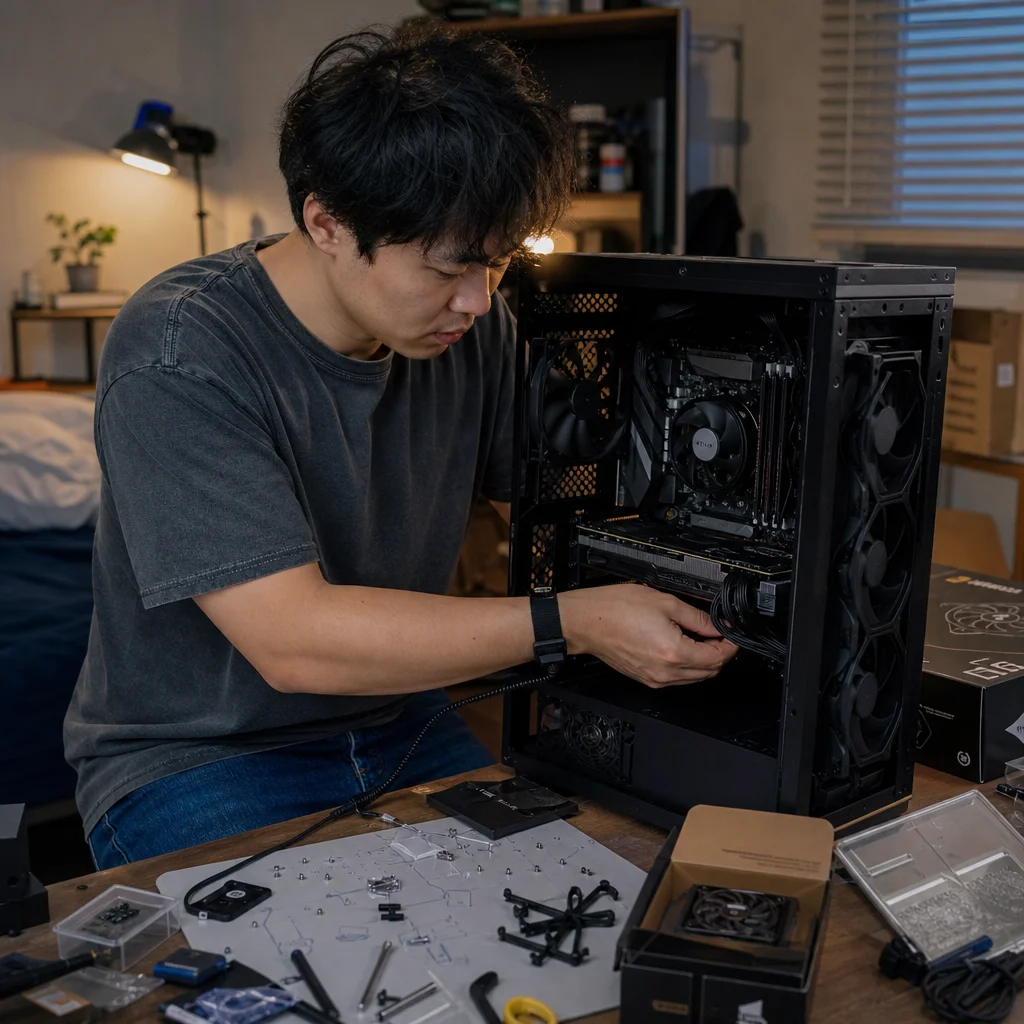
The newest processor socket isn't automatically the best value, and an older platform isn't automatically a false economy. For a value-focused build, the sensible choice depends on the whole platform: processor, motherboard, memory, storage connectivity, firmware support, and the cost of replacing each part later.
A current socket usually gives you newer memory standards, more recent connectivity, and a longer expected upgrade path. A mature platform can offer cheaper boards, discounted processors, inexpensive memory, and years of proven compatibility. The difficult cases are the ones where the newer platform costs substantially more today but only saves money if you actually upgrade later.
Start with the platform, not the socket name
A socket is only the physical connection between the processor and motherboard. The platform also includes the chipset, supported memory, expansion interfaces, firmware, and the processors you can realistically buy. Two motherboards using the same socket can differ considerably in storage support, USB connectivity, power delivery, wireless networking, and BIOS features.
That distinction matters when comparing examples such as AMD’s AM5 and AM4, or a newer Intel desktop socket with the preceding LGA platform. The newer option may support DDR5 and newer PCI Express features, while the mature option may use cheaper DDR4 and have a much wider second-hand market. However, the exact benefit depends on the processor, chipset, and board model rather than the socket label alone.
A low-cost current-socket board may also be a worse long-term purchase than a well-equipped mature board. Conversely, a cheap older board with weak power delivery, limited M.2 support, or an inconvenient firmware situation may erase much of the platform’s apparent savings.
Check the platform gap you can buy today: Compare complete parts lists from local European retailers, including VAT, delivery, memory, and a suitable motherboard. Also check the manufacturer’s CPU support list, BIOS requirements, memory type, M.2 layout, and the warranty terms before treating either platform as the cheaper option.
What a current socket buys you
The main advantage of a current socket isn't simply that it is newer. It is that manufacturers are more likely to design current motherboards and processors around newer standards. That can give you faster storage interfaces, more recent USB options, better wireless networking, improved integrated graphics on some processors, and memory support that will remain common in new systems for longer.
A current platform can also make future upgrades less disruptive. If the socket remains supported across several processor generations, you may be able to replace the CPU later without replacing the motherboard and memory. You still need to confirm the manufacturer’s support policy and individual BIOS compatibility, but the possibility has real value if your first processor is deliberately modest.
This is most attractive when your initial build has a clear upgrade route. For example, you might begin with a mid-range processor and later move to a faster model for demanding games, compiling, rendering, or other workloads. The motherboard must be capable of handling that future processor, and the rest of the system must be worth retaining when the time comes.
A current socket can also reduce the risk of buying into an ecosystem that is already at its endpoint. Mature platforms sometimes receive excellent final-generation processors, but they generally have fewer meaningful upgrades left. You may get one worthwhile CPU replacement rather than several generations of options.
The upgrade path has to be realistic
Don't assign a large value to an upgrade path merely because compatible processors exist. Ask whether you are likely to make that upgrade, whether the future processor will be affordable, and whether your motherboard will support it properly.
A planned upgrade is more credible when your current workload has an obvious limitation. If you are building a budget gaming PC today and expect to keep the graphics card for several years, a stronger future CPU may make sense. If you usually replace the entire computer after five years, paying extra for a socket you may never upgrade is less persuasive.
Consider the cost of the future upgrade as well. A processor that is expensive at launch may become attractive later, but it may also be replaced by a newer platform with better efficiency and features. Used prices can be unpredictable, particularly in Europe, where stock, currency, VAT, and regional availability vary between countries.
What a mature platform does better
A mature platform’s strongest advantage is often its total system cost. Motherboards have been available longer, retailers may be clearing inventory, and compatible processors and memory can be found across a broad range of new and used listings. That lets you direct more of the budget toward the graphics card, a larger SSD, or a quieter cooling solution.
Mature platforms also benefit from accumulated user knowledge. BIOS behavior, memory compatibility, cooler mounting, common faults, and sensible board choices are usually well documented. That doesn't guarantee trouble-free assembly, but it makes diagnosis easier when a system fails to boot or behaves differently than expected.
The older memory standard may be another advantage. If the mature platform uses DDR4 and you already own a suitable kit, moving to it can avoid a significant purchase. Even when buying new, DDR4 may cost less than comparable DDR5, depending on capacity, speed, and local stock. Existing parts can be valuable, but only if they are suitable for the workload and not so old that they create another bottleneck.
A mature platform can therefore be the better choice for a fixed-performance build. If you need a particular CPU now, don't expect to upgrade the processor, and can obtain a good motherboard at a meaningful discount, the newer socket may offer little practical benefit.
The hidden costs of the newer option
Current platforms often carry a “new system” premium. It may appear in the motherboard, memory, cooling requirements, and even the power supply if the chosen processor has higher peak consumption. A current socket may also encourage you to buy features you don't need, such as several PCIe 5.0 slots or elaborate voltage-regulation hardware.
Memory deserves particular attention. Changing from DDR4 to DDR5 isn't just a matter of comparing advertised speed. You need to compare the price of a complete kit at the capacity you actually want, along with the motherboard’s memory topology and the processor’s practical memory behavior. A cheap 32 GB kit isn't useful if it forces compromises you would avoid on the alternative platform.
Motherboard pricing can be deceptive too. The least expensive board may have only two memory slots, limited rear USB, no integrated wireless networking, or an M.2 slot that shares bandwidth with another connector. Those limitations may not matter in a simple build, but they reduce flexibility and can make later expansion awkward.
Cooling is another edge case. Some processors use the same basic socket mounting hardware across generations, while others may need a new bracket or a cooler model listed as compatible with the socket. Check the cooler manufacturer’s compatibility information rather than assuming that an existing heatsink will fit. A platform saving isn't a saving if it requires an unexpected replacement.
Connectivity can matter more than CPU performance
A current platform’s newer interfaces are valuable only when your devices can use them. PCI Express 5.0 storage, for instance, may be useful for a specialized workstation, but a typical gaming system may gain more from a larger, reliable SSD than from the fastest available interface. Likewise, extra high-speed USB ports matter if you use external drives, capture hardware, audio equipment, or several docks—not simply because the motherboard advertises them.
Look at how the board allocates its lanes. Some M.2 slots disable SATA ports or reduce the bandwidth available to an expansion slot. On certain boards, adding a second drive can change how another connector operates. These aren't reasons to reject a platform, but they are reasons to read the manual before buying parts that you expect to coexist.
Integrated graphics and display outputs can also change the decision. A processor with a basic integrated GPU may help with troubleshooting or provide display output while you wait for a graphics card. Some processors marketed for small systems have stronger integrated graphics but different expansion and memory considerations. Compare the complete configuration instead of assuming every processor in a socket provides the same fallback capability.
Firmware support is part of the price
A mature platform isn't automatically easier to use. If the motherboard predates the processor you intend to install, it may require a BIOS update before the system will boot. A board with a BIOS Flashback-style feature can make this manageable without an older compatible CPU; a board without one may require a shop, a borrowed processor, or a return.
Current platforms can have their own firmware issues, particularly during the early part of a socket’s life. Memory training may take longer, new processors may need a particular BIOS version, and motherboard vendors may revise compatibility over time. These problems are often resolved, but they reinforce the need to check the exact board model and firmware notes.
For a first build, choose a motherboard with a clear support page, a visible CPU compatibility list, and a practical recovery method. For a used board, confirm that the seller can demonstrate operation or that you have a realistic return option. A low price isn't useful if diagnosing an unverified board consumes a weekend and leaves you buying replacement parts by guesswork.
Compare three complete buying scenarios
Instead of comparing two socket names, price three builds with similar goals. The first should use the current platform with the processor you would buy today. The second should use the mature platform at its most sensible performance level. The third should show the likely future upgrade: a faster processor, additional memory, or a new graphics card.
This reveals where the money goes. A current platform may cost more initially but provide more memory capacity, better storage expansion, or a credible CPU upgrade. The mature platform may leave enough money for a faster graphics card, which could produce a more noticeable improvement immediately. The future scenario shows whether the supposed upgrade path is financially realistic or merely theoretical.
Include parts that are easy to overlook: a compatible cooler, sufficient memory, Wi-Fi if required, additional case fans, and any adapter needed for older storage or front-panel connectors. For European purchases, compare the delivered price in your country rather than relying on a headline price from another market. Warranty handling and return shipping can matter as much as a small discount.
When each choice makes sense
Choose the current socket when the price premium is manageable, you want newer connectivity or memory, and you can identify a likely upgrade within the system’s useful life. It is also the safer direction when you are buying a motherboard and memory from scratch and expect to keep the platform through at least one major CPU replacement.
Choose the mature platform when the discount is substantial, the available processor already meets your needs, and the saved money improves a more important part of the computer. It is especially sensible when you already own compatible memory or a motherboard, or when the mature platform’s final-generation processors offer the performance you need at a good price.
Be cautious with either choice when the deal depends on uncertain used hardware, an unsupported BIOS, a proprietary case or power connector, or a motherboard with no room for your planned storage and memory. A platform should be judged by the system you can assemble reliably, not by the most attractive component price in isolation.
The practical next step is to write down your workload, target resolution, storage plan, and expected ownership period. Then compare two complete builds and one plausible upgrade scenario using current local prices. If the current platform’s extra cost buys features you will use or a CPU upgrade you are genuinely likely to make, it is probably worth paying for. If it only buys newer specifications on a box, a well-chosen mature platform may leave more of your budget working where you can feel it.