How to Compare Processor Platforms by Total Cost of Ownership
I’ll help you compare processor platforms by accounting for the motherboard, memory, cooler, firmware support, and future upgrades, so a lower processor price doesn’t hide a more expensive or less flexible build.
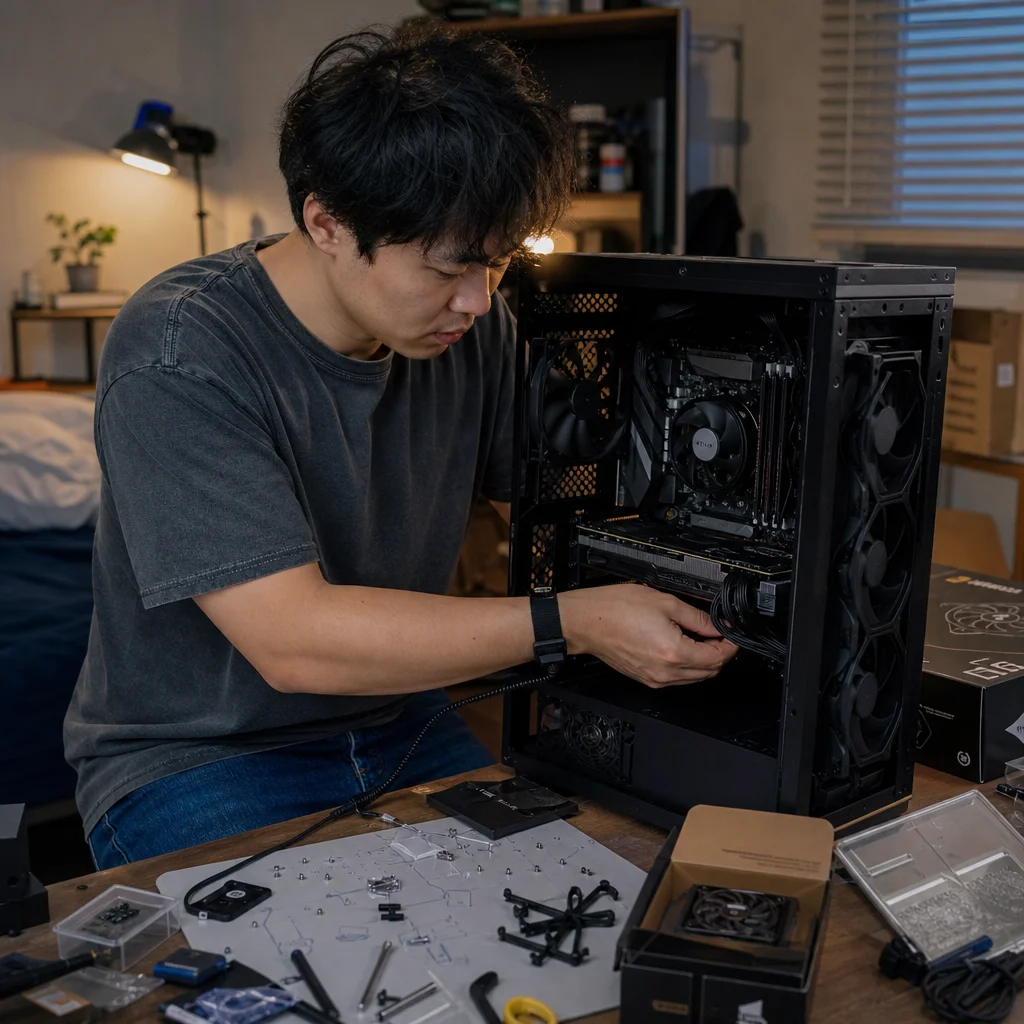
A processor can look like a bargain until you add the parts required to run it. Two CPUs at similar performance levels may lead to very different totals once you account for the motherboard, memory, cooler, firmware support, and the likelihood of replacing the platform later.
Comparing total cost of ownership (TCO) helps you avoid choosing the cheapest processor and accidentally paying more for the system around it. The method is useful whether you’re building a complete PC, upgrading an existing one, or deciding between two processor families.
Start with a complete platform, not a processor price
A processor platform is the group of components and constraints built around the CPU. At minimum, that usually includes the processor, motherboard, memory, and cooler. Depending on the parts you already own, it may also include a mounting kit, new storage, a power supply, or a case that supports the chosen board and cooling hardware.
For a fair comparison, calculate the cost of each platform as though it were a complete, working configuration. A simple starting formula is:
Platform TCO = processor + motherboard + memory + cooler or mounting hardware + required firmware preparation + expected upgrade cost − usable parts you already own
You don’t need to predict every future expense precisely. The purpose is to expose costs that a processor-only comparison leaves out. If one platform uses memory you already have and another requires a new kit, that difference belongs in the comparison even if the processors themselves are similarly priced.
Use equivalent assumptions for both options. Compare similar memory capacities, appropriate cooling, and motherboards with comparable features. Pairing one CPU with a basic board and another with an expensive enthusiast board will tell you more about the parts selected than the platforms themselves.
Include the motherboard’s real cost
Motherboards vary in price for reasons that affect ownership, not just appearance. The important differences can include the processor power delivery, memory support, expansion slots, storage connections, rear I/O, networking, fan headers, firmware features, and physical size.
You usually don’t need the most expensive board for a mid-range processor. A sensible comparison asks whether the board can run the processor reliably, provide the connections you need, and support the memory configuration you intend to use. Paying for features that will remain unused is part of platform cost without adding value to your system.
At the same time, choosing the cheapest compatible board can create false savings. It may lack enough fan headers, provide fewer high-speed storage connections, have weaker firmware support, or make future processor upgrades less attractive. If you later replace the board to gain those features, the original saving disappears.
Consider the board’s useful lifespan as well. A board that supports your current processor but offers no meaningful upgrade option may still be the right choice for a low-cost build. It becomes less compelling when the price is close to a board with broader processor support or better connectivity.
Treat memory as a platform decision
Memory is one of the easiest costs to miss because the processor specification doesn’t tell you the complete story. Different platforms may use different memory generations, and a new platform can require you to buy a fresh kit even if your existing memory is working well.
Start by checking whether your current memory is electrically and physically compatible. Memory generations generally aren’t interchangeable, and a board designed for one type won’t accept another simply because the capacity is the same. Also check the board’s supported memory configuration rather than assuming any kit with the right general specification will behave identically.
For a new build, compare like with like: the same capacity, a similar number of modules, and a reasonable performance level for the processors being considered. If one platform benefits from faster memory but the other doesn't, include the cost of the appropriate kit and account for the possibility that achieving its rated settings may require firmware configuration.
Existing memory has an economic value even if you don’t plan to sell it. Reusing it can reduce immediate spending, while moving to a new memory standard may improve performance or leave more room for future upgrades. Decide whether that benefit matters to your workload instead of treating newer memory as automatically worth the added expense.
Add cooler and mounting requirements
A cooler can be a small line item or a significant part of platform TCO. Some processors include a suitable cooler, some are commonly paired with an aftermarket model, and some builds reuse a cooler from an older system. The correct comparison depends on what you actually need for sustained performance and acceptable noise.
Check the processor’s thermal demands, the cooler’s capacity, the case’s clearance, and the cooler’s mounting support for the relevant socket. An existing cooler may be physically compatible with a new platform but still need a separate mounting bracket. That bracket belongs in the calculation, as does shipping or the cost of replacing the cooler if the required hardware is unavailable.
Avoid comparing a processor with its included cooler against another processor that requires a large aftermarket cooler without accounting for the difference. Conversely, don’t assume every higher-performance CPU needs an expensive liquid cooler. A properly sized air cooler may be adequate, and overspending on cooling can reduce the value of an otherwise efficient platform.
Cooling also affects long-term cost indirectly. A cooler that is difficult to clean, uses a proprietary mounting system, or has a pump that you don’t want to maintain may be less attractive than a simpler option even when the purchase prices are close.
Check today’s platform requirements: Before adding prices, verify the exact motherboard socket, supported memory type, cooler mounting hardware, and processor support list. These details can change with board revisions and firmware releases, and regional availability may alter which option is actually cheaper.
Account for firmware support and setup risk
Firmware support can create costs that don’t appear on a parts list. A motherboard may need a newer firmware version to recognize a processor, particularly when the board was manufactured before the CPU launched. If the board can't boot with the new processor, you may need a firmware update method that works without an installed CPU, a compatible older processor, or assistance from a retailer or repair shop.
The financial cost may be modest, but the practical cost can be considerable. Waiting for a replacement board, borrowing a compatible processor, or disassembling the system twice makes a platform less convenient. For a build needed immediately, a board that ships with confirmed support may be worth a small premium.
Firmware support also matters after the first boot. Updates can improve processor compatibility, memory stability, security, and support for later chips. That doesn’t mean you should buy a board based on an uncertain promise of future updates. Treat announced or rumored support as a possibility until the manufacturer documents it for the specific model and revision.
Look for the board’s CPU support list, minimum firmware version, update procedure, and revision information. Two boards with similar names may not have identical support, and a firmware file for one revision may not apply to another.
Estimate future upgrade costs realistically
Upgrade potential is valuable only if you’re likely to use it. A platform that can accept a later processor may reduce the cost of a future performance increase, but that advantage should be treated as an expected saving rather than a guaranteed one.
Ask what you would actually replace. If a future processor would require the same motherboard, memory, and cooler, its upgrade cost may be limited to the CPU. If it would push the board’s power delivery, cooling, or memory capacity beyond what you have, the upgrade may become a partial rebuild.
You can model this with a simple scenario:
- Current platform cost: processor, board, memory, and cooler.
- Likely upgrade cost: future processor plus any required cooler, memory, or board replacement.
- Alternative platform cost: the equivalent parts purchased today.
- Net difference: the alternative’s cost minus the expected value of parts you can keep.
Use a realistic ownership period, such as the time you expect to keep the motherboard. Don’t assign a large value to an upgrade path if you normally replace the entire computer or if the future processor’s price and availability are unknown. Flexibility is useful, but it isn’t free unless it changes a decision you’re likely to make.
Resale value can enter the calculation, but keep the estimate conservative. Used component prices vary by region, condition, warranty, and demand. It’s safer to treat resale as a possible reduction in cost than as money you are certain to recover.
Compare performance per total dollar
Once you have complete platform totals, compare what each system does for your workload. A cheaper platform that is noticeably slower at the tasks you care about may cost more in time, while a faster platform may be poor value if the rest of the system limits the result.
For gaming, consider the graphics card, target resolution, refresh rate, and the games you play. For content creation, software licenses, render time, application support, and sustained cooling may matter more than a short benchmark result. For everyday work, responsiveness and platform features can be more important than a small difference in peak CPU performance.
A useful comparison isn't simply “CPU A costs less than CPU B.” Instead, ask how much each complete platform costs and what performance or capability that money buys. If one option costs $120 more but avoids a required memory purchase and provides enough performance for a longer ownership period, it may have the lower effective cost. If the extra spending buys performance you won’t use, the cheaper platform is probably the better decision.
Write down your assumptions so you don’t change them unconsciously. Use the same memory capacity, comparable motherboard features, and the same expected ownership period. Separate confirmed costs from estimates, especially for future upgrades and resale.
A practical comparison example
Imagine two platforms for a new build. Platform A has a less expensive processor but requires a new motherboard, a memory kit, and a cooler mounting bracket. Platform B has a more expensive processor, but you can reuse your existing memory and cooler, and your current board family offers a straightforward upgrade option.
Platform A may look better in a processor-only comparison. After adding the required parts, however, its initial cost could be higher. Platform B might still be the better choice even if its processor isn't the cheapest, provided its performance suits your workload and the reused parts are genuinely compatible.
Now change the assumptions: perhaps your existing memory is near capacity, your cooler is noisy, and you want newer storage and networking features. In that case, the reuse advantage is smaller, and Platform A’s new components may provide more value. TCO isn't a universal ranking; it depends on which parts you need and which benefits you will use.
Avoid the most common comparison mistakes
The first mistake is comparing processors with different power, cooling, and performance expectations as though they were interchangeable. The second is counting existing parts as free without checking compatibility or considering whether replacing them is already part of the plan. A component you can't use has no practical reuse value.
Another mistake is paying for a speculative upgrade path. A socket lasting through several processor generations can be useful, but future support, pricing, and availability aren’t guaranteed. Choose the current platform because it meets today’s needs; consider future upgrades as a secondary benefit.
Finally, don’t ignore non-price costs. A platform may require a firmware workaround, have awkward memory tuning, need a larger cooler, or offer fewer connections than you want. Time and inconvenience aren’t easy to price, but they’re part of ownership—especially when a small upfront saving creates extra troubleshooting later.
Compare each option as a complete system, then test the result against your workload and likely ownership plan. The best platform is usually not the one with the lowest processor price or the longest feature list. It’s the one that meets your requirements with compatible parts, sensible cooling, manageable firmware support, and no expensive upgrade assumption hidden in the total.