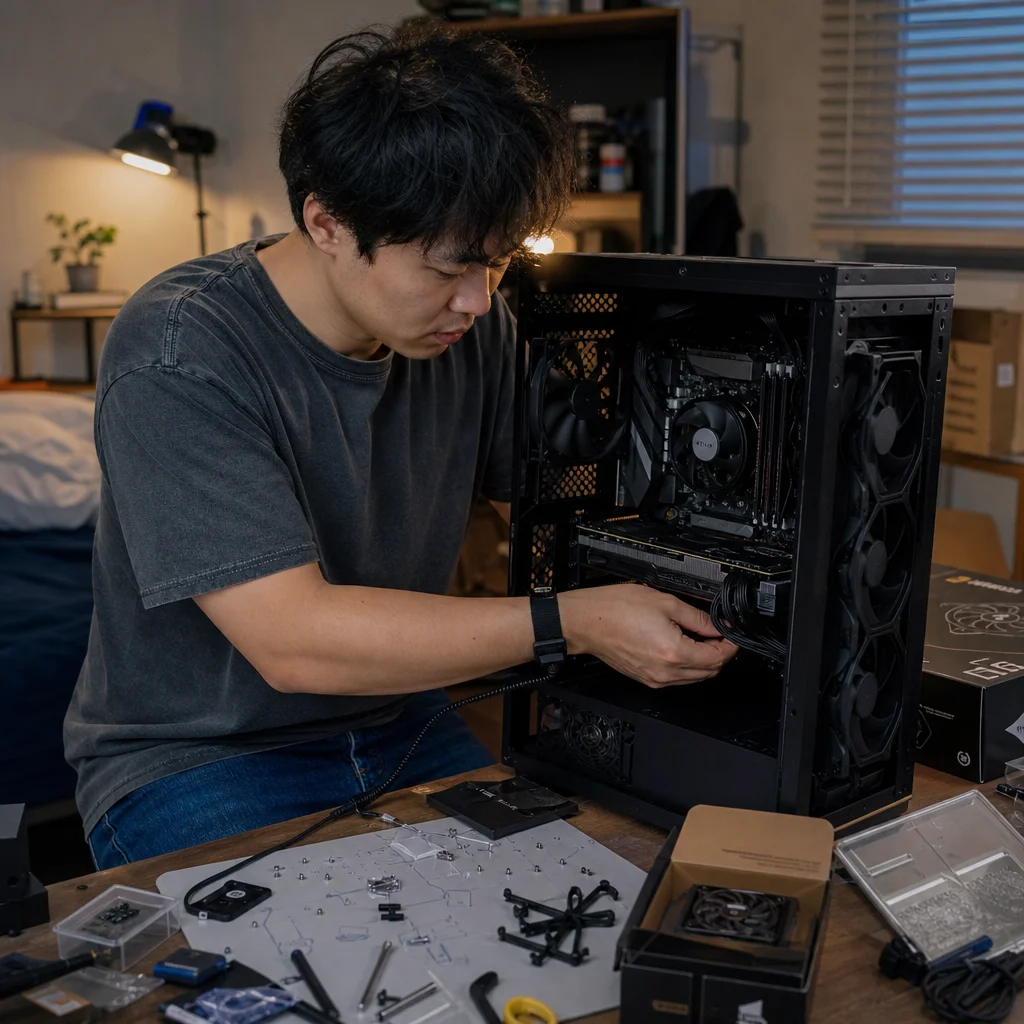
I’ll compare the main motherboard firmware flashback methods, explain when a processor is required, and show how to prepare the USB drive and recovery process without adding unnecessary tools or risk.
Read article →
When a parts list shows several possible wattage recommendations, I’ll help you estimate real system demand, allow sensible headroom, check the right connectors, and judge PSU quality without treating the number on the label as the whole decision.
Read article →
When your monitor has a high resolution or refresh rate, the right graphics card depends on more than a model name. I’ll show you how to match GPU performance, display features, connectors, power, and system limits without paying for capability your screen can’t use.
Read article →
I’ll compare the quickest software checks with hands-on slot and firmware inspection, then explain how to separate a genuinely restricted PCIe link from normal graphics-card behavior under different workloads.
Read article →
A supported processor can still fail to boot if the motherboard firmware is too old, while a firmware update carries its own risks. I’ll show you how to verify compatibility and prepare a safe recovery plan before opening the case.
Read article →
I’ll clarify which overlooked costs belong in a PC build budget, from operating-system licensing and extra fans to adapters, backup storage, and delivery charges, so you can compare cheaper options without discovering an avoidable shortfall at checkout.
Read article →
Small adjustments to tools, workspace, screw handling, and cables can make a PC build much more controlled when hand strength is limited. I’ll show you which minimalist changes reduce force and improve stability without adding unnecessary equipment.
Read article →
Cable labels often become unreadable, confusing, or misleading when a shared PC needs its second repair. I’ll show you how to build a compact labeling system that keeps modular cables, drives, fan headers, and unusual adapters identifiable without turning the case into a tagged-up maze.
Read article →
I’ll help you match RAM capacity to the work you actually do, from everyday office use and gaming to programming, creative applications, and virtual machines. You’ll get sensible starting points, warning signs that you need more memory, and a way to avoid paying for capacity your system won’t use.
Read article →
I’ll compare the motherboard slot-sharing arrangements that affect M.2 drives, graphics cards, and expansion cards, then show you how to read the manual, identify real bandwidth trade-offs, and choose parts without paying for connections your build can’t use together.
Read article →