How to Budget for the Parts People Forget
I’ll clarify which overlooked costs belong in a PC build budget, from operating-system licensing and extra fans to adapters, backup storage, and delivery charges, so you can compare cheaper options without discovering an avoidable shortfall at checkout.
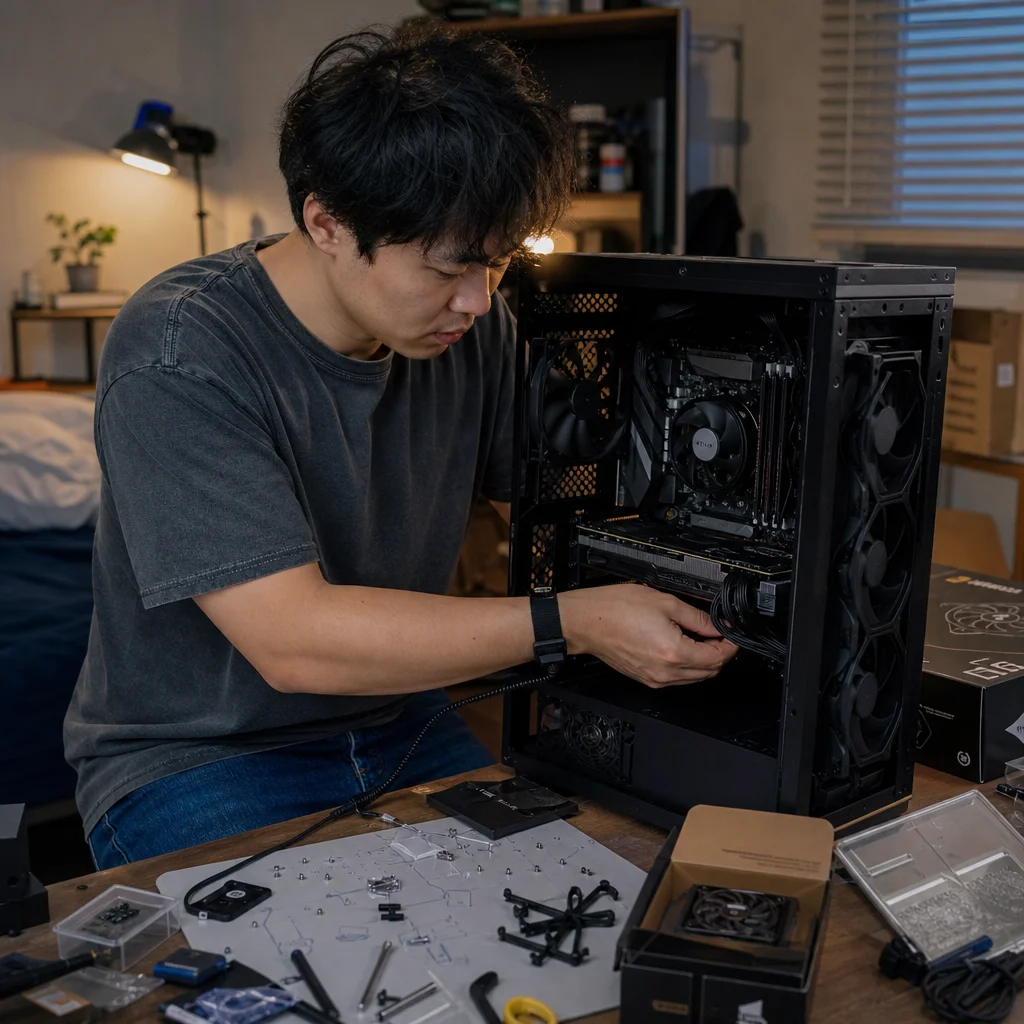
A PC parts list can look affordable until the costs around the main components start appearing. The processor, graphics card, motherboard, memory, and storage usually get most of the attention, while the items that make the system usable—and the purchase deliverable—are left for later.
That creates a familiar budgeting problem: you either spend more than planned or make rushed compromises after the build has already begun. A better approach is to treat the advertised component total as a starting point, then build a realistic budget around the complete system.
Start with the cost of a usable computer
Before comparing brands or choosing between two graphics cards, define what “complete” means for your build. A computer that powers on isn't necessarily a computer you can use comfortably. Your budget may also need to cover an operating system, display connection, wireless networking, extra cooling, storage for backups, and the delivery costs for several separate orders.
Some of these items are optional in a technical sense. You can assemble a system without buying a new operating-system license, and you may not need additional fans if the case already has an adequate layout. Optional, however, doesn’t mean irrelevant. If leaving something out forces you to buy it immediately afterward, it belongs in the original plan.
Separate your budget into three groups:
- Required for operation: items without which the intended system won’t work as planned.
- Required for your use case: items you need for your connection, software, noise preference, or storage routine.
- Useful later: upgrades or conveniences that can wait without making the initial system incomplete.
This distinction helps you compare approaches honestly. A cheaper build that excludes an operating-system license and backup drive may still be the right choice, but only if you understand what you’re postponing.
Operating-system licensing is a choice, not a footnote
An operating system can be one of the largest non-hardware costs in a beginner build. Whether you need to budget for one depends on your existing license, the operating system you plan to use, and how you intend to obtain it. A computer may boot without an activated installation, but that doesn’t automatically mean the arrangement suits your needs or complies with the software’s licensing terms.
There are several legitimate approaches. You might transfer an eligible license from an old computer, buy a new license, use a free operating system, or install an operating system first and decide later. Each has trade-offs in compatibility, support, convenience, and future maintenance. The least expensive option on paper may require more research or adjustment to your usual software.
Don’t assume that a product key advertised at an unusually low price is equivalent to an authorized retail or manufacturer-provided license. Licensing rules and transfer rights vary by product and region, and some offers may have restrictions that aren’t obvious from the headline price.
Check the license you’ll actually use: Before finalizing the parts total, confirm the current price, activation requirements, transfer rights, and regional terms from the operating-system publisher or an authorized seller. If you’re reusing a license, verify that it can be moved to the new hardware.
If your budget is tight, record the operating system as a separate line rather than hiding it inside “miscellaneous.” That makes it easier to compare a complete paid-software build with an alternative that uses software you already own or a different operating system.
Cooling costs depend on the case and processor
Extra fans are easy to overlook because a case may include some fans and a processor may include a cooler. Those included parts aren’t automatically inadequate, but you need to check what they cover. A case can have mounting positions for several fans without including fans for all of them. Likewise, a processor may be sold with a cooler, while another model in the same product family may require you to buy one separately.
Cooling should be budgeted as a system rather than as an isolated accessory. Consider the processor’s cooling requirement, the case’s included fans, the graphics card’s airflow demands, your room temperature, and whether you care about noise. Adding more fans can improve airflow, but buying a full set before checking the case layout can waste money or create unnecessary cable clutter.
A sensible low-cost plan is to use the included cooling first when it is suitable, then leave room for a targeted upgrade. You may need one or two additional fans rather than a complete replacement set. Check the fan sizes supported by the case, the available mounting positions, and whether the motherboard has enough suitable headers. A splitter or hub may become another small cost if several fans need to share a connection.
For a hotter processor or a compact case, it can be reasonable to reserve more of the budget for cooling from the start. The trade-off is straightforward: spending more on cooling may improve temperatures and noise, while spending the same money on a faster component may improve performance. Neither is universally better; the right choice depends on the workload and the limits of the case.
Cables and adapters are small costs with large timing problems
Most new components include the cables they normally require, but “normally” is doing some work here. Power supplies typically include their intended power leads, motherboards include data cables, and monitors often include a video cable. Yet a particular combination of parts may still need an adapter, extension, splitter, or replacement cable.
Common examples include a video-output adapter for an older display, a wireless adapter when the motherboard lacks Wi-Fi, a Bluetooth adapter for peripherals, a fan splitter, and a power extension when the case layout makes the standard cable difficult to route. Storage drives may need a data cable or mounting hardware depending on the type of drive and the case.
Check these details before ordering rather than buying a large assortment “just in case.” Confirm the connector on each end, the cable’s purpose, the required length, and whether the component already includes it. An inexpensive adapter can also introduce a limitation, such as a lower display resolution or refresh rate, so compare its specifications with the way you plan to use the computer.
Cable management accessories are usually a convenience, not a requirement. Reusable ties or a few inexpensive straps may be enough. Don’t let tidy-looking promotional photos persuade you to buy accessories that solve a cosmetic problem while your budget still lacks an essential connection.
Backup storage is separate from working storage
A large internal SSD gives you space for the operating system, applications, and files you use regularly. It isn't, by itself, a backup. If the drive fails, is accidentally erased, or becomes inaccessible through a hardware or software problem, the data stored only there may be lost.
You don’t necessarily need to buy an expensive backup device on the same day as the computer. You do need a plan. That might mean reusing a suitable external drive, buying a second drive later, using a reputable cloud service, or combining local and remote copies for important files. Each approach has different ongoing costs, storage limits, recovery speed, and privacy considerations.
If the computer will hold irreplaceable photos, schoolwork, creative projects, or business files, put backup storage or service costs into the initial budget instead of treating them as an optional luxury. For a gaming-focused build, you may be able to start with a simpler backup plan, but saved data and personal documents still deserve protection.
Keep the backup cost separate from the capacity of the main drive. This prevents a common mistake: spending the entire storage allowance on a larger primary SSD and then having no practical way to protect what it contains.
Shipping, tax, and regional availability change the comparison
A parts list assembled from several retailers can have a lower item total and a higher final cost. Shipping may apply to each order, free-shipping thresholds may encourage unnecessary purchases, and taxes, import charges, duties, or regional fees may appear only during checkout. These costs vary too much by location and date to estimate reliably from a general parts list.
Availability matters as well. If one component is out of stock locally, importing it may add delivery time, currency-conversion costs, warranty complications, or return expenses. A slightly more expensive nearby purchase can be the better value when it reduces shipping and makes a faulty part easier to replace.
Price the order at checkout: Before committing to a build, review the current delivered total for each retailer, including shipping, tax, duties, currency-conversion charges, and return terms. Check that the seller ships to your location and that the warranty route is practical there.
For a global budget, avoid treating a single currency conversion as a final answer. Use it to compare the parts, then replace it with prices available in your region. Keep a small contingency for changes in stock and delivery charges rather than allocating every last unit of currency to components.
Build a budget with a reserve, not a wish list
Once you have priced the overlooked items, decide what can move if the total is too high. Protect the parts that determine compatibility and the intended performance first. Then examine conveniences and upgrade paths.
For example, you might keep the same processor and motherboard but postpone extra fans if the included cooling is appropriate. You might choose a smaller primary SSD while maintaining a separate backup plan. You might buy a case with adequate included airflow instead of adding several fans afterward. Or you might reuse a monitor, operating-system license, or external drive and direct the saved money toward a component that is difficult to upgrade later.
Avoid cutting the budget by removing something you’ll need immediately. Leaving out a required Wi-Fi adapter, suitable cooler, or operating-system cost doesn’t make the build cheaper; it moves the purchase to a more inconvenient moment. Likewise, don’t spend a contingency reserve on decorative accessories before confirming that the system can be assembled and used as intended.
A useful final check is to calculate three totals: the minimum working total, the planned total for your actual use, and the comfortable total with a reserve. The first tells you whether the build is technically possible. The second is the number you should normally shop against. The third protects you from small price changes, missing cables, or a replacement purchase that only becomes obvious during assembly.
The goal isn’t to predict every expense perfectly. It’s to make the important trade-offs before you place the order. When operating-system licensing, cooling, connections, backup, and delivery are visible in the budget, you can choose what to delay deliberately instead of discovering the decision after the hardware arrives.