Plan a PC Build When You Need It to Last Through Several Upgrade Cycles
I’ll help you decide which PC parts deserve extra capacity now and which are smarter to replace later. You’ll learn how to plan around upgrade paths, power, cooling, storage, and changing platform requirements without paying for unnecessary future-proofing.
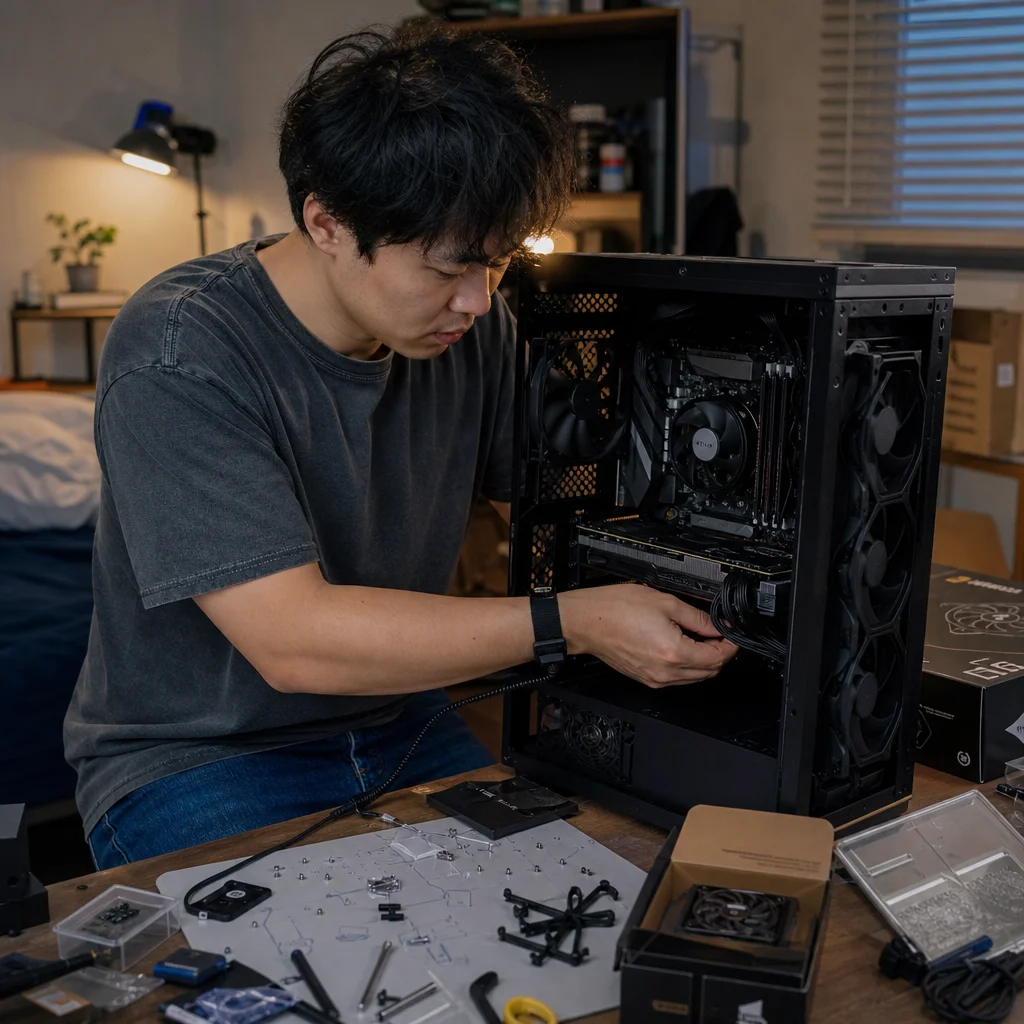
A PC that lasts through several upgrade cycles isn’t built by choosing the most expensive version of every part. It’s built by spending extra where replacement is difficult, preserving flexibility where standards may change, and accepting that some components are meant to be replaced sooner than others.
The challenge is that every part ages differently. A capable case may serve through multiple systems, while a graphics card can become the limiting component long before the rest of the computer. Memory capacity, storage needs, software requirements, and connector standards also change at different rates. Good long-term planning starts by separating durable foundations from replaceable performance parts.
Decide what “lasting” means for your build
Before choosing components, define the kind of longevity you want. A system intended to remain usable for six or eight years doesn’t need to deliver flagship performance for that entire period. It may instead need to support several sensible upgrades while remaining reliable, quiet, and easy to work on.
For many builders, the most useful goal is a computer that starts with strong everyday performance, receives one or two meaningful upgrades, and avoids a complete rebuild each time requirements increase. That might mean replacing the graphics card, adding storage, increasing memory, or installing a newer processor if the platform supports it. It doesn’t necessarily mean keeping every original component forever.
You should also identify your likely workloads. Gaming, video editing, software development, virtual machines, office work, and creative applications place different demands on the system. A gaming-focused build may benefit from leaving room for a future graphics card and more storage. A productivity system may gain more from memory capacity, CPU cores, and fast, dependable storage than from an oversized power supply.
Spend more on the parts that are hard to replace
Some components are relatively easy to upgrade later. Others require dismantling most of the system or replacing several parts together. Your budget should reflect that difference.
A good case is one of the strongest long-term investments. Look for enough internal space for the motherboard sizes and graphics-card lengths you’re likely to use, sensible airflow, removable filters, accessible cable-routing areas, and room for additional storage or fans. Tool-free panels and a layout that doesn’t force you to remove half the computer for a minor change also matter over time.
You don’t need the largest case available. Excess space can make a compact system unnecessarily awkward, and a huge enclosure may provide no benefit if your future parts will remain moderate in size. The useful question is whether the case leaves reasonable room for likely upgrades without requiring you to predict exact hardware several years from now.
The power supply is another foundation worth choosing carefully. A high-quality unit with appropriate capacity can survive a graphics-card upgrade, but buying far more capacity than you need can waste money and may not solve future compatibility issues. Power requirements, connectors, efficiency classifications, and manufacturer recommendations can change, so choose a reputable model with a sensible margin rather than treating wattage as the only measure of quality.
Check the upgrade’s power requirements: When you eventually choose a new graphics card or other high-draw component, verify its current connector, recommended power supply capacity, and physical clearance against your existing case and power supply. These details can change between product generations.
The motherboard deserves a similar but more qualified investment. It determines processor compatibility, memory support, expansion slots, storage interfaces, rear I/O, and many of the practical limits of the build. Paying for useful connectivity and a sturdy, well-supported design can extend the system’s life. Paying for features you’ll never use doesn't.
A motherboard can also create false confidence about future upgrades. A socket or chipset may support more than one processor generation, but that doesn’t guarantee that every future processor will work. Firmware support, power delivery, memory compatibility, and platform changes all matter. Treat processor upgrades as a possibility to preserve, not a promise.
Leave capacity where it is inexpensive and useful
Planning for future capacity is usually more effective than trying to predict future performance. Extra memory slots, vacant storage connections, spare fan positions, and a little room around major components can make later improvements straightforward.
For memory, consider how much you need today and whether your workload is likely to grow. If your applications regularly approach the installed capacity, adding more later can be a practical upgrade. But the easiest path depends on the motherboard’s available slots, the memory configuration, and the characteristics of the existing modules. Filling every slot immediately may leave no room for expansion, while buying a small amount now and relying on an identical kit years later may be difficult if that kit is no longer available.
That creates a trade-off. A larger matched kit may cost more at the beginning but give you a cleaner, more predictable configuration. Starting with fewer modules can leave physical room for expansion, but mixing different kits later may require conservative settings or troubleshooting. Check the motherboard’s memory support information and think about whether you’re more likely to add capacity or replace the original memory entirely.
Storage is generally easier to expand than memory, so you don’t need to buy the largest drive at the outset. Still, a system drive with comfortable free space will remain easier to maintain than one that is nearly full from the first day. Operating systems, applications, game installations, project files, and local backups tend to grow quietly until the lack of space becomes a problem.
A useful approach is to install enough fast storage for current work while leaving a straightforward path to add another drive. Check how many storage connectors remain available after installing your planned drives, and confirm whether using one connection disables another. These lane-sharing details are easy to overlook and can affect the expansion options you thought you had.
Treat the graphics card as a replaceable performance part
For many systems, the graphics card is the component most likely to be replaced during the computer’s life. It has a large effect on gaming performance and can age faster than the case, power supply, or storage system. That makes it a poor place to overspend purely for longevity.
Buy a graphics card that suits your current display resolution, applications, and quality expectations. Paying for a much faster model than your monitor or workload can use may provide less value than investing in a better case, power supply, motherboard, or storage plan. When performance needs rise, replacing the card can produce a noticeable improvement without rebuilding the entire system.
The rest of the build still needs to support that possibility. Check the case’s maximum graphics-card length and thickness, the motherboard’s slot layout, the power supply’s available connections, and the cooling system’s ability to handle additional heat. A future card may fit in the primary slot but interfere with other expansion cards, front-mounted radiators, or drive cages.
If you expect to upgrade the graphics card, avoid designing the original system around the absolute minimum power and cooling capacity. A modest margin is useful. An extreme margin that consumes a large share of the budget is usually less helpful than choosing a balanced card now and keeping money available for the eventual replacement.
Choose the processor platform with realistic expectations
The processor and motherboard are often upgraded together, but not always. A platform with a documented path to a later processor can make a future upgrade less expensive, especially if the original processor remains adequate while other parts improve. However, platform longevity is difficult to guarantee because manufacturers introduce new sockets, memory technologies, firmware requirements, and connectivity standards.
For that reason, don’t select a weaker processor solely because you hope to replace it later. The starting processor should comfortably handle your current workload. A future upgrade should be an option that adds value, not a rescue plan for a system that already feels slow.
It’s also worth considering the cost of the complete upgrade. If a future processor requires a new motherboard and memory, the apparent platform advantage may disappear. A system that lasts well isn't necessarily one with the longest theoretical compatibility; it’s one where the likely upgrade remains worthwhile compared with buying a new platform.
Cooling should support both the initial processor and the upgrades you can reasonably imagine. A capable air cooler may be easier to maintain and reuse than a complicated cooling solution, while a larger cooler can create conflicts with memory modules or the case side panel. Confirm the cooler’s mounting support and physical dimensions rather than assuming a future processor will use the same requirements.
Don’t overlook connectors, firmware, and physical standards
Long-term compatibility is more than matching sockets. Future parts may use different power connectors, storage interfaces, display connections, wireless standards, or physical dimensions. No build can preserve every possibility, so focus on the connections you’re likely to need and avoid locking yourself into an unusually narrow layout.
A motherboard with a useful selection of current ports and expansion options can reduce the need for adapters and add-in cards. You might value additional high-speed USB ports, networking options, multiple display outputs, or extra expansion slots depending on your work. These are practical conveniences, not guarantees of future compatibility.
Firmware support also matters. Keep the motherboard’s update process in mind, particularly if a later processor may require a newer firmware version. A board with a convenient update method can make an otherwise simple upgrade less frustrating, but you should still confirm the manufacturer’s current support information when planning a specific processor change.
Confirm the platform before buying an upgrade: For a future processor, memory kit, storage device, or expansion card, check the motherboard’s current compatibility list, firmware requirements, slot-sharing notes, and physical clearances. Treat the manufacturer’s documentation as the final reference for that particular combination.
Build for maintenance, not just installation
A system that is easy to clean and inspect is more likely to receive sensible upgrades. Route cables so that you can remove the graphics card or storage drives without undoing the entire build. Keep intake filters accessible, avoid blocking ventilation with unused cables, and label unfamiliar connections if another person may maintain the computer later.
Dust management and thermal monitoring are also part of long-term planning. Filters help, but they don’t eliminate the need for cleaning. Fans, coolers, and storage devices can behave differently as they age, and rising temperatures or unusual noise may indicate a problem before a component fails. You don’t need to obsess over every reading; you do need to notice meaningful changes from the system’s normal behavior.
Protecting your data is separate from protecting the hardware. A larger drive or more reliable power supply can't replace backups. Keep important files in at least one additional location, and make sure you know how to restore them. A build that remains operational but loses irreplaceable work hasn't really delivered long-term reliability.
A sensible order for future upgrades
When the system starts to feel limited, identify the actual constraint before buying anything. Slow game performance may point to the graphics card, but inconsistent performance can also involve memory capacity, processor limits, storage space, or thermal throttling. Application slowdowns may have a different cause from low frame rates.
Start with upgrades that address the measured problem and reuse the parts that still meet your needs. Add storage when capacity is the issue. Increase memory when applications are exhausting it. Improve cooling when temperatures or noise are the problem. Replace the graphics card when visual performance is the limitation. Consider a processor or platform change when the workload is consistently CPU-bound and smaller upgrades won’t solve it.
This order keeps a long-lived build from becoming an excuse to replace everything at once. Some components will eventually reach the point where replacement is more sensible than reuse, but you’ll make that decision with evidence rather than with a vague fear that the whole system is outdated.
The best multi-cycle build is balanced on day one and deliberately flexible afterward. Choose a case that is easy to work in, a power supply with credible headroom, a motherboard with useful expansion, and enough cooling for the parts you may actually install. Buy current performance for your real workload, leave inexpensive capacity where it helps, and verify future compatibility when a specific upgrade becomes real. That approach won’t make the system immune to changing standards, but it can turn several expensive rebuilds into a series of manageable improvements.