Build a PC for Color-Critical Photo Work Without Overspending on Gaming Hardware
I’ll clarify which PC components actually affect color-critical photo work, which gaming-oriented upgrades you can skip, and how to recover when a display, memory, storage, or graphics choice becomes the bottleneck.
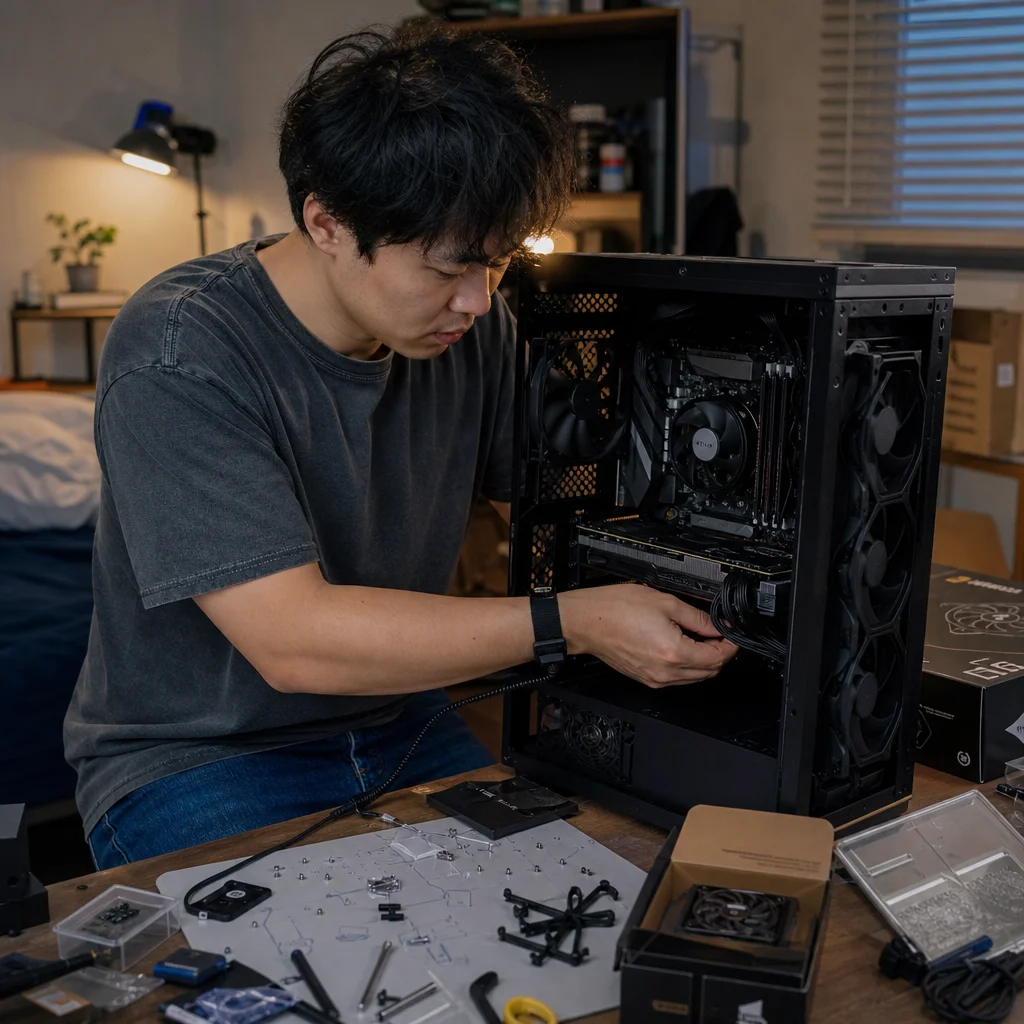
Color-critical photo work can look like a gaming-PC problem because both workloads involve high-resolution displays and demanding software. The difference is that photography usually rewards accurate color, stable performance, quiet operation, and dependable storage more than maximum frame rates.
That changes where you should spend money. A powerful gaming graphics card won’t compensate for a poor monitor, insufficient memory, or an unreliable backup plan. A sensible photo workstation starts by identifying the parts that affect your actual workflow, then leaves out performance that your applications won’t use.
Start with the display and its connection
For color-critical work, the monitor is part of the imaging system, not just an output device. Look for a display with the color gamut, uniformity, bit depth, brightness control, and calibration support appropriate to your work. A wide-gamut monitor can be valuable for editing photographs intended for modern displays or print workflows, but a wide gamut also makes color management more important. It doesn’t automatically produce more accurate images.
The connection between the computer and monitor matters as well. Check the monitor’s supported resolution, refresh rate, color depth, and gamut at the connection you plan to use. A port may technically drive the display while limiting one of those features, particularly at high resolutions or with older standards. The graphics output, cable, operating system, and monitor all need to support the mode you want.
Confirm your editing signal: Before buying the graphics hardware, check the monitor manufacturer’s input specifications and your operating system’s supported color modes. Verify that the intended connection can deliver the monitor’s target resolution and color depth, then plan to calibrate the complete setup rather than trusting factory settings.
You don’t need a high-refresh gaming monitor for still photography. A stable 60 Hz display can be entirely adequate if it offers good uniformity and the resolution and color characteristics your work requires. Higher refresh rates can make general desktop use feel smoother, but they shouldn’t take priority over panel quality, calibration, and viewing conditions.
Choose the processor for the work you actually do
Photo applications commonly use the processor for importing, preview generation, catalog operations, many editing tools, and exporting. A current mid-range processor is often a better value than a top-tier gaming chip, especially if your workflow is mostly still images rather than large video projects or extensive batch processing.
More cores can reduce waiting during exports and other parallel tasks, but not every adjustment scales perfectly with core count. Single-core responsiveness still affects how quickly the interface reacts to selections, brushes, masks, and other interactive tools. The sensible choice is usually a balanced processor with strong general performance rather than one selected solely for gaming benchmarks.
If you also edit high-resolution video, use complex panorama or HDR batches, or run several demanding applications at once, stepping up the processor may be justified. Otherwise, put the difference toward the monitor, memory, storage, or backup system. Those purchases are more likely to improve the complete workflow than a processor upgrade you rarely push to its limits.
Treat memory capacity as a recovery tool
Insufficient memory can make photo work feel broken even when the processor is fast enough. Large raw files, layered documents, browser tabs, catalog software, and other creative applications can consume memory together. Once the system starts relying heavily on the storage drive as virtual memory, previews and edits may become sluggish and interruptions more frequent.
For an intermediate builder, a sensible starting point is enough memory for the size of the files and number of applications you routinely keep open, with room to expand later. The exact capacity depends on the software, operating system, image dimensions, and multitasking habits, so application requirements should be checked for the versions you use. If you regularly work with very large layered files or batches, additional memory can be more useful than a faster graphics card.
Use a matched memory kit supported by the motherboard and processor, and check the board’s capacity and slot layout before purchasing. If a system becomes unstable after a memory upgrade, return it to default settings, test each module and slot methodically, and confirm that the installed kit is running within the platform’s supported specifications. Stability is more valuable than a marginal speed setting when the computer is handling irreplaceable work.
Prioritize fast working storage and dependable backups
A solid-state drive makes a noticeable difference to system startup, application launches, catalog access, scratch operations, and the movement of large photo libraries. For a new build, an NVMe SSD is a convenient choice when the motherboard provides a suitable slot, but the most expensive or fastest model isn’t automatically the best value. Photo editing rarely benefits from advertised peak speeds if the rest of the workflow is limited by memory, software behavior, or external storage.
Separate the roles of your drives where practical. A fast system and application drive can keep the operating system responsive, while a second internal or external drive can hold active projects and a larger library. Keeping working data separate from the system drive can also make maintenance and recovery less disruptive, although it isn’t a backup by itself.
Your backup plan should protect both original photographs and the catalogs, presets, profiles, and project files that help you use them. A second copy in the same computer won’t help if the computer, drive, or power event is the cause of the failure. Use a backup method appropriate to your budget and verify that files can actually be restored. A backup that has never been tested is an encouraging theory, not a recovery plan.
Test the recovery path: After setting up storage, restore a small selection of original files and catalog data to another location. Check that the files open correctly and that you know where the application stores presets, profiles, and project metadata before the first drive problem makes the answer urgent.
Pay attention to drive capacity as well as speed. Keeping an SSD nearly full can reduce flexibility for temporary files, catalogs, and exports. Leave working space according to the drive manufacturer’s guidance and your application’s needs, and move completed projects to properly backed-up storage instead of allowing the active drive to become a permanent archive.
Use graphics support without buying gaming performance
A dedicated graphics card can help with GPU-accelerated adjustments, high-resolution displays, noise reduction, masking, artificial-intelligence features, and other tasks supported by your photo software. It can also provide display outputs that suit a particular monitor better than the processor’s integrated graphics.
However, graphics-card gaming performance is a poor shortcut for predicting photo-editing performance. A card with more gaming speed may not improve the tools you use, while application support, graphics memory, drivers, and display connectivity may matter more. A modest current card—or integrated graphics, if it supports your monitor and software—can be sufficient for a still-photo workstation.
Check the applications you use before choosing the card. Look at their current GPU acceleration requirements, supported operating systems and drivers, recommended graphics memory, and the features you expect to use. This is one area where details can change with software releases, so verify the requirements for your installed or planned versions rather than relying on an old parts list.
More graphics memory becomes relevant with very high-resolution displays, large documents, multiple monitors, advanced masking, AI-assisted tools, and mixed photo-and-video work. If those aren't part of your workflow, paying for a large gaming card may give you heat, noise, power consumption, and cost without a corresponding improvement in editing.
Build around quiet, stable operation
A photo workstation may spend long periods generating previews, exporting batches, or synchronizing backups. Choose a case with sensible airflow, a reliable power supply with enough capacity for the selected components, and a CPU cooler that can handle sustained workloads without becoming distracting. You don’t need elaborate liquid cooling simply because the computer is a performance system.
Avoid sizing the power supply around a graphics card you don’t need. Select a reputable unit with appropriate connectors and reasonable headroom for the planned configuration and likely upgrade. Confirm current connector requirements before ordering, particularly if you choose a newer graphics card. The goal is stable delivery and quiet operation, not a large unused capacity number on the box.
Motherboard features should serve the workflow. Useful choices may include enough high-speed storage connections, the display outputs you need, reliable networking, memory capacity, and convenient USB connectivity for card readers, calibration devices, external drives, and backup hardware. Integrated wireless networking, extra expansion slots, or premium overclocking features may be worthwhile only if you’ll use them.
Prevent color problems before they become hardware problems
A mismatched color-management setup can make an expensive computer appear to produce poor results. Keep the monitor profile current after calibration, use applications with proper color-management support, and understand whether your export color space matches the destination. Viewing conditions matter too: changing room light or strong reflections can make a consistent display seem inconsistent.
When colors look wrong, isolate the failure instead of replacing parts. Confirm that the correct monitor profile is active, that the application is interpreting the image’s embedded profile correctly, and that the display settings haven’t changed. Try the monitor with a known-good cable and a direct connection, then compare the result with a calibrated reference if one is available. If the problem appears only in one application, its settings or update may be more likely than the graphics hardware.
If the display shows flicker, dropouts, missing modes, or intermittent signal loss, investigate the cable, port, adapter, driver, and monitor input before assuming the GPU is defective. Adapters can introduce limitations, and a cable that works at one resolution may fail at another. If a graphics driver update causes trouble, use the application’s documented compatible version or roll back through the operating system’s supported process rather than repeatedly changing unrelated settings.
A sensible spending order
For most color-critical photo builds, spend first on a suitable, calibratable monitor and a connection that can operate it correctly. Next, fund enough memory for your files and multitasking, a responsive SSD with practical capacity, and a backup system. Choose a balanced processor for your export and batch workload, then add only as much graphics capability as your applications and displays require.
That order also makes troubleshooting easier. If editing feels slow, you can distinguish memory pressure, storage saturation, processor-heavy operations, and GPU-accelerated features instead of treating the entire computer as one unexplained bottleneck. Monitoring memory use, drive activity, processor load, temperatures, and GPU utilization during a real project can reveal where an upgrade would help.
Build the system so that an ordinary photo session is stable, quiet, and recoverable. A color-critical workstation doesn’t need gaming-class hardware in every category; it needs a trustworthy display path, adequate resources for the files you handle, and storage practices that protect the work when a component eventually fails.