Planning a PC for Work, Gaming, and Occasional Creative Projects
A multipurpose PC should prioritize consistent everyday responsiveness before chasing peak performance in one application. I’ll show you how to balance the processor, graphics card, memory, storage, cooling, and budget so work, gaming, and creative tasks fit together without costly overbuilding.
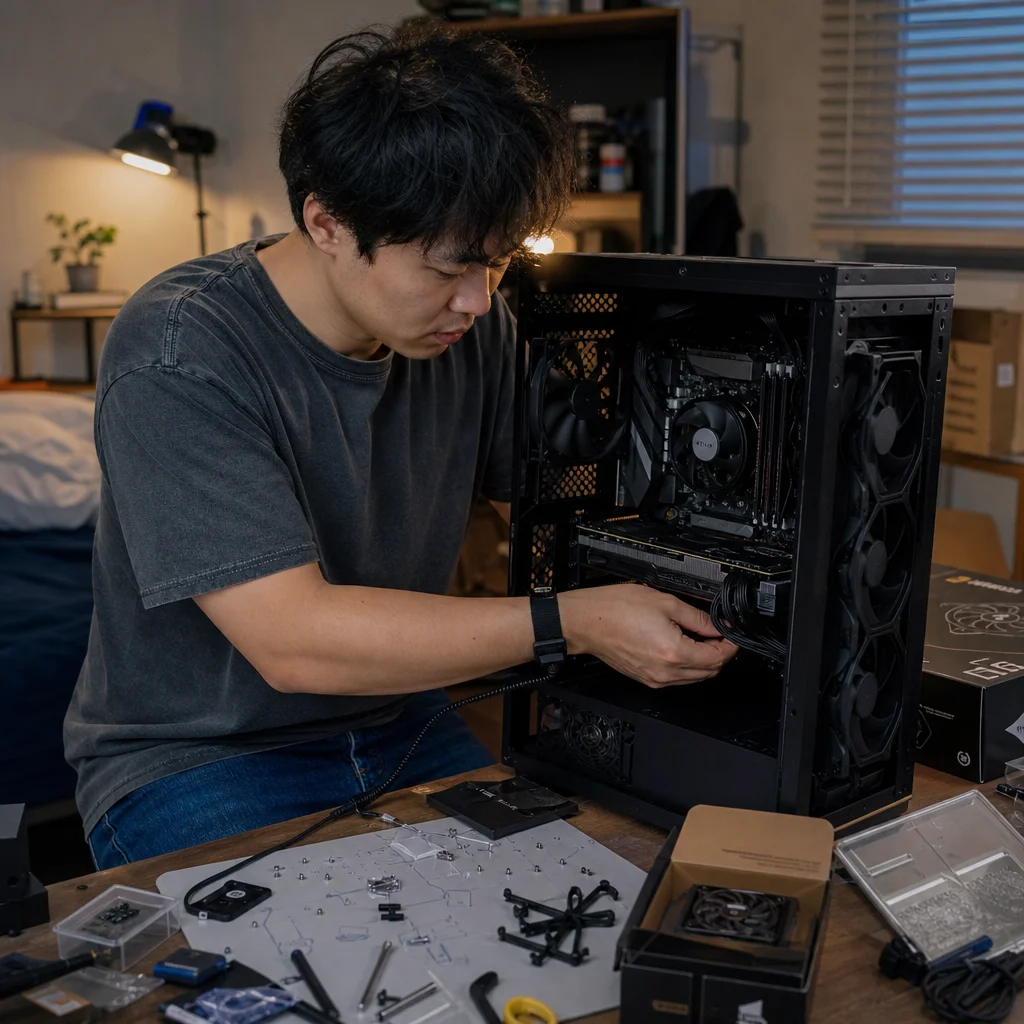
When one PC needs to handle office work, gaming, photo editing, video calls, and occasional demanding applications, the hardest part is deciding what not to overbuy. A system built only around gaming may feel unbalanced in creative software, while a workstation-focused build can spend heavily on performance you rarely use.
The sensible approach is to identify your regular workload, separate it from occasional peaks, and prioritize parts that improve the whole experience. You want a computer that feels quick during ordinary work, plays the games you care about at your monitor’s resolution, and has enough headroom for creative projects without turning every component choice into a specialist decision.
Start with the work you actually do
Make three lists: everyday tasks, regular demanding tasks, and occasional tasks. Everyday work might include a browser with many tabs, documents, spreadsheets, messaging, cloud applications, and video calls. Regular demanding work could include gaming several times a week or editing large batches of photos. Occasional tasks might be rendering a video, exporting a large project, or using an application that benefits from extra processing power.
This distinction matters because occasional workloads shouldn’t automatically dictate the entire build. If you edit video once every few months, it may be more sensible to accept a longer export or use proxies during editing than to buy an expensive processor, graphics card, and cooling system designed for professional production every day.
At the same time, “occasional” doesn’t mean “irrelevant.” If those projects are important, choose enough memory, storage, and cooling that the system can complete them reliably. The goal is balance, not the lowest possible specification.
Check your demanding applications: Before choosing parts, look at the current recommended requirements for the games and creative programs you expect to use. Pay particular attention to graphics memory, system memory, supported operating systems, and hardware-accelerated features.
Choose the processor for the mix, not the label
The processor affects general responsiveness, application performance, multitasking, and many creative workloads. For a multipurpose PC, a modern midrange processor is often a better starting point than either the cheapest model or a high-end chip aimed at constant rendering. You’ll notice processor limitations most when an application relies heavily on CPU work, when you’re exporting or encoding, or when several demanding tasks run together.
Gaming performance is more complicated. Some games respond strongly to processor speed and latency, while others depend more on the graphics card. A very powerful processor won’t make a modest graphics card deliver high frame rates at demanding settings, and a weak processor can prevent a powerful graphics card from reaching its potential in certain games.
For occasional creative work, consider how much time you’re willing to spend waiting. More cores can help with rendering, encoding, and other parallel workloads, but they may cost more and require stronger cooling. If your creative applications are mostly photo editors, design tools, or light video work, a balanced processor is usually more appropriate than one selected for professional production benchmarks.
Integrated graphics can also be useful. They may provide display output and basic acceleration while you use a separate graphics card, and they can make troubleshooting easier if the dedicated card is removed. However, don’t assume every processor includes integrated graphics or that integrated graphics will meet your gaming needs; verify the specific model.
Treat the graphics card as a gaming and creative decision
For most gaming-focused builds, the graphics card deserves a large share of the budget. It generally has the greatest effect on performance at higher resolutions and quality settings. Choose it based on your monitor and the games you play rather than on a general desire for “the best” card.
A card suited to a high-refresh 1080p monitor may be a sensible value choice, while a high-resolution display can justify a more capable model. If you mainly play strategy games, older titles, or competitive games at modest settings, your needs may differ from someone playing visually demanding releases with advanced lighting effects.
Creative applications complicate the choice because support varies. Photo editing may benefit from graphics acceleration without needing an especially powerful card. Video editing can use the GPU for effects, playback, and encoding, but the benefit depends on the software, codecs, project resolution, and features you use. Some applications also favor a particular graphics platform or require a certain amount of graphics memory.
That means a graphics card should be chosen for your actual software, not simply because it has a high benchmark score in games. If creative work is occasional, you can usually prioritize gaming while confirming that the card supports the acceleration and memory requirements of your chosen applications.
Give memory enough room for multitasking
System memory affects how comfortably you can keep applications open. A PC with too little memory may appear fast at first but become sluggish when a browser, video call, spreadsheet, game launcher, and creative application compete for space. It may rely more heavily on storage, which is slower and can make switching between tasks frustrating.
For a first-time multipurpose build, choose a sensible capacity for your operating system, games, and creative programs, then consider whether your projects are unusually large. More memory is useful when you work with high-resolution photographs, complex compositions, large timelines, virtual machines, or many applications at once. It’s less valuable if your normal use is light office work and a single game.
Memory speed and compatibility matter, but capacity should come first when you’re deciding between a comfortable amount and a faster version of an insufficient amount. Use matched modules where possible, install them in the motherboard’s recommended slots, and check the motherboard’s memory support before buying. Leaving upgrade room can be worthwhile, but don’t pay a large premium for a theoretical future upgrade if the current capacity already meets your needs.
Use fast storage, but plan for space
A solid-state drive makes everyday work feel responsive: the operating system starts quickly, applications open promptly, and files are easier to browse. It should be the foundation of a modern multipurpose PC rather than an optional luxury.
Capacity is just as important as speed. Games are large, creative project files grow quickly, and keeping an adequate amount of free space helps prevent constant housekeeping. A smaller fast drive can work for the operating system and frequently used applications, with a second drive for games and project files. Alternatively, one larger drive can simplify the build and make file management easier.
Consider how you’ll protect important work. A second internal drive isn't a backup by itself if both drives are affected by the same hardware failure, accident, or malware. Keep valuable photos, project files, and documents in a separate backup location, and make sure you can restore them rather than merely assuming a sync service has preserved every version you need.
For occasional creative work, fast storage can improve importing, cache performance, and project handling, but it won’t compensate for insufficient memory or an unsuitable processor. Balance the parts instead of paying for the fastest available drive while compromising elsewhere.
Build around a compatible, upgradeable platform
The motherboard should provide the connections and features your parts require without becoming the place where your budget disappears. Confirm that it supports the processor’s socket and generation, the memory type you intend to use, your storage interfaces, and the graphics card’s physical connection. You should also count the ports you’ll use for monitors, external drives, cameras, audio equipment, and other accessories.
A motherboard with useful expansion options can extend the system’s life. Additional memory slots, more storage connections, and a convenient rear I/O layout may matter more than premium features you’ll never use. Built-in wireless networking can simplify a build, while wired networking may be preferable if your PC stays near a router and you want a stable connection.
Don't assume that a motherboard supports a processor simply because the socket appears to match. Firmware support can vary between models and production batches. Check the manufacturer’s compatibility information for the exact board and processor combination, and confirm whether a firmware update is needed before the system will boot.
Budget for cooling, power, and the case
Cooling should support the processor you choose without creating unnecessary noise or complexity. A basic cooler may be adequate for a modest processor, while a higher-power chip may need a more capable air cooler or liquid cooling system. For a first build, a reliable air cooler is often easier to install and maintain, provided it fits the case and supports the processor.
The case affects more than appearance. Check graphics card length, cooler height, radiator support if relevant, motherboard size, drive mounts, front-panel connections, and airflow paths. A case with sensible intake and exhaust options can help the system maintain performance during long gaming sessions or creative exports.
Choose the power supply from the complete system’s requirements, not just the graphics card’s headline consumption. It needs the correct connectors, adequate capacity, and a reputable design. Some graphics cards have specific power connections or installation requirements, so inspect those details before finalizing the build. Avoid treating a low-cost power supply as an easy place to save money; unstable or inadequate power can affect the entire system.
Verify the final parts list: Before ordering, compare the exact processor, motherboard, memory kit, cooler, case, graphics card, and power supply specifications. Confirm clearances, connectors, firmware support, and the power supply’s required cables rather than relying on product names alone.
Decide what deserves the next dollar
When the budget is tight, improve the part that limits your intended experience. A gaming-first system may benefit more from a stronger graphics card than from a premium motherboard. A system used for large creative projects may need additional memory or storage before it needs a faster graphics card. A work-first PC that only plays lighter games can put more money toward quiet operation, display quality, and reliable storage.
The monitor should be part of this decision. A graphics card chosen for a resolution or refresh rate you don’t use is wasted potential, while an excellent graphics card paired with an unsuitable monitor can make the improvement hard to see. Include the monitor, keyboard, operating system if needed, and backup storage in the overall budget instead of spending the entire amount on the tower.
Leave a small amount of room for practical extras: case fans if the case needs them, a suitable cooler, thermal interface material when it isn’t included, and any adapters required by your display or network setup. These details are less exciting than a processor name, but they’re part of making the computer usable on day one.
A balanced starting point
For most first-time multipurpose builders, the priority order is straightforward: establish the monitor and software targets, choose a balanced processor and graphics card, install enough memory for comfortable multitasking, use solid-state storage with adequate capacity, and then confirm cooling, power, and physical compatibility. Adjust that order when your work is clearly different—for example, frequent video production should carry more weight than occasional photo editing.
You don’t need every part to be top-tier. You need the system’s strengths to match the tasks you perform most often, with enough headroom for the tasks you perform sometimes. Once the parts list passes the compatibility checks, review it from the perspective of daily use: Is there enough storage? Will the case fit everything? Can you connect your displays and peripherals? Will the system remain reasonably quiet under load?
Those questions lead to a more dependable build than choosing parts by prestige or isolated benchmark results. Prioritize the experience you want every week, make deliberate compromises for occasional workloads, and keep backups and future upgrades in the plan. That is how a single PC can serve as a work machine, gaming system, and creative tool without becoming unnecessarily expensive or difficult to build.