How to Choose Parts for a PC That Must Run Without Internet Access
I’ll clarify which PC parts and preparation steps matter when your workstation may spend most of its life offline, from driver storage and firmware updates to local backups and dependable peripherals.
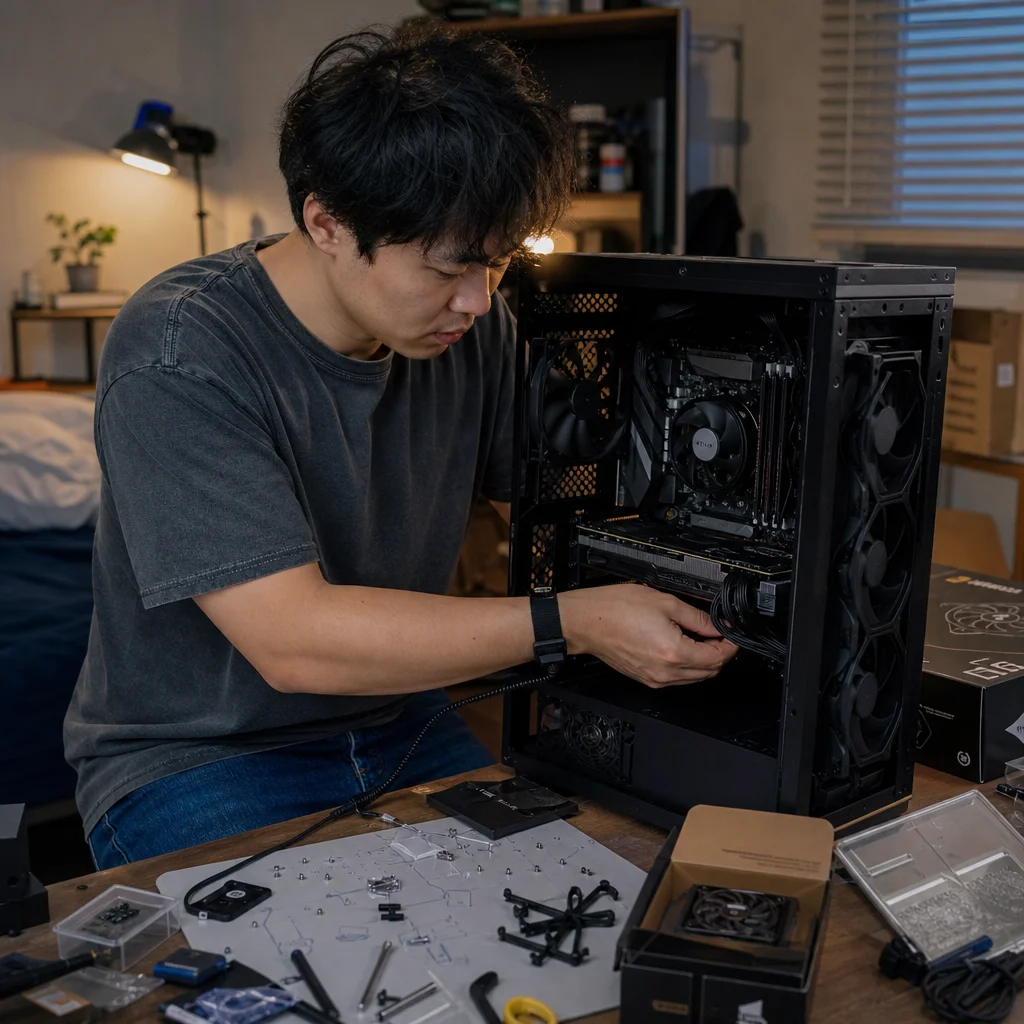
A PC that never connects to the internet has different priorities from an ordinary desktop. You still need a capable processor, enough memory, and suitable storage, but convenience features such as automatic driver downloads, cloud recovery, and online activation may not be available when something goes wrong.
The most common mistake is choosing hardware first and assuming the offline details can be solved later. A better approach is to plan the complete working environment: the operating system, applications, drivers, firmware, files, input devices, backup method, and the way you’ll transfer updates or data when necessary. That planning often matters more than buying the newest component.
Start with the software and peripherals
Before selecting parts, list what the computer must do without an internet connection. Office documents, photo editing, industrial control, media playback, programming, accounting, and specialized equipment can all have different requirements. Write down the applications you need, the file formats they use, and whether they require activation, a network license, or periodic online checks.
Also list every peripheral that must work: printers, scanners, card readers, USB instruments, audio interfaces, game controllers, external drives, and unusual adapters. A computer can boot perfectly and still be unusable if the required device has no local driver or depends on an online setup utility.
Check the operating system and application requirements before you buy components. Pay particular attention to processor architecture, memory requirements, available storage, supported graphics hardware, and whether the software needs a dedicated GPU. If a program is old, its hardware and operating-system support may be more predictable than that of a newer release; if it is specialized, the vendor’s supported hardware list may matter more than general PC-building advice.
Confirm offline operation: Before ordering parts, check each essential application and peripheral for offline activation, local installers, supported operating systems, and a driver package you can save separately.
Choose a platform with broad, stable support
For most offline workstations, a mainstream desktop platform is easier to maintain than an unusual or newly introduced one. Widely used processors and chipsets tend to have better operating-system support, more documented firmware options, and a larger pool of compatible drivers. This doesn’t mean you should avoid new hardware categorically, but novelty adds another dependency to a system that may not have a convenient way to retrieve fixes.
A processor with integrated graphics can simplify the build if your workload doesn’t need a dedicated graphics card. It removes one component, one set of drivers, and one possible failure point. Integrated graphics are often sufficient for office work, programming, administration, and basic media use. Choose a separate GPU when your software genuinely needs it, such as demanding 3D work, certain compute tasks, or high-resolution multi-display output.
If you do need a graphics card, avoid selecting it solely by performance. Consider whether the driver can be installed from a local package, whether the card supports your operating system, and whether your applications work with its graphics API. A powerful card with an inconvenient driver situation isn't a good bargain for an isolated workstation.
The motherboard deserves similar attention. Favor the connections you will actually use, including the right display outputs, USB ports, networking options, audio connections, and storage interfaces. An inexpensive board can become expensive if it requires add-in cards or obscure adapters for basic tasks. Conversely, paying for features that require online services doesn't improve an offline system.
Plan memory and storage for local work
Memory should be sized for the applications you will run together, not just for the operating system. A machine used for documents and light administration can need far less memory than one handling large images, virtual machines, databases, or engineering files. Leave some headroom for future software, but don’t treat maximum capacity as a substitute for understanding the workload.
Storage planning is more important when cloud storage is unavailable. Estimate the operating system, applications, working files, local reference material, installers, update packages, and recovery images. Keep additional free space so the system can install updates, create temporary files, and work with large projects without constantly approaching full capacity.
A solid-state drive is generally a sensible primary drive because it offers responsive startup and application loading without mechanical noise or moving parts. A second internal drive can separate the operating system and applications from projects or archives, although separation isn't the same as backup. If the motherboard supports multiple drive types, use a standard that your operating system and firmware support reliably rather than assuming the fastest interface is necessary.
Offline systems also benefit from a deliberate folder structure. For example, you might keep installers, hardware drivers, firmware files, project data, exported documents, and recovery material in clearly named locations. That structure makes the computer easier to restore and reduces the temptation to delete important support files when storage becomes tight.
Treat drivers and firmware as part of the build
An offline PC needs a driver plan before it is disconnected. The operating system may include basic drivers for common hardware, but those drivers mightn't provide full performance or every feature. Network, chipset, graphics, storage-controller, audio, printer, and peripheral drivers can all matter during setup.
Use another connected computer, when necessary, to obtain the correct driver packages from the hardware and operating-system vendors. Save them on more than one medium if the machine is important. Keep the motherboard model, revision, processor model, graphics card model, and operating-system edition with the files so you can identify what belongs to the system later.
Firmware requires more care. A motherboard, SSD, graphics card, or peripheral may have a firmware update available, but updating isn't automatically beneficial. A firmware update can add compatibility or fix a known problem, yet it can also introduce risk if power is interrupted or the wrong file is used. Read the manufacturer’s instructions, confirm the exact model and revision, and update before deployment when there is a clear reason to do so.
Don't rely on a web page remaining available or on a vendor’s download area retaining an older version. Save the relevant manuals, release notes, driver packages, and firmware documentation locally. Current download availability and support details can change, so verify them while the system is still being prepared rather than after it has been placed in an isolated location.
Build your offline kit: Download and store the operating-system installer, essential drivers, manuals, application installers, license information, and any required firmware files before the PC loses convenient internet access. Verify that the files open or install on a test system when possible.
Don’t overlook networking hardware
“Offline” can mean several things. The PC might never connect to a network, it might connect only to a private local network, or it might be disconnected from the internet but still exchange files with other machines. Decide which situation applies.
If the computer will use local networking, choose a motherboard or adapter with a supported Ethernet or Wi-Fi interface and save its driver locally. Ethernet is often simpler for a fixed workstation, while Wi-Fi can be useful where cabling is impractical. If wireless networking isn't needed, disabling it in firmware or the operating system can reduce accidental connections, but you should still know how to restore it if maintenance requires access.
A network adapter isn't a replacement for removable transfer media. Keep a dependable USB drive or external SSD available for moving installers, documents, and backups. Use a file system that your computers can read, and label the media clearly. If the data is sensitive, consider encryption, but make sure you have a workable way to recover the encryption key without an online account.
Select peripherals for reliability, not novelty
Basic wired peripherals are often the least troublesome choice for an isolated workstation. A standard USB keyboard and mouse don’t need pairing software, batteries, or a proprietary wireless receiver that could be misplaced. Wired displays are similarly straightforward, especially when the cable and input standard match the graphics output you selected.
Wireless devices can still be appropriate, particularly where cable management or accessibility makes them preferable. The important point is to obtain their pairing instructions, configuration software, and any required receiver before deployment. Some products expose only basic functions until a companion application is installed, and that application may not be available offline.
Printers and scanners deserve early testing because their driver support can vary considerably between operating systems. If a particular device is essential, connect it to a test installation and confirm printing, scanning, duplexing, special media handling, or other required functions. Keep a spare cable and, where practical, a simple fallback input device or display adapter.
Prepare backups and recovery before the first failure
An offline PC still needs backups. In fact, the lack of convenient cloud access makes local backup planning more important. Keep at least one backup copy on a separate storage device, and disconnect that device when it isn't being used if you want protection from accidental deletion, malware, or power-related damage.
For important work, use more than one backup destination and periodically test restoration. A backup that has never been opened may be incomplete, corrupted, or stored in a format you can no longer access. Record what is backed up, when it was created, and which software is needed to restore it.
Create a recovery path for the system itself. Save the operating-system installer, product keys or activation records, application installers, driver packages, and configuration notes. If the computer uses specialized software, preserve the license files, serial numbers, documentation, and any hardware key required to run it. Keep this material somewhere other than the PC’s main drive.
A full disk image can speed recovery after drive failure or a badly damaged installation, but it should complement—not replace—separate copies of active documents. Images become less useful as software and files change, so update them on a schedule that matches the importance of the workstation.
Avoid building in unnecessary dependencies
Cloud-linked features, online account requirements, subscription checks, and automatic synchronization may be convenient on a connected computer but awkward offline. During setup, identify which features can be replaced with local accounts, locally stored reference material, or exported configuration files. Don’t assume an application’s “offline mode” means it can be installed or reactivated without a connection.
Power protection is another practical consideration. A small uninterruptible power supply can give you time to save work and shut down cleanly, but its runtime and replacement-battery requirements vary. For any equipment used in a business or safety-sensitive setting, check the applicable electrical and workplace requirements for your location. Those requirements can change, so current local guidance should be confirmed rather than inferred from a general PC-building article.
Keep spare items that would otherwise stop the entire system: a known-good cable, a compatible input device, a bootable recovery medium, and an external drive containing essential installers and backups. You don’t need a duplicate of every component, but you should identify the parts whose failure would leave you unable to diagnose the machine.
Assemble and test the complete offline setup
Build the computer with ordinary compatibility checks: confirm the processor fits the motherboard socket, memory is supported, the power supply has suitable connectors and capacity, the case accommodates the board and graphics card, and cooling is adequate. Then test the system as an offline workstation rather than stopping when it reaches the desktop.
Disconnect the network and install the operating system from your prepared media. Install the drivers and applications from local copies, connect every essential peripheral, open representative files, and perform the tasks the machine was purchased to handle. Reboot several times, test recovery media, and verify that saved settings survive a restart.
Record the working configuration: component models, firmware versions, driver versions, operating-system edition, application versions, and backup locations. This inventory turns future troubleshooting from guesswork into a controlled process. Store a copy with the recovery materials and another where it can be read without starting the PC.
The best offline PC isn't necessarily the fastest or most expensive one. It is the system whose software, drivers, peripherals, storage, recovery process, and maintenance routine have all been considered before the network cable is removed. Choose broadly supported hardware, preserve the files needed to reinstall it, test the complete setup locally, and maintain independent backups. Those steps prevent the most frustrating offline failures: a machine that works in theory but can't be repaired, expanded, or used when the connection is gone.