Plan a PC Build When Your Budget Arrives in Stages
A staged PC budget should prioritize compatibility and usefulness, not simply the cheapest parts available today. I’ll explain which purchases can safely come first, which should wait, and how to keep each spending phase moving toward a complete, usable system.
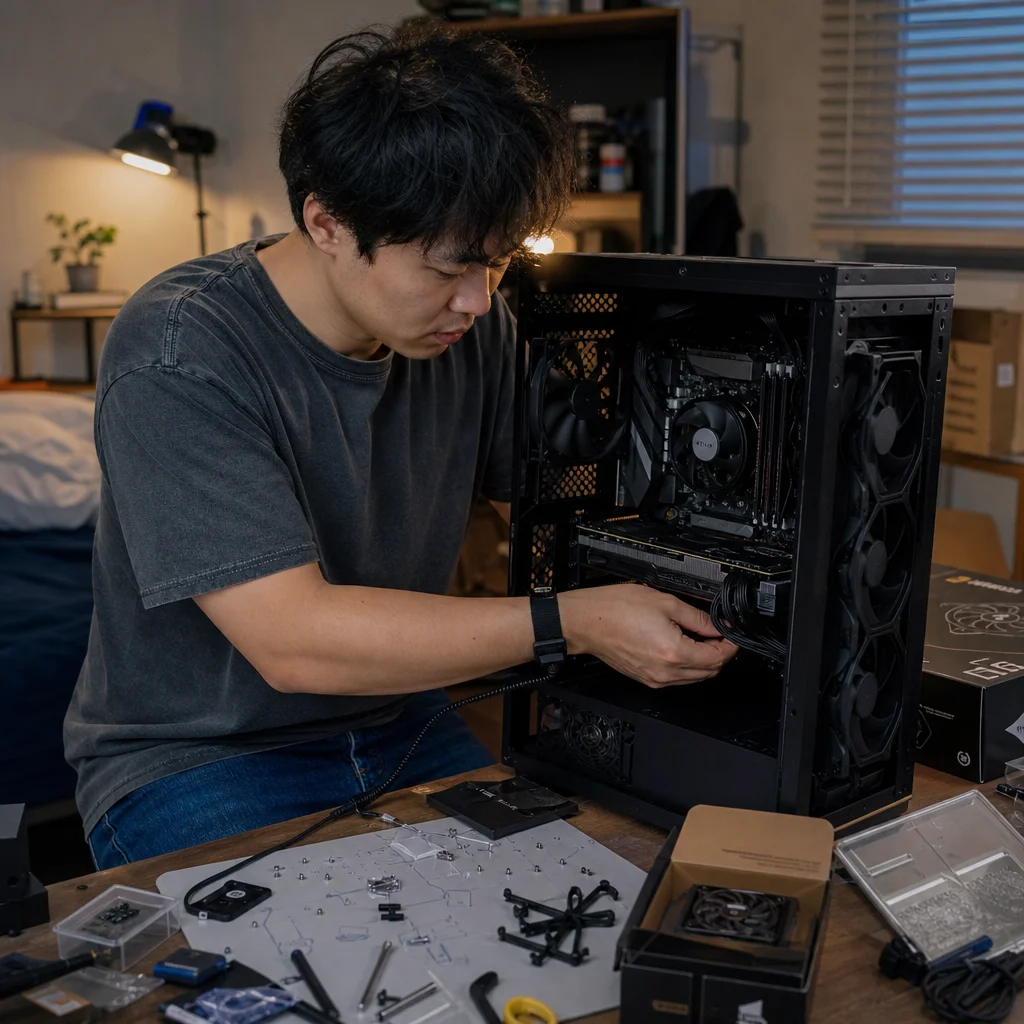
When your PC budget arrives in stages, the main challenge isn’t finding a part you can afford today. It’s making sure today’s purchase still makes sense when you have enough money for the rest of the system. A cheap case, an attractive graphics card, or a discounted processor can all become expensive mistakes if they lock you into the wrong platform or leave you with an unusable collection of hardware.
The safest approach is to plan the complete build first, then divide that plan into sensible purchasing phases. Each phase should either preserve future choices, provide a useful function, or complete a major part of the system. The goal isn’t to assemble as soon as possible. It’s to avoid spending money on components that are difficult to test, easy to damage, or likely to be replaced before the build is finished.
Start with the complete system, not the first purchase
Before buying anything, define the finished PC’s purpose. Gaming at a particular resolution, general productivity, creative work, software development, and occasional media use can point toward different balances of processor performance, graphics capability, memory, storage, and cooling. You don’t need an exact parts list immediately, but you do need a target for the whole machine.
Write down the parts the finished build will require: processor, motherboard, memory, graphics card if needed, storage, power supply, case, and cooling. Include the operating system and any adapters or peripherals that your current setup can’t provide. If you’ll reuse a monitor, keyboard, storage drive, or case, confirm that assumption rather than treating it as a permanent fact.
Then identify the dependencies between parts. A processor must match the motherboard socket and supported firmware. Memory must use a type supported by the motherboard. The power supply must provide suitable connectors and enough capacity for the eventual graphics card. The graphics card must physically fit the case, including its thickness and power-cable clearance. These relationships matter more than the order in which you happen to find discounts.
A staged budget is much easier to manage when you set a maximum total before shopping. Leave some room for shipping, replacement cables, a basic screwdriver, or an unexpected compatibility change. If your entire budget is allocated to components on paper, the real build may stall over a small missing item.
Buy the platform when you can commit to it
The first major decision is usually the platform: the processor, motherboard, and memory together. These parts determine many of your later options, so buying only one of them can be risky. A processor sitting in a box isn't useful by itself, and a motherboard purchased long before the rest of the system may become difficult to return if a better option appears.
If you can afford the processor, motherboard, and memory within a short period, buying them as one phase is often sensible. You can confirm that they belong together, inspect the sockets and memory slots, and—if you have the remaining parts needed for a basic test—check that they work while return windows are still relevant.
There’s an important exception: a processor with integrated graphics can make an early platform purchase more useful. It may let you assemble and operate the computer before buying a separate graphics card. You can use the system for office work, setup, downloads, and troubleshooting, even if gaming performance is limited. A processor without usable integrated graphics generally needs a graphics card before it can produce a display, unless the motherboard offers another supported graphics source.
Don’t assume that a motherboard supports every processor that fits its socket. Firmware support can vary by model and manufacturing date, particularly when a platform has received later processor generations. Check the motherboard manufacturer’s current CPU support list and BIOS requirements when you choose the parts, especially if the board may have been sitting in inventory.
Check platform support before ordering: Confirm the exact processor, motherboard revision, memory type, and required firmware version on the manufacturers’ support pages. Availability and firmware details can change, so verify these specifications at the time you buy.
Buying the motherboard first because it is discounted can work if the processor choice is already fixed and the board has a sensible return policy. Otherwise, it can turn a temporary saving into a long-term constraint.
Let the graphics card wait when the platform can function without it
For a gaming-focused build, the graphics card may be the most expensive single component and the part most affected by changing product availability. It’s often reasonable to delay it while you save, provided the rest of the system can operate without it.
A processor with integrated graphics gives you a working display for basic tasks. A spare compatible graphics card can serve the same purpose temporarily, although you should confirm that it works and that the power supply can support it. If neither option is available, buying the platform early means accepting that you may not be able to test or use the computer until the graphics card arrives.
There’s no universal rule that the graphics card should be bought last. If you find the exact performance level you need at a price that fits your total plan, it may be a sensible early purchase. The important question is whether buying it now prevents you from completing essential parts later. A powerful card paired with no power supply, case, or storage is still an incomplete system, and its warranty or return period may run while it remains unused.
Avoid choosing the graphics card in isolation. Check its length, height, thickness, power connectors, and recommended power-supply requirements against the case and power supply you intend to use. A card that fits your performance target but not your future case isn't a bargain.
Treat the power supply as a system decision
The power supply is easy to postpone because it doesn’t make the computer feel faster. It’s also a poor place to make a rushed compromise. Its capacity, connectors, physical size, and cable arrangement need to suit the final build, not just the first few parts you happen to own.
If you’re buying the power supply early, select it around the complete planned system. Leave appropriate headroom for normal operation and transient power demands, and confirm that it includes the connectors required by the intended processor and graphics card. Don’t buy a very high-capacity unit merely to keep every future possibility open; paying for capacity you won’t use can take money away from more important components.
If the final graphics card is undecided, you can delay the power supply or choose a model that supports the range of cards you’re genuinely considering. Don’t build a plan around an unnamed future upgrade. Write down the likely graphics-card class and check the manufacturer’s current requirements when you finalize the purchase.
Cases and cooling can come later—but not always
A case is usually safe to buy late because it doesn’t determine the platform, but it still has compatibility consequences. The case must support the motherboard form factor, graphics-card dimensions, power-supply format, storage arrangement, and cooler height or radiator size. A visually appealing case that lacks airflow or clearance can force expensive substitutions later.
Buying the case near the end also reduces the time it sits unused and taking up space. Once you have the major internal parts, you can make a better decision about the physical layout and cooling needs. If the case is part of a limited bundle or a particularly good fit for the build, buying it earlier is fine—provided you have checked the measurements rather than relying on the product category.
The same principle applies to cooling. A boxed processor cooler may be adequate for some processors, while others require a separate cooler. Don’t purchase an elaborate cooler before you know the processor’s thermal requirements, the case’s clearance, and whether the cooler’s mounting hardware supports the chosen motherboard platform. Cooling is a useful early purchase only when its compatibility is already established.
Storage and memory are useful, but easy to buy too early
Storage and memory can feel like straightforward purchases, yet they’re commonly affected by changes in the rest of the plan. Memory must match the motherboard’s supported memory generation and should be purchased in a sensible capacity and configuration for the final system. Buying a small amount now and replacing it later may cost more than waiting for the complete kit.
Storage is more flexible, especially when you can reuse an existing drive temporarily. Still, check whether the motherboard supports the drive interface and whether installing one drive will disable or share connections with another slot. A fast storage drive is valuable only if the rest of the build can use it and you have enough capacity for the software and games you actually intend to install.
If you need a working computer during the saving period, storage and memory can be part of an early platform phase. Otherwise, they’re often better purchased alongside the motherboard and processor, when you can confirm the complete layout and capacity needs.
Use phases that produce a useful checkpoint
A good purchasing plan creates meaningful checkpoints rather than random piles of hardware. For example, one phase might be the platform: processor, motherboard, and memory. A second might make it usable: storage, power supply, case, and basic cooling. A final phase might add the dedicated graphics card and any optional upgrades.
Alternatively, if you already have a monitor and a temporary graphics solution, the first phase can create a functioning general-purpose computer. If you’re building specifically for high-performance gaming, you may choose to wait and purchase the processor, graphics card, power supply, and other essential parts close together so the system can be tested immediately.
The best phase structure depends on what you already own. Reusable parts can change the order substantially. An existing case may let you buy the platform first; an existing graphics card may let you delay the new one; an existing computer may mean there’s no benefit in making the new system usable until it’s complete.
Keep a written parts matrix with the planned component, confirmed compatibility, likely purchase phase, and any unresolved question. This prevents a discount notification from replacing your plan. If a new part changes the platform or power requirements, update the entire matrix instead of adding it as an isolated bargain.
Protect parts while the build is incomplete
Unassembled components should remain in their antistatic packaging, in a dry and reasonably stable place, until you’re ready to install them. Keep invoices, accessories, mounting hardware, and manuals together. Avoid opening every box as soon as it arrives if you won’t be able to test the component for some time.
Testing is most useful when several essential parts are available and the relevant return periods haven't passed. A motherboard and processor can’t tell you much without memory and a way to display output. A graphics card can’t be meaningfully evaluated if you have no compatible system to run it in. Buying one part far ahead of the others can therefore reduce your ability to identify a faulty component promptly.
When a phase is complete enough to test, assemble it carefully and confirm basic operation before adding optional complexity. Check that the system reaches firmware setup, detects the memory and storage, and remains stable during ordinary use. Then install the remaining parts and keep track of any changes.
Make the final decision based on completion, not excitement
Before each purchase, ask three questions: Does this part fit the complete plan? Can you test it within a reasonable period? Will buying it now leave enough money for the parts that make the system usable? If the answer to any of these is no, waiting is often the more efficient choice.
A staged budget rewards patience. Buy the platform together when possible, delay parts whose specifications depend on later choices, and give priority to purchases that create a testable checkpoint. You don’t need every component on day one, but each purchase should reduce the distance to a reliable finished PC rather than merely add another box to the shelf.