When to Buy Parts Separately and When to Buy a Complete Bundle
I’ll clarify when a component bundle genuinely saves money and when separate purchases give you a better system. You’ll learn how to compare total cost, compatibility, warranties, flexibility, and unused features before choosing either approach.
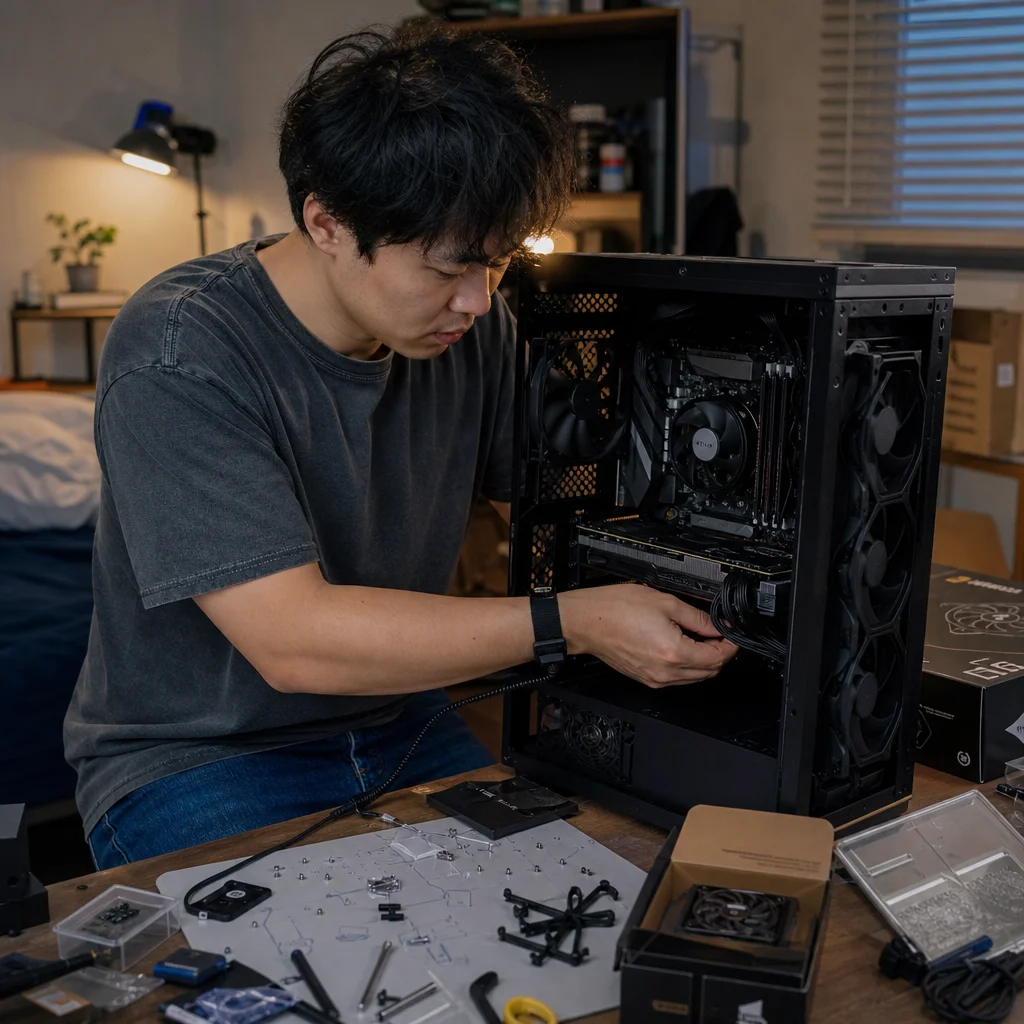
Buying a complete bundle can feel like the simplest way to save money, especially when several parts are advertised together. But a bundle is only a good deal if the parts suit your build and the savings survive closer inspection. Otherwise, you may pay for features you won’t use, accept weaker components, or create warranty problems later.
The useful question isn’t whether bundles are cheaper in general. It’s whether the specific bundle matches your build better than a carefully chosen group of individual parts.
What counts as a bundle?
A bundle might contain a processor and motherboard, a processor with motherboard and memory, or a larger package that includes storage, cooling, and sometimes a power supply. Some bundles are assembled by a retailer, while others are manufacturer promotions that combine products with a discount, rebate, or included accessory.
The parts may be designed to work together, but “compatible” doesn’t necessarily mean “well matched.” A powerful processor can work in an inexpensive motherboard, for example, while still leaving you with limited expansion, weaker power delivery, or fewer useful ports. A bundle reduces some compatibility work, but it doesn’t remove the need to evaluate each component.
There’s also a difference between a true discount and convenience packaging. If the listed bundle price is lower than the same parts purchased individually, that’s a saving only if you would have bought every part. An included feature you never needed isn't free value; it’s part of what you paid for.
When buying separately usually makes sense
Individual purchases are often the better choice when your priorities are specific rather than general. If you already own a case, storage drive, power supply, or operating system license, a bundle that includes those items may leave you paying twice. The same applies when you have a particular cooler, memory kit, or graphics card in mind.
Buying separately also makes sense when you’re balancing a budget across different priorities. You might choose a less expensive motherboard and put the savings toward a larger SSD, or select a basic case and spend more on a quieter cooler. A preselected package can force compromises in places that matter to you while adding value in areas that don’t.
Separate purchases are especially useful when the parts have different upgrade timelines. A motherboard and processor may be replaced together years from now, while storage or memory can be added sooner. Choosing those parts individually lets you buy only what the current build needs instead of committing to a package designed around someone else’s assumptions.
Another reason to buy separately is availability. Retailers may discount one component without discounting the others. A bundle can look attractive next to the regular prices of its parts, but the same processor or memory kit may be on sale elsewhere. Comparing the actual current prices of equivalent parts—not just the bundle’s stated savings—can reveal that the discount is small or nonexistent.
When a complete bundle is the smarter purchase
A bundle can be worthwhile when it includes parts you would otherwise buy and the combination fits your intended system without expensive substitutions. This is common for a new builder choosing a processor, motherboard, and memory together. The package may reduce research time and lower the chance of selecting an incompatible socket, unsupported memory type, or motherboard with an outdated firmware requirement.
Bundles can also be useful when a promotion includes a meaningful discount on a part you already wanted. For example, if you need a motherboard and processor now and the bundle adds compatible memory at a lower total price, it may be a sensible way to complete the core platform. The key is that the included memory should have suitable capacity and speed for your workload, not merely a low price on the label.
A bundle is more compelling when you value simplicity over maximum customization. You’ll have fewer separate orders, fewer product pages to compare, and possibly fewer returns to manage. That convenience has real value, particularly if you’re building your first PC and would rather reduce the number of decisions. It’s just important not to mistake reduced decision-making for guaranteed quality.
Bundles can also reduce shipping costs or make a promotion easier to use. Those savings vary by retailer and may depend on current offers, membership programs, rebates, or pickup options. Treat them as part of the calculation rather than as permanent features of a product category.
Check the offer while you’re shopping: Compare the bundle’s current total with the exact individual models, shipping charges, instant discounts, rebates, and return terms. Promotions, included accessories, and eligibility rules can change, so use the retailer’s current listing and the manufacturers’ warranty pages rather than relying on an older comparison.
Compare the parts, not just the headline price
Start by writing down every item in the bundle and assigning it a realistic individual price. Use the same model numbers wherever possible. A bundle may list “32GB DDR5 memory” without making the speed, timings, capacity per module, or manufacturer clear. Those details affect whether the standalone comparison is fair.
Then remove anything you wouldn’t otherwise purchase. If you need only a processor and motherboard, the value of an included cooler is limited if you already own a suitable one. If you need a graphics card, don’t count an integrated graphics feature as a saving unless you actually plan to use it. Your comparison should reflect the system you intend to build, not the maximum retail value of every item in the box.
Account for the cost of correcting a weak match. A bundled motherboard may require a BIOS update before it supports the included processor. A bundled power supply may have enough total wattage but lack the connectors or quality level you want. A low-capacity SSD may technically complete the build but lead to an immediate replacement. The cheapest purchase price can become the most expensive option once you add the parts needed to make it suitable.
It also helps to compare like with like. A bundle with a higher-end motherboard isn’t automatically a better deal than a cheaper standalone motherboard if you don’t need its extra USB ports, storage slots, overclocking controls, or expansion options. Conversely, the least expensive individual alternative may cut features you’ll need later. Evaluate the capability you’re receiving, not only the dollars saved.
Watch for limited choices and unused features
Bundles are usually built around a few predetermined configurations. You may get a choice of processor but only one memory kit, or a choice of memory capacity but no option to change the motherboard. This can be fine when the default parts are appropriate. It becomes a problem when one component is clearly a poor fit for your case, workload, or upgrade plan.
Unused features are another common source of false value. A motherboard with extensive networking, audio, or expansion features may be attractive, but those features don’t justify a premium if your system will use a wired connection, a basic headset, and one graphics card. Likewise, an oversized cooler, decorative case, or high-capacity power supply can consume budget without improving your actual experience.
This doesn’t mean you should always choose the simplest part. Extra capacity can be valuable if you expect to add drives, install more memory, or upgrade to a higher-power graphics card. The test is whether you have a plausible use for the feature. Paying for flexibility is reasonable; paying for complexity that will remain unused isn't.
Understand the warranty and return relationship
A bundle can make support less straightforward. Some retailers treat the package as one order but require the entire bundle to be returned if one part is defective. Others allow individual returns, while promotional bundles may have separate terms for rebates or included items. Manufacturer warranties also differ by product and brand, so the bundle doesn't necessarily create one unified warranty.
This matters when troubleshooting. If a new PC fails to start, you may need to determine whether the processor, motherboard, memory, power supply, or another part is responsible. Returning one component can be difficult if the seller expects the complete promotional package. If an item has a separate serial number or warranty registration, keep its packaging and purchase documentation until the system has been tested thoroughly.
Individual purchases can create a different problem: multiple orders may have different return windows and support contacts. A defective motherboard bought from one retailer and memory bought from another can require more coordination. Separate buying gives you more choice, but it also makes record-keeping more important.
Review the warranty before you commit: Open the current retailer return policy and each manufacturer’s warranty information, then check whether promotional items must be returned together, whether rebates affect returns, and who handles a defective part after the retailer’s return period ends.
A simple decision process
First, define the complete system you actually need. List the parts you already own, the parts you must buy, and the features that matter for your workload. A gaming system, quiet home PC, and workstation may use similar core parts but have different priorities for cooling, storage, memory, and expansion.
Next, separate “must have” specifications from preferences. The processor socket and memory type are compatibility requirements. A particular motherboard brand, RGB lighting scheme, or number of rear USB ports may be a preference. This distinction helps you judge whether a bundle is solving a real problem or merely narrowing your choices.
Now compare three totals: the bundle as listed, the same parts individually, and the bundle adjusted for replacements. The third number is often the most useful. If you would replace the included memory, cooler, or power supply immediately, include that replacement cost. If you would keep everything, include shipping, taxes where relevant, and any discounts you can actually use.
Finally, consider how much uncertainty you’re accepting. A modest bundle discount may be worthwhile if it gives you compatible, suitable parts with clear support. A larger apparent discount may not be attractive if the motherboard is too limited, the power supply is questionable, or the warranty terms are difficult to confirm.
The practical middle ground
You don’t have to choose between an all-in-one package and completely independent shopping. A hybrid approach often works well. Buy the processor, motherboard, and memory as a bundle if they’re well matched, then select the case, power supply, storage, and cooling separately. Or buy a discounted processor and motherboard together while choosing memory based on the capacity and speed you actually need.
This approach preserves the compatibility advantage where it matters most without giving up control over the parts that affect noise, storage, airflow, or future upgrades. It also lets you compare deals as they appear rather than treating one retailer’s package as the only sensible path.
A complete bundle is a good purchase when every included part belongs in your planned system, the specifications are suitable, and the savings remain real after shipping, replacements, and warranty terms are considered. Buy separately when you already own some components, have unusual requirements, or care about selecting each part for a specific reason. If the answer is close, choose the option that leaves you with fewer compromises—not merely the one with the larger discount printed on the product page.