How to Turn a Software Workflow Into a Realistic PC Parts Brief
I’ll help you translate the software you actually use into a parts brief that survives real workloads, interruptions, and upgrades. You’ll learn how to identify bottlenecks, set sensible requirements, and leave room for recovery when a component or application behaves differently than expected.
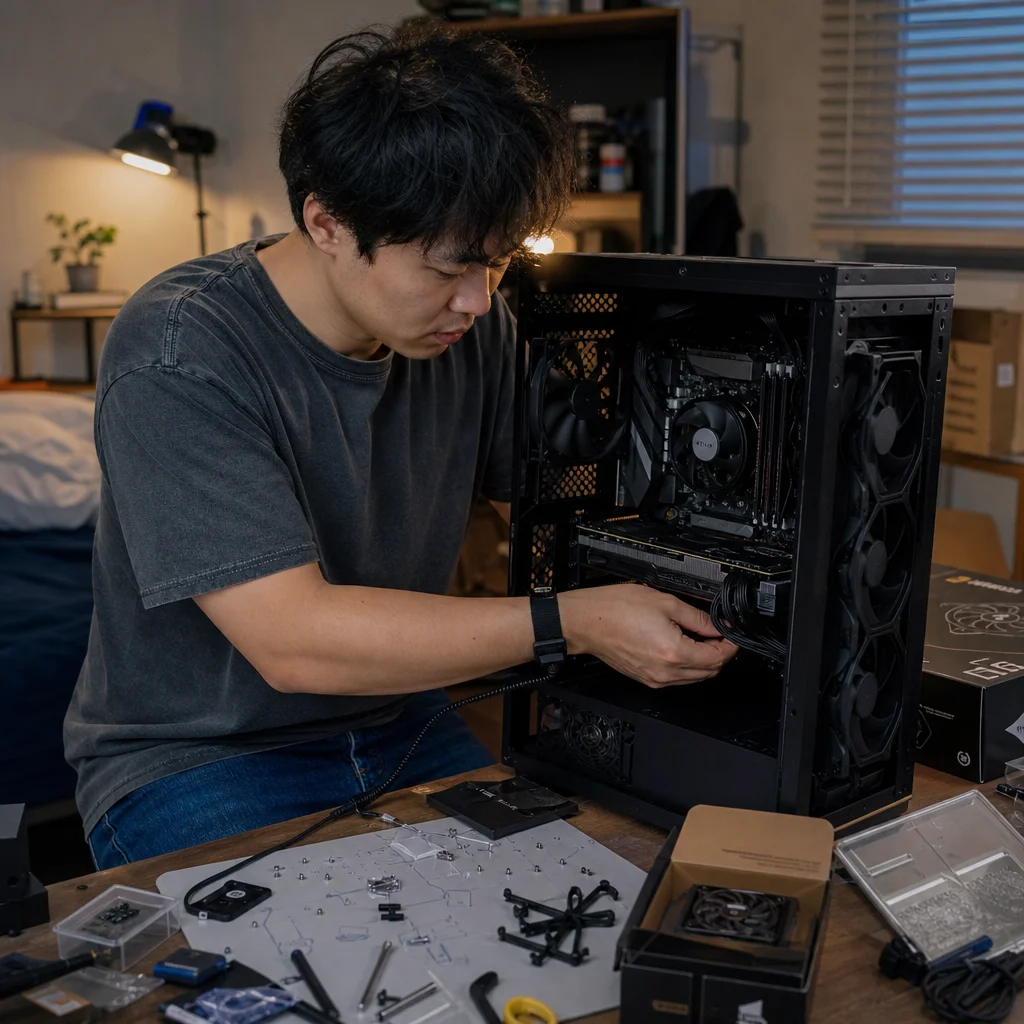
Buying PC parts from a vague software list—“office work, gaming, and some editing”—usually produces a vague result. You may spend too much on a processor while overlooking memory capacity, choose a graphics card that suits one application but not another, or discover that your storage and connectivity choices make the finished system awkward to use.
A better approach is to start with the work your PC must perform and turn that workflow into a parts brief. The brief isn't a shopping list yet. It is a set of requirements, priorities, constraints, and fallback options that help you choose compatible hardware and recover more easily if your first assumption proves wrong.
Start with the actual workflow
List the applications and tasks you expect to use, but go one level deeper than the application names. “Video editing” can mean trimming compressed clips occasionally, editing several high-resolution camera streams, or rendering effects while another program remains open. Those activities can have very different hardware demands.
For each major task, note four things:
- What you do most often
- What you do at the same time
- Which part of the process feels slow or frustrating now
- How much waiting or interruption is acceptable
Your most common task should influence the baseline system. Your most demanding recurring task should influence the headroom. A rare task might justify a faster component, but it shouldn't automatically dictate the entire build unless that task is important enough to justify the cost.
It also helps to describe the workflow in stages. A photographer’s workflow might be importing files, sorting them, editing a small number at once, exporting finished images, and backing up the originals. A developer’s might be editing code, running local services, compiling, testing, and using a browser with many tabs. A student’s might combine documents, video calls, research tabs, and occasional creative software.
This description reveals where delays occur. Importing and opening projects may depend more on storage and memory than on a top-tier processor. Compiling and rendering may reward more CPU performance. GPU-accelerated effects, 3D work, and some creative applications may depend heavily on graphics hardware. The software name alone rarely tells you enough.
Separate requirements from preferences
A useful brief distinguishes between what must work and what would simply be nice. “The system must run two large projects while a browser and communication app remain open” is a requirement. “The system should feel instant when opening a small utility” is a preference that may affect storage and general responsiveness but doesn't necessarily justify an expensive upgrade.
Write requirements in observable terms where possible. Instead of saying “I need a powerful PC,” write something like this:
The computer must handle my primary application with several supporting programs open, remain responsive during normal multitasking, and leave enough storage for current projects plus working space.
Then add boundaries. Set a target budget, physical size, noise tolerance, display resolution, and upgrade expectation. These limits matter because a component can be technically fast but still unsuitable for the system you want to build. A large graphics card may not fit the intended case. A high-power processor may conflict with a quiet cooling goal. A platform with limited expansion may be fine for a compact build but frustrating if you expect to add storage or memory later.
Classify each requirement as must have, strong preference, or optional. This prevents a minor feature from competing with something fundamental, such as sufficient memory or reliable storage capacity.
Turn software behavior into hardware requirements
Processor: follow the work pattern, not just the core count
The processor matters most when your software performs substantial calculation on the CPU, when tasks are lightly threaded and sensitive to quick individual cores, or when you run many activities at once. Compilation, simulation, encoding, large exports, and some productivity workloads can benefit from additional cores. Many everyday applications and certain games respond more noticeably to strong per-core performance and low system latency.
Describe the processor requirement by workload first: sustained multi-core work, quick interactive work, or a mixture of both. If your tasks include long renders or repeated exports, look beyond peak specifications and consider whether the intended cooling solution can sustain performance without excessive noise. If your work is mostly interactive, spending heavily on additional cores may produce less noticeable improvement than choosing a well-balanced platform and faster storage.
Don't treat processor selection as isolated. The processor determines the compatible motherboard platform, memory support, cooling approach, and sometimes the useful graphics and storage options available to you. Put the required performance class in the brief before choosing a specific model.
Memory: account for simultaneous use and recovery
Memory capacity is often easier to underestimate than processor performance. Your operating system, browser, communication tools, background services, and primary application all consume memory at the same time. Large files, virtual machines, development environments, and creative projects can increase that demand quickly.
Estimate from your heaviest normal session rather than from the application running alone. If the system begins using storage as an emergency extension of memory, responsiveness can drop sharply, particularly when the storage drive is also handling project files or application activity.
Your brief should specify a minimum capacity and a sensible expansion path. If you expect to increase memory later, check how many motherboard slots will remain available, whether you plan to populate them with matching modules, and whether the platform’s supported memory configuration is appropriate. Buying a small amount now can be reasonable for a strict budget, but only if the upgrade path is realistic.
Memory speed and timings can matter, but capacity and stable operation usually deserve attention first. A slightly faster kit doesn't compensate for running out of memory during the work you actually do.
Graphics: identify acceleration, display, and fallback needs
A graphics requirement should answer more than “integrated or dedicated.” Ask whether your applications use GPU acceleration, whether they need a particular graphics technology, how many displays you will connect, and what resolution or refresh rate you expect. Games and 3D applications may be limited primarily by graphics performance, while other programs may use the GPU only for selected effects.
Also consider memory on the graphics card. Large textures, complex scenes, high-resolution displays, and some creative workloads can increase graphics memory requirements. More graphics memory doesn't make every application faster, but insufficient graphics memory can create stutters, reduced settings, or failed workloads.
A troubleshooting-minded brief includes a fallback. If a dedicated graphics card fails, can the system start using processor-integrated graphics? If not, will you have another compatible card available, or will diagnosis require borrowing one? Integrated graphics can be valuable for setup and fault isolation even when they aren't intended for the primary workload.
If gaming is part of the workflow, define the target in terms of resolution, frame-rate expectations, and the games you actually play. Avoid selecting a graphics card from a generic performance tier without considering the monitor and settings you intend to use.
Storage: divide speed, capacity, and protection
Storage performs several different jobs: starting the operating system and applications, holding active projects, receiving temporary files, and preserving completed work. A single drive can handle all of them, but the brief should still account for each role.
Capacity should include the operating system, applications, current files, project caches, downloads, and free space. Filling a drive nearly to its limit can make organization and maintenance harder, while a drive with insufficient free space can interfere with updates or large working files. Estimate growth over the period you expect to keep the PC, not just the day you assemble it.
Speed matters most when the workload repeatedly reads or writes large files, loads substantial projects, or uses storage as part of a memory-heavy workflow. For general use, a responsive solid-state drive is usually more important than chasing the highest advertised sequential speed. For demanding work, check whether the software benefits from separate project, cache, or scratch storage rather than assuming that adding a faster drive solves every delay.
Storage isn't a backup. A realistic brief specifies where important files will be copied and how you will restore them if the main drive fails. A second internal drive can improve organization, but it doesn't protect data if both drives are damaged, stolen, or affected by the same mistake.
Connectivity: include the devices you already own
Connectivity problems often appear after the main components have been chosen. List your monitors, wired network equipment, Wi-Fi needs, audio devices, external drives, card readers, cameras, printers, and other peripherals. Record the connectors they use and any performance requirement that matters, such as high-speed external storage or multiple display outputs.
Then check the complete path from device to system. A fast external drive needs a suitable port, cable, enclosure, and controller; a high-resolution display may need the correct output standard and cable; a wireless requirement may depend on the motherboard or a separate adapter. Front-panel ports depend on both the case and motherboard headers, so they belong in the compatibility brief rather than being assumed.
Include a recovery path here too. If a wireless adapter is unavailable, can you connect temporarily by Ethernet? If the usual display output fails, is another output available? These are small considerations, but they can turn a frustrating setup problem into a manageable diagnosis.
Check the software and device requirements you’re about to rely on: Application support, operating-system requirements, recommended memory, GPU features, display standards, and port capabilities can change. Confirm the current requirements on the software and hardware makers’ documentation before finalizing model-specific parts.
Build the brief around bottlenecks and trade-offs
Once you have translated the workflow, rank the likely bottlenecks. A simple priority order might be: the component that limits the primary task, the capacity needed for normal multitasking, storage capacity and protection, connectivity, and then optional performance improvements.
This ranking keeps the build balanced. A powerful processor paired with too little memory may feel constrained during multitasking. A strong graphics card paired with inadequate storage may make project management painful. A large memory kit can't compensate for a graphics-dependent application that lacks suitable GPU performance.
Consider what happens when one part is underused. If your primary application rarely uses the graphics card, shifting some of that budget toward memory, storage, or a better monitor may improve the overall experience. If the workload is mostly GPU-limited, a high-end processor may provide little benefit. The best brief makes these trade-offs explicit instead of hiding them behind a list of premium parts.
You should also record what can be delayed. A second storage drive, extra case fans, a higher-end cooler, or a dedicated graphics card may be added later if the initial system remains usable without it. Delaying a purchase is only sensible when the required slot, power capacity, physical clearance, and platform support are preserved from the start.
Add a compatibility and recovery section
Before turning the brief into a shopping list, add a short section for failure prevention. Confirm the processor socket and motherboard platform, memory type, motherboard firmware support, cooler mounting compatibility, graphics-card clearance, power supply connectors and capacity, storage interfaces, and case airflow options.
Then write down how you would isolate common problems. A system that fails to start may be affected by memory seating, power connections, firmware support, graphics output selection, or a short circuit. A system that crashes under load may point toward temperature, memory stability, power delivery, drivers, or application-specific issues. Your brief can't eliminate every fault, but it can preserve useful diagnostic options.
Keep a record of the final parts, firmware settings, operating-system installation media, driver sources, and backup locations. If you later replace one component, this information helps you determine what changed. It also prevents the familiar situation where a minor upgrade becomes a hunt through boxes, downloads, and uncertain recollections.
A parts-brief template
Before shopping, fill in a document with these headings:
- Primary workloads: the applications and tasks that matter most
- Normal simultaneous workload: what stays open together
- Worst recurring workload: the heaviest task you regularly perform
- Processor requirement: interactive, multi-core, or mixed behavior
- Memory requirement: minimum capacity and likely expansion
- Graphics requirement: acceleration, displays, resolution, and fallback
- Storage requirement: capacity, active-work speed, and backup plan
- Connectivity: monitors, network, external devices, and required ports
- Physical limits: case size, noise, cooling, and available desk space
- Budget priorities: must-have spending and acceptable compromises
- Recovery plan: alternate display, network, storage, and diagnostic options
Only after completing this document should you compare specific parts. The model numbers will still matter, but they will be answering defined questions instead of creating the questions themselves.
A good software-to-hardware brief doesn't predict every future application or guarantee that no component will ever fail. It gives you a defensible starting point: enough performance for the work you do, enough capacity for normal growth, and enough flexibility to troubleshoot without replacing half the computer. When you shop, keep returning to that brief. If a part doesn't solve a stated requirement or preserve a useful recovery option, it may be impressive—but it probably doesn't belong in this build.