Turn a Software Budget Into a Realistic PC Parts Plan
Software costs can quietly shrink the money available for hardware, especially when subscriptions and upgrades recur. I’ll show you how to turn those obligations and workload demands into a balanced PC parts plan.
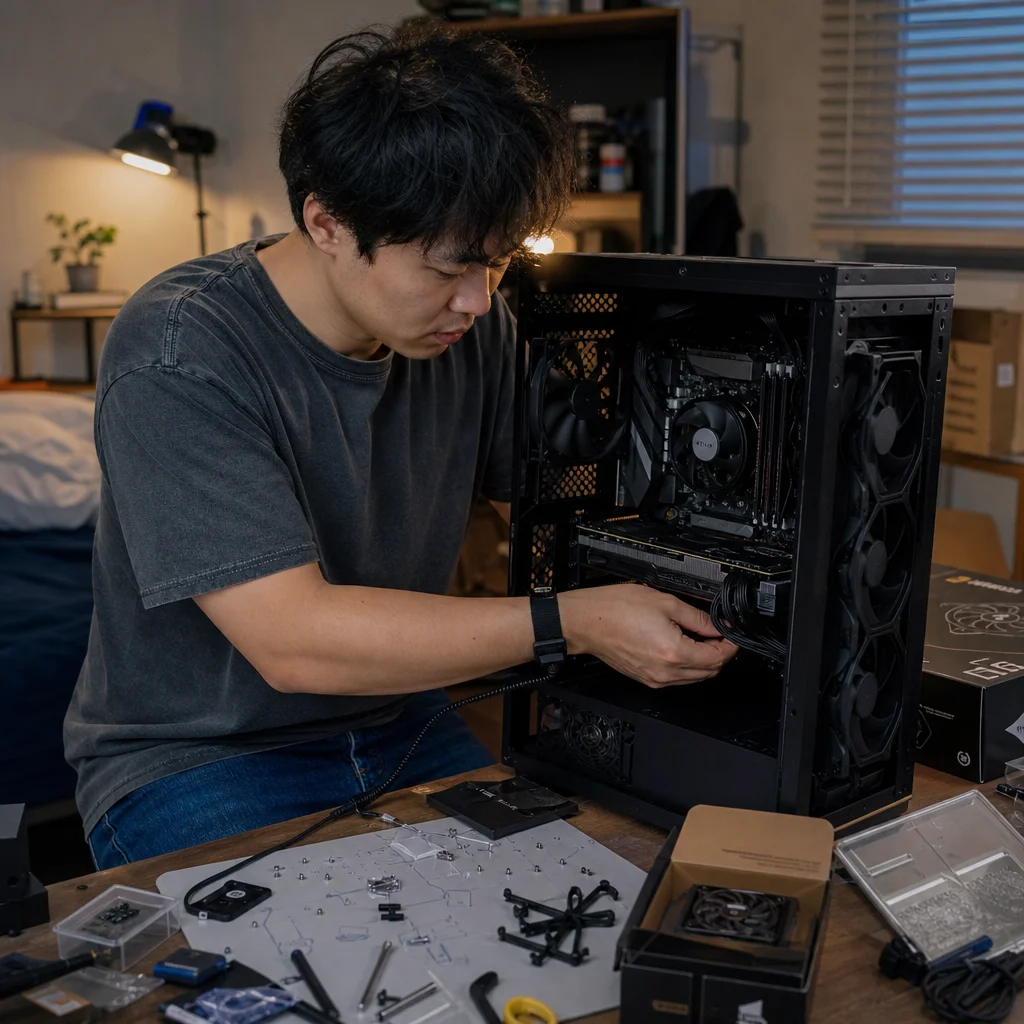
Software often gets treated as a separate expense from the PC itself, but the two budgets compete for the same money. A subscription, operating system license, plugin bundle, or paid upgrade can reduce what remains for the processor, graphics card, memory, storage, and power supply.
The goal isn’t to spend less on software at all costs. It’s to understand what your software requires, what you must pay now, and which hardware decision will have the greatest effect on the work you want to do. Once those pieces are visible, you can build a parts plan around the system you actually need rather than the system that looks impressive on a component list.
Start with the complete software cost
Before choosing parts, write down the software you expect to use during the first year. Include the operating system, security software if you plan to pay for it, productivity applications, games, creative tools, development environments, virtual machines, plugins, and cloud services that are necessary for your workflow.
Separate those costs into three groups. One-time purchases are paid up front, although they may still have future upgrade costs. Recurring subscriptions renew monthly or annually. Optional software is useful but not required to perform the work. This distinction matters because a subscription can affect your PC budget repeatedly, while a one-time purchase mainly affects the initial build.
For recurring software, convert the cost into an annual figure so it can be compared with the rest of the project. If a service costs $15 per month, its first-year budget impact is $180, not $15. You don’t necessarily need to reserve the entire lifetime cost, but you should know whether the software is a short-term experiment or a service you expect to keep using.
Also account for software you already own. A license may transfer to a new computer, require a new activation, or be tied to a particular platform or account. Some applications offer different editions with different hardware capabilities. A cheaper edition may be enough for your current work, while a professional edition could require more memory, storage, or graphics performance.
Check your software’s current requirements: Before finalizing parts, visit the developer’s official requirements and licensing pages for every application that matters to you. Confirm the supported operating system, recommended memory, processor features, graphics requirements, storage needs, and whether your existing license transfers.
Define the workload before dividing the hardware budget
A parts plan should follow the workload, not a generic percentage split. “General use” can mean web browsing and documents, while another builder may use the same phrase for photo editing, coding, large spreadsheets, and occasional video work. Those activities can produce very different priorities.
Think about what you do most often and what makes you wait. If your main application spends its time rendering with the graphics card, the GPU deserves more of the hardware budget. If it compiles code, processes simulations, or performs CPU-based exports, processor performance may matter more. If you work with large projects or many applications at once, memory capacity and fast storage can prevent slowdowns even when the processor is adequate.
It also helps to identify the workload that would be most expensive to compromise. A computer used for occasional gaming can tolerate lower game settings more easily than a computer used to meet a work deadline. Likewise, a builder who edits photos casually may not need the same graphics card or display setup as someone working with high-resolution video every day.
Write a short priority statement before shopping. For example: “This PC must handle large photo catalogs smoothly, run several applications together, and remain quiet; gaming is secondary.” That sentence gives you a basis for resolving trade-offs later. Without it, you can spend heavily on a powerful component that has little effect on your actual work.
Reserve money before choosing parts
Start with the total amount you can responsibly spend on the project. Then subtract software and other non-hardware costs before assigning money to components. Those costs may include the operating system, a monitor, keyboard and mouse, Wi-Fi hardware, speakers, a webcam, or a replacement license for software that won’t transfer.
A simple planning formula looks like this:
hardware budget = total project budget - software costs - peripherals - delivery or tax allowance
The result is your real parts budget, not the amount you initially hoped to spend on the tower. If the total is tight, you may need to decide whether the computer, the software, or a peripheral can be purchased later. It’s better to make that decision deliberately than to discover during assembly that the system can't be used as intended.
Keep a small allowance for unplanned costs. A different power supply may be necessary after changing the graphics card. You may need an additional storage drive sooner than expected, or discover that your existing display cable doesn’t support the connection you want. The exact reserve depends on your situation, but spending every available dollar on listed parts leaves little room to recover from a compatibility problem.
When comparing prices, use current listings from the retailers and manufacturers relevant to your location. Hardware prices, software plans, taxes, and delivery charges change, and a parts list that worked at one point may no longer fit the same budget. The important principle is to reserve the categories first; the exact allocation can be updated as you shop.
Match software demands to the right parts
The processor is often the most visible choice, but it isn’t automatically the best place to spend more. Applications that rely on a small number of fast CPU cores benefit from strong per-core performance. Other workloads scale across many cores. If your software uses the graphics card for rendering, effects, or computation, a more capable GPU may deliver a larger improvement than moving to a higher-end processor.
Graphics requirements deserve special attention because “supports GPU acceleration” doesn’t mean every graphics card performs equally well. The application may favor a particular graphics API, driver family, or vendor feature. Video software can also use graphics memory for high-resolution footage, effects, and multiple streams. A card with enough raw performance but too little memory may still become a limitation.
Memory capacity affects how much work you can keep open at once. A browser with many tabs, a development environment, a virtual machine, and a creative application can use substantially more memory together than any one program uses alone. Capacity usually matters before small differences in memory speed, especially for a beginner building around a fixed budget.
Storage affects both capacity and convenience. Your operating system, applications, project files, game library, recordings, and backups all compete for space. A drive that is technically fast enough can become frustrating if it stays nearly full. Plan for the files you’ll create, not just the applications you’ll install, and leave room for normal growth.
The power supply, case, and cooling support the performance of the main components. They may not increase application speed directly, but an unsuitable power supply or poorly ventilated case can make a good parts list unreliable. Cooling also affects noise and sustained performance. These aren't ideal places to make arbitrary cuts simply because they don’t appear in software requirements.
Use tiers instead of chasing a perfect build
A useful beginner plan has three tiers: required now, valuable soon, and optional later. Required-now parts should run your chosen software correctly and support the workload you described. Valuable-soon upgrades improve comfort or capacity but don’t prevent the computer from being useful. Optional parts are conveniences or performance improvements that can wait.
For example, you might require enough memory for your main application and a second drive for active projects. A larger graphics card could be valuable soon if your workload grows, while decorative lighting or a premium case can remain optional. This approach protects the component that matters most without pretending every desirable feature is urgent.
Avoid saving money by choosing a part that blocks a sensible future upgrade. A small amount of storage can be added later if the case and motherboard support another drive. Memory can sometimes be expanded, although the available slots and module configuration matter. A graphics card upgrade may require a stronger power supply and better airflow, so those supporting parts should be considered from the beginning.
On the other hand, don’t pay extra for an upgrade path you’re unlikely to use. A larger motherboard, high-end power supply, or premium processor can consume money without improving your current software experience. Future-proofing is useful when it preserves a realistic option, not when it becomes a reason to buy every feature available.
Make the trade-offs in the right order
If the software budget leaves you short, first remove optional software and peripherals that don’t affect the core workload. Next, look for software editions, payment schedules, or existing licenses that genuinely meet your needs. Don’t assume the cheapest option is appropriate if it removes a feature your work depends on, but don’t pay for professional capabilities you won’t use.
Then adjust the hardware around the main constraint. If the application is GPU-limited, keep a capable graphics card and reduce spending on parts with less effect on that workload. If memory capacity is the problem, don’t compensate with a faster processor. If your projects need storage, a balanced processor paired with adequate, expandable storage may serve you better than a faster CPU and an overcrowded drive.
Cut cosmetic features and convenience upgrades before cutting reliability. A simpler case, fewer lights, or a less elaborate cooler can often preserve the important parts. A questionable power supply, inadequate cooling, or incompatible memory configuration can create problems that cost more to fix than the original savings.
Turn the plan into a parts list
Once the priorities are clear, create a parts list with a purpose beside each major component. Note which software or workload justifies the processor, graphics card, memory amount, and storage capacity. If you can’t explain why a part is in the build, it may be a default choice rather than a considered one.
Check the complete configuration together. Confirm the processor works with the motherboard, the memory is supported, the case fits the graphics card and cooler, the power supply has the necessary connectors, and the storage devices have compatible interfaces. Software planning doesn’t replace compatibility checking; it tells you where the performance and capacity need to go.
Finally, compare the finished list against the full project budget, including software and anything outside the tower. If it exceeds the limit, return to your priority statement instead of making random cuts. Delay optional purchases, reduce features that don’t affect the workload, or choose a sensible lower tier for a secondary component.
A realistic PC parts plan begins by treating software as part of the computer’s cost and purpose. Annualize recurring expenses, verify current requirements, identify the workload that matters most, and reserve the hardware budget around that constraint. With those steps in place, you can build a system that runs the software you need now while leaving room for upgrades that solve real problems later.