The Parts You Should Prioritize When Your Budget Has a Hard Ceiling
I’ll show you how to protect the parts that shape your PC’s actual workload, avoid false economies, and decide which compromises are safe when your budget in pounds or euros can't move any higher.
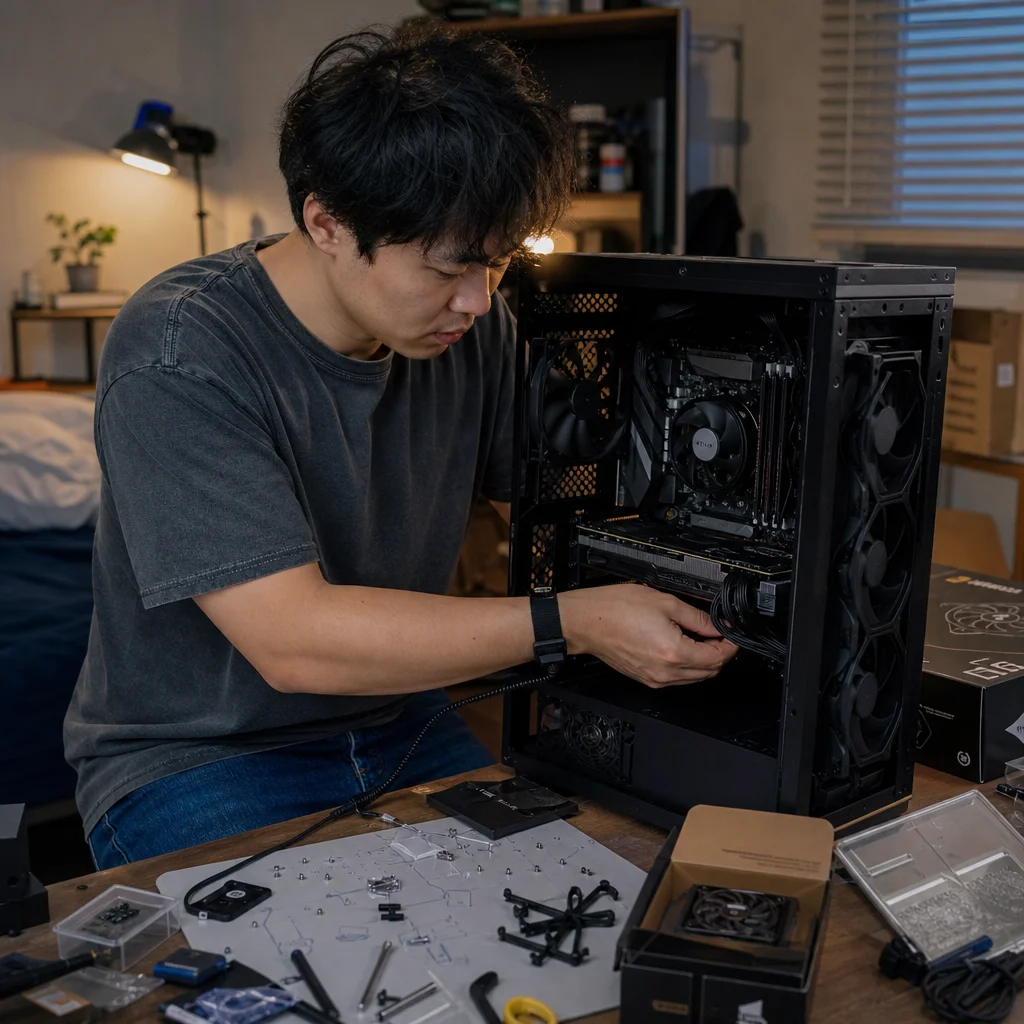
A hard budget ceiling changes the question from “Which parts are best?” to “Which parts must be good enough for what I’ll actually do?” That distinction matters because a cheaper graphics card can affect gaming immediately, while saving money on a motherboard may have little practical impact. The common mistake is spreading the budget evenly across every component, even though the parts don't contribute equally to your experience.
The sensible approach is to protect performance-critical parts first, then make controlled compromises elsewhere. You should also budget for the complete computer—not just the core components—because a forgotten operating system, case fan, Wi-Fi adapter, or suitable power supply can force painful last-minute substitutions.
Start with the workload, not the parts list
Your main workload should determine your priorities. A gaming PC, an office computer, and a machine for video editing can have similar-looking components but very different spending patterns.
For gaming, the graphics card is often the most important performance part, particularly when you’re targeting higher resolutions or demanding visual settings. The processor still matters, especially for high-refresh-rate gaming and simulation-heavy titles, but choosing a slightly less expensive CPU is often more tolerable than dropping to a graphics card that can't deliver the frame rates you want. At 1080p, the balance can shift depending on the game and monitor, so avoid treating “gaming PC” as a precise specification.
For general office work, web browsing, study, and light creative work, you usually don’t need to reserve as much of the budget for a powerful graphics card. A responsive processor, sufficient memory, a solid-state drive, and a reliable display will affect everyday use more than a large graphics upgrade. If you use specialist applications, check their actual hardware requirements rather than assuming that a premium gaming component will help.
Content creation needs more careful separation. Video editing may benefit from a capable GPU, plenty of memory, and fast storage for source footage, while CPU rendering, software compilation, and some 3D workloads may place more emphasis on processor cores and sustained cooling. The right priority is the one that shortens the tasks you perform regularly, not the one that looks most impressive on a specification sheet.
Protect the components that are difficult to compensate for
Once you know the workload, divide components into three groups: performance drivers, reliability foundations, and convenience features. Performance drivers deserve the largest share of the budget. Reliability foundations shouldn't be reduced below a sensible standard. Convenience features are where you can usually make the easiest cuts.
For a gaming-focused build, that often means prioritising the graphics card first, followed by a processor that won't hold it back for your target games and resolution. Memory capacity and storage come next. You need enough of both for your intended use, but paying extra for unusually high memory speed or premium SSD benchmarks may produce less visible benefit than moving to a better graphics card.
For a productivity-focused build, the processor, memory, and storage may deserve priority instead. If your work involves large files, many browser tabs, virtual machines, or local data processing, running out of memory can be more disruptive than having a modest graphics card. Likewise, a small system drive can become an expensive annoyance when you have to replace it earlier than planned.
The power supply is a foundation rather than a performance luxury. It should have enough capacity for the selected hardware, appropriate connectors, and a trustworthy design from a reputable manufacturer. Cutting the PSU budget to fund a slightly faster component is a poor trade if the result is an unsuitable unit, strained upgrade path, or unnecessary risk to the system. Exact model quality and current connector requirements vary, so verify them when you buy rather than relying only on wattage.
Check the parts at checkout: Compare current UK or Irish prices, retailer return terms, VAT treatment, socket and connector compatibility, and the power supply’s required cables before finalising the basket. Prices and bundled offers change, and a build that fits one country’s total may not fit the other’s.
Make compromises where they have limited consequences
The case is often a useful place to save, provided it supports the hardware you’ve chosen. You can usually accept a simpler exterior, fewer decorative features, or less elaborate cable-management space. You shouldn't, however, ignore airflow, graphics-card clearance, radiator support if you need it, or the number of storage devices you plan to install. A cheap case that restricts cooling can turn a reasonable component choice into a noisy or throttled system.
The motherboard is another area where restraint can work well. You may not need built-in wireless networking, extensive rear-panel connections, multiple high-speed expansion slots, or support for several storage technologies. A less expensive board can be perfectly suitable if it supports your processor, memory configuration, storage devices, and required connections.
That doesn't mean every low-cost motherboard is an automatic bargain. Check the processor support list, especially if the board may need a BIOS update before it can start with your chosen CPU. Also consider whether its power delivery, firmware features, and expansion layout suit your plans. Saving money on features you will never use is sensible; saving money by choosing a board that can't comfortably support the processor isn't.
Storage capacity is a trade-off rather than a simple quality decision. A smaller SSD can keep the initial cost down, but you should allow enough room for the operating system, applications, updates, and the files you actually keep locally. Adding a second drive later may be easy, but only if the case and motherboard have the space and connections available. If you already know you work with large game libraries or media files, undersizing storage can create a near-term expense rather than a useful compromise.
Cooling can also be simplified, but it shouldn't be ignored. A processor’s included cooler may be sufficient where one is provided and the workload is moderate. For a hotter chip, sustained heavy use, or a quieter system, a reasonably priced tower cooler may be a better investment than an expensive liquid-cooling setup. You’re paying for heat management and noise control, not visual complexity.
Avoid the compromises that create replacement costs
Some savings are only attractive because their consequences appear later. Buying too little memory is one example. A system that feels fine with a few applications open may become frustrating as your workload grows. Replacing a memory kit can also be awkward if the original kit leaves you with mismatched modules or occupies the available slots.
The same principle applies to the processor platform. Choosing a very old or heavily discounted platform may lower the initial total, but it can limit future upgrades and require replacement of the motherboard and memory sooner. An inexpensive current platform isn't automatically better, but you should compare the complete upgrade path rather than judging the CPU price alone.
Avoid reducing the budget by omitting basic assembly or protection items. You may need a suitable screwdriver, cable ties or reusable straps, thermal paste if the cooler doesn't include it, and a safe, well-lit work area. These are modest costs compared with a damaged component or a build that can't be completed because a required cable or bracket is missing.
Peripherals deserve the same scrutiny. If your existing monitor, keyboard, mouse, and headset are usable, carrying them forward can free money for the computer itself. If you need everything, include those costs from the beginning. A powerful PC connected to an unsuitable display may not deliver the experience you expected, while a budget that excludes the monitor isn't a complete budget.
Use a priority order instead of chasing discounts
A practical order for many beginner builds is:
- Define the workload, target resolution, applications, and expected lifespan.
- Set aside the cost of the complete system, including storage, cooling, operating system, and peripherals you actually need.
- Reserve enough for a suitable power supply and a case with adequate airflow.
- Allocate the remaining performance budget to the part that most directly affects your workload.
- Choose compatible supporting parts without paying for features you won't use.
- Recheck the whole list after every change, because one cheaper component can create a new compatibility or cooling problem.
The order is more important than any particular percentage split. A fixed rule such as “spend half the budget on the graphics card” can be useful as a rough starting point for a gaming build, but it becomes misleading when your budget includes a monitor, when you need a large amount of memory, or when your work is primarily CPU-based.
When comparing two possible builds, look at what the compromise changes. If Build A has a faster processor but a much weaker graphics card, ask whether your games or applications will use the extra CPU performance. If Build B has a premium motherboard but less storage, ask whether its additional features solve a real problem. The better build is usually the one whose expensive parts match your repeated tasks, not the one with the longest specification list.
Plan an upgrade path without relying on it
An upgrade path is useful, but it shouldn't excuse an inadequate first build. Buy enough memory, storage, and graphics performance for the way you intend to use the system now. Future upgrades are uncertain: prices change, standards evolve, and the specific component you want may no longer be available.
You can still make sensible provisions. Leave accessible memory slots where practical, choose a case with room for a longer graphics card, avoid filling every storage connection unnecessarily, and select a power supply with reasonable headroom for a likely—not imaginary—upgrade. These choices cost little when made during planning and can preserve flexibility later.
Be careful with “temporary” parts. A very weak graphics card bought with the promise of upgrading soon may be difficult to sell, while an undersized SSD may need replacement before the planned upgrade arrives. If you must delay one component, delay a convenience feature or choose a modest but usable part rather than something that makes the computer unpleasant to operate.
Check the finished budget as a system
Before ordering, review the build from the outside in. Confirm that the processor, motherboard, and memory are compatible; that the cooler fits the socket and case; that the graphics card fits without blocking necessary connections; and that the PSU has the capacity and cables the system needs. Check whether the motherboard includes the networking and display outputs you expect, and whether the case includes enough fans for the selected hardware.
Then ask one final question: which part would be most expensive or disruptive to replace if you had chosen badly? That answer often reveals where the budget should move. A gaming builder may protect the graphics card and PSU, while a workstation builder may protect memory capacity, storage endurance, and CPU cooling. The exact priorities differ, but the reasoning stays the same.
A hard ceiling doesn't require every component to be cheap. It requires every compromise to be deliberate. Spend first on the parts that determine your workload, maintain a sensible standard for power and cooling, and save money on features or finish that you can add later—or comfortably live without. That approach produces a balanced PC rather than a collection of individually attractive bargains.