How to Turn a Realistic Budget Into a Balanced PC Build
I’ll help you divide a fixed PC budget among the parts that affect performance, reliability, and future upgrades, so you can avoid overspending on one component while leaving another underpowered or dangerously neglected.
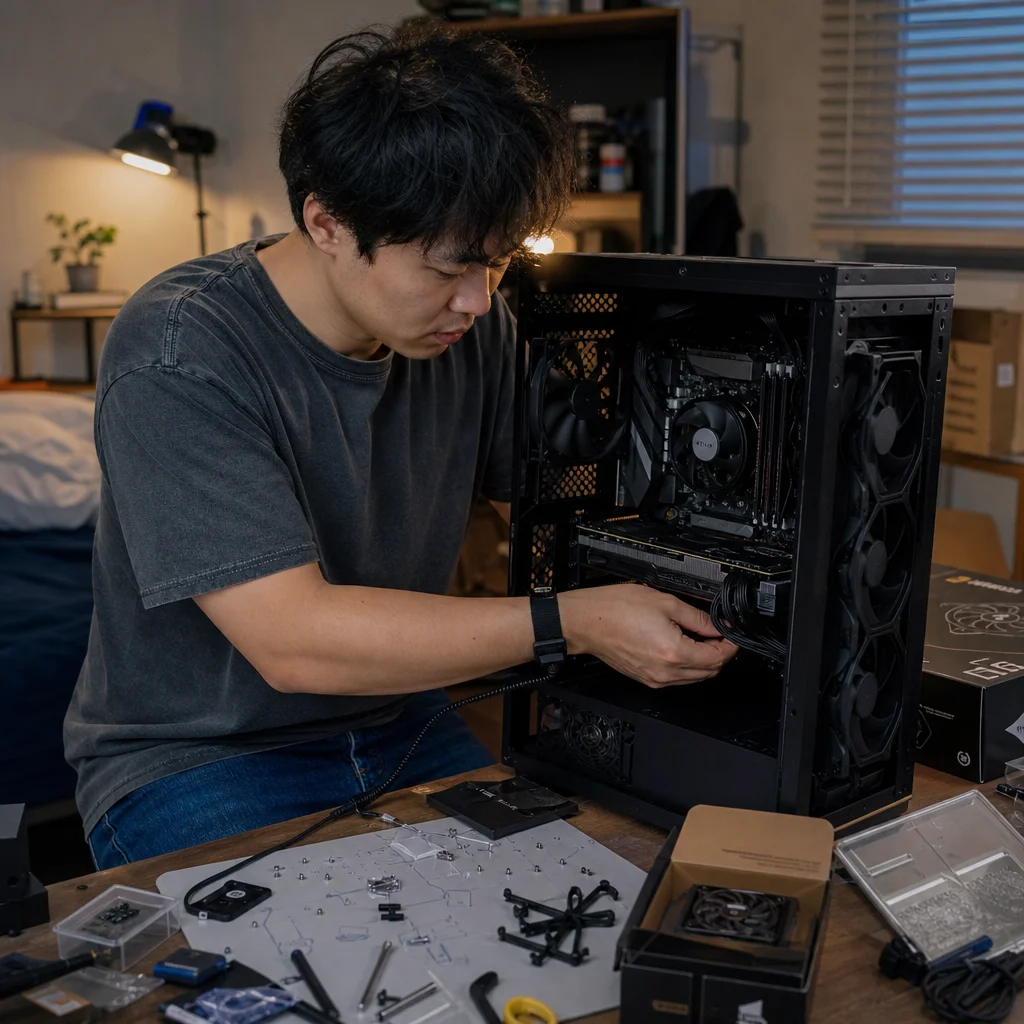
A fixed budget can produce a balanced PC, but only if you decide what the computer needs to do before choosing individual parts. The common mistake is to shop component by component: a tempting processor here, fast memory there, and then a graphics card or power supply squeezed into whatever money remains.
A better approach is to reserve money for the essentials first, then adjust the balance around your main workload. For a gaming PC, that usually means giving the graphics card the largest share. For a productivity or content-creation system, the processor, memory, storage, or even a quiet case may deserve more attention. The goal isn’t to make every part equally expensive. It’s to prevent one weak link from making the rest of the system less useful.
Define the budget before dividing it
Start by writing down the total amount you can spend and exactly what that amount includes. A “$1,000 PC” might mean the tower only, or it might also need a monitor, keyboard, mouse, operating system, Wi-Fi adapter, and a copy of a game. Those are very different budgets.
For a first build, decide whether you’re budgeting for:
- The computer tower only
- The tower plus an operating system
- The tower plus peripherals and a monitor
- The tower plus assembly tools, shipping, or paid installation
Leave some room for costs that are easy to overlook. Shipping, taxes, additional case fans, a better Wi-Fi solution, and a replacement cable can all affect the final total. If you spend every dollar on core components, a small surprise can force you to compromise on the power supply or storage—two poor places to cut deeply.
Your budget should also reflect the computer’s expected lifespan. If you want to keep the system for several years without replacing major parts, it can make sense to spend somewhat more on the platform, power supply, case, and storage. If you’re building a temporary system or expect to upgrade soon, a simpler foundation may be reasonable.
Check the shopping cart before choosing parts: Component prices, discounts, bundles, taxes, and stock change frequently in the United States. Recalculate your total using the actual listings you plan to buy, and confirm that shipping or required accessories haven’t pushed an apparently affordable build beyond its limit.
Start with the workload, not the parts list
The most useful budget split depends on what you’ll ask the PC to do. Gaming at a higher resolution or refresh rate generally places more pressure on the graphics card. Competitive games at a lower resolution may benefit from a strong processor as well, especially when you’re targeting very high frame rates.
General office work, web browsing, and school tasks don’t need an expensive graphics card. A processor with integrated graphics may be enough if you aren’t planning to play demanding games or use GPU-accelerated creative applications. That can free money for more memory, a larger solid-state drive, or a quieter case.
Video editing, software development, 3D work, and heavy multitasking can shift the priorities again. More processor cores, additional memory, fast scratch storage, or a graphics card with adequate application support may matter more than gaming-oriented performance. Identify the programs you’ll actually use and check their current recommended specifications rather than assuming that a part marketed for gaming is automatically the right choice.
A useful test is to describe your normal session in one sentence: “I want to play modern games at a particular resolution,” “I need many browser tabs and office applications,” or “I’ll edit large video projects while keeping other programs open.” That sentence should guide the spending order.
Use percentages as a starting point
For a gaming-focused tower, a rough starting allocation might look like this:
- Graphics card: 30–40 percent
- Processor: 15–20 percent
- Motherboard: 10–15 percent
- Memory: 7–10 percent
- Storage: 7–12 percent
- Power supply: 7–10 percent
- Case and cooling: 8–12 percent
These aren’t rules, and they don’t need to add up to a perfect formula before you begin. They’re a way to expose an obviously lopsided plan. A build with half its budget in the processor and very little left for the graphics card may be sensible for certain workloads, but it’s suspicious if the stated goal is gaming.
The graphics card usually deserves the largest single share in a gaming system because it performs much of the work of rendering the image. However, that doesn’t mean you should buy the most expensive card you can fit into the budget. A graphics card that exceeds the monitor’s resolution or refresh-rate needs can be poor value, particularly if it forces you to use a weak processor, small storage drive, or unreliable power supply.
The processor should be strong enough to keep the graphics card supplied with work and to handle everything else running on the computer. For many beginners, a mid-range processor is a sensible center of gravity. Spending more on a top-tier model may produce little visible improvement if the graphics card, monitor, or game settings become the limiting factor.
Protect the parts that are harder to replace
The motherboard doesn’t usually increase frame rates directly, but it determines which processor, memory, storage, and expansion options are available. Choose it for the features you need rather than for an impressive list of extras. Important questions include whether it supports the intended processor out of the box, has enough memory slots, provides the storage connections you need, and includes the networking features you expect.
Compatibility between a motherboard and processor can depend on the socket, chipset, firmware version, and manufacturer support. Memory compatibility can also involve the board’s supported generation and rated speeds. Check the current manufacturer specifications and, when appropriate, the board’s processor support list before buying. A bargain motherboard that needs an unavailable older processor for a firmware update isn’t much of a bargain for a first-time builder.
The power supply deserves similar respect. Its job is to deliver stable power to every component, and replacing a graphics card is much easier than recovering from damage caused by a poor-quality unit. You don’t need extreme wattage, but you do need enough capacity for the selected parts, appropriate connectors, and a reputable model with independent reviews or recognized certification.
Avoid choosing a power supply solely by its advertised wattage or the lowest price. Compare the graphics card’s current power requirements with the supply’s recommended capacity, account for the processor and the rest of the system, and leave reasonable headroom for normal transient demands and future changes. Confirm the current connector requirements for the graphics card you’re buying; standards and connector arrangements can change.
Keep memory and storage sensible
Memory is one of the easiest areas to overbuy and one of the easiest areas to underbuy. Too little memory can cause stuttering, slow multitasking, or excessive reliance on the storage drive. Excessive capacity, on the other hand, may take money away from parts that affect performance more often.
For a new system, choose a matched memory kit in the generation supported by the motherboard and processor. Capacity should follow your workload: basic tasks need less than modern gaming with other applications open, and demanding creative work can need considerably more. Check current platform recommendations rather than assuming that the highest advertised memory speed is automatically the best choice. Stability and proper configuration matter more than a number on the package.
A solid-state drive should be the default for the operating system and applications unless you have a specific reason to use older storage technology. Choose enough capacity that you won’t immediately have to move games or projects to a slower secondary drive. A smaller, faster-looking drive may be frustrating if it fills quickly, while a slightly larger model with ordinary specifications may provide a better daily experience.
You can add a secondary drive later, but make sure the case and motherboard support the intended expansion. Also check whether installing a particular storage device disables or shares another connector. These details are listed in the current motherboard manual and are worth checking before finalizing the parts list.
Don’t treat the case and cooling as leftovers
A case is more than a box with a glass panel. It must fit the motherboard, graphics card, processor cooler, power supply, and storage devices, while allowing enough airflow to move heat out of the system. A cheap case with restricted intake areas may require extra fans, and the final cost can approach that of a better-designed model.
You don’t need an elaborate liquid cooler for most mainstream processors. A capable air cooler, whether included with the processor or purchased separately, is often the minimalist choice. Check the cooler’s socket support, height clearance, and rated capacity. If the processor doesn't include a cooler, include one in the original budget rather than treating it as an optional upgrade.
Case fans are useful when the case supports a clear path for cool air to enter and warm air to leave. More fans aren’t automatically better, especially if they add cost and noise without improving airflow. Favor a straightforward layout, a removable dust filter where practical, and enough room to route cables without pressing them against the side panel.
Find balance by making deliberate compromises
When the parts total is too high, cut in an order that protects the system’s purpose. For a gaming build, consider reducing decorative features, choosing a less expensive motherboard with the same necessary connections, selecting a sensible rather than oversized storage drive, or choosing a more modest processor—provided it remains appropriate for the graphics card and games you play.
Don’t make the power supply the first place you save money, and don’t accept a case that creates cooling problems just to preserve a flashy component. You should also be cautious about reducing memory below a comfortable level or buying a tiny storage drive that will require immediate expansion.
If the build is still too expensive after removing optional features, reconsider the target rather than forcing the list to fit. Lowering the display resolution, accepting a lower refresh rate, buying a previous-generation component from a reputable seller, or planning a later graphics-card upgrade can be more sensible than weakening every part at once. Just verify warranty terms, condition, return policies, and compatibility when buying older or used hardware.
Check the finished list as a system
Before ordering, review the complete build in one pass. Confirm that the processor matches the motherboard socket and supported firmware, the memory matches the board’s memory type, the cooler fits the socket and case, and the graphics card fits the case with adequate clearance. Check that the power supply has the required connectors and enough capacity, and confirm that the case includes the fans or mounting points you expect.
Then ask whether the computer’s weakest part matches your actual workload. A gaming system may be limited by the graphics card at your chosen settings; an office system may gain little from an expensive discrete GPU; a development or editing system may need memory and storage capacity more than cosmetic upgrades. A balanced build isn’t one where every component sits at the same price tier. It’s one where the money supports the tasks you care about without creating avoidable reliability or compatibility problems.
Once the list passes those checks, buy the core parts with a small reserve still available if possible. Build around the processor, graphics card, power supply, memory, storage, case, and cooling you genuinely need. Optional lighting, premium fans, extra storage, and cosmetic upgrades can come later, when the system is working and you know which improvements would actually make it better.