How to Set a PC Budget When You Already Own a Monitor and Peripherals
I’ll help you turn the monitor, keyboard, mouse, and other equipment you already own into a realistic PC parts budget, while leaving room for compatibility surprises, missing essentials, and the recovery costs that can derail a first build.
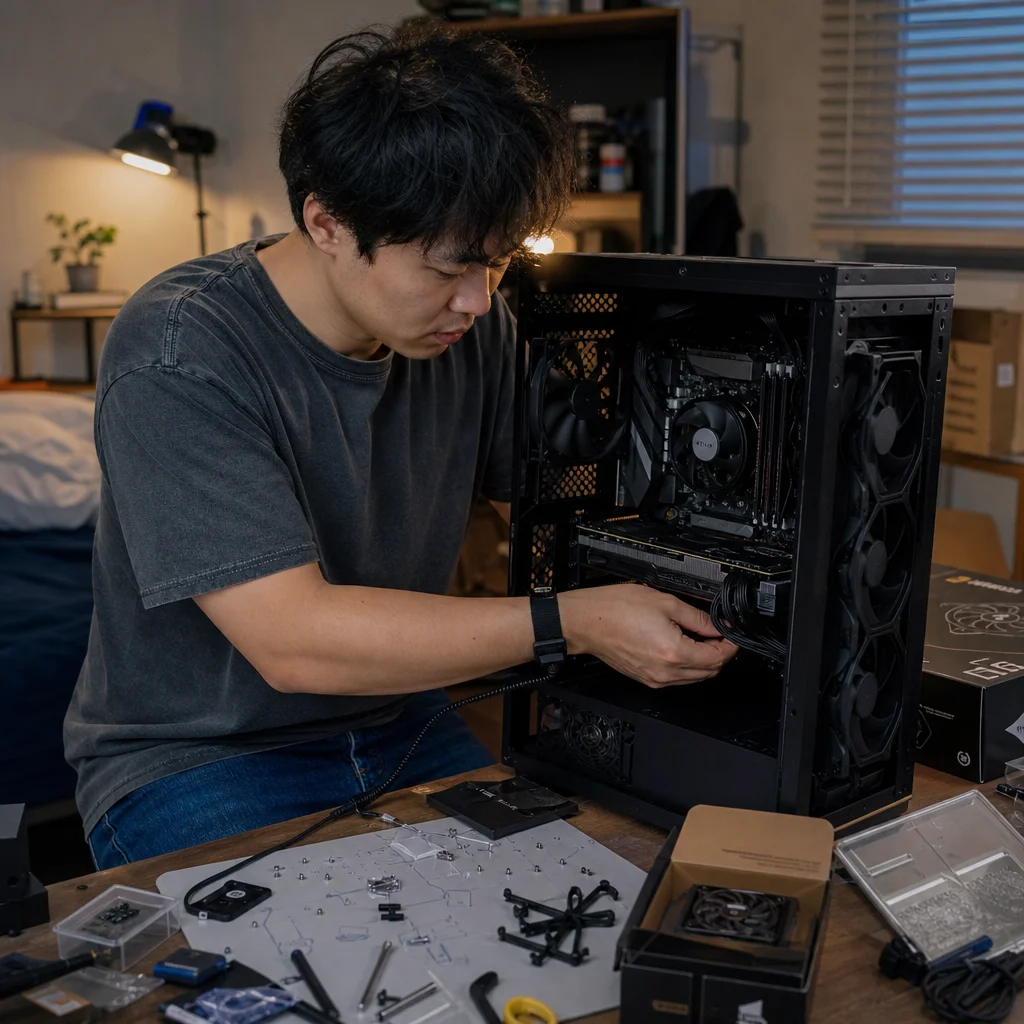
Owning a monitor and peripherals lowers the cost of building a PC, but it doesn’t automatically tell you how much to spend. The difficult part is separating what you can reuse from what the new system still needs—and then protecting enough of the budget for parts or fixes you didn’t expect.
A sensible budget starts with an inventory, not a target price. Once you know which equipment is genuinely usable, you can direct more of your money toward the components that affect your workload and keep a reserve for troubleshooting.
Start with what you actually own
Write down every item that will connect to the new computer: monitor, keyboard, mouse, headset, speakers, webcam, Wi-Fi adapter, external storage, operating system license, and any useful cables. Then inspect each item rather than counting it as a free part automatically.
Your monitor’s resolution and refresh rate are particularly important. A 1080p display at 60 Hz places different demands on a graphics card than a 1440p high-refresh monitor. If you own a 4K display, you may need considerably more graphics performance for modern games, even though the monitor itself costs nothing in this build. A monitor with only an older input may also require an adapter, depending on the graphics card and cable you plan to use.
Peripherals can have less obvious limitations. A keyboard and mouse with USB-A plugs may need suitable ports or a hub. A headset may use a combined headset connector, separate microphone and headphone plugs, USB, or wireless hardware. A wireless headset or keyboard might need its receiver, and Bluetooth equipment requires Bluetooth support in the PC or an inexpensive adapter.
Treat existing equipment as usable only after checking its condition and connection requirements. If a monitor flickers, a cable cuts out when moved, or a mouse has an intermittent button, the replacement cost belongs in the plan. Reusing unreliable equipment can turn a small saving into a frustrating diagnosis later.
Check your existing setup first: Confirm each monitor, cable, peripheral, adapter, and license works with the connections and operating system you intend to use. Record anything that needs replacement before you assign the rest of the money to PC components.
Separate the budget into three parts
A useful first pass divides your total spending limit into three categories:
- Required new components: the parts that make the computer function.
- Supporting items: cables, adapters, fans, storage, software, and other items that may be easy to overlook.
- Recovery reserve: money kept aside for a replacement, return shipping, diagnostic tool, or compatibility problem.
The required components usually include the processor, motherboard, memory, storage, power supply, case, and graphics card when the processor doesn't provide sufficient integrated graphics. You may also need a CPU cooler if one isn't included or if the included cooler isn’t suitable for your goals.
Supporting items vary with the equipment you already have. A system may need a Wi-Fi adapter, Bluetooth adapter, extra case fans, a longer display cable, a USB hub, or a different audio solution. You might also need an operating system license or a larger storage drive sooner than expected. None of these items is necessarily expensive by itself, but several small additions can consume a meaningful portion of a tight budget.
The recovery reserve isn't money you have failed to spend. It is part of the cost of building a computer with less risk. A reserve of roughly 5 to 10 percent can be reasonable for a straightforward new-parts build, while a tighter budget, used components, or a complicated compatibility situation may justify more. If you never need it, you can put it toward an upgrade later.
Decide what the computer must do
Your existing display and peripherals tell you what you can reuse, but your workload determines what the new parts must accomplish. Start with the tasks that matter most: office work, school applications, photo editing, software development, streaming, competitive gaming, single-player gaming, or demanding creative applications.
For general productivity, you can often prioritize a responsive processor, enough memory, and a reliable solid-state drive without buying a powerful dedicated graphics card. If your processor includes integrated graphics, check that it supports the monitor’s resolution and the applications you plan to run. This can reduce the initial cost while leaving room for a later graphics upgrade.
Gaming budgets are more sensitive to the monitor you already own. Match graphics performance to the display rather than buying a card designed for a much higher resolution than you use. At the same time, don’t choose a graphics card solely because it reaches your monitor’s resolution in a few undemanding games. Look at the types of games you play, the frame rate you want, and whether features such as ray tracing or upscaling matter to you.
For processor-heavy work, such as compiling large projects or rendering, spending on additional CPU capability may make more sense than buying an oversized graphics card. For graphics-heavy applications, the reverse may be true. Your existing equipment reduces the number of things you need to buy; it doesn’t eliminate the need to match the new system to its actual workload.
Allocate money by priority, not by equal shares
It’s tempting to divide the budget evenly across the major components, but that usually produces an unbalanced computer. Instead, identify the parts that affect your main use and protect the parts that affect reliability.
A gaming build will commonly place a large share of its component budget into the graphics card, with the processor chosen to support it without creating an obvious performance limitation. A productivity build may put more emphasis on processor cores, memory capacity, and storage. In either case, the motherboard should provide the features you need without absorbing money better spent elsewhere.
The power supply deserves a similar distinction. You don’t need to buy the highest-wattage model available, but choosing a reputable unit with suitable connectors and enough capacity is more sensible than treating it as a place to cut aggressively. A power supply that is inadequate, defective, or poorly matched can cause shutdowns and difficult-to-diagnose instability.
The case is also more than decoration. It must fit the motherboard, graphics card, power supply, and CPU cooler, and it should provide a reasonable path for airflow. A very inexpensive case can require extra fans or make assembly more difficult. Those additions should be included in the case’s real cost.
Plan around the parts that can cause delays
Some compatibility problems are inexpensive but can stop a build until you solve them. Before buying, check that the motherboard supports the processor, that the memory type and capacity are appropriate, and that the cooler fits both the processor socket and the case. Confirm the graphics card’s length and thickness against the case’s clearance.
Pay attention to firmware support as well. A motherboard may require a particular BIOS version for a newer processor. Features such as BIOS flashback can make recovery easier, but their availability and implementation vary by model. If you’re buying parts that have been sitting in inventory for a while, verify the manufacturer’s current support information rather than assuming the board and processor will work immediately.
Storage choices can create less dramatic but still costly surprises. Check how many M.2 slots are available, whether installing a particular drive disables shared ports, and whether you have enough capacity for your applications and games. Starting with a small drive can make the initial total look attractive, but replacing it quickly may cost more and create an avoidable migration task.
For a first build, these checks are often worth more than a small discount on an individual part. A component that is slightly cheaper but difficult to return, incompatible with the rest of the system, or missing an important feature can consume both money and time.
Keep a troubleshooting budget after the build
Budgeting shouldn’t end when the computer powers on. If the system fails to display an image, crashes under load, or runs hotter than expected, you may need time and a few basic resources to isolate the cause.
A useful recovery plan begins with simple substitutes. If possible, keep access to another display cable, a basic wired keyboard, or another computer for downloading drivers and manuals. You don’t need to purchase every spare in advance, but you should know which items could be borrowed and which would have to be bought.
Your reserve may also cover a replacement cable, a different fan, thermal paste, a shipping charge, or the temporary replacement of a suspected faulty component. When buying used hardware, include a larger reserve and confirm the seller’s return policy. Used parts can be good value, but testing them may require more patience and may provide less protection if something fails.
Avoid spending the reserve on cosmetic upgrades before the system has completed basic testing. Extra lighting, premium sleeved cables, and decorative accessories can wait. A stable computer with ordinary-looking cables is more useful than a visually complete build that has no money left for a failed fan or replacement memory kit.
Use a staged upgrade plan when the budget is tight
You don’t have to buy every improvement at once. If your existing monitor is adequate, you can put the initial budget into the core system and postpone a monitor upgrade, larger storage drive, additional memory, or a dedicated graphics card. This works best when the initial parts are chosen with the later upgrade in mind.
For example, a motherboard with suitable expansion options and a power supply with reasonable headroom may cost a little more now but make a later upgrade simpler. That doesn’t mean buying far more capacity than you need. It means avoiding parts that make your intended next step impossible or unnecessarily expensive.
Be careful with plans that depend on replacing several components at once. A future graphics card may require a larger power supply, and a faster processor may require a BIOS update or a stronger cooler. Write down the likely follow-up costs so a staged plan doesn’t become a series of surprise purchases.
A simple way to set the final number
Begin with the maximum amount you can spend without using money needed for essentials. Subtract the recovery reserve first. Then subtract supporting items that your inventory shows you’ll need, such as adapters, fans, storage, or software. The amount left is your actual core-parts budget.
Next, price a complete compatible set of required components rather than comparing isolated bargains. Include taxes, shipping, and currency conversion where relevant. Buyers in Canada should account for the final Canadian-dollar total and any shipping or import conditions; buyers in the United States should likewise use the checkout total rather than a pre-tax sticker price. These costs change, so check them when you’re ready to purchase.
If the complete build exceeds the core-parts budget, reduce performance expectations or delay a nonessential component. Don’t quietly remove the reserve or substitute an unsuitable power supply and motherboard just to reach the original number. A lower initial target that produces a stable, upgradeable system is usually better than a nominally cheaper build that immediately needs repairs.
Once the parts list fits, keep a small amount of flexibility until you’ve tested the system. Your monitor and peripherals can save a substantial amount, but their real value comes from using them reliably—not from assuming every item in the room is automatically compatible. Build the budget around the computer you need, protect yourself from the problems you may encounter, and treat future upgrades as optional rather than inevitable.