When a Prebuilt Desktop Is More Sensible Than a Custom Build
I’ll help you compare a prebuilt desktop with a custom build so you can avoid paying for convenience you don’t need—or choosing parts and support that create problems later. The right choice depends on more than the sticker price.
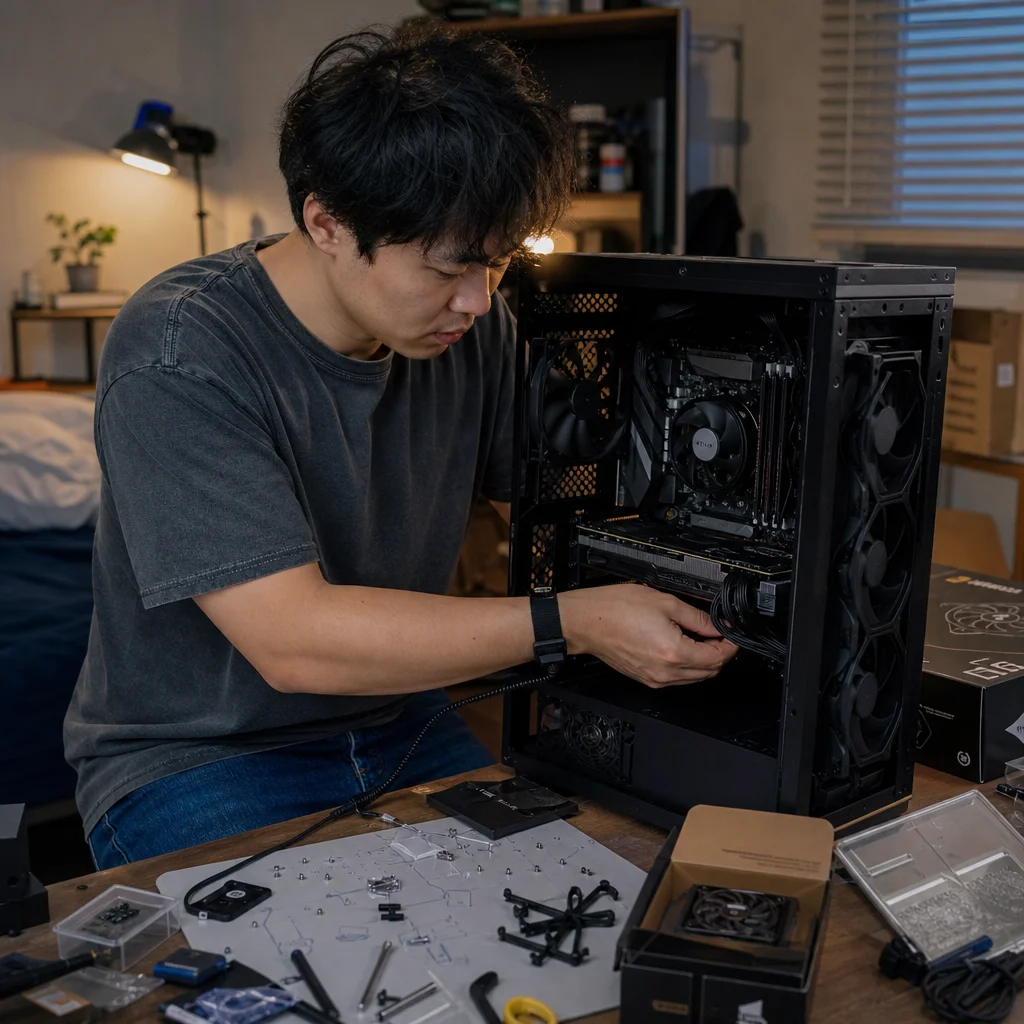
The common mistake is treating a prebuilt desktop as automatically overpriced or a custom build as automatically better. Both can be sensible, but they solve different problems. A prebuilt gives you a working computer, one purchase process, and a single company to contact when something goes wrong. A custom build gives you more control over parts, upgrades, and how your money is allocated.
For a new buyer, the best choice usually comes down to how much you value convenience, how carefully you want to select each component, and whether you’re prepared to diagnose or repair the system yourself. You should also compare complete system costs rather than comparing a prebuilt’s advertised price with only the core parts of a custom build.
When a prebuilt is the more sensible choice
A prebuilt is often the practical option when you need a usable computer quickly and don’t want the project of selecting, assembling, and testing individual parts. The manufacturer has already checked that the processor, motherboard, memory, storage, power supply, cooling, and case work together. That doesn’t guarantee a perfect configuration, but it removes many compatibility decisions from your plate.
This matters if the computer is for school, remote work, a small business, or a household where downtime is expensive. With a prebuilt, you generally receive an assembled and tested system rather than a box of components and a set of possible problems. If the machine fails during its coverage period, you may have one support channel instead of trying to determine whether the issue is the memory, motherboard, power supply, or your own assembly.
A prebuilt can also make sense when you don’t have a strong preference about individual parts. If you need a capable desktop for office applications, browsing, creative work, or gaming at a particular resolution, a well-specified prebuilt may meet that need without requiring you to research every current processor and graphics card. The time saved is part of the value, even if it doesn’t appear on the receipt.
It may be especially attractive when a system seller is discounting complete computers or bundling an operating system and support. Component prices change, and retailers sometimes price complete systems competitively because they buy parts in volume. You shouldn’t assume that a prebuilt costs more simply because it includes assembly.
When custom building is worth the effort
A custom build is more sensible when you have specific requirements that mass-produced systems don’t meet. You might need a quiet case, a particular number of storage drives, unusually large memory capacity, a compact form factor, or a graphics card suited to a specialized workload. Choosing each part lets you spend more of the budget on what affects your actual use and less on features you won’t notice.
Custom building also gives you clearer control over the quality and upgrade path of the system. You can choose a power supply from a reputable product line, select a case with good airflow, install the storage you prefer, and avoid a motherboard with limitations that aren’t obvious from the product name. You’ll know what is inside because you selected it, rather than having to reconstruct the specification from a manufacturer’s abbreviated listing.
The educational value is another legitimate reason. Building a computer teaches you how the parts connect and gives you useful troubleshooting knowledge later. If you’re comfortable taking your time, reading manuals, and checking connections before applying power, the assembly process can be rewarding. It isn’t difficult because it requires mysterious expertise; it’s difficult because several small decisions and installation steps need to be handled carefully.
The important qualification is that a custom build doesn’t automatically produce better performance. A poorly balanced parts list can cost more, run hotter, offer fewer useful features, or leave you responsible for a problem you haven’t learned to diagnose. Control is valuable only if you use it thoughtfully.
Compare the complete cost, not just the tower
The fairest comparison includes everything required to get both options running. For a custom build, that may include the operating system, a CPU cooler if one isn’t included, additional case fans, Wi-Fi or Bluetooth hardware, a larger power supply, assembly tools, and delivery charges. You may also need a monitor, keyboard, mouse, speakers, or a license for software you already assumed would be included.
For a prebuilt, look beyond the headline processor and graphics card. A low price may be paired with a small solid-state drive, one memory module instead of two, a basic power supply, limited cooling, or a case that makes future upgrades awkward. Those aren’t automatically deal-breakers, but they can change the system’s real value. Replacing several weak components soon after purchase can erase the convenience advantage.
Your time has value too. A custom build involves research, ordering, waiting for deliveries, assembly, operating-system setup, driver installation, updates, and testing. If you enjoy that work, it may be part of the appeal rather than a cost. If you need the computer for a deadline, the hours spent solving an unexpected boot or compatibility problem may be more expensive than the difference between the two options.
Check the complete checkout comparison: Confirm whether each option includes the operating system, delivery, taxes or applicable fees, Wi-Fi, a usable amount of storage, and the peripherals you need. Prices, promotions, availability, and included software change, so verify the current totals from the seller and—if you’re in Canada—check whether the listed price is before or after applicable sales tax.
Warranty and support change the risk calculation
A prebuilt commonly gives you a system-level warranty or support arrangement, while a custom build usually spreads coverage across the individual components. That distinction can matter more than a modest difference in price. With a prebuilt, the seller may handle diagnosis, parts replacement, and sometimes shipping. With a custom system, a failed component may require you to identify the part, remove it, contact its manufacturer or retailer, and wait for a replacement.
System-level coverage isn’t always simpler. Some companies require you to ship the entire desktop, and support quality varies. A warranty may cover hardware but not data loss, software problems, accidental damage, or shipping in both directions. Custom components may have longer individual warranty periods, but you’re still responsible for coordinating the repair and proving which part failed.
Read the actual terms before treating warranty coverage as a major advantage. Pay attention to the length of coverage, return windows, who pays shipping, whether opening the case affects anything, and whether support is provided by the seller or the component manufacturer. Keep receipts, serial numbers, and a record of the original configuration.
Verify the support terms before choosing convenience: Open the current warranty and return pages for the exact prebuilt model and seller. Check coverage length, depot or on-site service, shipping responsibility, exclusions, and the process for a system that arrives damaged or fails after setup. These terms differ by company, model, and location.
Component transparency is often the dividing line
Prebuilt specifications can look impressive while leaving out details that affect reliability and future upgrades. “16 GB of RAM” doesn’t tell you whether it uses one module or two. “1 TB SSD” doesn’t identify the drive’s performance or whether there is room for another drive. “750-watt power supply” doesn’t tell you the model, efficiency rating, connectors, or quality of the power supply platform.
This doesn’t mean an unnamed component is defective. It means you have less information for evaluating it and planning replacements. Before buying, look for the exact motherboard, memory configuration, storage type, power supply model, cooler, and available expansion slots. If the seller won’t provide those details, treat the missing information as a limitation rather than assuming the best.
Case design deserves particular attention. Some prebuilts use standard parts and are easy to upgrade; others use custom motherboards, unusual power connectors, restricted cooling, or cramped layouts. A computer can be perfectly adequate as sold while being inconvenient to modify later. If you expect to add storage or replace the graphics card, investigate those upgrade paths before purchasing.
A custom build isn't automatically transparent either. A parts list can omit a required cooler, use a mismatched memory kit, or select a power supply that technically works but leaves little room for expansion. Transparency comes from the exact parts list, not from the label “custom.”
Repairability and upgrades should match your plans
Choose based on the upgrades you’re realistically likely to make, not every upgrade you might imagine. If you expect to use the computer for several years without opening it, a prebuilt with suitable performance and support may be the better decision. If you already know you’ll add storage, increase memory, or replace the graphics card, check that the case, power supply, motherboard, and cooling system can accommodate those changes.
Repairability is also about access. Standard screws, replaceable fans, ordinary power connectors, and a clearly documented motherboard make future work easier. Proprietary parts don’t necessarily make a system unusable, but they can narrow your replacement options and make repairs more dependent on the original seller.
With either route, avoid buying far beyond your needs in the hope that the computer will remain ideal forever. A balanced system with a practical upgrade path is usually more useful than one expensive component paired with compromises everywhere else. The best upgrade is often the one you can install without replacing half the machine.
Mistakes that make either choice worse
The first mistake is buying from a headline specification. A powerful processor paired with insufficient memory, slow storage, poor cooling, or an unsuitable power supply may not deliver the experience you expect. Consider the whole configuration and the work you’ll actually do.
The second is assuming that assembly removes responsibility. A prebuilt still needs safe transport, adequate ventilation, software updates, backups, and sensible maintenance. A custom build still needs careful assembly and testing. Neither option protects your files from drive failure, so plan backups separately from the hardware purchase.
The third is ignoring return logistics. A desktop that must be shipped across the country for service has a different practical value from one that can be returned locally. For buyers in the United States and Canada, seller policies, shipping costs, taxes, and service availability can vary substantially even when two systems have similar specifications.
Finally, don’t let the identity of being a “PC builder” or a “non-technical buyer” make the decision for you. Building is a skill you can learn, but learning it isn't an obligation. Buying a prebuilt isn't a failure to understand computers; it can be a deliberate choice to reduce risk and save time.
A sensible way to decide
Start by writing down your software, performance, size, noise, storage, and upgrade requirements. Then price a custom parts list that includes every necessary component and compare it with prebuilt systems whose full specifications are available. If the custom build saves a meaningful amount while giving you parts and features you value, the extra work may be worthwhile.
Choose the prebuilt when its convenience, support, and delivery as a ready-to-use system outweigh the benefits of selecting each component. Choose the custom build when component control, repairability, or a specific configuration matters enough to justify the research and responsibility. In both cases, favor a complete, transparent specification over a dramatic headline number. That approach prevents the most expensive mistake: paying for a computer that solves a different problem than the one you actually have.