Plan a Family PC That Handles Schoolwork, Streaming, and Light Gaming
A shared family PC needs balanced performance, quiet operation, usable storage, and room to grow rather than one expensive headline component. I’ll show you how to prioritize those choices so schoolwork, streaming, and light gaming fit one sensible desktop.
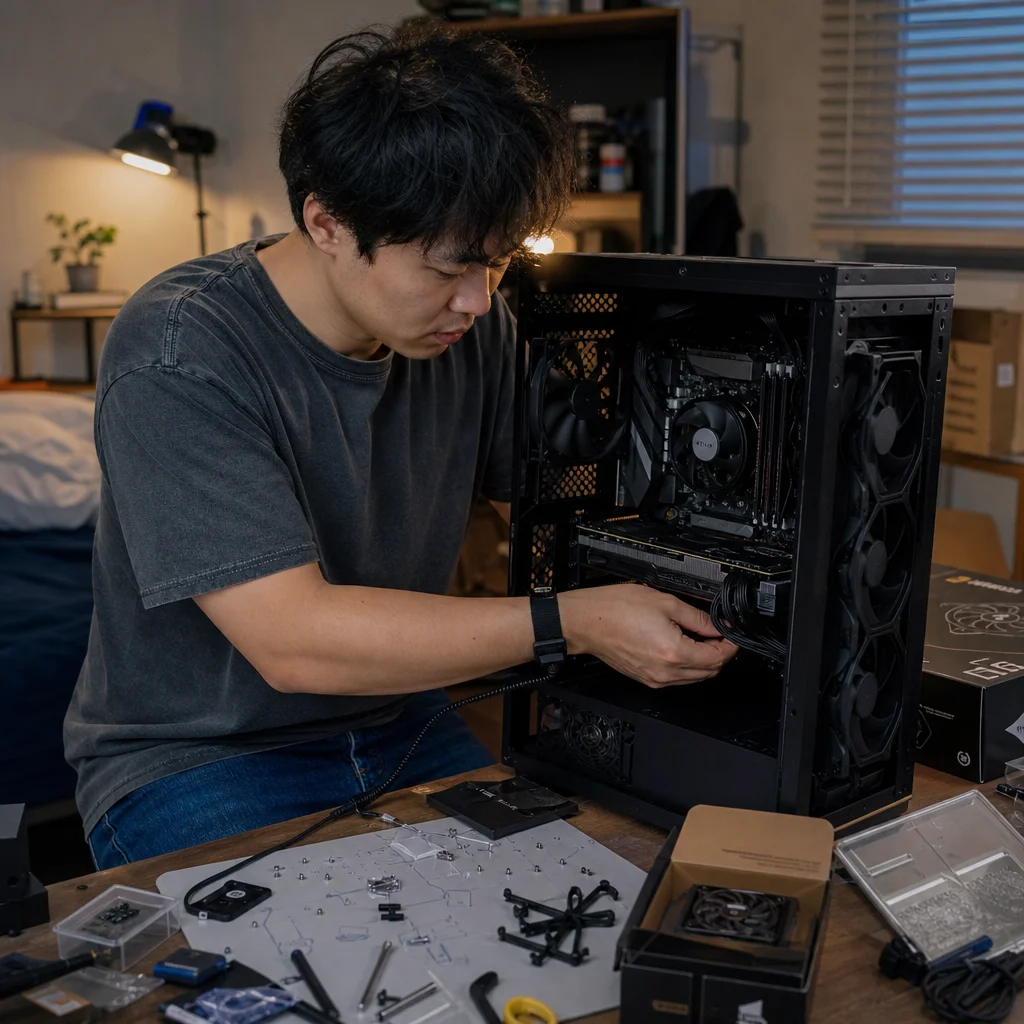
A family PC has to satisfy several people without becoming expensive, noisy, or difficult to maintain. A student may need a browser full of research tabs and video calls, someone else may want to stream shows, and another family member may expect to play games after school. The sensible approach is to balance those workloads instead of optimizing for only one of them.
For most households, that means spending on a responsive platform, enough memory and storage, quiet cooling, and straightforward upgrade options. You usually don’t need a high-end graphics card or an enthusiast processor. You do need a system that remains pleasant when several everyday tasks happen at once.
Start with the shared workload
Write down what the computer will actually do during a typical week. Schoolwork may include documents, web applications, online learning platforms, video meetings, and occasional creative software. Streaming is usually a light task for a modern PC, but the experience also depends on a good display, reliable network connection, and enough performance to keep background applications from making everything feel sluggish. Light gaming covers a wide range, from simple multiplayer and indie games to demanding titles played at modest settings.
The most important question is whether gaming is an occasional extra or a primary reason for the purchase. If gaming is occasional, integrated graphics may be sufficient, especially for less demanding games at sensible resolution and quality settings. If the family expects to play newer, graphically intensive games, plan for a dedicated graphics card from the beginning or choose a case and power supply that can accept one later.
Don’t count every possible future use as a requirement. “Someone might edit 4K video someday” can turn a reasonably priced family PC into an expensive workstation. Choose for the work the household expects to do regularly, then leave room for realistic upgrades.
Put the budget where everyone will notice it
A balanced family system usually benefits more from a solid midrange foundation than from one oversized component. A fast processor paired with too little memory, a tiny drive, or a poor-quality power supply won’t feel balanced. Likewise, a powerful graphics card may add little value if the computer is mainly used for documents, streaming, browsing, and modest games.
Prioritize the parts that affect daily responsiveness and shared convenience:
- Processor: Choose a current mainstream desktop processor with enough cores for multitasking. Integrated graphics can reduce the initial cost if the intended games don’t require a dedicated card.
- Memory: Start with enough RAM for browsers, office applications, meetings, and games to coexist comfortably. A two-stick kit is generally preferable to a single stick when the platform supports it.
- Storage: Use a solid-state drive for the operating system and applications. Capacity matters in a shared computer because game libraries, downloads, photos, and school files accumulate quickly.
- Graphics: Match the graphics solution to the actual games and monitor resolution. Don’t buy a gaming-class card simply because it sounds like the safest choice.
- Power supply: Select a reputable unit with appropriate capacity and the connectors required by the current or planned graphics card. Avoid treating the power supply as the place to make aggressive savings.
- Case and cooling: A case with sensible airflow and accessible filters can make the system quieter and easier to maintain than a flashy case with restricted ventilation.
The monitor and peripherals deserve attention, too. A comfortable display, dependable keyboard, and mouse may affect every family member more than a small processor upgrade. If the budget is limited, it can be more useful to buy a balanced computer and a decent monitor than to overspend on internal hardware while keeping an uncomfortable screen.
Check the current parts list: Prices, processor generations, graphics-card availability, and operating-system support change. Before buying, compare current models for total cost, warranty, compatibility, and the type of games your household actually plays rather than relying on an old recommendation.
Decide whether integrated graphics are enough
Integrated graphics are built into some processors and use system memory instead of a separate graphics card. They can be a sensible cost- and power-efficient choice for a family PC used mostly for schoolwork, streaming, web applications, and lighter games. They also simplify the build by removing one large component and reducing heat, noise, and potential troubleshooting points.
The trade-off is limited gaming performance. Integrated graphics generally work best when you accept moderate settings and, depending on the game, a lower resolution or frame rate. They also borrow memory from the system, so a computer intended for integrated graphics shouldn't be configured with the bare minimum amount of RAM.
A dedicated graphics card makes more sense when a family member already knows which demanding games they want to play, when higher visual settings matter, or when the computer will drive a high-resolution gaming monitor. It raises cost and power consumption, and it can make the case, power supply, and cooling choices more important. If gaming needs are uncertain, beginning with integrated graphics and adding a card later can be efficient—provided the case, power supply, and motherboard layout support that plan.
Choose memory and storage for a shared computer
A family PC shouldn't be designed around the smallest acceptable memory configuration. Multiple browser profiles, office applications, video calls, game launchers, and background utilities can all be open during a busy session. Adequate RAM helps avoid constant slowdowns when switching between them, while a solid-state drive keeps startup and application loading responsive.
Capacity is just as important as speed. A shared drive fills faster than expected because each person stores different files and may install separate applications or games. A drive that looks generous during setup can become cramped after updates, downloads, photos, and several large games arrive. Leave free space for normal operation rather than planning to run the drive nearly full.
Separate personal folders or accounts can make storage easier to manage. They won’t replace backups, but they reduce accidental changes and make it clearer who is using the space. If a family keeps important photos or school documents on the PC, add a backup plan rather than assuming the internal drive is permanent storage.
Make the system quiet and easy to live with
Noise is a shared-use issue, not merely a performance detail. A computer in a bedroom, living room, or homework area can become annoying if its fans constantly ramp up. Choose a case with open but controlled airflow, quiet fan options, and dust filters that can be removed without dismantling the whole system. A moderate processor and graphics card are often easier to cool quietly than high-end parts packed into a small enclosure.
Avoid choosing a tiny case unless space is the overriding priority. Compact systems can be excellent, but they often provide less room for cable management, storage expansion, replacement parts, and larger coolers. A straightforward microATX or mid-sized case may be a better family choice because it offers reasonable expansion without taking over the room.
Placement matters after assembly. Keep the computer’s intake and exhaust areas clear, avoid putting it directly on thick carpet when the case design doesn’t support that, and make it accessible enough to clean. Dust buildup raises temperatures and can increase fan noise over time.
Plan upgrades without overbuying today
Upgradeability is useful when it supports a likely need, not when it becomes an excuse to buy a more expensive platform. Check whether the motherboard has open memory slots, additional storage connections, and a suitable expansion slot for a future graphics card. Confirm that the case has enough physical space and that the power supply can support the planned upgrade.
It’s also worth considering who will maintain the computer. A system built from common, easily replaceable parts is usually easier to repair than one that depends on proprietary connectors or unusual form factors. Standard components can make a future memory or storage upgrade less intimidating, particularly for a first-time buyer.
Still, don’t pay heavily for theoretical expansion. If the family is unlikely to add multiple drives, install a high-end graphics card, or replace the processor later, a more modest motherboard and case may deliver better value. Put the saved money toward capacity, a better display, or a backup drive—items the household can use immediately.
Keep maintenance simple from the start
Create separate user accounts so files, browser settings, and permissions don’t become tangled. Use automatic updates where appropriate, install software from trustworthy sources, and keep enough storage free for updates and temporary files. A family PC also benefits from a short written note listing its parts, warranty information, and where important files are backed up.
Backups deserve a specific decision. Files that matter should exist somewhere other than the computer, such as an external drive or a reputable cloud service. The exact service, price, storage limit, and privacy terms can change, so review current options for your location and household needs. A backup that stays permanently connected to the same computer isn't complete protection against every failure or mistake.
Before handing the system over, test the basics: each user can sign in, the display is comfortable, audio and cameras work for meetings, the network connection is reliable, and the intended games launch at acceptable settings. These checks are less glamorous than choosing components, but they prevent the new computer from becoming a family help-desk ticket on its first busy week.
A sensible family-PC formula
For many households, the best starting point is a mainstream processor, sufficient dual-channel memory, a roomy solid-state drive, integrated graphics or an appropriately modest dedicated card, a reliable power supply, and a quiet case with accessible filters. That combination handles everyday work without wasting money on performance no one will use.
Begin by ranking the household’s real tasks, then decide whether light gaming fits within integrated graphics or requires a dedicated card. From there, protect the daily experience with enough memory, storage, and a comfortable monitor. Leave practical upgrade paths open, document the parts you buy, and set up accounts and backups before the system becomes everyone’s primary computer. The result should feel less like a compromise and more like a well-planned shared tool.