Why an Expansion Card Works in Windows but Not in Firmware Setup
A card that appears in Windows may still be absent from firmware setup because operating-system drivers and pre-boot enumeration serve different purposes. I’ll help you separate a harmless setup display limitation from slot, option-ROM, boot-mode, and power problems that can affect startup.
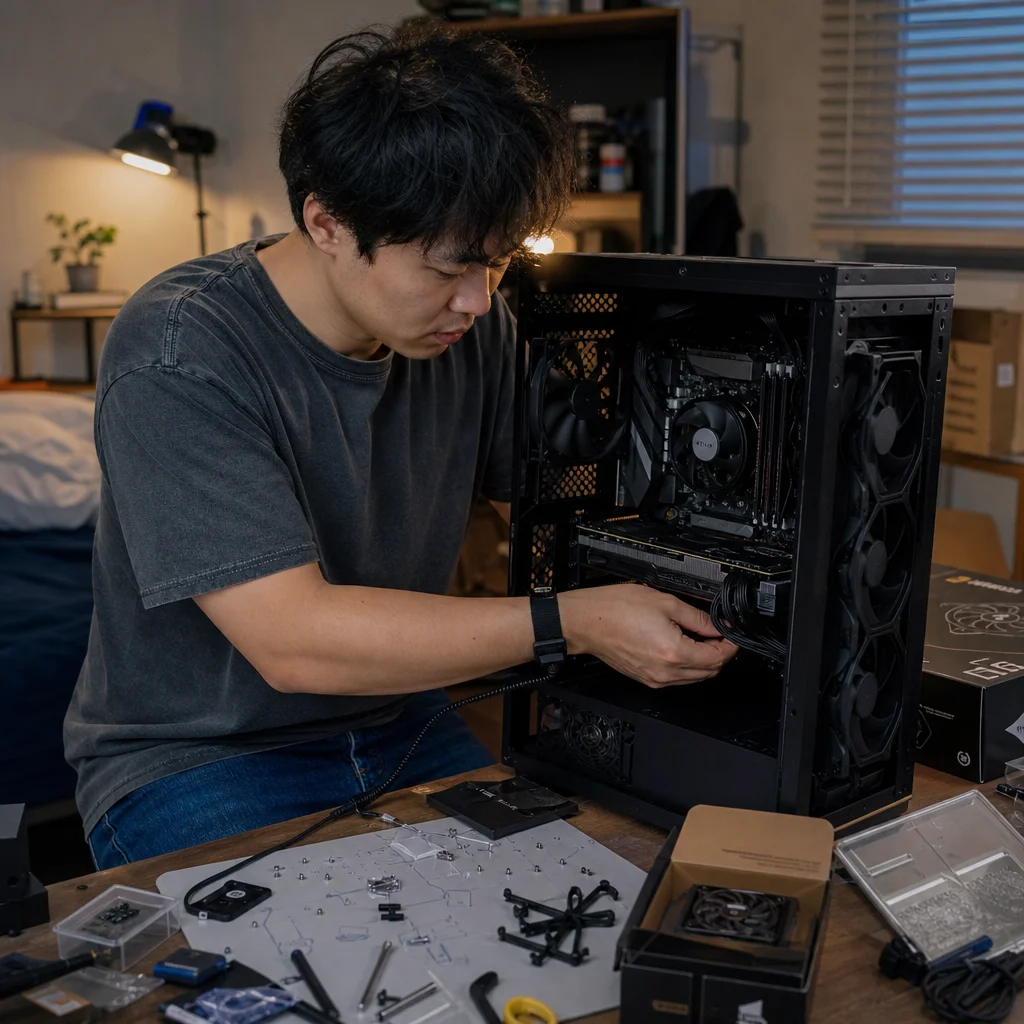
Windows detecting an expansion card doesn’t necessarily mean your motherboard’s firmware will present it in a menu. The operating system can discover PCIe hardware, load a driver, and expose its functions long after firmware setup has finished its own narrower initialization work.
That difference matters most when a card is needed before Windows starts. A storage controller may work once its driver loads but offer no bootable disk in firmware. A network adapter may function in the operating system but provide no pre-boot network option. A graphics card may render the Windows desktop while its firmware interface uses the motherboard’s integrated graphics or another card.
The first task is to determine whether you’re seeing a firmware-interface limitation or a genuine pre-boot compatibility problem. Avoid changing several settings at once; firmware troubleshooting becomes much harder when you can’t tell which change mattered.
Windows support and firmware support are separate layers
During startup, the motherboard firmware initializes enough hardware to perform memory training, display setup, boot selection, and basic platform configuration. It usually enumerates PCIe devices, but it doesn’t have to provide a complete management screen for every device it finds. The setup interface may show only the slot’s link status, a broad device class, or nothing at all.
Windows has a much larger software environment. Its PCIe stack can identify a device by its vendor and device ID, load a full driver, allocate resources, and initialize features that firmware never attempts to use. A device can therefore be fully operational in Windows without having a visible name or configuration page in UEFI setup.
This is especially normal for cards that have no pre-boot role. A sound card, USB expansion card, capture card, accelerator, or secondary network adapter mightn't need firmware-level configuration. If Windows reports the card correctly, its driver works, and the device performs as expected, the absence of a dedicated firmware menu may be harmless.
The situation is different when you expect the card to provide an early display, expose disks as boot targets, offer a firmware-level network boot function, or participate in a RAID or storage-management environment. Those uses require more than PCIe electrical connectivity. They depend on firmware support, an option ROM or UEFI driver, suitable boot mode, and sometimes a motherboard-specific configuration.
Start by defining what “not in firmware” means
Firmware setup screens are inconsistent. One board may list devices under a PCIe information page, another may show only slot speed and lane width, and a third may reveal the card only in a boot, storage, or integrated-peripherals menu. The absence of a model name isn’t proof that enumeration failed.
Check the motherboard manual for pages such as PCIe configuration, board explorer, system information, storage configuration, network stack, or boot override. Look for indirect evidence: a slot reporting a negotiated link, a storage controller appearing among boot devices, or a card changing available options elsewhere in setup. Read the wording carefully. “PCIe slot disabled” and “no device detected” suggest different problems from simply having no menu for that card.
The card’s function also sets the right expectation. A GPU should normally provide a pre-boot display path if the monitor is connected to it and its firmware exposes a compatible display initialization method. A storage card may be visible as a controller but not as a boot target. A USB card may have no meaningful firmware representation at all.
Check your board’s firmware map: Before treating the card as missing, use the motherboard manual to find where PCIe devices, storage controllers, boot entries, and option-ROM settings are reported. Menu names and visibility vary substantially by vendor and firmware version.
Confirm the physical and electrical path first
A card that works in Windows has already passed some important tests, but it may still be marginal during early initialization. Reseat the card with the system powered down and disconnected from AC power. Hold the bracket level with the case, press the card firmly into the slot, and confirm that the retention clip has engaged. A card can make enough contact to initialize under one set of conditions while remaining unreliable during cold boot or reset.
Inspect auxiliary power connectors and cables. High-power cards may need one or more plugs connected directly from the power supply, while some lower-power cards draw everything through the slot. Use the connector type specified by the card and power supply manufacturer, and don’t force a plug that doesn't fit. If the card has status LEDs, treat them as clues rather than definitive diagnostics; their meanings are model-specific.
Try the slot recommended by the motherboard manual, particularly on a platform with multiple physical x16 slots. Secondary slots may run through the chipset, share lanes with M.2 sockets, or be disabled when another connector is populated. On some boards, lane bifurcation or storage settings can change what a slot can enumerate. A card working in Windows doesn’t prove that every cold-start path or every slot configuration is equally sound.
For diagnosis, remove unnecessary PCIe cards and external devices, then test with a minimal configuration. This reduces resource conflicts and makes it easier to identify whether another card, an occupied M.2 socket, or a shared chipset link is affecting startup. Keep a record of the original slot and settings so you can restore the intended layout afterward.
Understand option ROMs, UEFI drivers, and boot mode
Many expansion cards include firmware intended to run before the operating system. Traditionally, this was a PCI option ROM. Modern UEFI systems may use a UEFI driver, sometimes alongside a legacy ROM. These components can provide early display output, expose storage volumes, initialize a network boot function, or present a card-specific configuration utility.
A card can enumerate on the PCIe bus without having a firmware component that the motherboard can execute. It may then appear in Windows but offer no pre-boot function. The reverse can also happen: the card has a suitable option ROM, but the motherboard’s current boot policy refuses to load it.
Boot mode is a common dividing line. A system configured for pure UEFI may not execute a legacy-only option ROM. A system using Compatibility Support Module, or CSM, may support older firmware paths but change how boot devices and graphics initialization behave. The exact combination depends on the card, motherboard, and operating system installation. Enabling CSM can make an older card usable, but it can also interfere with a modern UEFI installation or features that require pure UEFI.
Graphics cards add another layer. To show an image during POST and enter setup, a card generally needs a firmware display component compatible with the board’s boot environment. Windows can later load a graphics driver and use the card even if early display initialization used integrated graphics or another adapter. If you see setup on one monitor but Windows on another, check which output is connected and which GPU the firmware has selected as the primary display.
Avoid assuming that a newer firmware setting will solve every option-ROM issue. A motherboard update may improve compatibility, but the card’s own firmware may also matter. Firmware updates carry a real risk of interruption or an incorrect image, so use the exact files and procedure specified for your hardware and keep a recovery path available.
Check resource allocation and platform settings
PCIe devices need address space, interrupts, and bus resources. Modern systems usually allocate these automatically, but certain combinations of older cards, large memory-mapped devices, or multiple GPUs can expose limits. Settings such as Above 4G decoding and, where relevant, Resizable BAR affect how firmware maps PCIe resources. They aren't universal fixes, and changing them can alter compatibility with other devices.
A storage or accelerator card may also depend on CPU-connected lanes rather than chipset-connected lanes, or on a particular link width. A slot that physically accepts an x16 card may electrically provide fewer lanes. That can still be enough for Windows operation while failing a card’s pre-boot expectations, especially if its firmware requires a certain path or if the platform is configured for bifurcation.
Reset unusual tuning while troubleshooting. Disable experimental PCIe generation settings and return link speed to Auto unless the card’s documentation recommends a fixed value. Remove manual lane-splitting configurations, unnecessary legacy boot options, and platform settings changed for a previous build. Load optimized defaults if necessary, but photograph or record important settings first.
Use controlled tests to isolate the fault
A useful sequence is to cold-boot the system with only the expansion card installed, then test a warm restart, a complete shutdown, and a reset from the operating system. If the card appears only after a warm restart, suspect power sequencing, reset behavior, link training, or firmware initialization rather than the Windows driver itself.
Next, compare slots and, if possible, another known-compatible system. A successful test elsewhere doesn’t prove that your board is defective, but it helps separate the card’s firmware behavior from a platform-specific limitation. Likewise, testing a known-good card in the same slot can distinguish a slot or lane problem from a card-specific issue.
In Windows, check Device Manager and the card’s diagnostic utility for the PCIe link width, negotiated speed, error status, and firmware version. These details confirm that the operating system is seeing a live PCIe function, but they don’t prove that the device has a usable pre-boot driver. Event logs may reveal repeated link resets or resource errors that explain intermittent startup behavior.
If the card is visible in Windows but never supplies a function you need before boot, consult the card’s documentation for UEFI support, boot compatibility, option-ROM behavior, and required platform settings. Some cards simply aren't designed to be configured or booted from through a general motherboard setup screen.
Decide whether the difference is a problem
The missing firmware entry is probably benign when the card has no pre-boot role, Windows identifies it consistently, and the feature you bought it for works after the operating system loads. In that case, forcing firmware settings or repeatedly updating components may create more risk than value.
Treat it as a real compatibility issue when the card must provide early display, a bootable storage volume, network boot, pre-OS management, or a card-specific setup utility and that function is absent. Also investigate further if the card appears only intermittently, disappears after a cold boot, causes long training delays, or works only in one slot.
Work from least disruptive checks toward firmware changes: verify the slot and power, inspect the motherboard’s actual device-information pages, test with a minimal configuration, then review boot mode and option-ROM requirements. Only after those checks should you consider platform firmware, card firmware, or resource-allocation changes. That order protects your working Windows installation and gives each result a clear meaning.
Once the card’s intended pre-boot behavior is understood, the answer is usually straightforward. It may be a normal boundary between firmware and Windows, or it may identify a specific initialization dependency. Either way, separating enumeration from driver loading keeps you from mistaking a sparse setup menu for failed hardware—or overlooking a genuine startup problem because Windows eventually makes the card work.