Adding a Capture Card, Sound Card, or Network Adapter Without Surprises
I’ll explain how to choose an expansion card without wasting a slot, blocking airflow, or creating a lane-sharing problem. You’ll learn what to check on your motherboard, case, operating system, and existing hardware before buying a capture card, sound card, or network adapter.
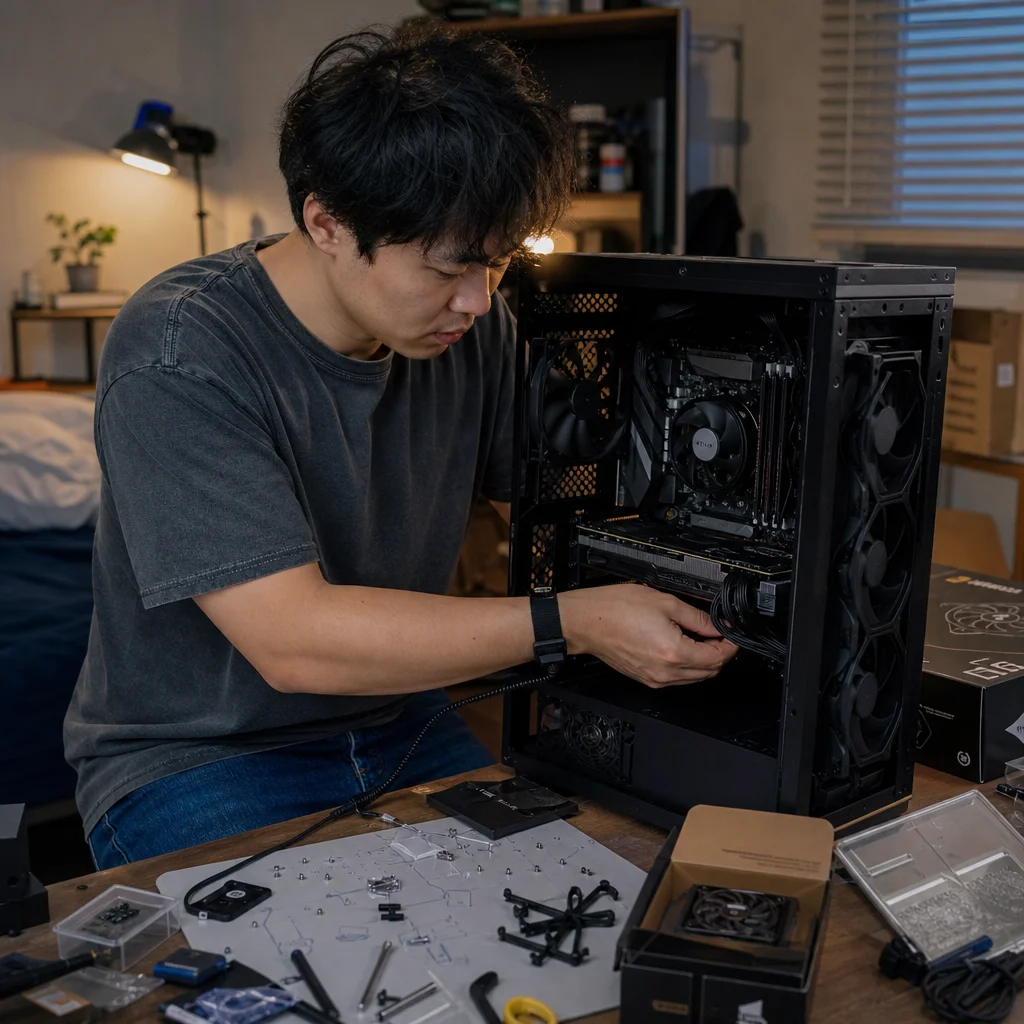
Adding an expansion card looks simple: find an open slot, install the card, and load its driver. The surprises usually come later—a storage drive disappears, a card blocks another connector, the case can't close, or the operating system doesn't support the device as expected.
The most cost-efficient approach is to treat the card as part of the whole system rather than as an isolated upgrade. Before spending money, identify what capability you actually need, which slot can provide it, and what resources the card will share.
Start with the job, not the card
A capture card, sound card, and network adapter can all use PCI Express, but they solve very different problems. A capture card needs to accept and process a particular video signal at the resolution, refresh rate, color format, and latency you expect. A sound card may be useful for specific analog inputs, outputs, monitoring features, or electrical isolation, but it may offer little benefit if your existing audio hardware already meets those needs. A network adapter is most useful when your current Ethernet or Wi-Fi connection is too slow, unreliable, or limited by the network standard you need.
Check whether an external device would solve the problem more cheaply and with less installation risk. USB capture devices, USB audio interfaces, and USB network adapters can avoid internal clearance and slot-sharing issues. They can also be easier to move between computers. An internal card may still be the better choice when you want a permanent installation, additional bandwidth, lower cable clutter, or a feature that an external device doesn't provide.
Be careful not to buy a card merely because its headline specification is higher. A faster network adapter can't make an internet connection faster than the service and local network allow. A sound card can't fix poor speakers or a noisy microphone by itself. A capture card can't turn an unsupported source into a compatible one. Match the card to the limitation you are actually trying to remove.
Map the motherboard’s PCIe resources
Look at the motherboard manual, not just the product photographs. Record the number and physical size of the PCIe slots, which processor or chipset provides each slot, and whether using one slot disables or reduces another connection. Motherboard manuals often include a block diagram or a table describing these relationships.
A slot’s physical length and its electrical connection aren't always the same. A long x16-length slot may be wired for x16, x8, or fewer lanes. A short x1 slot normally has one lane, while an x4 slot has four, but the exact arrangement varies by board. Many capture cards, sound cards, and network adapters work in an x4, x8, or x16-length slot depending on their design. The card and the slot must both support a compatible PCI Express connection; a card doesn't gain the full performance of a longer slot simply because it fits inside one.
For relatively low-bandwidth devices, an available chipset-connected slot may be perfectly adequate. The trade-off is that chipset-connected devices share the motherboard’s link to the processor with other chipset-connected hardware. That shared path can include USB ports, storage, networking, and other expansion slots. This doesn't automatically create a problem, but simultaneous heavy transfers can expose the limit.
A capture card is the device most likely to make bandwidth planning important. Its required PCIe bandwidth depends on what it captures and how the card handles compression. A card that captures an already compressed or modest-resolution signal may need far less bandwidth than one handling high-resolution, high-refresh-rate video. Use the manufacturer’s required slot specification rather than guessing from the card’s appearance.
Check the board’s sharing table: Before ordering, confirm which PCIe slot you’ll use and whether populating it disables an M.2 socket, reduces the graphics slot’s lanes, or shares bandwidth with another connection you depend on.
Check lane sharing before installing anything
Lane sharing is one of the easiest ways to create a problem that looks unrelated to the new card. On some motherboards, installing an M.2 drive disables a particular SATA port or PCIe slot. On others, using a secondary full-length slot changes the primary graphics slot from x16 to x8. The exact behavior depends on the motherboard and processor platform.
For a single graphics card, a reduction from x16 to x8 may have little practical effect on some systems, but you shouldn't assume that every board behaves the same way or that the change is acceptable for your workload. A capture card can also become inconvenient if it occupies the only slot with adequate access to the processor’s lanes, especially when a graphics card is already installed.
If your system uses multiple NVMe drives, high-speed USB devices, a second graphics card, or several network connections, count the heavy users together. A card that works correctly on its own may compete with other devices during recording, file transfers, game loading, or live streaming. For many hobbyist systems, the limitation isn't a complete failure but reduced or inconsistent performance under simultaneous use.
The motherboard manual should take priority over generic diagrams on retailer pages. Board revisions and processor generations can change available lanes and sharing rules. If the manual is unclear, search for the exact board model and revision, then confirm the slot configuration with the manufacturer’s current documentation.
Plan physical clearance and airflow
Measure more than the card’s bracket. Check its full length, height, thickness, and the position of connectors. A two-slot card can cover the slot below it; a thicker card may cover two or more slots. Some capture cards and network adapters have large heatsinks, while many sound cards are slim but can still interfere with a bottom-mounted fan or a front-panel cable.
The graphics card is usually the main physical constraint. Determine which slots remain accessible after the graphics card is installed, including the space occupied by its cooler. If the new card sits directly against the graphics card’s intake fans, it may raise temperatures or make the system noisier. Leaving an otherwise suitable card in a poorly ventilated position is rarely a good bargain.
Check the case’s rear expansion openings and internal support points. A small-form-factor case may accept only low-profile cards, and some cases require a compatible low-profile bracket. A card that fits the motherboard can still fail to fit the case because of its bracket, backplate, cable bend radius, or front-panel obstruction.
Before opening the case, identify where the card’s ports will be located. HDMI, DisplayPort, coaxial, optical, antenna, and Ethernet connectors all need room outside the chassis. A stiff cable can place sideways pressure on a card or make it impossible to close the side panel. Use cables with enough space to bend naturally rather than forcing them against the case.
Confirm drivers and software support
Driver support matters as much as PCIe compatibility. Check the card maker’s support page for your operating system and confirm whether the device is supported by the applications you plan to use. For a capture card, that may include your streaming or recording software, video-conferencing tools, and any console or camera workflow. For a sound card, check support for your audio software and required input or output modes. For a network adapter, confirm support for the operating system, virtualization tools, and features such as VLANs or hardware offloading if you need them.
A device can appear in the operating system while still lacking an important feature. Some capture cards expose only certain formats or refresh rates to particular applications. Some audio drivers add effects or routing controls that are unavailable through generic operating-system drivers. Some network adapters require a newer driver for stable operation, while older drivers may expose fewer settings.
Download the correct driver before removing your old hardware or disconnecting your internet connection. Save a copy locally if the new network adapter will be your only working network interface. Also check whether the manufacturer provides firmware updates, and read the release notes rather than updating automatically without a reason. Firmware and driver interfaces can change, and a stable system doesn't always benefit from the newest package.
Verify the software path: Before installation, check the card’s current driver, firmware, and application compatibility pages for your operating system and the exact capture, audio, or networking features you plan to use.
Account for power, heat, and signal quality
Most cards in this category draw power directly from the PCIe slot, but some higher-performance devices use an additional power connector. Confirm the requirement before installation and make sure the power supply has the appropriate cable. Don't improvise with adapters that aren't approved for the connector and power supply you use.
Heat can matter even when the card has a modest power rating. A capture card processing a continuous video stream, a high-speed network adapter transferring large files, or a sound card operating near a warm graphics card may run for hours at a time. Maintain clear intake and exhaust paths, and avoid placing a card where it will recirculate hot air from another component.
Signal quality is part of the system design too. A network adapter needs a cable, switch, and router that support the desired link speed. A capture card needs a source and cable that meet its input requirements; copy-protection rules and source-device settings may also affect what can be captured. An internal sound card still depends on good grounding, sensible cable routing, and the quality of the connected amplifier, headphones, speakers, or microphone.
Install with a rollback plan
Shut down the computer, switch off the power supply, disconnect the power cable, and press the case’s power button briefly to discharge the system. Work on a clean surface and handle the card by its edges. Remove only the required slot cover, seat the card evenly, and secure its bracket so the card doesn't sag or move when you attach cables.
After starting the computer, check the firmware setup and the operating system. Confirm that the expected slot is enabled, that storage devices are still present, and that the new device appears without an error. Install the appropriate driver, then test the card at the workload you actually care about rather than only checking whether it is detected.
For a capture card, test the source, resolution, refresh rate, audio path, recording format, and a sustained recording. For a sound card, test every required input and output while monitoring for noise or dropouts. For a network adapter, verify negotiated link speed, sustained transfers, latency, and the connection’s behavior under load. Check temperatures and fan noise after the system has run long enough to reach normal operating conditions.
If something breaks, reverse the last change methodically. Remove the card, restore any changed firmware settings, and check whether a disabled M.2 socket, SATA port, or onboard device returns. This tells you whether the issue is physical placement, lane sharing, a driver conflict, or the card itself. Keep the original hardware available until the new setup has passed these tests.
Spend on the limiting part
The best expansion-card purchase is usually the one that solves a specific bottleneck while preserving the resources your system already uses. An inexpensive x1 network adapter may be enough for a secondary connection, while a demanding capture workflow may justify a card with a higher slot requirement and better software support. A sound card may be unnecessary if a USB interface already provides the inputs and monitoring you need.
Before buying, compare the card’s required slot, lane behavior, physical dimensions, power needs, operating-system support, application compatibility, and return policy. Then compare those requirements with the motherboard manual and the case’s available space. That short check can prevent a much more expensive chain of replacements.
Install the card only after you know which existing connections it may affect. If the card works in the least disruptive suitable slot, keeps airflow open, and has dependable software support, you can add the capability without sacrificing hardware that was already doing its job.