How to Choose an Expansion Card for a PC With Few Available Slots
I’ll help you choose the expansion card that solves the real limitation in a slot-constrained PC, from networking and storage to capture and connectivity. You’ll learn how to check lane sharing, physical clearance, power, cooling, and recovery options before buying.
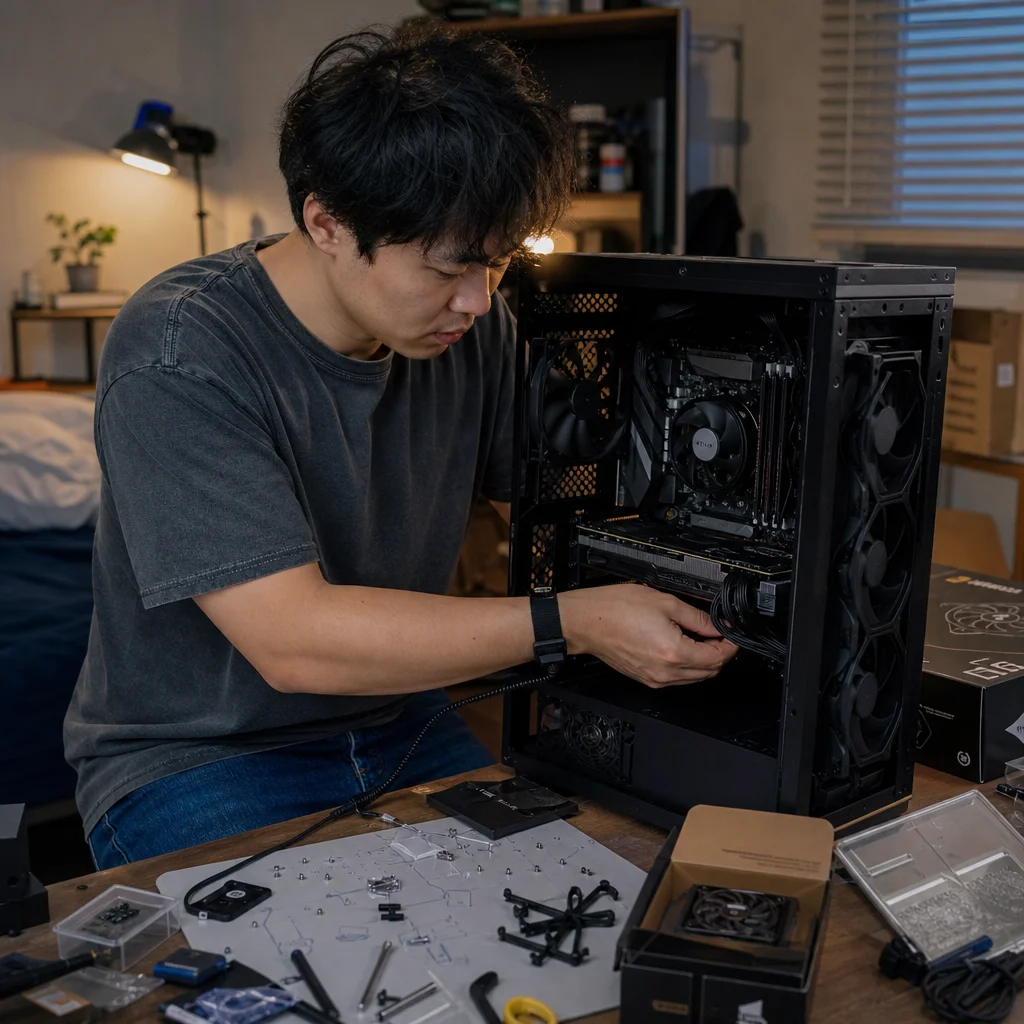
When a PC has only one or two usable expansion slots, choosing an expansion card is less about finding the fastest specification and more about avoiding a new problem. A card may fit electrically but block airflow, disable another connector, exceed the available lanes, or leave you without a practical recovery path if its driver fails.
For a small-form-factor or workstation build, start with the limitation you’re trying to remove. Then work backward through compatibility, physical access, lane allocation, cooling, and troubleshooting. This approach helps you spend one scarce slot on the function that will remain useful rather than on a specification that looks impressive on a product page.
Identify the problem before choosing the card
Write down what the PC can't do reliably today. If wired networking is unstable, a 2.5Gbps or 10Gbps network card may be the right answer. If you need more fast local storage, an M.2 adapter or storage controller could help. If the system lacks a particular port, a USB, Thunderbolt, or other connectivity card may solve the problem. Audio and capture cards are more specialized, but they can be worthwhile when onboard features are inadequate for your equipment or workflow.
Be specific about the workload. “More storage” could mean one additional SSD for active projects, several drives for a redundant array, or an adapter that lets you use a particular drive format. “Better networking” could mean lower latency, a different connector, support for a managed network, or simply a reliable replacement for a damaged motherboard port. Those needs can point to very different cards.
Also decide whether the card must solve a failure or add capacity. A replacement network adapter is useful even if it runs at the same speed as the onboard port. An additional storage card should be judged by usable capacity, drive support, and recovery options—not just the maximum interface speed printed on the box.
Map the slots and connectors you actually have
Look at the motherboard manual and the case, not only the motherboard’s marketing summary. Record each available slot’s physical length, electrical connection, generation, and position. A long PCIe x16-length slot may be electrically connected with fewer lanes, while a short x1 or x4 slot may be the only one that remains accessible after the graphics card is installed.
Then account for the components already occupying space. A graphics card can cover a neighboring slot even when the motherboard technically provides it. A thick cooler may leave no room for an adjacent card, and a bottom-mounted slot may align poorly with a case that uses a riser or a restricted rear bracket. In a compact system, “available” should mean both electrically usable and physically reachable.
Pay attention to M.2 sockets and onboard controllers as well. Installing an M.2 drive may disable a SATA port or change how a PCIe slot operates. The reverse can also happen: an expansion storage card may share chipset bandwidth with USB, networking, or another slot. These arrangements are normal, but they need to be known before installation.
Confirm your motherboard’s slot map: Before ordering, check the current motherboard manual or support page for lane sharing, disabled connectors, slot-generation limits, and any restrictions tied to the CPU or chipset. These details vary by board and can change the best card choice completely.
Understand lanes without chasing theoretical speed
PCIe cards communicate through lanes, commonly described as x1, x4, x8, or x16. The physical connector and the number of active lanes aren't always the same. A card designed for x4 may fit in a longer slot, but it may not receive four active lanes in that location. Likewise, a card that works in a slot may operate at a lower generation or reduced width than its maximum specification.
For many devices, this isn't automatically a problem. A basic audio card, network adapter, or USB controller may not need a large number of lanes. Storage cards and capture devices can be more sensitive, particularly when several drives or high-bandwidth video streams are active at once. The practical question is whether the card’s required throughput fits the slot under the workload you expect—not whether the card advertises a large interface.
Chipset-connected slots often share bandwidth through the motherboard’s platform connection. That can be perfectly adequate, but simultaneous transfers may compete with USB devices, onboard networking, storage, or other chipset-connected hardware. A CPU-connected slot may offer a more direct path, though using it for one device can reduce options for another.
If you’re considering a card that supports multiple devices, check whether it needs PCIe bifurcation. Bifurcation allows a suitable slot to divide its lanes between devices, but support depends on the motherboard firmware and the card or adapter. A passive multi-drive adapter can't create lanes that the motherboard doesn't provide.
Choose the card type around the recovery need
A network card is often the simplest recovery-oriented expansion. It can restore connectivity after an onboard controller fails, provide a connector your network requires, or separate workstation traffic from general household traffic. Check the connector type, negotiated speed, operating-system support, driver availability, and whether the card uses a controller with reliable support for your platform. A faster port isn't useful if the switch, cabling, storage server, or network service can't use it.
For storage, distinguish between a simple adapter and a controller. An adapter may expose an NVMe drive directly through PCIe, while a controller can manage multiple drives or provide RAID-related functions. These designs have different boot support, driver, monitoring, and recovery behavior. If the card contains important data, determine how you would access those drives after a motherboard or card failure. Proprietary metadata and controller-specific arrays can make recovery more complicated than moving a standalone drive to another system.
An audio card can improve input and output options, reduce dependence on a failed onboard codec, or provide connections better suited to recording equipment. It won’t automatically improve every listening setup, though. Confirm the required analog, digital, microphone, or monitoring connections, and consider whether the card’s software remains supported by your operating system. In a slot-constrained PC, a USB audio interface may be a better use of internal space if you don’t need an internal card.
Capture cards need especially careful matching. Verify the input and output formats, refresh rates, resolution limits, HDR or copy-protection behavior where relevant, audio handling, and software compatibility. A card that can accept a signal may still fail to provide the combination of passthrough and capture behavior your workflow needs. If your source changes frequently, leave room for firmware and driver differences rather than relying on a single headline specification.
Connectivity cards cover a wide range of needs, including additional USB ports, wireless networking, serial interfaces, and specialized workstation connections. Check whether the card’s ports share one internal controller and whether the supplied power is sufficient for the devices you intend to attach. Several high-draw USB devices can expose limitations that are invisible when the ports are tested one at a time.
Treat physical fit and cooling as compatibility requirements
Measure the card’s length, height, thickness, and bracket style against the case. Small-form-factor systems may require a low-profile bracket, a short PCB, or a particular riser arrangement. Some products include both full-height and low-profile brackets, but you should confirm that the replacement bracket is included and compatible with the card’s connector layout.
A card that fits on installation day can still create trouble by blocking an intake, covering a fan, or trapping heat between itself and the graphics card. This matters for network, storage, and capture cards that may run sustained workloads. Check whether the heatsink is passive, whether it expects airflow from a nearby fan, and whether the card’s temperature monitoring is exposed to the operating system.
Consider cable access too. A tightly packed rear panel can make it difficult to insert a network cable, connect an external capture source, or remove the card later. In a workstation that must be serviced without dismantling half the system, a slightly less feature-rich card with sensible connector placement may be the more reliable choice.
Check power, drivers, and platform support
Most low-power expansion cards draw their power through the slot, but some storage, capture, or specialized cards require an auxiliary connector. Confirm the connector type and cable routing before installation. Avoid assuming that a high-end card is suitable simply because the power supply has enough total wattage; the case, connector clearance, and cooling path may be the real constraints.
Operating-system support is equally important. Look for current drivers, documented support for your operating system version, firmware tools, and known limitations. A card that relies on an old driver can become difficult to use after an operating-system update. For a machine used in production, download the driver and firmware packages before removing the old hardware, and keep a copy of the working installer where you can reach it without network access.
If the card is needed for boot storage, verify that the motherboard firmware can boot from that device and that the intended operating-system installation supports it. A card can function perfectly after the operating system loads while remaining invisible to the firmware’s boot process.
Plan for failure before you install
A slot-constrained build benefits from a simple rollback plan. Record the original slot arrangement, save important firmware settings, and keep the old working device available until the new card has passed testing. If you’re replacing a network adapter, have another way to download drivers. If you’re moving storage, confirm that the original drives and data remain untouched until the new arrangement is proven.
Install one change at a time when possible. After fitting the card, check whether the firmware detects it, whether expected onboard devices remain enabled, and whether the operating system identifies the correct controller. Test the actual workload: copy files to and from the storage card, sustain the network connection, monitor a capture session, or use the audio inputs you depend on. A device that appears in Device Manager or a similar system utility hasn't necessarily been validated.
If the system fails to start after installation, power it down and return to the last known-good configuration. Reseat the card, inspect the riser and power connections, and confirm that no cable or bracket is causing a short or preventing full insertion. If the motherboard offers firmware settings for slot speed, bifurcation, or onboard-device control, return those settings to a known compatible state before experimenting.
When the system boots but the card is missing, check the slot-sharing table first. Then inspect firmware detection, operating-system logs, driver installation, and the card’s auxiliary power. If performance is lower than expected, test the negotiated link width and generation under load rather than judging from idle behavior. The result may be a platform limitation rather than a defective card.
Make the scarce slot earn its place
The best expansion card for a compact or workstation PC is the one that addresses a defined limitation while preserving access to the rest of the system. Prioritize the function you can't replace conveniently with an external device, then verify the slot’s electrical connection, lane sharing, physical clearance, cooling, power, and software support.
Before buying, compare the card’s real workload requirements with the motherboard’s documented layout. Prefer a design with dependable drivers, accessible connectors, and a straightforward recovery path over one that offers unused bandwidth or extra features. Once installed, test it under the conditions that matter and keep the previous configuration available until the result is stable. That small amount of planning turns a scarce slot from a gamble into a deliberate upgrade.