What to Check Before Using a Graphics Card With a Dock or Adapter
External graphics setups depend on more than whether the plugs fit: display standards, PCIe bandwidth, power delivery, drivers, and connector limits all matter. I’ll show you how to check those pieces before connecting a GPU to a dock or adapter.
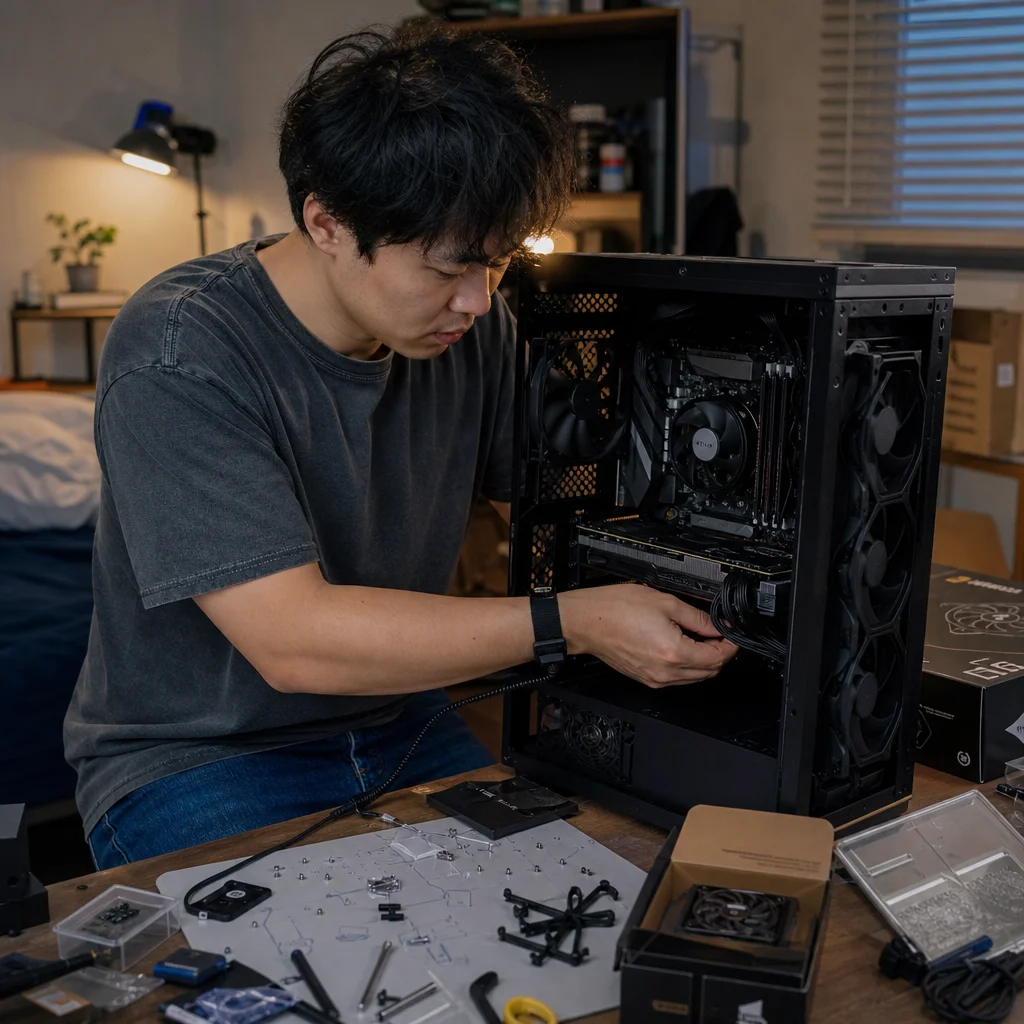
A graphics card can appear compatible with a dock or adapter because the connectors line up, yet still fail to produce an image—or work with severe performance and reliability limitations. The important question isn't simply whether the card has HDMI, DisplayPort, or USB-C nearby. You need to understand how the graphics data travels, which device is responsible for rendering it, and where power and display conversion happen.
This matters in several different setups. You might be connecting a laptop to an external GPU dock, routing a desktop graphics card through a dock to several monitors, or using a USB display adapter to add screens to a hybrid workstation. Those arrangements don't have the same requirements. Start by identifying which one you have before buying cables or powering anything on.
Identify what the dock or adapter actually does
A conventional laptop dock usually doesn't turn a desktop graphics card into an external GPU. It may pass a video signal from a laptop's USB-C or Thunderbolt port to DisplayPort or HDMI outputs, or it may use a display chipset to create additional desktop outputs over USB. These are different from an eGPU enclosure or dock, which provides a PCIe connection for a graphics card and normally includes or requires a separate power supply.
A passive cable or simple connector adapter only changes the physical connection. For example, a DisplayPort-to-HDMI adapter may convert or carry a display signal, depending on the adapter's design and the direction in which it is intended to work. It doesn't provide PCIe connectivity, graphics processing, or the power needed by a desktop GPU.
An active display adapter contains electronics that translate one display standard into another. That can solve a connector or signaling mismatch, but it still doesn't make a general-purpose desktop graphics card compatible with a laptop dock. A USB display adapter is another category entirely: it relies on a USB graphics chipset and drivers rather than exposing a PCIe graphics card to the computer. It can be useful for office monitors, but it may have different limitations for gaming, color-managed work, video playback, or protected content.
If your goal is to use a full-size desktop GPU with a laptop, look specifically for an eGPU enclosure or eGPU dock that supports the card's interface, power requirements, operating system, and physical dimensions. If your goal is merely to connect monitors, begin with the laptop, dock, and monitor specifications instead of assuming the desktop card belongs in the signal path.
Check the data path and bandwidth
An external GPU requires a high-speed PCIe data path between the computer and the graphics card. Thunderbolt and USB4 implementations can tunnel PCIe, but support and performance depend on the particular computer, port, firmware, cable, dock, and operating system. A USB-C-shaped port by itself doesn't confirm that PCIe tunneling or an eGPU is supported.
Even when an eGPU works, its external link is usually narrower than the PCIe connection inside a desktop. The graphics card can render normally, but moving frames between the laptop and the external GPU may reduce performance. The effect depends on the game or application, resolution, settings, workload, and whether the display is connected directly to the external GPU or routed back through the laptop's internal display.
A direct connection from the monitor to the external GPU generally avoids sending completed frames back through the external link. That can improve performance and reduce latency, although it may be inconvenient if your dock, desk, or monitor arrangement is built around the laptop's internal display output. If you need the laptop screen to show applications rendered by the eGPU, check whether the computer and operating system support that path and accept that it may carry an additional bandwidth cost.
For ordinary dock use, calculate the bandwidth of the monitor arrangement as well. Resolution, refresh rate, color depth, HDR, compression, and multiple-monitor transport all affect the required link capacity. A dock may support one high-resolution display but not two at the same refresh rate, or it may support the advertised maximum only with Display Stream Compression or a particular connection mode. The dock's total bandwidth is also shared with USB data, networking, storage, and other peripherals on some designs.
Confirm the complete signal path: Before connecting anything, verify the computer port's supported mode, the dock's input and output standards, the adapter's direction, each monitor's requirements, and the cable specifications. Check the manufacturer documentation for the exact computer and dock models rather than relying on the shape of a connector or a generic USB-C label.
Match display standards, not just connectors
DisplayPort, HDMI, USB-C DisplayPort Alt Mode, and Thunderbolt are related parts of a modern display setup, but they aren't interchangeable by default. USB-C can carry DisplayPort signals through Alt Mode, USB data, power, or several of these at once. The available display capability depends on how the host port and dock allocate their lanes.
A dock's HDMI or DisplayPort output also doesn't guarantee that every feature available from the graphics card will pass through it. You may lose a maximum refresh rate, HDR, adaptive sync, high color depth, or a particular audio mode. Multi-monitor docks can introduce additional limits through MST hubs, internal conversion chips, or shared bandwidth.
Adapters have direction and feature limits. A DisplayPort source to HDMI display connection isn't automatically equivalent to an HDMI source to DisplayPort display connection. Passive adapters often depend on the source providing the appropriate conversion mode, while active adapters perform the conversion themselves. Read the adapter's source-to-display direction and maximum supported resolution and refresh rate before using it.
HDCP can also matter if you watch protected streaming content. A chain that works for the desktop may fail when protected video is played if the computer, dock, adapter, monitor, and cable don't negotiate a compatible version. That is a compatibility issue, not necessarily a graphics-card fault.
Verify power before installing or connecting a GPU
A desktop graphics card draws substantially more power than a display adapter or ordinary dock. An eGPU enclosure may include a power supply, while an open eGPU dock may require you to provide one. Check the supply's rated wattage, the available PCIe power connectors, and the enclosure's maximum supported graphics-card power. Don't assume that a laptop charger or the dock's USB-C power input can power the graphics card.
The power supply needs suitable connectors and enough capacity for the card and the enclosure's other components. Use the power cables intended for that supply, and don't force a connector that doesn't fit. Some newer graphics cards use different high-power connector designs than older cards; the card and power supply documentation should specify the correct cable and connection method.
Power delivery to the laptop is a separate question. An eGPU dock may provide USB-C charging, but its advertised power can be shared with the dock and peripherals, and the laptop may require more power under sustained load. A computer that slowly loses charge while gaming or rendering may be operating normally within the dock's limits, even though the arrangement is unsuitable for that workload.
Keep airflow and physical support in mind. A bare graphics card mounted in an open dock needs to be protected from accidental contact and supported so its circuit board, slot, and cables aren't under strain. An enclosed unit needs adequate ventilation and clearance. Disconnect power before moving hardware, changing the card, or reseating internal connections.
Check operating-system and driver behavior
An eGPU isn't just a hardware connection. The operating system must enumerate the external PCIe device, load a compatible graphics driver, and coordinate it with the laptop's integrated or discrete graphics. Some systems handle hot-plugging well; others expect the eGPU to be connected before startup or require a restart after a connection change.
Driver support can vary by operating system version, graphics-card generation, laptop firmware, and dock firmware. A card that works in a desktop may need a separate driver installation or may encounter resource-allocation problems in an external configuration. Integrated graphics, a built-in discrete GPU, and an eGPU can also compete for application selection, display ownership, or power management.
Before installing the card, check whether the manufacturer lists your operating system and computer model as supported. Look for instructions covering driver installation, sleep and wake behavior, safe removal, monitor connection, and firmware updates. If the computer uses security features that restrict external PCIe devices, the eGPU may need explicit permission or may be blocked.
For a dock that uses USB graphics rather than an eGPU, the driver issue is different but still important. The adapter may depend on a vendor driver, and operating-system updates can affect compatibility. USB graphics adapters are usually best treated as productivity devices unless the manufacturer specifically documents support for your intended applications.
Plan around the connector limitations
Inspect every connection in the chain, including the computer-to-dock cable. A high-capability dock paired with a low-capability cable can fall back to a slower mode or lose display features. Cable length, signal quality, and construction also matter, particularly at high refresh rates and resolutions. Use cables rated for the standard and mode you intend to run, but remember that a premium cable can't add capabilities missing from the host port or dock.
Consider where the monitor is connected. If you install an eGPU but continue connecting the monitor to the laptop's original dock output, the application may render on the eGPU and then transfer frames through the laptop. That can work, but a direct monitor connection to the eGPU is often the more predictable arrangement. If you need one cable for charging, USB, network, and displays, determine whether the eGPU dock can provide those functions without exceeding its bandwidth or power limits.
Adapters can also affect features that are easy to overlook. Audio may travel through HDMI or DisplayPort, while some conversion paths omit it. Variable refresh rate, HDR metadata, USB-C power delivery, and monitor daisy-chaining may not survive every conversion. A setup that displays a desktop image isn't necessarily operating at the monitor's intended capability.
Test safely and troubleshoot methodically
Read the setup instructions before connecting the card, then power down when the instructions require it. Seat the card fully, secure it mechanically, connect every required power lead, and keep the dock on a stable, ventilated surface. Avoid repeatedly forcing hot-plug connections while the system is unstable; if the device isn't detected, shut down and inspect the hardware, power, cable, and firmware in that order.
When troubleshooting, reduce the setup to one computer, one dock or eGPU, one cable, and one monitor. Confirm that the computer recognizes the dock, then confirm that it recognizes the graphics card, and finally test the display output. If the card is detected but the monitor is blank, try a direct output from the card and a simpler resolution and refresh rate. If the monitor works but performance is poor, compare a direct eGPU output with a display connected through the laptop or dock.
Intermittent disconnects often point to power management, cable quality, thermal conditions, firmware, or sleep-state behavior rather than a permanently defective GPU. A device that disappears after sleep may need a documented firmware or driver fix, a different connection sequence, or a full restart. Avoid treating repeated crashes, hot connectors, burning smells, or visible cable damage as ordinary compatibility quirks—disconnect power and investigate the hardware before continuing.
Make the final compatibility decision
The safest way to approve a graphics-card-and-dock combination is to verify five separate areas: the data path, display standards, power, software support, and physical fit. A successful match has a host port that supports the required PCIe or display mode, a dock and cable that preserve the needed bandwidth, a power system sized for the card, drivers that support the configuration, and connectors that are used in the correct direction.
If you only need more monitors, a conventional dock or active display adapter may be simpler and more reliable than adding an eGPU. If you need desktop-class rendering on a laptop, use an eGPU enclosure or dock designed for that purpose and connect demanding monitors directly to the external card when practical. Check the exact model documentation, start with a minimal setup, and add peripherals only after the basic graphics path is stable. That approach costs a little planning time and can prevent much more expensive guesswork later.