What to Keep in Your PC Budget for Shipping, Returns, and Replacement Parts
A damaged parcel, incompatible part, or missing cable can push a carefully planned build over budget. I’ll show you how to reserve money for shipping, returns, and replacements without inflating your contingency fund or sacrificing the components that matter most.
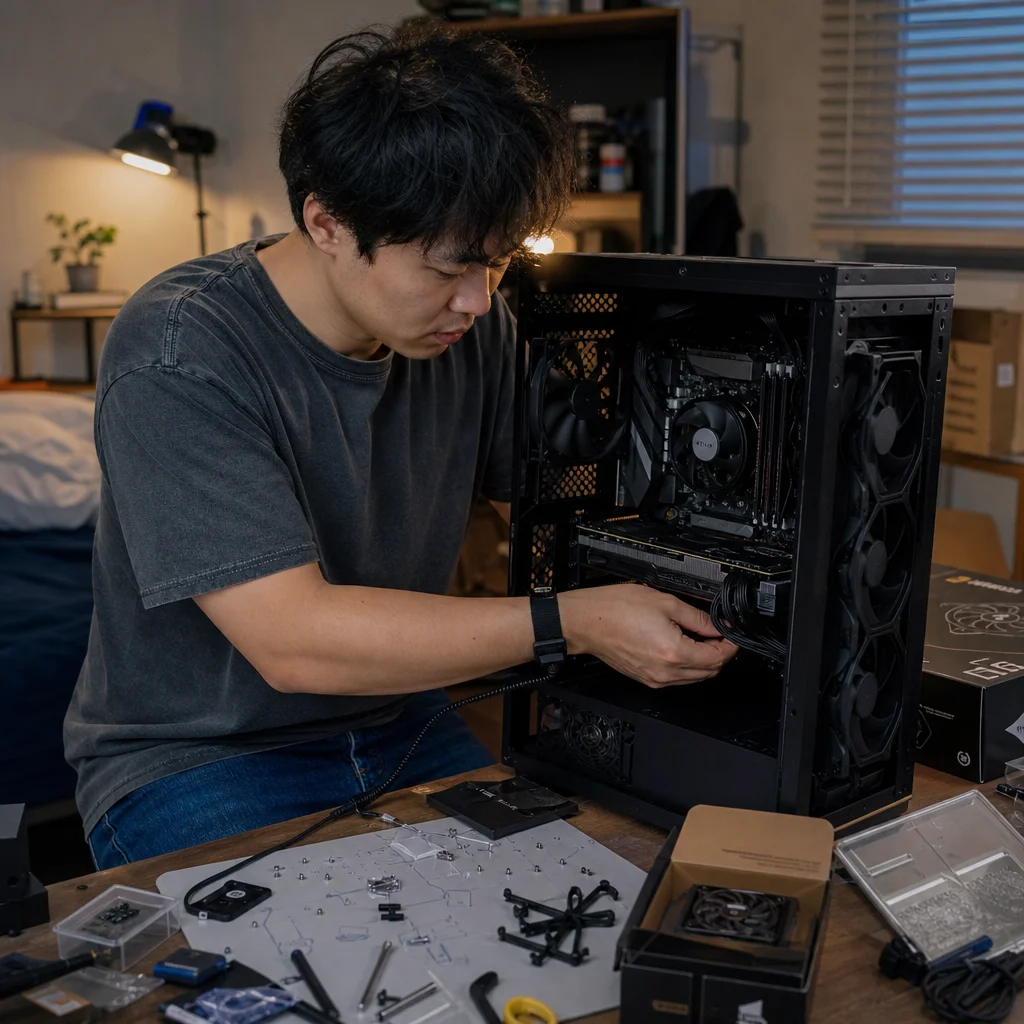
A PC budget can look complete once it covers the processor, graphics card, motherboard, memory, storage, case, power supply, and operating system. The trouble starts when the real total includes delivery charges, return postage, a replacement cable, or a second order for the part that turned out to be incompatible.
For a first build in Australia or New Zealand, these costs are difficult to predict precisely. They depend on the retailer, delivery location, item size, warranty or return terms, and whether you’re buying locally or importing. That doesn’t mean you should guess. A small, deliberate reserve can protect the build without turning every purchase into a worst-case scenario.
Separate the build price from the build budget
Start by calculating the price of the parts you actually intend to buy. Then treat that figure as the hardware subtotal, not the final budget. Shipping, taxes or duties where applicable, accessories, and contingency money belong in separate lines so you can see which costs are certain and which are only possible.
This distinction helps when comparing retailers. A component that is slightly cheaper from one store may stop being a bargain after delivery is added. Conversely, paying a little more to consolidate several items into one order might reduce the number of parcels, delivery charges, and opportunities for something to arrive separately or be lost in transit.
Your working budget can be divided into four parts:
- Core hardware: the components required for the computer to function.
- Planned extras: items such as extra fans, a larger SSD, a Wi-Fi adapter, or a spare display cable.
- Known delivery costs: shipping charges shown at checkout, including charges for large or heavy items.
- Contingency: money reserved for returns, replacement parts, or an unexpected compatibility problem.
Keep the contingency separate from planned upgrades. If you spend it on a better keyboard or more storage before ordering, it no longer protects you from a damaged motherboard or a replacement power cable.
Account for shipping before the checkout page
Shipping is easy to underestimate because PC parts are often bought from several retailers. A case may have a different delivery charge from a processor, while a monitor or large power supply can affect the order’s shipping category. Marketplace sellers may also charge separately even when products appear on the same website.
Make a simple delivery estimate while comparing parts. Count the likely orders rather than assuming every item can be shipped together. If one store has the right motherboard, memory, and SSD, grouping those purchases may be sensible. It isn’t automatically better, though: a single delayed order can hold up several components, and a retailer’s return process may be less convenient than the cheapest price suggests.
For a first build, convenience has a value. Fewer retailers usually means fewer accounts, invoices, tracking numbers, and return policies to manage. On the other hand, concentrating every purchase with one seller can remove useful alternatives if that seller has limited stock or a narrow range of compatible parts. Compare the complete delivered cost and the support you expect to need, not just the line-item prices.
Delivery timing can create a second cost. If parts arrive weeks apart, you may not discover a missing accessory or faulty component until the return window has become harder to use. Buying everything at once isn’t essential, but avoid ordering a part so early that you can’t reasonably test it with the rest of the system.
Check the delivered total and return route: Before placing each order, confirm the shipping charge, estimated delivery area, seller identity, return postage conditions, and any tax or import amount that may apply to your Australian or New Zealand address. Retailer terms can change, so rely on the current checkout and policy pages rather than an old comparison or forum post.
Build a return reserve, not a fear budget
A return reserve covers the cost and inconvenience of correcting a purchase. It may be needed when a part arrives damaged, you order the wrong form factor, a product is missing an accessory, or a component is faulty. It shouldn’t assume that every build will fail or that you’ll need to replace an expensive part immediately.
For many first-time builders, a reserve of roughly 5–10% of the hardware subtotal is a reasonable planning starting point, provided the amount is large enough to cover at least one ordinary replacement or return-related cost. This is a planning range, not a rule. A low-cost build may need a practical minimum rather than a percentage, while a high-end graphics card can make a percentage reserve look generous even though one major replacement would exceed it.
Consider the risk profile of the actual build. A new, standard configuration bought from established local retailers may need less reserve than a mixed collection of used parts, marketplace listings, imported goods, and components with uncertain compatibility. A compact build with unusual dimensions may also justify more room because a case, cooler, or power cable can be harder to substitute.
Don’t count a retailer refund as immediately available money. Refund timing, return postage, inspection, and replacement stock can all affect how quickly you recover the original cost. If you’re using most of your available cash to buy the parts, keep enough accessible to solve a problem before a refund arrives.
Decide when replacement is better than return
Not every problem should be handled the same way. If an item is visibly damaged on arrival, document the packaging and contact the seller before installing it. If the wrong model was ordered, check the retailer’s current return process and avoid opening or modifying it unnecessarily. If a component appears faulty, basic testing may help distinguish it from a cable, connection, or configuration problem, but don’t continue using hardware that shows signs of electrical or physical damage.
A replacement can be faster when a low-cost accessory is missing or a common cable is defective. For example, buying a compatible SATA cable or case fan locally may get the build running sooner than waiting through a return process. That convenience has a cost, so decide whether speed matters and whether the original item can still be returned or claimed under the seller’s terms.
For expensive parts, returning the item is usually the safer financial choice than quietly buying another one. A second graphics card or motherboard can consume the entire contingency fund, especially if you haven’t confirmed that the first part is actually defective. Keep the packaging, accessories, invoices, and serial-number records until the system has passed its initial testing.
This is also why it helps to test the build in stages. You don’t need to install every cable neatly or close every panel before checking that the system powers on, reaches firmware, detects memory, and recognises its storage. Early testing can reveal a missing part while the order details and packaging are still easy to find.
Allow for compatibility mistakes
Replacement money isn’t only for damaged hardware. First-time builders sometimes discover that a cooler is too tall for the case, a radiator doesn’t fit the intended mounting position, memory clearance conflicts with the cooler, or a power supply lacks the required connector. These are planning errors rather than manufacturing faults, and return shipping may not always be free.
The best defence is to spend time checking compatibility before ordering. Confirm the motherboard socket and memory type, case support for the motherboard size and graphics card length, cooler clearance, storage connections, and power-supply connectors. Check the manufacturer specifications for the exact model rather than relying only on a product family name.
Some choices reduce the cost of being wrong. A standard mid-tower case generally gives you more clearance options than a very compact case. A modular power supply can reduce cable clutter, but its detachable cables aren’t universally interchangeable; use only the cables supplied or explicitly approved for that power supply. Choosing widely available parts can also make a replacement easier to find.
If your budget is tight, avoid spending the contingency on a highly specialised design unless that design is the point of the build. A simpler configuration may be slightly less exciting but easier to return, replace, and troubleshoot.
Treat imported purchases as a separate risk
Buying from overseas can make a component look cheaper, but the displayed price may not represent the complete cost for your location. Delivery, currency conversion, taxes or duties, brokerage or handling charges, warranty arrangements, and return shipping can all affect the result. Some sellers may require an international return, which can be expensive and slow.
Imported purchases can still make sense when the saving is substantial or the part is unavailable locally. Put the expected landed cost beside the local delivered price, then decide whether the saving is large enough to justify the additional return risk. For a critical part such as the motherboard or power supply, local support may be worth more than a modest price difference.
Be especially cautious with unfamiliar marketplace sellers and listings that combine new, used, refurbished, or region-specific products under similar descriptions. Check the exact model, condition, included accessories, seller location, and warranty route before treating the item as equivalent to a locally supplied product.
Use the contingency without letting it disappear
Give the reserve a job. If you need it for return postage, a missing bracket, or a replacement cable, record the amount and what remains. If the problem is covered by a refund or warranty replacement, return the recovered money to the contingency rather than treating it as spare spending money.
You can also make the reserve easier to manage by ranking possible compromises. If shipping costs more than expected, delay an optional fan or RGB accessory before downgrading the power supply or buying a questionable replacement. If a cooler doesn’t fit, choose a compatible cooler with adequate performance rather than forcing the original installation. Protect the parts that affect safety, compatibility, and system stability first.
A useful budget might therefore look like this in plain language: the required hardware comes first, delivery is added using real order estimates, and a separate reserve covers one plausible problem. Planned extras are purchased only after those costs are accounted for. That approach keeps the budget honest without assuming that every parcel will arrive damaged.
Plan the final amount before ordering
Before you commit, write down the complete delivered price for each likely order and identify which items are optional. Check the return and warranty route for expensive or unusual components, particularly when buying from a marketplace or overseas seller. Keep enough accessible money for a replacement or second delivery, and preserve the packaging and purchase records until the system has been tested.
The right contingency isn't the largest one you can imagine. It’s enough to handle the realistic problems your shopping choices create. Buying locally, consolidating sensible orders, checking compatibility carefully, and reserving money for one genuine setback will usually do more for a first build than simply adding a large unexplained percentage to the total.