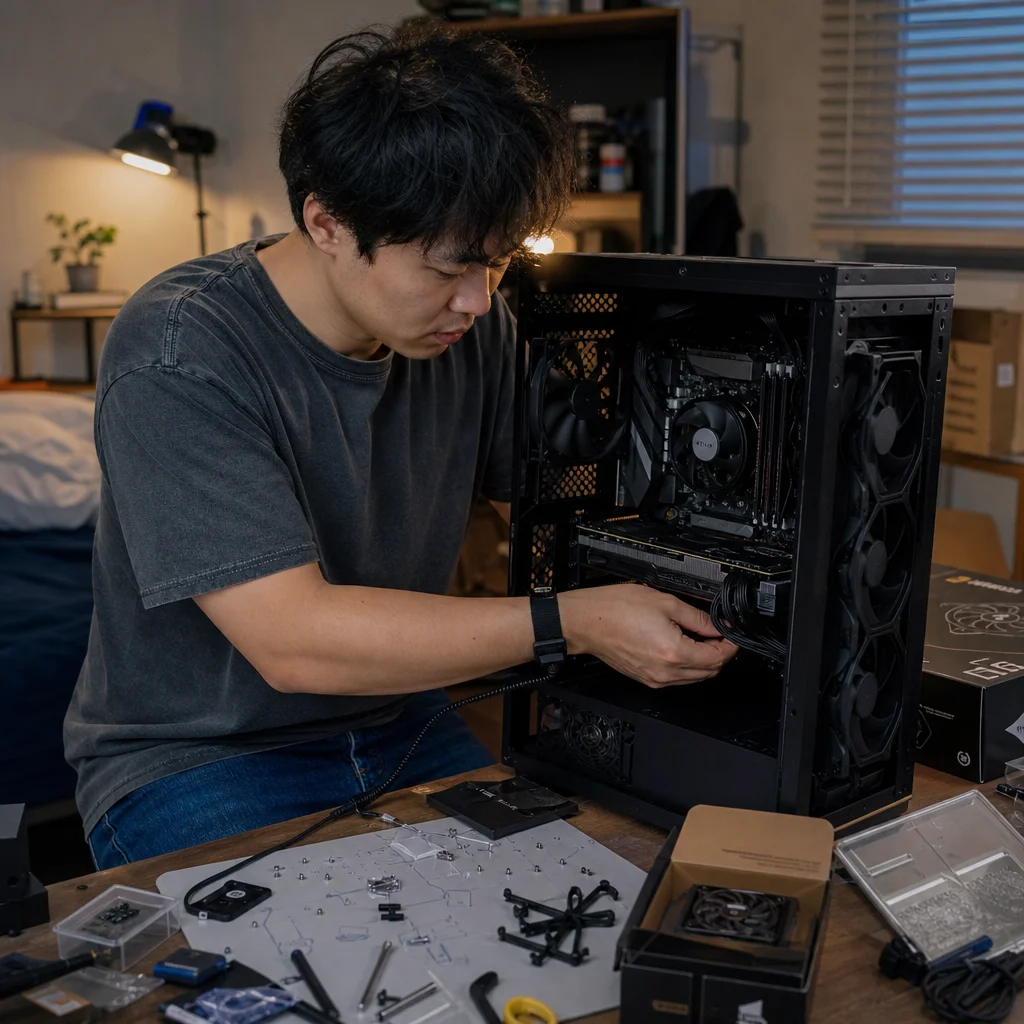
I’ll help you assemble a compact PC-building tool kit that covers installation, cable management, maintenance, and basic recovery without encouraging unnecessary purchases. You’ll learn what to keep nearby, what to borrow, and which specialized tools can wait.
Read article →
I’ll show you how to install a motherboard I/O shield without bent tabs or misplaced standoffs, so you can check alignment early and avoid removing the motherboard at the end.
Read article →
When an older gaming PC still runs some games well but struggles in others, the right first upgrade depends on where performance is actually being lost. I’ll show you how to identify that limit and compare GPU, memory, storage, processor, and display upgrades before spending your budget.
Read article →
I’ll help you test a new monitor alongside your existing display, from resolution and refresh rate to sleep, audio, adaptive sync, and application behavior, so you can find compatibility problems while the old monitor is still available as a fallback.
Read article →
A temporary test setup can expose a bad connection or unstable component before it disappears behind cable management. I’ll show you how to check booting, memory, storage, networking, and shutdown safely while keeping the build easy to inspect and move.
Read article →
A successful boot isn't the same as a finished upgrade: I’ll walk through the first checks that confirm Windows, storage, networking, sleep, and recovery still work after a motherboard replacement.
Read article →
When a new power supply arrives before the rest of the PC is assembled, I’ll show you how to inspect it, use the correct modular cables, test startup in stages, and recognize behavior that deserves a closer look.
Read article →
I’ll help you compare the signs of genuine memory pressure with startup clutter, storage limits, and background software. You’ll get repeatable checks that point toward a RAM upgrade, a cleaner software setup, or a different fix entirely.
Read article →
I’ll compare the fan-curve choices that matter most—sensor source, ramp speed, minimum duty cycle, and separate CPU, GPU, and case-fan behavior—so you can reduce unnecessary noise without letting heat soak or sustained workloads push component temperatures too high.
Read article →
I’ll help you turn the monitor, keyboard, mouse, and other equipment you already own into a realistic PC parts budget, while leaving room for compatibility surprises, missing essentials, and the recovery costs that can derail a first build.
Read article →