How to Tell Whether a Slow PC Needs More Memory or a Clean Software Setup
I’ll help you compare the signs of genuine memory pressure with startup clutter, storage limits, and background software. You’ll get repeatable checks that point toward a RAM upgrade, a cleaner software setup, or a different fix entirely.
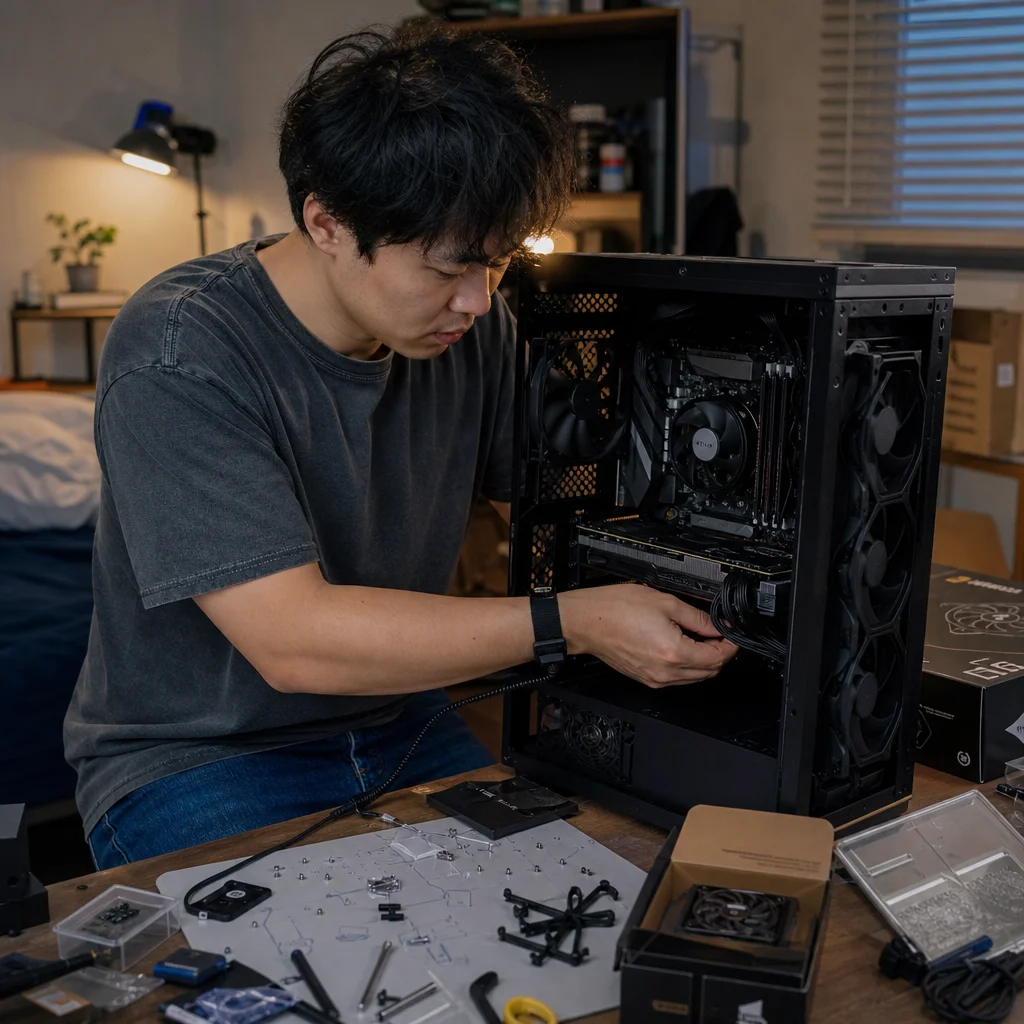
A slow computer doesn’t automatically need more RAM. The same hesitation—delayed window openings, browser pauses, or a desktop that takes too long to become usable—can come from too many startup programs, a nearly full drive, runaway background software, or a storage device beginning to fail.
The useful question isn't simply whether your PC feels slow. It’s what the computer is doing while it feels slow. By watching memory, storage, processor activity, and the timing of the problem, you can usually narrow the cause without buying parts first.
Start by identifying when the slowdown happens
Pay attention to the pattern before opening a system monitor. A PC that is slow immediately after startup but becomes reasonable after several minutes often has too many startup tasks or background services. A computer that slows only when you open many browser tabs, edit large photos, run a virtual machine, or play a game alongside other programs is more likely running short of memory.
A system that is consistently sluggish, including when no demanding program is open, needs a broader check. Storage health, unwanted software, excessive background activity, thermal throttling, and an aging processor can all look like a memory problem. If the computer freezes, crashes, restarts, or shows damaged files, treat those as reliability symptoms rather than simple performance complaints.
Restart the PC before testing. A restart clears temporary conditions and gives you a known starting point. It doesn’t solve the underlying problem, but it helps distinguish a one-time buildup from a slowdown that returns under normal use.
Check the tools on your system: Open the current performance-monitoring tool for your operating system and note the labels it uses for memory, disk, startup items, and background processes. Windows commonly provides these details through Task Manager, while macOS uses Activity Monitor and related system settings; names and locations can change between releases.
What memory pressure actually looks like
When a computer runs low on RAM, the operating system moves less-active data between memory and the storage drive. Windows may use a paging file, while macOS uses swap. This lets programs continue running, but storage is much slower than RAM, so switching tasks can become noticeably jerky.
Memory pressure usually appears when your workload grows. You might see a browser become slow after opening many tabs, an editing application pause while several large files are open, or a game stutter when other programs remain active. Closing one or two large applications may produce an immediate improvement because it reduces the amount of data the system needs to keep active.
Look at memory usage while reproducing the slowdown, not five minutes after closing everything. On Windows, Task Manager’s memory figures and the Processes tab can show whether an application is consuming an unusually large amount. On macOS, Activity Monitor’s Memory view includes memory pressure and swap-related information. The precise indicators differ, but the principle is the same: a high percentage alone doesn’t prove that you need more RAM. The stronger evidence is sustained pressure accompanied by slow task switching, heavy paging or swap, and a workload that regularly exceeds your installed memory.
Don’t interpret cached memory as wasted memory. Modern operating systems use spare RAM to cache frequently accessed data and generally release it when applications need it. A computer can show a large amount of memory as used while still operating normally. Look for pressure and behavior, not one alarming percentage.
A useful memory test
Open the applications you normally use together. Include your typical browser session, office or creative software, communication tools, and any other program that is usually open. Reproduce the delay, then observe memory activity for several minutes.
If memory pressure rises sharply and the system becomes responsive after you close a major application, RAM is a credible limitation. If the system remains slow even with memory comfortably available, adding RAM is unlikely to address the main problem. If one process keeps growing while you do little else, investigate that application for a memory leak or update rather than assuming every slowdown calls for an upgrade.
Also check how much RAM is installed and whether your computer can be upgraded. Some laptops have memory soldered to the motherboard, and many systems have a maximum supported capacity. A useful upgrade must match the machine’s memory type and configuration; more capacity isn't helpful if the module is incompatible or the computer can't use it.
Signs that software cleanup is the better first move
Startup clutter is a common cause of a computer that feels slow after logging in. Cloud-sync clients, launchers, update helpers, hardware utilities, messaging applications, and vendor tools may all start automatically. Each one may be reasonable by itself, but their combined effect can delay startup and consume memory and processor time before you begin working.
Check the list of programs that launch automatically and disable items you recognize as unnecessary. Disabling startup doesn't usually uninstall the application; it prevents automatic launching so you can open it when needed. Keep security software, hardware components that genuinely control a device, and tools required for a specific workflow unless you know their functions are duplicated.
Background activity can also explain a PC that becomes slow at predictable times. Indexing, cloud synchronization, antivirus scans, application updates, and backup jobs may increase disk or processor activity. If the slowdown appears during a scheduled task and disappears afterward, changing its schedule or reducing the amount of data it processes may be more sensible than installing RAM.
Uninstall software you no longer use, but avoid aggressive “PC cleaner” utilities that promise to fix every performance problem. Registry cleaners, automatic driver tools, and unidentified debloat scripts can remove useful components or introduce new problems. Prefer the operating system’s normal uninstall process and make changes one at a time so you can undo them if necessary.
Don’t mistake a full or unhealthy drive for low memory
Storage affects responsiveness in several different ways. A nearly full system drive gives the operating system less room for temporary files, updates, caches, and paging. A mechanical hard drive can also become a major bottleneck compared with a solid-state drive, particularly during startup and application loading.
Check available space on the drive that holds the operating system. If it has very little free capacity, remove or move files safely, clear applications’ temporary data through built-in tools, and review large downloads and old installers. The amount of free space needed varies by system and workload, so avoid treating one universal percentage as a guarantee. Leave enough room for normal updates and the temporary work your applications perform.
A slow drive can make memory pressure feel worse because paging and swapping take longer. Conversely, upgrading from a hard drive to a solid-state drive can make startup and loading much faster without changing the amount of RAM. It may not fix application slowdowns caused by insufficient memory, but it can improve the overall feel of an older system substantially.
If you hear unusual noises from a mechanical drive, encounter repeated file errors, or see warnings from the operating system, back up important data before experimenting. A failing drive is a data-protection issue first and a performance issue second. Don’t use cleanup software as a substitute for a backup or drive-health investigation.
Compare the evidence before buying anything
Use a simple comparison rather than relying on a single observation:
| What you observe | More likely explanation | Sensible first step |
|---|---|---|
| Slow mainly after startup | Startup clutter or background services | Review automatic launchers and scheduled activity |
| Slow when many demanding apps are open | Memory pressure | Measure memory during the workload and consider more RAM |
| Slow opening files and programs, with high disk activity | Storage bottleneck or background disk work | Check free space, drive type, and active processes |
| One program consumes increasing memory | Application problem or memory leak | Update, repair, or replace that application |
| Slow even when memory and disk activity are low | CPU, thermals, drivers, or hardware age | Broaden the diagnosis instead of buying RAM |
| Freezes, file errors, or repeated crashes | Possible hardware or system corruption | Back up data and investigate reliability first |
These categories can overlap. A computer with too little RAM may also produce heavy disk activity because it is paging. A full drive may leave too little space for effective paging. Several startup programs may consume enough memory to expose a limitation that isn’t noticeable during a clean session. The aim is to find the dominant cause, not force the symptom into one box.
Use a controlled cleanup test
Make a small number of reversible changes, then test the same workload again. Disable a few unnecessary startup items, restart, wait for normal background activity to settle, and repeat the tasks that previously caused trouble. If performance improves without reducing the programs you need during work, software cleanup was probably worthwhile.
Next, test with your normal applications open and watch memory behavior. If the cleaned-up startup environment helps at login but the PC still slows once your workload grows, you may have both issues: software clutter to reduce and insufficient RAM to address. Cleaning up first can also make a memory upgrade more effective because the new capacity isn’t immediately consumed by programs you didn’t need running.
If you suspect a background process, close or pause one category at a time—for example, a sync client or a launcher—and retest. Avoid ending unknown system processes indiscriminately. A process name that looks unfamiliar may belong to the operating system, a driver, or security software.
When more RAM is a sensible upgrade
More memory is worth considering when the slowdown is repeatable under a normal workload, memory pressure remains high, paging or swap increases, and closing applications consistently restores responsiveness. It’s especially useful if your everyday tasks have outgrown the system: more browser tabs, larger creative projects, newer games, or simultaneous work and communication applications.
Buy based on the computer’s supported specifications and your actual workload, not on the largest capacity advertised. Confirm the memory type, maximum supported capacity, number of slots, and whether existing modules must be replaced. Matching modules are often the straightforward choice, but the correct configuration depends on the motherboard or laptop design.
RAM won’t repair a failing drive, remove malware, reduce excessive startup activity, or compensate for a processor that is the limiting component. It also won’t necessarily make a lightly used PC faster if memory is already sufficient. In those cases, software cleanup, a storage upgrade, cooling maintenance, or a fresh operating-system setup may provide more benefit.
When a clean software setup is the better choice
Choose cleanup first when the slowdown follows login, improves after closing background applications, or appeared after installing a collection of utilities. Review startup programs, uninstall software you don’t use, update important applications, check for unwanted software with trusted security tools, and keep adequate free storage.
A clean reinstall of the operating system is more drastic than ordinary cleanup. Consider it when the system has accumulated years of unwanted software, persistent errors, damaged system components, or configuration problems that are difficult to isolate. Back up personal files, confirm that you can reinstall required applications, and make sure you have access to account credentials and essential drivers or recovery options. A reinstall can remove software causes, but it can't fix failing hardware and may erase data if handled carelessly.
The best decision is often a sequence rather than a choice between two extremes: measure the slowdown, remove unnecessary background work, verify storage space and health, and then reassess memory under the workload you actually care about. If the computer still runs out of memory at that point, an upgrade has clear evidence behind it. If it doesn’t, you’ve avoided spending money on RAM that would only have treated a symptom.