When a Memory Upgrade Is Better Than a New Processor
A full memory pool and a slow processor can feel surprisingly similar, but they need different fixes. I’ll show you how to read the symptoms, confirm the bottleneck, and decide whether more RAM is smarter than replacing the CPU and platform.
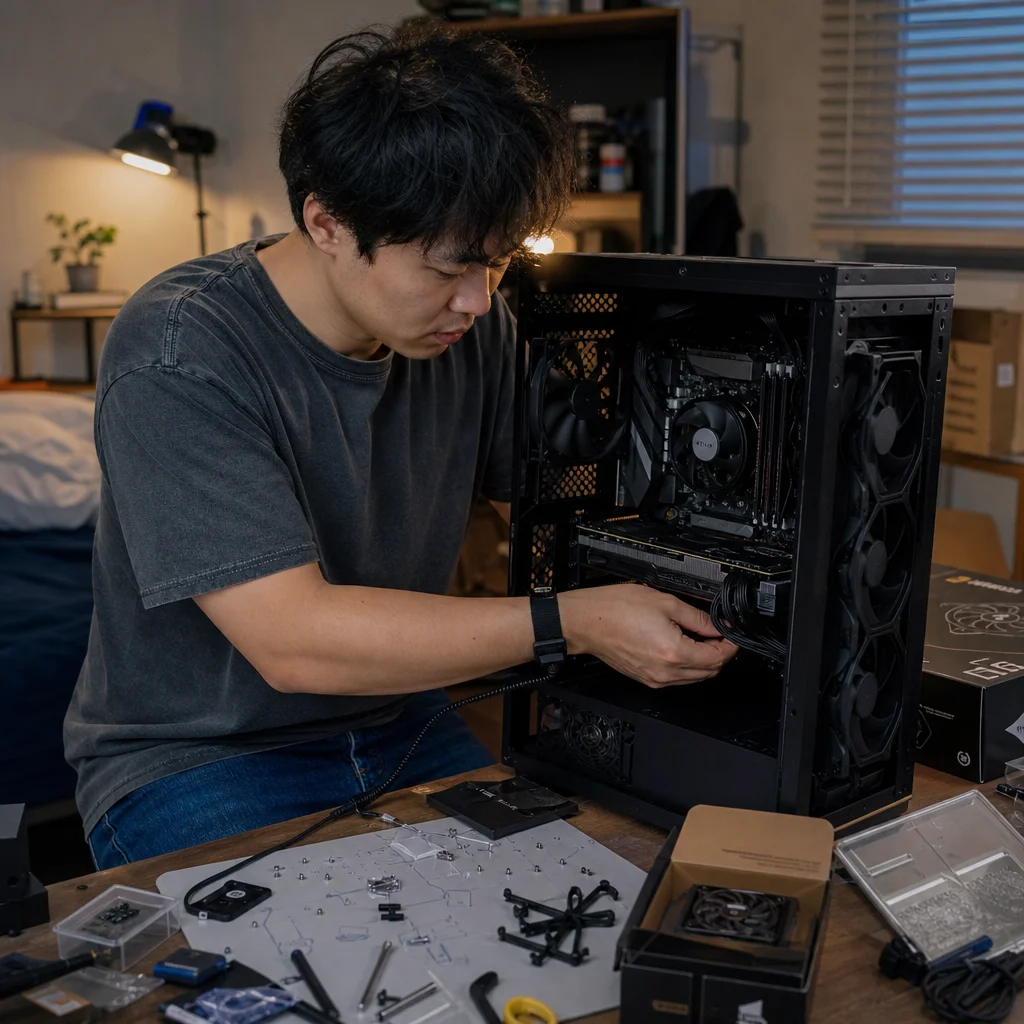
A computer that feels slow doesn’t automatically need a faster processor. If applications pause while you switch between them, games hitch when background programs are open, or the system becomes unpleasantly sluggish during large projects, the real limitation may be memory capacity rather than CPU performance.
That distinction matters because a memory upgrade can be relatively contained, while a processor upgrade may also require a new motherboard, memory standard, cooler, or operating-system setup. The right choice starts with identifying what the system is running out of.
What memory pressure feels like
RAM holds the data and instructions your active applications need quick access to. When there isn’t enough of it, the operating system moves less-active data to storage. This process, often called paging or swapping, keeps the computer functioning but is much slower than working from memory.
Memory pressure usually appears as a pattern rather than one isolated symptom. You may notice long pauses when switching between browser tabs and an editor, a delay after opening a large project, or severe slowdowns when a game, voice chat, browser, and recording software run together. The storage drive may stay busy even though you aren’t deliberately opening or saving files. Closing one large application can make the whole system feel normal again.
Some programs also become progressively less responsive during a session. A browser with many demanding tabs, a photo or video editor, a virtual machine, and development tools can all consume substantial memory. If the problem is worse after several applications have been open for hours, capacity deserves attention before you assume the processor is too slow.
High memory usage by itself isn’t proof of a problem. Operating systems often use spare RAM for file caches and release it when another application needs it. The more useful question is whether available memory is falling low while storage activity rises and responsiveness deteriorates. Look for that combination rather than treating a high percentage as a verdict.
How a processor limitation differs
A CPU limitation tends to remain even when enough memory is available. Tasks such as compiling code, exporting video, rendering a scene, compressing a large archive, or calculating a complex spreadsheet may take a long time because the processor can't complete the work faster. The system can still feel responsive between operations, but the operations themselves remain CPU-heavy.
Games provide a useful example. If the processor is limiting performance, one or more CPU threads may stay heavily loaded while the graphics card isn't being fully used. Frame rates may be inconsistent in busy scenes, or the game may perform poorly at lower resolutions where the graphics card has less work to do. Increasing RAM won’t remove a processor bottleneck in that situation unless the game was also running short on memory.
Processor limits can also show up as sustained CPU utilization during the exact task that bothers you. A short spike when launching an application is normal. A processor that remains near its practical limit throughout a render or compile is different. Check whether the workload is using many cores or only one or two; some applications depend heavily on single-thread performance and won’t benefit fully from adding cores.
A new CPU can improve both responsiveness and completion time, but it’s a broader change than replacing a memory kit. The processor may use a different socket, require a BIOS update, need a stronger cooler, or work only with a different motherboard generation. If the existing platform is otherwise healthy, that added complexity is part of the decision.
Confirm the bottleneck before buying
Use the computer while reproducing the problem, then watch resource activity at the same time. On Windows, Task Manager can show memory, CPU, disk, and per-application usage. macOS Activity Monitor provides similar information, and Linux users can combine a system monitor with tools such as free or top. The labels differ, but the goal is the same: connect the symptom to the resource being exhausted.
For a memory-related slowdown, note the total memory in use, available memory, storage activity, and whether the affected application grows large before the pause. A system that reaches its capacity and begins paging is a stronger upgrade candidate than one that has plenty of available memory while the CPU remains fully occupied.
For a processor-related slowdown, observe CPU usage during the task rather than only when the computer is idle. Check whether a particular application is using the available cores effectively. If the CPU is saturated but memory remains comfortable and storage activity is modest, a processor or broader platform upgrade is more likely to help.
You should also separate memory capacity from memory speed. Adding RAM can solve capacity pressure, but faster RAM may produce only a small improvement in many everyday workloads. If the machine is running out of capacity, prioritize having enough memory. If capacity is already adequate, changing speed or timings is a different, narrower decision and may not address the problem you’re feeling.
Check the platform before ordering memory: Confirm your motherboard’s supported memory type, maximum capacity, slot layout, module limits, and any relevant firmware requirements. Then verify that the planned modules fit the board and that your operating system and applications can use the added capacity.
When more RAM is the better upgrade
A memory upgrade is usually the sensible first move when your slowdowns are tied to multitasking, large files, virtual machines, or applications that exceed the system’s available capacity. It’s especially attractive when the processor still handles ordinary work comfortably and your demanding tasks improve immediately after closing other programs.
Capacity also makes sense when the computer’s storage drive is active during pauses and the system becomes responsive again after memory-hungry applications are closed. You may not see a dramatic benchmark increase, but you can get fewer interruptions, smoother task switching, and less waiting for applications to recover from paging.
Choose a configuration that matches the platform rather than buying the largest number on the package. Two compatible modules can allow a desktop platform to use its memory channels as intended, but the correct arrangement depends on the motherboard manual. A larger module count can also make higher memory speeds or maximum capacity harder to achieve on some systems.
Mixing an old kit with a new kit can work, but it isn’t guaranteed to be trouble-free. Modules may have different voltage, timing, rank, or memory-chip characteristics. The system may run them at a lower setting, fail to boot, or become unstable under load. A matched kit with the capacity you actually need is often the simpler route, particularly if reliability matters more than preserving every existing module.
Before installing anything, shut the computer down, disconnect power, and handle the modules by their edges. Make sure each module is fully seated and that the retaining clips close. Afterward, check that the operating system reports the expected capacity and run your normal workload. If instability appears, return to conservative memory settings and test the modules individually or with a suitable memory diagnostic.
When a new processor is justified
A processor upgrade becomes more convincing when memory pressure is absent and the workload consistently saturates the CPU. That includes long exports, code builds, simulation work, high-refresh gaming limited by the processor, and other tasks where completion time is determined mainly by CPU throughput.
It’s also worth considering when the processor lacks features your current software needs, or when the platform has reached a practical ceiling for compatible CPUs. In that case, replacing the processor alone may not be possible or may offer poor value compared with a coordinated motherboard and memory change.
A broader platform upgrade can be worthwhile if you need substantially more processing performance, newer connectivity, or a different memory standard at the same time. However, don’t let the possibility of a faster CPU distract from a simpler fix. If your computer freezes only when you open a large number of applications, a new processor may finish individual tasks faster while leaving the underlying memory pressure unchanged.
Cooling and power also belong in the plan. A higher-performance processor may generate more heat or require a cooler with a different mounting system. Your power supply may be adequate, but confirm its connectors and overall capacity when other components are changing too. These are compatibility checks, not reasons to replace functioning parts automatically.
Avoid upgrading the wrong symptom
A slow startup isn't necessarily a memory or processor problem. Startup programs, a nearly full or failing storage drive, malware, background synchronization, thermal throttling, and driver issues can all produce sluggish behavior. If the computer is slow even with little running and resource monitors show no clear memory or CPU pressure, investigate those causes first.
Likewise, adding RAM won’t fix application crashes caused by faulty memory, overheating, or an incompatible overclock. If problems include random reboots, blue screens, corrupted files, or errors that appear under load, treat stability as a separate troubleshooting problem. Test at default settings and check the health of the storage drive before assuming more capacity will help.
The cheapest upgrade isn't always the smallest purchase. A low-capacity kit that forces you to replace it again soon may cost more effort than choosing a sensible capacity now. Conversely, buying far beyond your workload can tie up money without improving performance. Base the decision on the applications you actually use, the size of your projects, and how often you run them together.
Make the decision from evidence
Start by reproducing the slowdown and recording what the CPU, memory, and storage are doing at that moment. If memory approaches its usable limit, paging increases, and closing applications restores responsiveness, expand memory first. If memory remains comfortable while the CPU stays saturated during the task, investigate a processor upgrade and its platform requirements.
If both resources are under pressure, prioritize the bottleneck that causes the most disruptive symptom. More RAM may improve multitasking immediately, while a CPU change may shorten the completion time of demanding work. If neither resource is clearly responsible, pause the upgrade and examine storage health, temperatures, software behavior, and background tasks.
A memory upgrade is better than a new processor when your computer is struggling to keep active work in memory, not when it simply feels old. Confirm the diagnosis, buy a compatible configuration, and test the result under the workload that prompted the upgrade. That approach can restore smoothness without turning a targeted repair into an unnecessary platform rebuild.