When a Used Office PC Needs a New Fan Before It Needs Faster Parts
A quieter, cooler office PC may be a better investment than a faster processor or more memory. I’ll show you how to assess fan noise, temperatures, dust, bearings, and workload limits before choosing an upgrade.
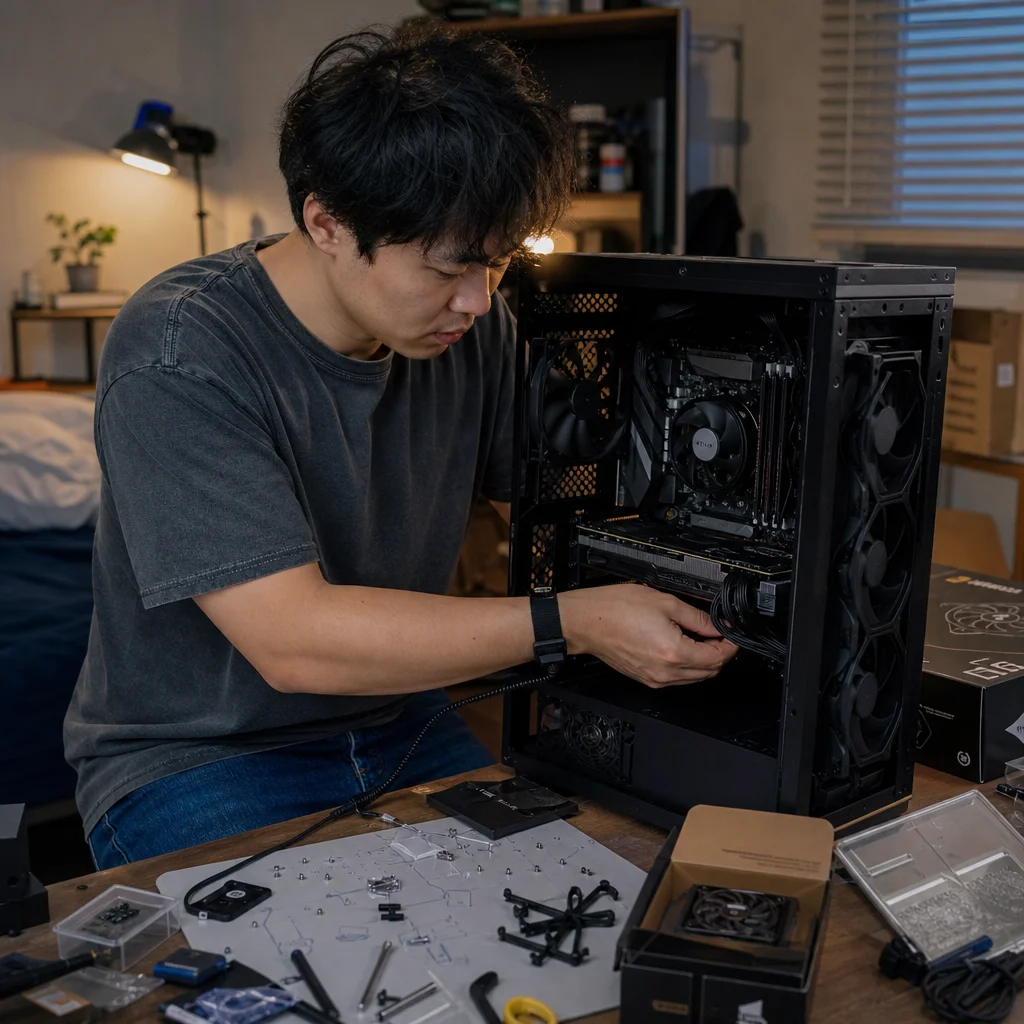
An older office PC can feel slow for two very different reasons: its components may be genuinely underpowered, or its cooling may be struggling. If the fan is clogged, worn, or running at full speed because temperatures are too high, buying faster parts first can leave you with a louder and less reliable computer.
The sensible starting point is to determine whether the machine has a cooling problem, a performance problem, or both. A fan replacement is relatively inexpensive and can restore normal operation. It won’t turn an aging dual-core office desktop into a modern workstation, but it can prevent heat and noise from masking what the existing hardware is still capable of doing.
Start with the symptoms, not the upgrade list
Listen to the PC while it is idle, then pay attention to what happens when you open several browser tabs, start a video call, or run the application that feels slow. A steady low hum is usually normal. A rattling, grinding, chirping, or irregular clicking sound points more strongly toward a fan or its mounting than toward a processor that needs replacing.
A fan that suddenly becomes very loud when the system is doing almost nothing deserves attention. The same is true if the noise rises and falls repeatedly during light work, or if the computer becomes noticeably quieter after a short period switched off. Those patterns can indicate restricted airflow, a fan bearing beginning to fail, or a temperature-control system reacting to heat.
Performance symptoms need a separate look. Slow application launches, long boot times, and delays when switching between programs can come from a slow hard drive, insufficient memory, background software, or an old processor. Stuttering under sustained work can also result from thermal throttling, where the system reduces processor speed to control temperature. A fan replacement helps with that last case only if cooling is the cause.
Before opening the case, save your work and shut the computer down normally. Disconnect its power cable and any connected peripherals, and give moving parts time to stop. You don't need to dismantle the whole machine to inspect whether dust or an obviously damaged fan is the problem.
Check the exact desktop design: Before ordering a replacement, identify the computer's model, fan location, connector, mounting method, and available space. Business desktops sometimes use proprietary fan assemblies, unusual connectors, or tight internal clearances rather than standard enthusiast-PC parts.
Inspect dust, airflow, and the fan itself
Dust is often the simplest explanation for a noisy office PC. Intake grilles, processor heatsinks, exhaust vents, and power-supply openings can become blocked when a computer has spent years under a desk. A layer of dust acts like insulation, while a clogged heatsink forces the fan to spin faster to move heat away.
Look for three things during inspection: blocked vents, a heatsink packed with dust, and cables or debris touching a fan blade. Also check whether the fan spins smoothly when the system is powered off and disconnected. It shouldn't feel rough or wobble significantly when moved gently. Don't force it or run a finger through the blades.
Cleaning may solve the problem without a new part. Hold fan blades still while using short bursts of compressed air, because allowing a small fan to spin freely at high speed can stress its electronics. Work outdoors or in a well-ventilated area if practical, and keep the nozzle far enough away to avoid striking components or spraying liquid propellant. A soft brush can help loosen stubborn dust, but avoid scraping circuit boards or tearing delicate cables.
If the fan remains noisy after cleaning, the bearing may be worn. Some fans have labels covering a bearing access point, but adding oil is usually a temporary experiment rather than a dependable repair. Once a bearing has become noisy, replacing the fan is generally the more predictable solution.
Check temperatures under a realistic workload
A temperature reading is useful only when you know what the computer was doing at the time. An idle reading can look perfectly healthy even when the system overheats during a video call or sustained application work. Conversely, a brief high reading during startup may not indicate a serious problem.
Use a trusted hardware-monitoring utility that supports your operating system and processor, then observe temperatures at idle and while performing the task that causes the noise or slowdown. Look for an unusual rise, repeated drops in processor speed, application crashes, sudden shutdowns, or a fan that remains at maximum speed. The exact temperature limits vary by processor and system design, so compare readings with the processor or computer manufacturer's published specifications rather than relying on one universal number.
The pattern matters more than a single number. If temperatures climb quickly and performance falls at the same time, cooling deserves priority. If temperatures remain reasonable but the processor is already fully occupied during ordinary work, a faster part may address the actual limitation. If the storage drive is constantly busy while memory use is high, neither a case fan nor a processor upgrade is likely to solve the main complaint.
A fan that is loud but keeping temperatures stable is a comfort and maintenance issue, not automatically an emergency. A fan that is loud because temperatures are rising, stops intermittently, or produces a warning from the system is more urgent. Continuing to use a computer with a failing cooling fan can lead to instability and, depending on the component, protective shutdowns.
Decide which fan needs attention
The processor fan is the most important to assess because it cools the chip directly. On many office desktops, it is attached to a compact heatsink and may be part of a manufacturer-specific assembly. Replacing only the fan can be possible, but replacing the entire cooler may be simpler if the mounting system is damaged, the heatsink is badly clogged, or the fan can't be separated from the shroud.
Case fans move air through the enclosure. A failed exhaust fan can raise internal temperatures, while a blocked intake can make every other fan work harder. If the computer has only one small case fan, restoring that airflow may be more valuable than adding several larger fans that the case was never designed to support.
The power-supply fan is different. Don't open the power supply to clean or replace its internal fan. Dangerous electrical energy can remain present even after the PC is unplugged. If the power supply is noisy, overheating, or showing other signs of failure, replace the complete unit with a suitable, quality model or have the computer serviced by someone qualified to handle it.
Check the replacement fan's voltage, dimensions, connector, screw spacing, airflow direction, and control type. A physically compatible fan may still have the wrong connector or lack the speed-control behavior expected by the motherboard. Some systems report a fan error if the replacement's speed signal is missing or outside the expected range.
When a fan replacement should come before faster parts
A new fan or a thorough cleaning should usually come first when the PC is noisy at idle, temperatures are unusually high, performance improves after the system cools, or the fan makes mechanical sounds. Cooling is also the sensible first repair when you plan to keep the existing processor and memory for several more years. It protects the hardware you already own and gives you a more accurate picture of its real performance.
The same priority applies when the computer is used for light office work but has become unpleasant to sit beside. Email, documents, web applications, and ordinary video playback don't necessarily require new core components. A quiet, stable machine may be a better result than a modestly faster one that still runs hot because its airflow problem was ignored.
A fan replacement is less likely to be the right first move when the system is quiet, temperatures are normal, and the processor or storage is clearly saturated. In that situation, examine memory capacity, drive type and health, startup programs, and the requirements of the software you actually use. An older hard disk can make a healthy desktop feel much slower than its processor specifications suggest.
There are also limits to what maintenance can achieve. If the PC has an old processor with too few cores for your workload, a small amount of memory, an outdated operating system, or a drive that is failing, cooling won't remove those bottlenecks. It can still be worthwhile because it reduces one source of instability, but it shouldn't be presented as a performance upgrade.
Plan the repair around the office PC's constraints
Business desktops often favor compact layouts, low power consumption, and parts selected for a specific chassis. Before buying, measure the available space and check whether the side panel, drive cage, or ducting restricts fan placement. A larger or faster fan isn't automatically better if it can't fit, can't connect correctly, or creates turbulence against a narrow vent.
If you remove a processor cooler, follow the cooler manufacturer's procedure for cleaning the old thermal compound and applying new compound. Use only enough to make a thin interface between the processor and cooler; more isn't a substitute for proper mounting. Tighten the cooler evenly and confirm that its fan cable is connected to the intended motherboard header.
After reassembly, make sure no cables can reach the blades, the heatsink is firmly seated, and all panels and vents are restored to their normal positions. Run the computer through its usual workload and listen again. Confirm that the operating system no longer reports a fan error and that temperatures and performance remain consistent rather than judging success from noise alone.
If a proprietary replacement is expensive or difficult to find, compare its cost with the value of the entire computer. A cheap standard fan isn't a sensible bargain if it requires unsafe modifications or can't provide reliable cooling. Likewise, an expensive repair may not make sense when the PC still can't run the software you need.
A used office PC earns a faster processor, more memory, or a new drive only after it can operate quietly and consistently under its normal workload. Clean the airflow, check temperatures, identify the noisy or failing fan, and replace it with a properly compatible part when necessary. Once cooling is stable, you can judge the remaining bottleneck on its own terms—and spend your upgrade budget where it will actually make the computer more useful.