When a Used Graphics Card Is a Sensible Upgrade for an Older PC
A used graphics card only makes sense when its age, power needs, physical fit, workload, and failure risk align with the rest of your PC. I’ll show you how to evaluate those connections before you spend money on secondhand hardware.
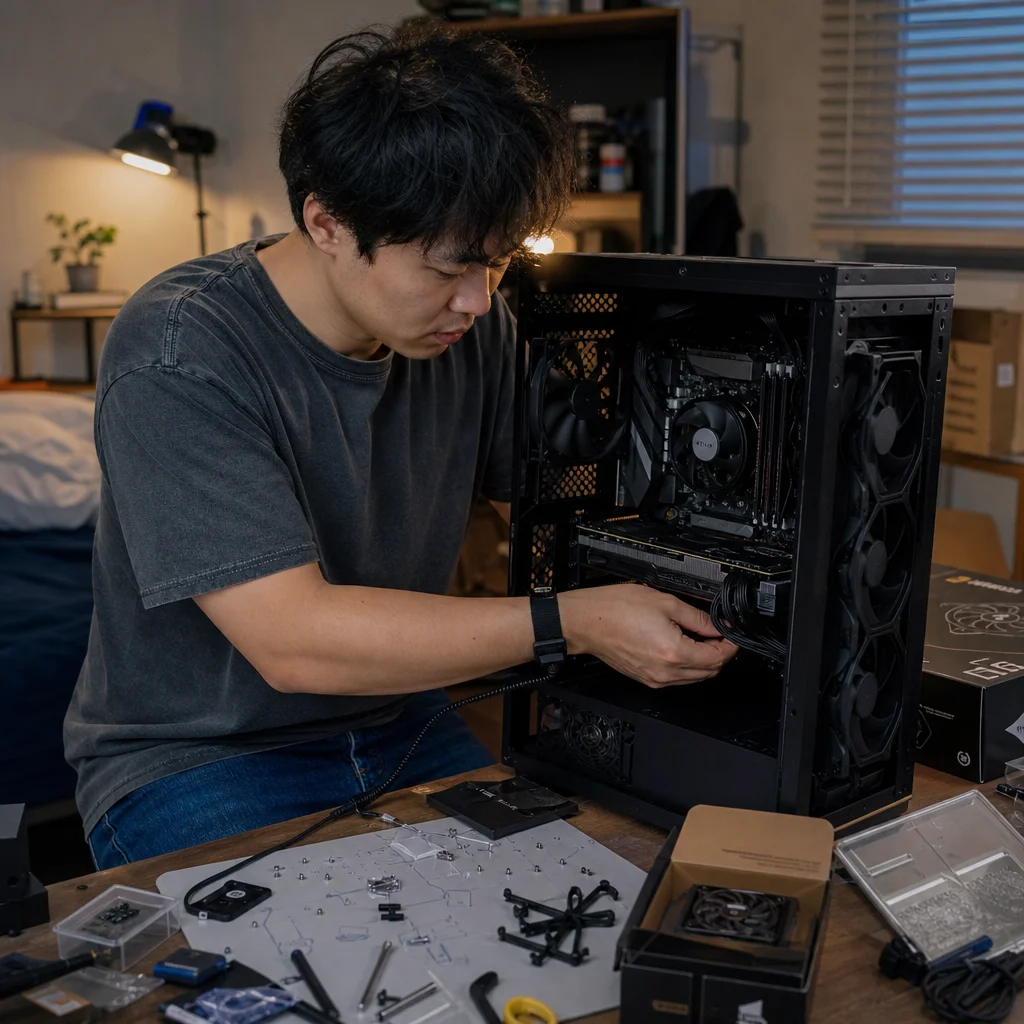
Buying a used graphics card can be one of the most effective ways to extend an older PC, but a low price doesn’t automatically make it a good upgrade. The card still has to suit your processor, power supply, case, monitor, software, and intended games or applications.
The strongest secondhand purchases solve a specific limitation without creating three new ones. Before comparing listings, establish what your current system can't do, then check whether the proposed card addresses that problem at a reasonable level of risk.
Start with the workload, not the listing
A graphics card is a sensible upgrade when your current one is the clear bottleneck. You might be running out of graphics memory, missing a target frame rate, struggling with a higher-resolution monitor, or relying on integrated graphics for applications that benefit from dedicated GPU acceleration. If the processor is already limiting performance, however, a faster card may deliver only a modest improvement in the games or programs you use.
Look at your actual workload rather than relying on a card’s reputation. A used model that is excellent for 1080p gaming may be a poor choice for 4K, heavily modded games, local AI workloads, video production, or professional software with specific driver and acceleration requirements. VRAM capacity, memory bandwidth, ray-tracing performance, codec support, and application compatibility can matter more than the card’s name or its original retail tier.
Your monitor also sets a useful boundary. If you use a 1080p display with a modest refresh rate, an older midrange card may be enough. A high-refresh 1440p monitor or a multi-monitor setup can justify more performance, but it can also expose limitations in an older processor or power supply. Decide which setting you want to improve before you decide which card to buy.
Judge age by support and condition, not just the launch year
Older cards can remain useful for years, but age affects more than benchmark speed. Driver support, game-engine requirements, hardware video features, and the condition of the fans and thermal interface all change over time. A card that still performs well may receive fewer driver optimizations, or it may lack a feature required by newer software.
The original product name isn't enough to establish suitability. Check the manufacturer’s current driver information and the requirements of the applications you care about. Support policies and compatibility can change, so treat those pages as information to verify close to purchase rather than permanent facts. The same applies to features such as hardware encoding, ray tracing, upscaling technologies, and operating-system support.
Age also raises the probability of wear. Graphics cards commonly spend years exposed to heat cycles and dust. Fans may develop bearing noise, and a card that was repeatedly operated at high temperatures may have less remaining life than a lightly used example. That doesn't make every old card unsafe or unreliable; it means condition and testing deserve more weight as the card gets older.
Be especially cautious with unusual listings. A seller may advertise a workstation card, mobile-derived board, engineering sample, modified BIOS, or card with a confusing model number as though it were a standard consumer product. Confirm the exact model from photographs, the serial or product label where available, and software identification from a functioning system.
Confirm that your PC can supply and contain it
Physical fit is a common source of preventable disappointment. Graphics cards can occupy two, three, or more expansion slots, and their length, height, and thickness may interfere with front fans, drive cages, side panels, or adjacent expansion cards. Compare the card’s published dimensions with the usable space in your case, not merely the case’s general GPU category.
Check the power connections as well. Some cards draw power entirely through the motherboard slot, while others need one or more six-pin, eight-pin, or newer high-power connectors. Your power supply must have the correct native connectors, sufficient capacity, and enough output on the relevant power rail. Avoid treating a collection of inexpensive adapters as a substitute for a suitable power supply, particularly when a card requires a high sustained load.
The power supply’s age matters too. An older unit may have adequate wattage on paper but lack the connectors, efficiency, protections, or condition you want for a demanding upgrade. Check the exact model, not only the brand and advertised wattage. If the proposed card would push a marginal or aging supply near its limit, include a replacement PSU in the upgrade cost.
Compatibility usually starts with the PCI Express slot, but it doesn't end there. A modern card will generally operate in an older PCIe slot, although platform limits can affect performance in some situations. Small-form-factor and prebuilt systems may impose additional restrictions, including proprietary power connectors, locked firmware, limited cooling, or a power budget below what the card expects.
Also check display outputs and boot behavior. An older monitor may require an adapter, while some adapters don't support the resolution or refresh rate you need. Very old motherboards or displays can introduce firmware compatibility problems, so confirm whether the card and system vendor document any relevant requirements before committing.
Verify your system before meeting the seller: Record your case’s usable GPU dimensions, power-supply model and connectors, motherboard slot, monitor inputs, and the exact card model. Compare those details with manufacturer specifications rather than a marketplace seller’s abbreviated description.
Compare the complete cost with a new alternative
The purchase price is only one part of the value calculation. Add likely shipping, taxes, marketplace fees, an adapter or cable, replacement fans, new thermal materials, and a possible power-supply upgrade. In the US and Canada, return rights, buyer protection, and warranty coverage can differ substantially between a retailer, a local marketplace, an auction site, and a private sale. Verify the current terms for the platform and seller you’re considering.
A used card becomes less attractive when it approaches the cost of a new model with a full warranty, newer media features, lower power consumption, or a more predictable return process. The performance gap doesn't need to be enormous for the new card to be the better value; reduced risk and a longer support horizon have value, especially if this is your primary PC.
On the other hand, a secondhand card can be compelling when the price leaves room for uncertainty and the performance tier is no longer sold new at a similar cost. A card with a known history, complete photos, verifiable testing, and a reasonable return window is worth more than an untested bargain with no recourse.
Treat the seller and testing evidence as part of the hardware
Ask direct questions before buying. Find out whether the card was used for gaming, workstation work, cryptocurrency mining, or a system that ran continuously. Mining use doesn't prove that a card is defective, and gaming use doesn't prove that it was treated gently, but the answer helps you judge heat exposure and the seller’s transparency.
Request clear photographs of the front, rear, power connectors, cooler, and product label. Look for damaged screws, missing cooler shrouds, corrosion, burnt areas, bent brackets, damaged connector housings, and excessive dust. Some signs are cosmetic, while others suggest that the card has been opened, repaired, modified, or exposed to unsuitable conditions. A missing backplate isn't automatically a problem, but an unexplained modification deserves a closer explanation.
Prefer evidence from a real test over a screenshot of a benchmark. A useful test confirms that the card is recognized correctly, renders a sustained workload without artifacts, reaches an understandable temperature, and maintains stable fan behavior. The exact temperature depends on the cooler, case, room, power limit, and test, so one number shouldn't be treated as a universal pass-or-fail threshold.
If possible, test the card yourself during the return period. Confirm the model and VRAM with a trusted hardware-information utility, install the appropriate driver, and run the games or applications you actually use. Watch for flickering, colored blocks, driver resets, sudden black screens, crashes under load, abnormal fan noise, and clock speeds that collapse for thermal or power reasons. Test every display output you expect to use, since a card can appear functional while one connector is faulty.
Don't open a card merely to inspect it unless you understand the consequences. Removing a cooler can damage pads or fasteners, disturb the thermal interface, and complicate a return or warranty claim. If the seller claims that a repair or repaste was performed, ask what was changed and whether the card was tested afterward.
Recognize fraud and failure risks
Listings that use stock images only, hide the model label, promise unusually high performance, or avoid basic questions should be treated cautiously. A counterfeit or misidentified card may report a false model in software, use less memory than advertised, or deliver performance far below the listing. A card may also be sold as “for parts,” “untested,” or “working when removed”; those descriptions transfer much of the risk to you.
Be wary of requests to move payment or communication outside a platform’s protections. Keep the listing, messages, payment record, and shipping documentation. For local purchases, use a public setting and arrange a test only if it can be done safely. Never let urgency replace verification, and don't assume that a familiar-looking logo or serial-label photograph establishes authenticity.
Some failures are intermittent. A card may pass a short desktop test but crash after heat builds up, or it may work with one driver and fail with another. That is why a return period matters. Test promptly and thoroughly rather than leaving the card on a shelf until the return deadline has passed.
Decide whether the rest of the system is ready
Your older PC doesn't need to match a used GPU perfectly, but it should be balanced enough for the improvement to be meaningful. A processor from several generations ago may be entirely adequate for a budget 1080p upgrade, yet become a serious limit at high frame rates. Insufficient system memory, a slow storage drive, poor case airflow, or an old operating-system installation can also make a new graphics card appear less effective than expected.
Consider whether the upgrade changes your future options. A card with more VRAM, modern media support, or better efficiency may remain useful if you later replace the processor and motherboard. Conversely, buying a very powerful card for a platform you don't intend to update can leave performance unused while adding heat, noise, and power cost.
The best decision is often the least dramatic one: choose the lowest-cost card that meets your actual workload, fits without adapters or clearance compromises, works with a known-good power supply, and comes with enough evidence and recourse to make failure manageable. If the seller can't establish those basics, the discount is paying you to accept uncertainty—and it may not be paying enough.
Before buying, write down your target resolution and applications, verify the complete system fit, compare the total used cost with current new alternatives, and arrange a realistic testing window. A used graphics card is a sensible upgrade when those checks line up; when they don’t, saving for a newer card or upgrading another component first is usually the more reliable path.