How to Clean a PC After a Basement Leak Without Powering It On
I’ll explain how to isolate, inspect, clean, and dry a PC exposed to basement water without turning a repairable system into a dangerous one, including when contamination, corrosion, or a soaked power supply makes professional assessment the sensible choice.
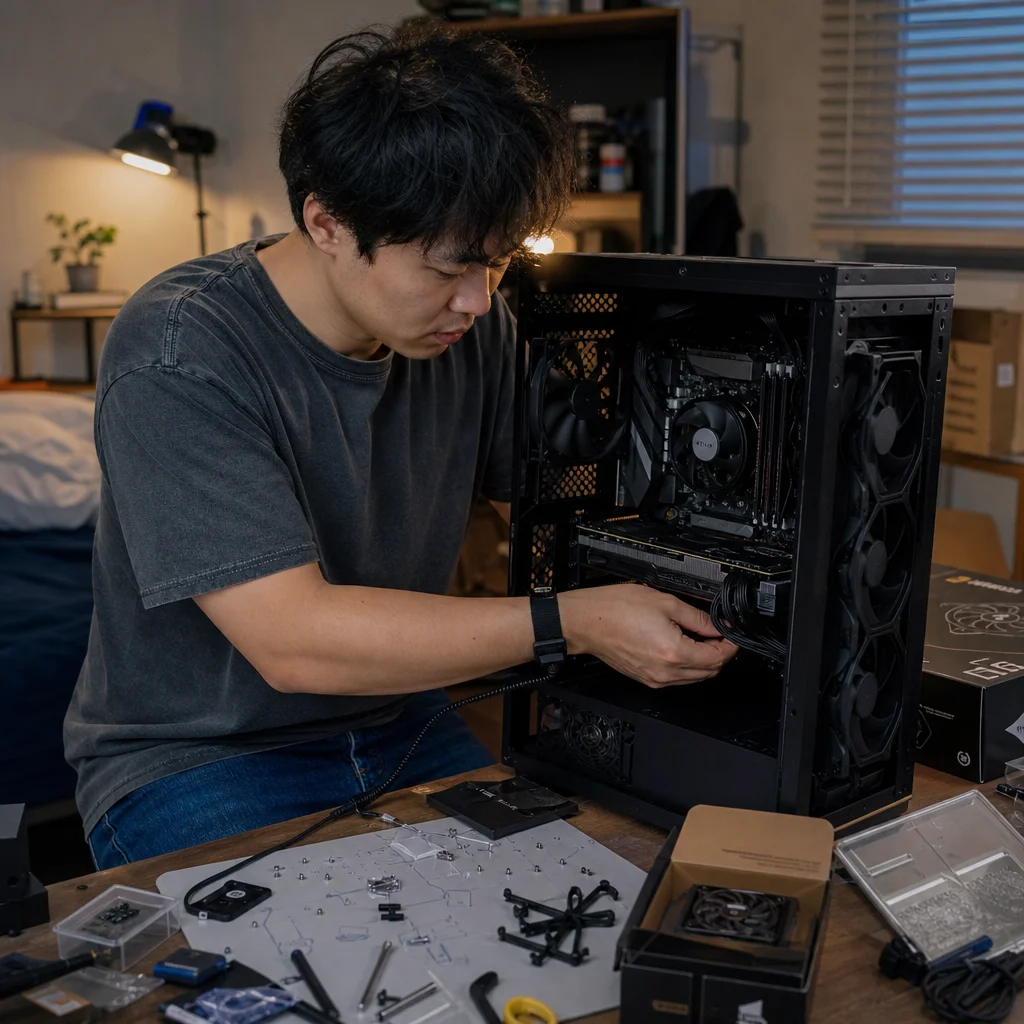
Water in a basement creates more than a simple drying problem. A PC exposed to a leak may contain energized components, contaminated residue, trapped moisture, and corrosion that continues after the outside looks dry. The safest first decision is also the easiest to get wrong: don’t power it on to see whether it still works.
A short test can turn a recoverable computer into a source of permanent damage. It can also create a shock or fire hazard if water reached the power supply, wall outlet, surge protector, or other electrical equipment.
Make the area safe before touching the PC
If the computer is still connected to power, leave it alone until you can disconnect it safely. Don’t reach through standing water, touch a wet power strip, or handle a damaged cord. If the affected area may still be electrically energized, keep away and contact a qualified electrician or emergency service rather than trying to retrieve the PC yourself.
If you can safely reach the plug from a dry position, disconnect the computer from the wall. Unplug the monitor, speakers, external drives, network equipment, and any other connected device. A switched-off PC can still have power available inside its power supply and on the motherboard, so switching the case off isn't enough.
Move the computer only after it’s disconnected and the route is safe. Put it on a dry, stable surface away from the leak. Don’t place it on carpet, near a heater, or in a location where more water can reach it. Photograph the setup and the visible damage before removing anything; those images can help with insurance, warranty discussions, or a repair assessment.
Check the affected circuit first: If water reached an outlet, surge protector, extension cord, or other electrical equipment, follow current guidance from your local utility, fire authority, or a qualified electrician before handling it. Electrical safety procedures and requirements can vary by location and by the type of water involved.
Treat basement water as contaminated until you know otherwise
Clean water from a small supply-line leak is different from water that came through a foundation, drain, sewage backup, appliance overflow, or flood. Basement water may contain sediment, chemicals, biological contaminants, or salts that remain on circuit boards after the liquid evaporates. Those residues can attract moisture and promote corrosion.
Wear suitable disposable gloves when handling wet or dirty components. If there is visible sewage, mold, heavy sediment, or a strong chemical odor, avoid cleaning the parts in a living area. Keep contaminated hardware away from food-preparation surfaces, children, and pets. Depending on the source and amount of contamination, a professional electronics-restoration service may be safer than home cleaning.
Don't use a household vacuum on wet electronics or loose contaminated debris. It can spread material and may not be suitable for wet electrical cleanup. Avoid compressed air at close range while liquid or grit is present, because it can drive moisture and debris deeper into connectors and under components.
Remove power sources without opening the power supply
Once the PC is in a dry work area, press and hold the case’s power button for several seconds only if the system is disconnected from the wall. This can help discharge some stored energy, but it doesn't make every component safe immediately. Never assume that a lack of lights means there is no stored charge.
Remove the side panels and inspect the inside without scrubbing or rubbing at first. Look for water lines, droplets, mud, white or green residue, rust, swollen parts, discoloration, and moisture beneath the graphics card or motherboard. Check the bottom of the case carefully; liquid can collect under the motherboard, power supply, and drive cages.
Disconnect the internal components methodically and label cables if necessary. Take photographs before removing the graphics card, memory, storage devices, expansion cards, and motherboard. Hold circuit boards by their edges, and place them on a clean, dry, nonconductive surface. Don’t stack damp boards or put them on cardboard that is shedding fibers.
The power supply deserves special caution. If water entered its ventilation openings, assume that it needs professional assessment or replacement. Don’t open the power-supply housing. Dangerous voltage can remain inside even when the unit is unplugged, and its internal construction isn’t intended for casual cleaning. Because a failing power supply can damage other parts, replacing a wet or contaminated unit is often a more sensible recovery decision than testing it in the finished PC.
Disconnect or remove the CMOS battery if you can do so without forcing it or working around moisture. Coin-cell batteries can leak or corrode, and removing one prevents it from continuing to power a small part of the board. Replace it later if it shows corrosion or if the manufacturer specifies a replacement procedure.
Decide whether cleaning is appropriate
A lightly dampened exterior, with no evidence that liquid entered the case, may need only careful external cleaning and extended observation. Internal exposure is different. The more liquid, sediment, or residue you find, the less useful simple air-drying becomes.
For clean-water exposure on removable circuit boards, a repair professional may clean affected areas with an appropriate high-purity isopropyl alcohol and suitable tools. Alcohol can help displace moisture and dissolve some residues, but it isn’t a universal solution: it won’t safely remove every contaminant, and it can damage labels, adhesives, plastics, or finishes. Use the component manufacturer’s service guidance where available, and don’t pour liquid into slots, fans, motors, or sealed drives.
If you do clean a board yourself, work in a well-ventilated area away from flames and ignition sources. Use only a small amount on a compatible, lint-free swab or soft brush, and let all solvent evaporate completely. Don’t scrub aggressively around tiny surface-mounted components. A professional cleaning service can use controlled methods and inspect areas you can’t see.
Avoid hair dryers, heat guns, ovens, direct heaters, and prolonged hot sunlight. Excessive heat can warp plastics, loosen adhesives, damage displays, and stress solder joints. Rice and other household drying tricks don’t remove contamination and can introduce dust or particles into connectors. Gentle airflow in a dry room is safer, but airflow alone doesn’t prove that trapped moisture or residue is gone.
Give the parts time, then inspect again
Separate the components so air can reach their surfaces. Open removable covers where the design permits, but don’t dismantle sealed drives, power supplies, liquid-cooling hardware, or other parts that aren’t meant to be opened. Position boards so liquid can drain away from connectors rather than pooling beneath them.
Drying time depends on how much water entered the system, the humidity, the airflow, and the component design. A few hours isn't a reliable rule. Moisture can remain under chips, inside connectors, beneath protective plates, and in cable ends. For a serious exposure, plan on several days of controlled drying and inspection rather than treating a dry exterior as proof of safety.
After the initial drying period, inspect every board and connector under bright light. Look for new oxidation, dull or powdery deposits, sticky residue, and corrosion around USB ports, fan headers, memory slots, and the graphics-card edge connector. Any continuing odor, visible moisture, or contamination is a reason to stop and seek assessment.
Storage devices need separate consideration. Don’t repeatedly connect a wet hard drive or solid-state drive to see whether your files are accessible. If the data matters, protect the drive and use a data-recovery service rather than risking additional damage. If you have a current backup, replacing a contaminated drive may be more reliable than cleaning and trusting it.
Test only after the risk has been reduced
A first test shouldn't be a fully reassembled system with every expensive component attached. Before testing, confirm that the case, motherboard, cooling hardware, graphics card, memory, cables, and connectors are clean and completely dry. Use a known-good, dry power supply rather than a unit that was exposed to water.
For a system with uncertain contamination, professional assessment is the safer route. If you decide a limited test is appropriate, a technician may begin with the minimum hardware needed to reach firmware setup, keeping valuable storage devices and other accessories disconnected. The test should stop immediately if you notice smoke, crackling, unusual odor, heat, unexpected fan behavior, or repeated power cycling.
Don’t bypass protections, repeatedly restart the machine, or keep testing to “burn off” a smell. A computer that starts successfully can still have weakened connectors or corrosion that causes failure later. Successful booting is a useful observation, not proof that the system is safe or reliable.
Confirm your recovery path: Before reconnecting the cleaned components, check the affected part’s manufacturer guidance and your local electrical-safety advice. If the water was dirty, the power supply was exposed, corrosion is visible, or important data is involved, arrange a qualified electronics or data-recovery assessment instead of continuing with trial-and-error testing.
Know when replacement is the better repair
Some parts are poor candidates for home recovery. Replace or professionally assess a power supply that was wet, a storage device containing irreplaceable data, visibly corroded cables, and components with contamination inside sealed assemblies. Fans, pumps, and mechanical drives can trap water in bearings or housings even when their circuit boards look clean.
A motherboard or graphics card may be recoverable after clean-water exposure if it is properly cleaned, dried, and inspected. Recovery becomes less attractive when the board has extensive corrosion, residue beneath components, damaged sockets, or a history of repeated failed power attempts. The cost of specialized cleaning and the value of the part matter more than the hope that it might boot.
Once the system is recovered, replace any compromised surge protector or extension cord rather than reusing it automatically. Improve the PC’s placement so it isn’t sitting directly on a basement floor, and address the leak before returning equipment to the area. A raised stand helps protect against minor floor moisture, but it won’t solve a recurring flood or major water event.
The safest recovery plan is deliberately slow: isolate the PC, treat the water as potentially contaminated, keep the power supply closed and out of the test process, clean only with methods appropriate to the exposure, and inspect repeatedly as the parts dry. If the leak involved dirty water, significant internal moisture, corrosion, or valuable data, professional assessment is usually cheaper than turning a damaged component into several damaged components.