Choose a Motherboard for Several Years of Peripheral Changes
A motherboard’s useful lifespan depends on how its rear ports, internal headers, networking, storage, and expansion options work together. I’ll show you how to plan for changing peripherals over several years without paying for features that will sit unused.
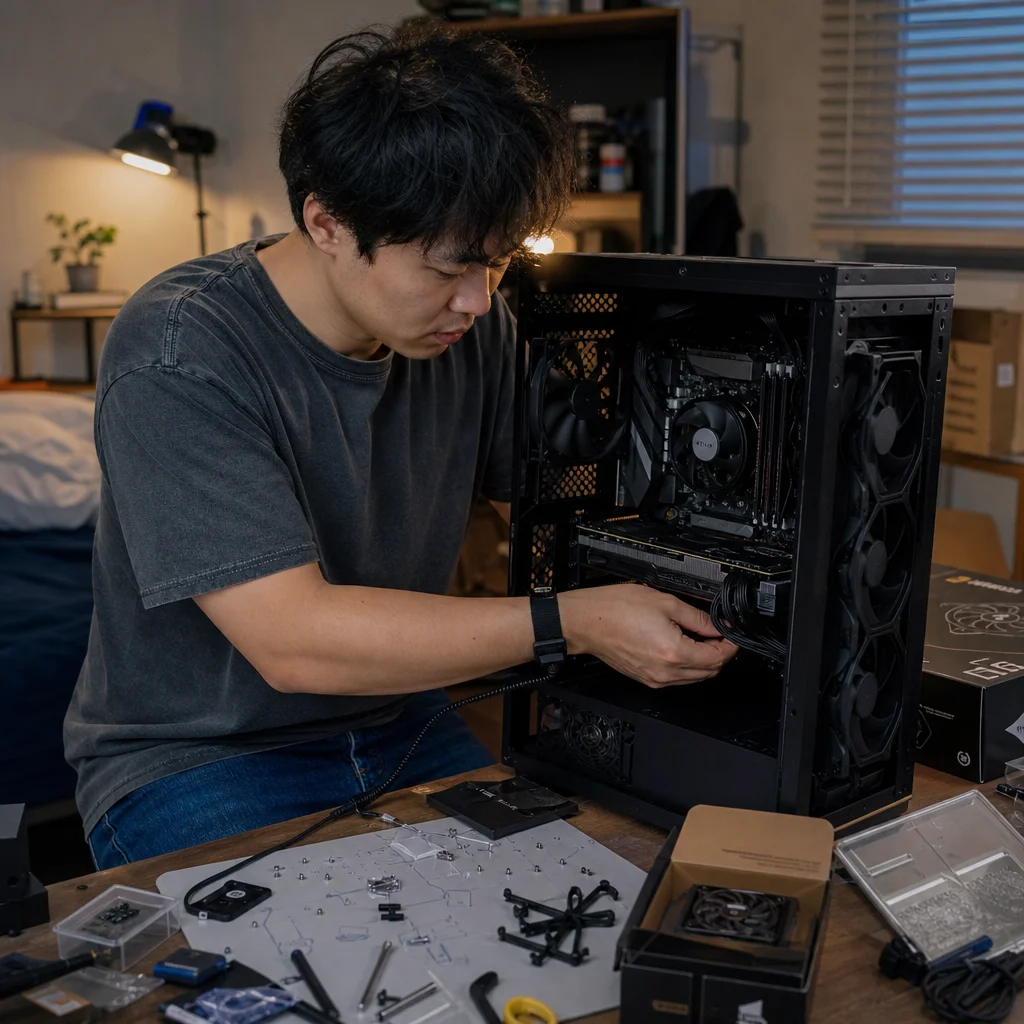
A motherboard can remain perfectly functional while the devices around it change several times. You might replace a monitor, add faster external storage, move from wired to wireless networking, or discover that a new accessory needs a connector your current board lacks. Choosing for longevity is therefore less about buying the most expensive model and more about leaving sensible paths for change.
The goal isn't to predict every peripheral you’ll own. It’s to identify which connections are difficult or inconvenient to add later, then balance those against the features you’re unlikely to use. A reliable long-term choice usually has enough useful connectivity, a sensible internal layout, and an upgrade path that matches the rest of your system.
Start with the peripherals you expect to keep
Before comparing motherboards, make a short inventory of the devices you already use and the changes you can reasonably anticipate. Include monitors, keyboards, mice, audio equipment, webcams, external drives, printers, game controllers, card readers, networking equipment, and any specialized hardware. Note how each connects: USB, DisplayPort, HDMI, Ethernet, audio, internal expansion card, or an internal header.
Then separate firm requirements from possibilities. A second monitor may be likely; a capture card may be merely conceivable. This distinction prevents a common mistake: treating every advertised feature as insurance. Extra connectivity has value only when it solves a plausible problem without creating unnecessary cost, complexity, or unused hardware.
Also consider how long you intend to keep the platform. A board chosen for a three-year system and one intended to support several processor or storage upgrades shouldn't be judged by exactly the same standard. The longer you expect to keep it, the more useful it is to preserve options that are difficult to add later.
Rear-panel ports: count usability, not just sockets
The rear I/O panel is the part most people inspect first, but a port count by itself tells you little. A board with many USB ports may still be inconvenient if most are slower, if the connectors are awkwardly arranged, or if you need to occupy several with devices that could have used a hub. Look at the types and placement of ports as well as the total number.
For everyday peripherals, several USB-A ports are often useful because keyboards, mice, headsets, printers, and other established devices still use them. USB-C can be more valuable for newer phones, docks, external storage, and displays, but its usefulness depends on the actual capabilities behind the connector. USB-C is a physical connector family, not a guarantee of a particular data rate, display feature, or charging capability.
Video outputs on the motherboard deserve special attention if you may use integrated graphics now or later. They generally matter only when the processor provides the required graphics capability, but they can be useful for troubleshooting, a secondary display, or a future change in graphics hardware. If you plan to use a discrete graphics card permanently, motherboard video outputs may be less important than additional USB or networking options.
Audio connections are similarly easy to overvalue. A typical analog headset and speaker setup may need only a few jacks, while a more elaborate arrangement could benefit from optical output or a front-panel connection. If you use a dedicated audio interface, the motherboard’s analog output may not be central to your decision.
Confirm the ports you’re counting on: Before choosing a board, check its manufacturer specifications and manual for the exact rear-panel USB modes, USB-C capabilities, display outputs, audio connections, and any sharing between ports. Names that sound similar can support different functions.
Internal headers determine how easily the case can grow
Rear ports are visible, but internal headers often decide whether a future upgrade is clean or awkward. Check for the front-panel USB headers required by your case, including any USB-C connector on the case’s front or top panel. If the board lacks the matching internal header, that case feature may require an adapter, an expansion card, or remain unused.
Fan and pump headers matter for more than cooling today’s processor. A board with a sensible number of controllable headers gives you room to add case fans, change a cooler, or improve airflow without filling the system with splitters. Splitters can be perfectly reasonable, but you should know each header’s stated limits and avoid assuming that every header is interchangeable with a dedicated pump connection.
RGB and addressable-RGB headers are another area where planning helps. If lighting isn't part of your system, you don’t need to pay a premium for an elaborate lighting ecosystem. If you do want it, confirm the connector types rather than assuming that all lighting plugs are compatible. A clean build is easier to maintain when lighting, fans, and front-panel connections can reach their headers without crossing the board awkwardly.
Internal headers also compete for space with large graphics cards, tower coolers, and drive mounts. A header may exist on the specification sheet but be difficult to reach once the graphics card is installed. Examine the board layout and your case dimensions, especially if you expect to add drives or rearrange cooling later.
Networking should match likely changes
Ethernet is usually the least complicated networking choice for a desktop. If your computer will sit near a router or switch, a dependable wired connection may matter more than an unusually advanced wireless feature. A faster Ethernet interface is useful only if the rest of your network and internet service can take advantage of it, though it can provide headroom for local file transfers and a future network upgrade.
Integrated Wi-Fi can make a system easier to place and can provide Bluetooth for controllers, headphones, and other accessories. It also adds a dependency: the board needs appropriate antenna connections and driver support, and wireless performance depends heavily on the surrounding environment. If you know the computer will always use Ethernet, paying extra for advanced wireless hardware may not improve your experience.
Networking is one of the easier features to add later through a PCIe card or USB adapter. That makes it a lower-priority long-term requirement than a well-placed internal connector or an additional storage slot. Still, replacing an integrated feature can consume an expansion slot, block airflow, or create another device and cable to manage. Built-in networking is valuable when it matches your expected setup, not simply because the specification is impressive.
Storage slots are useful, but lane sharing matters
A board’s M.2 slots can support a gradual storage plan: one drive for the operating system and applications now, another for projects or games later, and perhaps a larger replacement when prices or capacities make it worthwhile. That flexibility is often more useful than buying a very large drive immediately.
However, additional slots may share bandwidth with one another or with SATA ports and PCIe slots. Installing a drive in one location can disable a group of SATA connectors or reduce the availability of another slot. This isn’t necessarily a problem, but it should be understood before you commit to a storage layout.
Think about access as well as capacity. An M.2 slot beneath a graphics card may be perfectly suitable for an initial build but inconvenient to reach later. A board with a heatsink that must be removed, or a slot positioned under a large cooler, can turn a simple storage change into a larger disassembly job. For long-term maintenance, physical accessibility has real value.
If you expect to keep several SATA drives, optical hardware, or a home-server-style collection, don’t let a long list of M.2 slots distract you from the SATA count and controller limitations. Conversely, if your likely future storage is one or two NVMe drives, paying for a board built around many legacy drive connections may not be sensible.
Read the lane-sharing notes: Before purchase, open the board manual or detailed specification page and look for statements such as “when this slot is populated” or “shares bandwidth with.” Map your intended graphics card, M.2 drives, SATA devices, and expansion cards together rather than evaluating each slot in isolation.
Expansion slots are your insurance policy
A full-length PCIe slot can accommodate more than a graphics card. It may eventually hold a capture card, sound card, high-speed network adapter, storage controller, or specialized hardware. You don’t need every possible slot, but you do need to consider what your graphics card will cover and what you might reasonably add.
Slot spacing is often more important than the number printed in the specifications. A modern graphics card can occupy two, three, or more slot positions and may block a smaller slot below it. If you might add a card later, inspect the physical layout with your chosen graphics card installed. A second full-length slot may exist but be unsuitable because of clearance, reduced bandwidth, or heat.
Avoid treating expansion as an unlimited substitute for onboard connectivity. An adapter can add a missing port, but it occupies a slot, uses drivers, may require an internal power connection, and can make future troubleshooting less straightforward. A motherboard with the few ports you actually need plus one practical expansion route is often more useful than a board covered in specialist features.
Pay attention to the platform around the motherboard
Long-term peripheral planning can't be separated entirely from the processor platform. The socket and chipset determine which processors, memory types, PCIe resources, and firmware features the board can support. A motherboard may have excellent connectivity but offer little value for future upgrades if the platform is already at the end of its support path.
That doesn’t mean you should always choose the newest or most upgradeable platform. A mature platform may be cheaper, well-tested, and entirely adequate for your workload. The sensible question is whether its expected processor and memory options align with how you upgrade. If you plan to keep the processor for the board’s entire life, prioritize connectivity, layout, stability, and support over a theoretical upgrade you probably won’t make.
Memory support is part of this calculation. Check the board’s supported memory type and capacity, then decide whether you’re likely to replace the existing modules or simply add more. Adding memory later is easiest when you leave compatible slots available, but using fewer, higher-capacity modules can sometimes make future expansion simpler than filling every slot with small modules.
Features worth paying for—and those worth skipping
Pay more when a feature removes a likely future constraint: enough rear USB ports for your regular devices, a front USB-C header that matches your case, accessible storage slots, integrated networking you’ll actually use, or expansion spacing that accommodates your graphics card. These features affect daily use or future maintenance and can be difficult to improve without replacing or rearranging hardware.
Be cautious about paying for features that don’t fit your system. Specialized overclocking controls, unusually elaborate lighting, many extra storage interfaces, premium audio, and high-end networking may be worthwhile for a specific build, but they aren’t automatically signs of a longer-lived board. Extra hardware can also mean more firmware settings, more crowded layouts, and more opportunities for an unused feature to complicate troubleshooting.
Reliability isn't proven by a dramatic feature list. Look for a board with clear documentation, a layout that suits your case, accessible connectors, a sensible power design for your chosen processor, and firmware support appropriate to the platform. A modest board that is easy to work on can age better in practice than an expensive model whose useful features you never connect.
Make the decision as a layout exercise
Once you have narrowed the options, sketch your current build and two plausible future changes. Place the graphics card, processor cooler, memory, M.2 drives, SATA cables, front-panel connectors, and likely expansion cards. Check which slots and headers remain usable after the main components are installed. This catches conflicts that a comparison table won’t show.
Then rank the board’s features by consequence. Missing a port you can add with a small adapter may be a minor inconvenience. Losing the only practical expansion slot, blocking a future storage drive, or discovering that the case’s front USB-C port has nowhere to connect is more significant. Give priority to the constraints that would force a board replacement rather than merely add a little cost or clutter.
Finally, leave some capacity without trying to reserve every connector. A couple of open USB ports, one realistic expansion route, accessible storage, and a compatible networking option are usually enough for a flexible system. The best long-term motherboard isn't the one with the longest specification sheet. It’s the one whose connections, layout, and platform remain useful as your peripherals change—and whose unused capabilities aren’t consuming money that would be better spent elsewhere.