How to Plan a PC Around Virtual Machines and Containers
I’ll explain how to size a development PC for virtual machines and containers without wasting money on headline specifications. You’ll see where extra CPU threads, memory, fast storage, networking, and virtualization features genuinely improve daily work—and where they don’t.
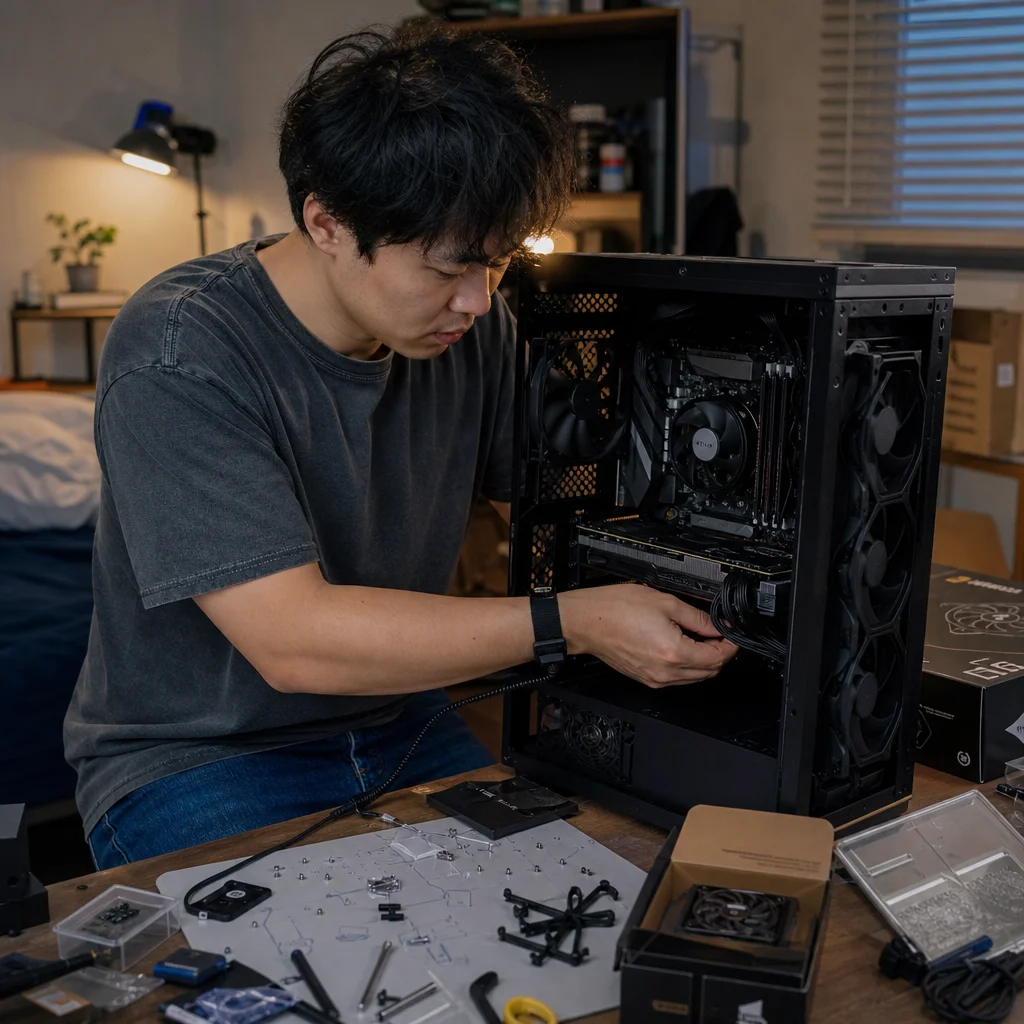
A development PC that runs virtual machines and containers has a different workload from a typical gaming or office system. You’re not only launching one operating system and a few applications; you may be running several isolated environments, compiling code, moving large images, and keeping databases active at the same time. The challenge is deciding which resources deserve your budget first.
The most efficient approach is to plan around your normal concurrent workload rather than the maximum number of environments a tool claims to support. A few well-sized virtual machines can be more useful than an expensive processor paired with too little memory or a cramped, slow system drive.
Start with the environments you’ll run together
Make a short inventory of what you expect to run at the same time. A local Kubernetes cluster, a Linux build environment, a Windows test virtual machine, a database, and a browser can consume far more resources together than any one of them suggests. Containers are usually lighter than full virtual machines, but a large container stack can still place sustained demands on memory, CPU, storage, and networking.
For each virtual machine, estimate its assigned memory, number of virtual CPUs, operating system disk size, and whether it will compile code or host a database. For containers, note the services that will be active simultaneously and whether they use persistent volumes. Include the host operating system and development tools in the calculation; those resources aren’t available to guests.
You don’t need perfectly accurate forecasts. A simple table with “light,” “regular,” and “heavy” workloads is enough to expose the important constraint. If you’ll usually run one small Linux VM and a handful of containers, your needs differ substantially from someone testing several operating systems while building software inside one of them.
CPU: prioritize usable parallelism
Virtualization and container workloads benefit from multiple CPU cores because separate guests and services can run concurrently. Compilation, test suites, code indexing, compression, and database operations can also use several threads. For this type of PC, a processor with strong modern per-core performance and a healthy number of physical cores is generally a better starting point than a chip chosen only for its peak single-thread benchmark.
More threads aren’t automatically equivalent to more physical cores. Simultaneous multithreading or a similar technology can improve throughput, but the benefit depends on the workload. A processor with many threads can become less attractive if those threads come with lower sustained performance, strict power limits, or a large price premium that would have bought more memory and storage instead.
Consider how your virtualization software presents CPU resources. Assigning every available thread to a guest can make the host sluggish and leave no scheduling flexibility. It’s usually better to reserve capacity for the host and let the guest use additional CPUs only when its workload needs them. Overcommitting virtual CPUs can work for lightly loaded environments, but too much contention causes inconsistent build times and frustrating pauses.
A sensible processor choice often sits in the middle of the product stack: enough physical cores for parallel work, strong performance per core for interactive tools, and a platform with a useful upgrade path. A top-tier desktop CPU may be worthwhile for frequent parallel builds or several busy VMs, but it won’t compensate for a memory shortage.
Memory is usually the first hard limit
RAM is shared between the host, virtual machines, containers, file caches, and development applications. When the system runs short, the operating system begins paging data to storage. Even with a fast solid-state drive, that can turn a responsive workstation into one that stalls whenever you switch environments or start a build.
Think of memory as a capacity budget. Add the host requirement to the assigned memory of your regularly active VMs, then leave room for containers, browsers, editors, caches, and unexpected peaks. Don’t treat the assigned amount as a complete forecast: a VM with 8 GB allocated still has overhead, and a container host can use memory for filesystem caches that improve performance.
For a light setup, a sensible amount of system memory may be enough for the host, one or two modest environments, and ordinary development work. A more demanding workstation benefits from a larger capacity so you don’t have to shut down services before every test. Developers running multiple operating systems, local databases, build workers, or Kubernetes nodes should plan memory before spending extra on a faster processor.
Leave room for expansion if the motherboard supports it. Check the number of memory slots, supported module capacities, and the platform’s validated memory limits. Filling every slot with small modules can make a later upgrade inconvenient, while buying an oversized kit today may cost more than adding memory when your workload actually grows. Also check whether your chosen capacity and memory configuration affects supported speed or stability.
Storage layout matters as much as storage speed
Virtual machine disks, container images, source trees, package caches, and build artifacts create a mixture of random and sequential storage activity. A single drive can work, but separating important workloads can reduce contention and make maintenance easier.
Start with enough fast solid-state storage for the host, applications, active projects, VM disks, container images, and working data. Capacity often matters more than a small difference in peak transfer speed. Virtual disk files and container layers can grow quietly, and a nearly full drive tends to leave less room for caching, updates, and temporary build output.
If your budget allows two drives, use one for the operating system and everyday applications and another for virtual machine disks, container data, or active build work. This isn’t a guarantee that every task becomes faster, but it can keep an operating-system update or unrelated file activity from competing with a busy VM. It also gives you more flexibility when reinstalling the host.
Choose the storage interface and form factor your motherboard can support, and pay attention to sustained behavior rather than headline sequential figures alone. Long builds, image extraction, and large virtual disks can expose thermal throttling or poor sustained write performance. A drive with adequate endurance, a useful warranty, and enough free space is often a better value than the fastest model on a specification sheet.
Remember that a snapshot isn't a backup. VM snapshots and container image layers are convenient for testing, but they remain dependent on the same storage system unless you copy them elsewhere. Keep irreplaceable source code and data in an appropriate backup system, especially if a virtualized database is part of your workflow.
Choose a platform with virtualization in mind
Modern desktop processors and operating systems generally include hardware virtualization support, but it still needs to be enabled and exposed correctly. Firmware settings may use names such as AMD SVM, Intel VT-x, or virtualization technology. IOMMU support, sometimes associated with AMD-Vi or Intel VT-d, can matter for device assignment and more advanced virtualization tasks.
The exact combination of features depends on your processor, motherboard firmware, operating system, and hypervisor. Hardware virtualization alone doesn’t promise that every device can be passed directly to a guest or that every nested virtualization scenario will work. If you need nested virtual machines, PCIe device passthrough, special networking modes, or a particular host operating system, check those requirements against the specific platform rather than assuming compatibility.
Confirm your hypervisor requirements: Before buying parts, check the current documentation for your chosen host and guest operating systems. Verify support for hardware virtualization, nested virtualization if needed, IOMMU or device passthrough, required security features, and the memory and CPU limits relevant to your workload.
Motherboard selection affects more than the socket. Look for sufficient memory capacity, useful M.2 and expansion options, reliable firmware support, and the networking features your lab requires. A board with only two memory slots may be perfectly adequate for a small system but less convenient if you expect to double capacity later.
Networking can become a real workload
Containers and VMs communicate with one another through virtual switches, bridges, NAT, and host interfaces. Most local development doesn’t require an unusually fast physical network connection, but network-intensive tasks can change the calculation. Examples include pulling large images, testing distributed services, transferring VM disks, accessing a network storage server, or running several nodes that communicate continuously.
A stable wired connection is usually the simplest choice for a fixed development machine. Faster Ethernet can be worthwhile if your network storage and switches support it and you regularly move large datasets. Otherwise, paying for a high-speed network controller without compatible equipment won’t improve local workloads.
Check the virtualization software’s networking model before choosing advanced hardware. Some environments work well with ordinary integrated Ethernet, while passthrough, VLAN testing, multiple physical segments, or router and firewall labs may require additional interfaces. Extra network ports can be useful, but they add cost and complexity; virtual networks are sufficient for many application-development scenarios.
Cooling, power, and noise affect sustained work
A processor that performs well for a brief benchmark may behave differently during a long compilation, test run, or image build. Choose a cooler that can handle sustained load, and use a case with sensible airflow rather than treating cooling as an afterthought. Consistent temperatures help the processor maintain performance and make a workstation more pleasant to use.
Power supply capacity should account for the processor, graphics card if one is installed, storage, fans, and future upgrades. A development machine without a powerful discrete GPU may not need a large supply, but a modest reserve is useful. Review the power supply’s current specifications and connectors for your actual components instead of selecting a wattage number in isolation.
Noise can become a cost in its own way. If a VM host runs for hours, aggressive fan behavior is noticeable even when performance is adequate. A well-cooled, moderate-power platform can deliver a better daily experience than a hotter high-end configuration that spends much of its time ramping fans.
Decide whether you need a discrete GPU
Most VM and container development workloads don’t require a discrete graphics card. Integrated graphics can handle the host desktop, editors, browsers, and ordinary display output. Money saved here may be better spent on RAM, a second SSD, or a quieter cooler.
A discrete GPU becomes more relevant for GPU-accelerated development, machine-learning experiments, 3D workloads, video processing, or testing software that depends on a particular graphics API. Virtualizing a GPU or passing it through to a guest can introduce platform, driver, firmware, and hypervisor constraints. If that is central to your work, investigate the complete software stack before choosing the graphics hardware.
A cost-efficient planning order
When the workload is uncertain, allocate the budget in this order: define concurrent environments, buy enough memory to keep the host responsive, choose a processor with suitable physical cores and strong per-core performance, provide fast storage with adequate capacity, and then add specialized networking or graphics hardware only when a real requirement justifies it.
For many developers, a balanced machine with generous RAM and two well-chosen SSDs will feel better than a premium CPU paired with minimal memory and one crowded drive. You can usually add storage or memory later, but confirm that the motherboard, power supply, case, and cooling solution make those upgrades practical.
Before ordering, write down the environments you’ll run together and the heaviest task you expect to perform. Assign provisional CPU and memory budgets, estimate storage growth, and identify any special needs such as nested virtualization, passthrough, GPU acceleration, or multiple physical networks. Then price the whole platform—not just the processor—so the final system remains balanced.
The right PC for virtual machines and containers is the one that keeps your typical environments available without forcing you to overspend on resources that sit idle. Plan for memory and storage growth, reserve CPU capacity for the host, and verify specialized virtualization features against your exact software stack. That approach gives you useful performance now and a clearer upgrade path when your development workload expands.