Do You Need a Motherboard With Built-In Wireless Networking?
Built-in wireless networking can simplify a PC, but an expansion card or USB adapter may suit your layout better. I’ll explain how Wi-Fi and Bluetooth options differ in placement, antennas, upgradeability, reliability, and small-form-factor builds.
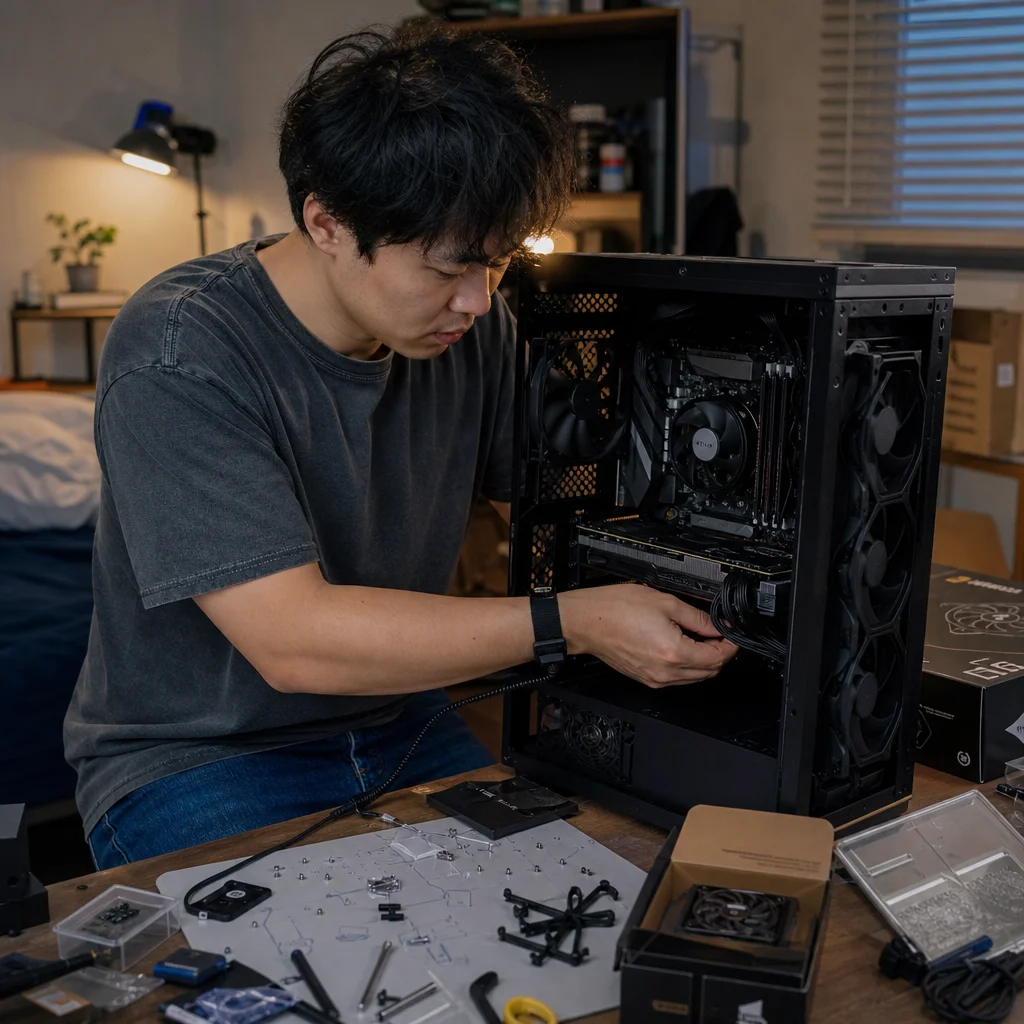
Choosing a motherboard with built-in wireless networking can make a first PC build simpler, but it isn't automatically the best option for every system. The right choice depends on where the computer will sit, how much room you have for antennas and expansion cards, and whether you want an easy upgrade path later.
A motherboard advertised with Wi-Fi usually includes Wi-Fi and Bluetooth together. You connect an antenna to the motherboard's rear I/O, install the relevant drivers, and connect to a network without adding another card. The alternatives are a PCIe wireless expansion card or a USB adapter, each with different trade-offs.
What “built-in wireless” actually includes
A wireless motherboard normally has a wireless module connected internally, along with antenna connectors on the rear panel. The module handles Wi-Fi, while Bluetooth is commonly provided by the same hardware. Bluetooth may require an internal USB connection or driver support, depending on the board and wireless module.
The word “built-in” doesn't mean the antenna is hidden inside the motherboard. Most boards include one external antenna that screws into the rear connectors, although the antenna's shape and cable arrangement vary. You still need to position it where it has a reasonable signal path rather than burying it behind a metal case or pushing it against a wall.
Read the exact motherboard specification before buying. Check whether it supports Wi-Fi, Bluetooth, or both; which wireless standard and frequency bands it supports; whether an antenna is included; and which operating systems have drivers. Product names and specifications can change, so the manufacturer's current product page and manual are more reliable than a retailer's short feature list.
Confirm the wireless details: Before ordering, check the board's current specification and included-accessories list for Wi-Fi, Bluetooth, antenna support, and drivers. “Wireless-ready” or a similar phrase may not mean the same thing as a complete wireless solution.
The main advantages of motherboard Wi-Fi
The biggest benefit is simplicity. The wireless hardware is already fitted, so you don't need to select a separate adapter, find an available slot, route an additional cable, or make room for another device. For a first-time builder, fewer components also means fewer opportunities to forget a part or install something incorrectly.
Built-in wireless is particularly convenient in a compact case. A small-form-factor build may have only one usable PCIe slot, and that slot can be blocked by a large graphics card. If the motherboard includes Wi-Fi, you preserve that expansion slot for a graphics card or another device while keeping the exterior relatively tidy.
The rear antenna connection can also be better than the tiny antenna on an inexpensive USB dongle. The included antenna can often be positioned above or beside the case, which gives the radio a clearer path to the router. That doesn't guarantee a strong connection—walls, floors, distance, and interference still matter—but it gives you a sensible starting point.
Bluetooth is another practical advantage. A built-in solution can connect wireless keyboards, mice, headphones, controllers, and other accessories without occupying a visible USB port. If you expect to use several Bluetooth devices, having it included from the beginning is often more convenient than adding another adapter later.
When a PCIe wireless card makes more sense
A PCIe wireless card is a good choice when your preferred motherboard doesn't include wireless networking or when you want to choose the wireless hardware separately. You install the card in an open PCIe slot, attach its antenna leads, and install drivers. Many cards also include Bluetooth, though the Bluetooth function may need a small internal USB cable connected to the motherboard.
A separate card gives you more flexibility when choosing the radio and antenna arrangement. If the motherboard's wireless hardware is outdated, a later PCIe card can provide a newer feature set without replacing the entire board. This is most useful when the rest of your motherboard is still suitable and the case has a spare slot.
The drawback is that a PCIe card consumes expansion space. In a standard ATX case, that may be a minor concern. In a small-form-factor system, the available slot may be difficult to reach, occupied by the graphics card, or compatible only with a particular low-profile card. Check the case, motherboard layout, and graphics-card thickness together rather than assuming any open-looking slot will work.
A PCIe card also adds another driver and installation step. That isn't difficult, but you should download the correct drivers in advance if the PC will have no wired network during its first boot. You may need another computer and a USB drive to transfer them.
Where USB adapters fit
USB Wi-Fi adapters are the easiest option to add after the build is complete. You plug one into a USB port, install its driver if necessary, and move it between computers. This makes a USB adapter useful for a temporary connection, a basic office PC, or a system that has no suitable internal expansion slot.
Their small size is both an advantage and a limitation. A compact adapter can be hidden behind the case, but that location may be surrounded by metal and other electronics. Models with a short cable or a separate external antenna can be positioned away from the case and may perform more consistently.
USB adapters also vary widely in quality. A very small, inexpensive model may be adequate for browsing near the router but less satisfactory through several walls or during sustained downloads. USB ports can also be crowded by other devices, and some adapters become warm during extended use. These aren't reasons to reject USB networking, but they are reasons to treat it as a deliberate choice rather than an automatic bargain.
Bluetooth USB adapters are separate from USB Wi-Fi adapters unless the product specifically supports both. If you need both functions, verify that the adapter provides both and that its drivers support your operating system. Otherwise, you could end up with a Wi-Fi connection but no Bluetooth support—or the reverse.
Comparing the three approaches
For most first-time builders, built-in Wi-Fi is the easiest middle ground. It avoids using a PCIe slot, normally includes external antenna support, and commonly provides Bluetooth as well. If the motherboard fits your processor and memory plans, and its wireless features meet your needs, paying a modest premium for the integrated option can be worthwhile.
A PCIe card is preferable when wireless performance or future replacement matters more than simplicity. It lets you select the adapter independently and replace it without changing the motherboard. Choose it when you have a genuinely suitable slot and are comfortable handling one additional installation.
A USB adapter is the most flexible in terms of timing and portability. It can rescue a build that lacks Wi-Fi, provide a connection for testing, or move between systems. It is less attractive when you need maximum consistency, a clean permanent installation, or a strong connection in a difficult location—unless you choose a model with a well-placed external antenna.
| Option | Main strength | Main limitation |
|---|---|---|
| Motherboard Wi-Fi | Simple, tidy, and often includes Bluetooth | Wireless hardware is tied to the motherboard |
| PCIe wireless card | Replaceable and independently selectable | Uses an expansion slot and may need an internal Bluetooth cable |
| USB adapter | Easy to add, remove, and move | Placement, port crowding, and adapter quality can affect results |
Antenna placement matters more than the label
A capable wireless chipset can't overcome a poor physical location. Place the included or external antenna in the open, preferably above or beside the case rather than directly behind it. Keep the computer away from enclosed cabinets when possible, and consider the router's position and the materials between the two devices.
For a desktop under a desk, a motherboard antenna attached directly to the rear panel may be partly blocked by the case or desk. An antenna with a magnetic base or a cabled stand can be easier to position. PCIe cards and some USB adapters may offer similar options, so compare the antenna arrangement—not just the advertised wireless standard.
If you can run Ethernet to the PC, it remains a useful fallback. Wired networking generally avoids local wireless interference and doesn't depend on antenna placement. You don't need to choose between built-in Wi-Fi and Ethernet; a motherboard can include wireless networking while you use Ethernet for the most demanding or stationary connection.
Check the upgrade and repair implications
Wireless hardware isn't usually the deciding factor in motherboard selection, but it should fit your expected lifespan for the system. With integrated Wi-Fi, a failed or outdated module may be replaceable on some boards, but access can be awkward and compatibility may depend on the motherboard's internal socket, firmware, and antenna connections. In other cases, adding a PCIe or USB adapter is the simpler repair.
A separate card is easier to replace if you have room for it. However, replacing an adapter may require removing the graphics card in a cramped case, and a card that fits today may be obstructed by a future graphics-card upgrade. USB avoids those internal-space concerns but adds an external device that can be bumped or lost.
Also consider driver support. Before choosing a less common adapter, look for current drivers and support for the operating system you plan to use. This is especially important if you intend to install a new operating system soon after building the PC or use a distribution that may not include every wireless driver by default.
A sensible choice for a first or compact build
Choose a motherboard with built-in Wi-Fi and Bluetooth if you want the cleanest installation, have limited expansion space, and are satisfied with the board's current features. It is usually the least complicated option for a small-form-factor computer, provided the rear antenna has somewhere sensible to sit.
Choose a PCIe card if the motherboard you want lacks wireless networking, if you want the option to replace the wireless hardware independently, or if you need a particular antenna arrangement. Confirm that the card fits the case and that its slot won't be blocked by the graphics card.
Choose a USB adapter when you need a quick, portable, or temporary solution, or when the case leaves no practical internal option. Prefer an adapter with an external antenna or extension cable if the computer will be far from the router or separated by several obstacles.
In each case, compare the complete setup: wireless features, antenna placement, available slots, case clearance, driver support, and the distance to your router. For most beginners, integrated Wi-Fi is worth choosing when it costs only a reasonable amount more and the motherboard is otherwise a good match. The adapter type matters, but the surrounding layout and signal path often matter just as much.