What to Check Before Moving a Desktop Between Different Countries
I’ll show you which power, transport, warranty, and operating-condition checks matter before moving a desktop internationally, so you can avoid damaging hardware, losing coverage, or discovering that a simple plug adapter isn’t enough.
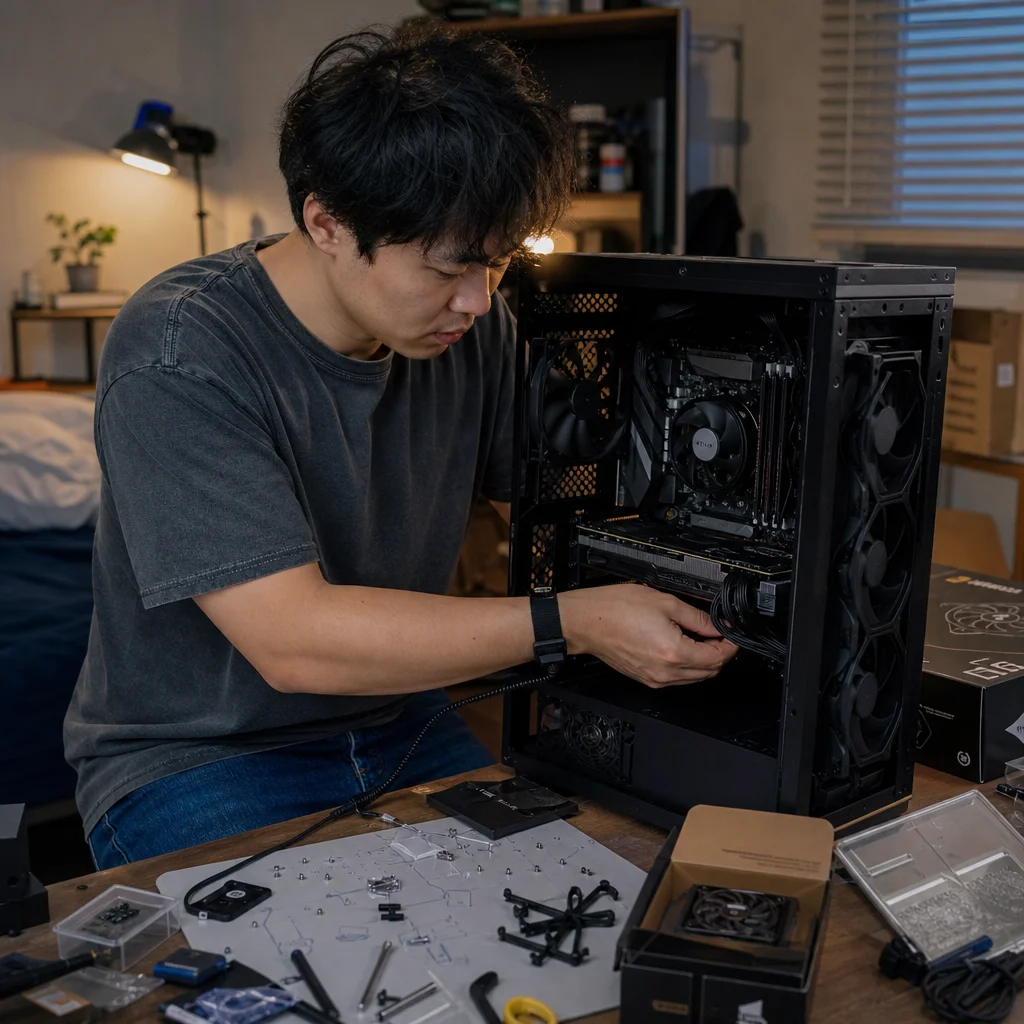
Moving a desktop between countries is less about the border crossing than the details at each end. A computer that worked reliably at home can face a different mains voltage, plug shape, power frequency, climate, transport environment, and warranty arrangement after the move.
You don’t need to replace every part or pack a workshop of specialist equipment. Start by identifying the few things that can damage hardware or leave you without practical support, then protect the components most vulnerable to movement.
Confirm the power situation before you pack
The first check is the input specification on the desktop’s power supply unit (PSU). Look for a label near the power socket or on the PSU itself. A unit marked something like 100–240V, 50/60Hz is designed to accept the common mains ranges used in many countries. It normally needs only the correct power cable or a suitable plug adapter.
A PSU marked for a single voltage, such as 115V or 230V, is different. Some older or lower-cost units have a manual voltage selector, often labelled 115/230V. That selector must match the local supply before the computer is switched on. Connecting a single-voltage or incorrectly selected PSU to the wrong supply can damage the PSU and other components.
The plug shape is separate from the electrical supply. A travel adapter changes the physical connection between the wall socket and the plug; it usually doesn’t convert voltage or frequency. If the computer’s PSU isn’t rated for the destination voltage, a plug adapter alone won’t make it safe. Voltage converters also need an appropriate power rating and may introduce their own limitations, so replacing an unsuitable PSU is often the simpler and more dependable solution.
Check every device that will be connected to mains power, not just the tower. Monitors, powered speakers, external drives, network equipment, printers, and some UPS units can have different input requirements. A universal desktop PSU doesn’t make a single-voltage monitor safe to use on a different supply.
Frequency is usually less troublesome for a modern desktop than voltage, because many computer PSUs accept both 50Hz and 60Hz. Still, read the labels rather than assuming. Motors, fans, older displays, UPS systems, and other equipment may have more specific requirements.
Verify your destination’s power details: Before departure, compare the input labels on your PSU, monitor, and UPS with the destination country’s current mains voltage, frequency, and plug standard. Use the manufacturer’s documentation or a reputable electrical-safety source, and don’t rely on the plug shape alone.
Decide what should travel with the desktop
The minimalist option is to move the tower and buy or source ordinary cables and peripherals after arrival. That can reduce luggage and the number of fragile items crossing the border, but it only works if you’ve confirmed the replacement equipment is compatible and available where you’re going.
At minimum, record the tower’s make, model, serial number, and major components. Photograph the PSU label, the inside of the case, cable connections, and any existing damage. These records help you reconnect the system, identify missing parts, and support a warranty or shipping claim if something goes wrong.
Back up important files before moving the computer. Keep at least one backup separate from the desktop, preferably with a copy stored securely online or on a drive travelling independently. A computer can arrive physically intact and still fail because of a loose connection, a damaged drive, or an accidental mistake during reconnection. Your data shouldn't depend on the move going perfectly.
If you’re moving a desktop with a custom water-cooling loop, reconsider whether it should travel assembled. Liquid cooling adds leak risk, weight, and more points of failure. Draining, packing, and recommissioning a loop requires more care than moving an air-cooled system. If you’re not confident handling it, have the loop serviced by a qualified technician before or after the move, or transport the components separately.
Protect heavy and fragile components from movement
Desktop cases are designed to sit still, not to absorb repeated drops, vibration, and sideways impacts. Remove anything that can put leverage on the motherboard or its slots. A large graphics card is the main concern because its weight hangs from the PCIe slot and rear bracket. Remove it when practical, place it in an antistatic bag, and cushion it in a rigid box that prevents movement.
Large tower air coolers can create similar stress. If the heatsink is unusually heavy or extends far from the motherboard, remove it according to the cooler manufacturer’s instructions. Smaller stock-style coolers are generally less of a concern, but they still shouldn’t be allowed to press against packing material or the case panel.
Hard disk drives deserve extra protection because their moving parts are more vulnerable to impact than solid-state drives. Shut the computer down normally, disconnect it from power, and pack the drive so it can't rattle inside its container. Solid-state drives aren't immune to damage, but they don’t have the same mechanical impact concerns.
Use the original case box and molded inserts if you still have them. If not, use a rigid outer box with substantial cushioning around every side, rather than relying on a thin suitcase or loose clothing. The case shouldn’t be able to shift inside the box. Don’t place heavy objects on top of it, and label the package only as much as necessary; prominent markings can’t substitute for proper packing.
Keep removed screws, brackets, GPU supports, and cables together in a labelled bag. Put the bag somewhere it won’t fall into the case or press against a fan. Before closing the box, take a final photograph of the packed interior and note which components were removed.
Plan for customs, insurance, and warranties
International relocation can involve customs declarations, import restrictions, duties, taxes, or carrier rules. The treatment may differ depending on whether you’re moving your own used belongings, shipping a newly purchased computer, or sending equipment as commercial goods. Requirements can also depend on the destination, the shipping method, and the value you declare.
Keep purchase records and an inventory, but don’t assume a receipt automatically establishes the correct customs value or exemption. Check the destination government’s current guidance and the carrier’s rules before shipping. If the desktop contains batteries, liquid cooling, or other regulated items, confirm the relevant transport requirements separately.
Insurance is worth considering for a valuable system, but read what it actually covers. Some policies exclude inadequate packaging, pre-existing damage, cosmetic damage, or losses caused by a specific shipping method. Photograph the computer before packing and retain tracking information, receipts, and records of the condition at handoff.
A manufacturer’s warranty may be limited to the country or region where the product was sold. Service might require returning a component to the original market, and shipping costs may not be covered. This matters especially for the PSU, monitor, graphics card, and motherboard, which can be expensive or inconvenient to replace.
Check warranty terms for each major component rather than treating the whole desktop as one product. Also check whether the manufacturer has an authorised service network at your destination. If a part is still under warranty, keep its serial number, proof of purchase, and original accessories accessible after the move.
Check the destination’s current rules: Before handing the computer to a carrier, review official customs guidance, carrier restrictions, and the warranty terms for your exact component models. Requirements for used personal goods, taxes, insurance, batteries, and liquid cooling can change, so confirm them for your route rather than relying on a general travel assumption.
Recommission the computer carefully
After arrival, let the packaged equipment reach room temperature before powering it on if it has been exposed to a substantial temperature change. Condensation can form when cold hardware is brought into warm, humid air. Leave the system unplugged until it is dry and visually free of moisture; rushing this step gains little and creates avoidable risk.
Place the tower on a stable, dry surface with clear airflow. Avoid carpet if it blocks the case’s intake or encourages dust buildup, and don’t put the computer in a tightly enclosed cabinet. Check the local room conditions as well: very high humidity, dust, salt air, or unusually high altitude can affect cooling and long-term reliability.
Inspect the case for dents, cracked panels, loose parts, and damaged ports. Reinstall the graphics card and cooler only after checking their connectors and mounting hardware. Make sure the card is fully seated, its retaining screw or bracket is secure, and any required power cables are connected without strain. Confirm that fans can spin freely and that no packing material remains inside the case.
Connect only the equipment you have verified. Use the correct destination cable or a properly rated adapter, and confirm the PSU’s voltage setting again if it has a manual selector. Switch on the monitor and other peripherals according to their labels. If the computer behaves oddly, smells of overheating insulation, trips a breaker, or shows visible damage, disconnect it and investigate rather than repeatedly trying to start it.
Once the system boots, check storage health, memory capacity, graphics-card detection, fan operation, and network connectivity. Let the computer run a short, ordinary workload while watching temperatures and listening for new noises. You may need to adjust fan curves, replace a damaged cable, or reinstall drivers, but avoid treating every post-move issue as a software problem.
The sensible preparation is compact: confirm voltage compatibility, protect heavy components, back up your data, document the system, and verify current shipping and warranty conditions. If those checks are complete, moving the same desktop is usually more practical than replacing hardware simply because the country has changed. The components still need suitable power, careful handling, and enough airflow—but they don’t need a completely new identity at the border.