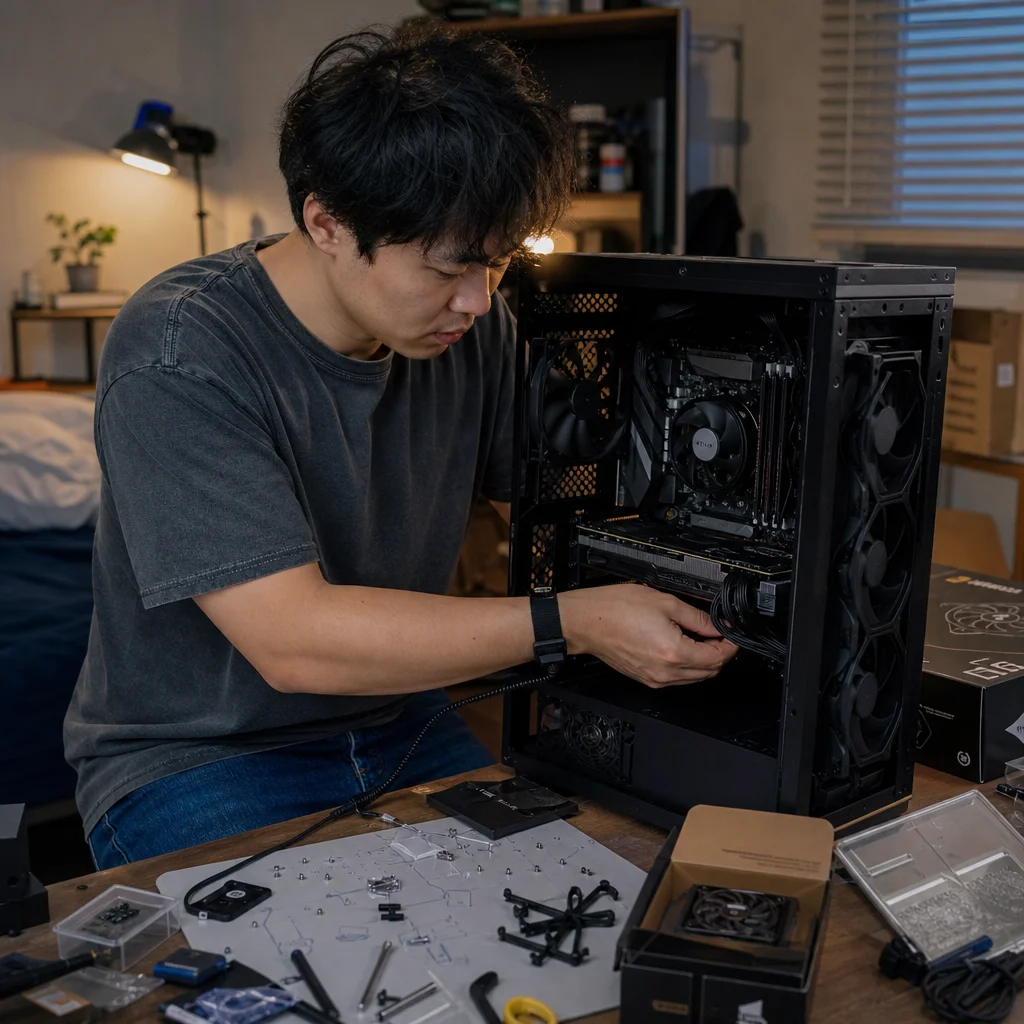
The first start can feel risky when a new build has several cables, screws, and settings to check. I’ll walk you through a calm final inspection so you can catch simple problems and understand what a normal first boot looks like.
Read article →
I’ll help you check compatibility, shared motherboard connections, physical clearance, heat, backups, and operating-system setup so a second storage drive doesn’t disable another component or leave your data at risk.
Read article →
I’ll clarify which parts from an older PC build are usually worth reusing, which deserve extra scrutiny, and when replacement is the better value. You’ll get a cost-conscious framework for evaluating your case, power supply, storage, memory, and graphics card before buying new hardware.
Read article →
I’ll explain what OCP, OVP, UVP, OPP, SCP, and OTP actually do, where their limits are, and how to choose sensible next steps when a power-supply fault threatens your hardware.
Read article →
More CPU cores can shorten a compile or render, while a faster individual core may matter more for everyday responsiveness. I’ll show you how to match core and thread counts to real workloads without treating specifications as a simple ranking.
Read article →
I’ll compare what changes when you mount a graphics card vertically, from cooler clearance and airflow to riser reliability, cable strain, and access to expansion slots. You’ll also see how to diagnose problems before rebuilding the entire case around a different layout.
Read article →
Front-panel design affects more than appearance: it changes how much air your fans can move, how quickly dust accumulates, and how hard the system must work. I’ll help you weigh solid, mesh, glass, and mixed designs so you can prioritize the trade-offs that fit your build.
Read article →
I’ll compare what a motherboard chipset really controls, from expansion and storage to overclocking and future upgrades, so you can separate meaningful differences from labels that mainly divide product tiers.
Read article →
When a new processor uses a different socket, the upgrade can involve far more than removing one chip and installing another. I’ll show you how to check the motherboard, firmware, cooler, memory, and operating system so you can recover cleanly if the first boot goes wrong.
Read article →
I’ll compare the most useful checks when a motherboard detects some hardware but leaves other devices missing, from shared PCIe lanes and firmware settings to disabled ports, poor seating, and overlooked power connections.
Read article →