What a Motherboard Chipset Actually Changes
I’ll compare what a motherboard chipset really controls, from expansion and storage to overclocking and future upgrades, so you can separate meaningful differences from labels that mainly divide product tiers.
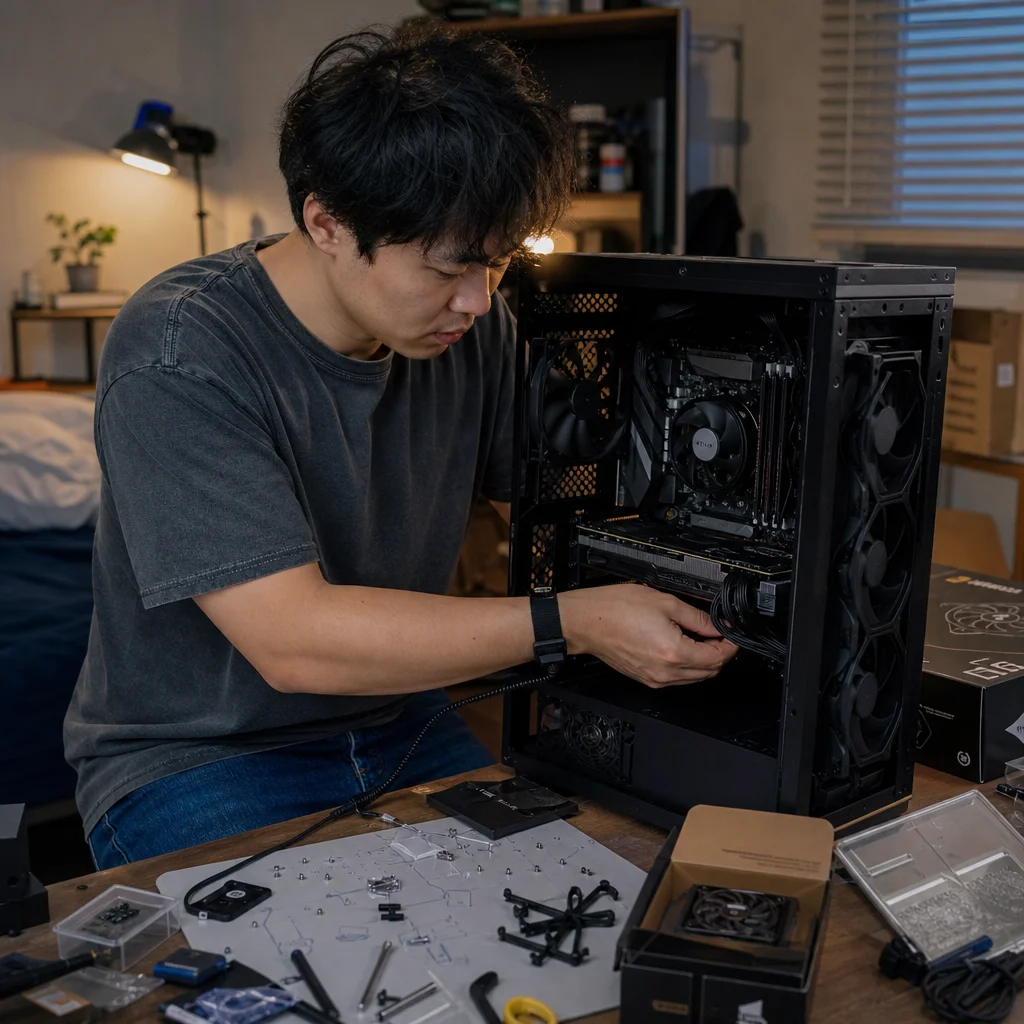
When you compare motherboards, the chipset name can look like the most important specification on the box. It often appears beside claims about faster storage, more USB ports, overclocking, or “future-ready” upgrades. But a chipset doesn’t define the entire motherboard, and a more expensive chipset won’t automatically make your computer faster.
The chipset is best understood as part of the motherboard’s traffic and feature-management system. It helps provide additional connectivity and determines which platform-level features the board can support. The processor, motherboard manufacturer, BIOS, and physical board design still have major roles in what you can actually use.
Understanding that division helps you avoid two common mistakes: paying for capabilities you won’t use and assuming a compatible socket guarantees every upgrade will work.
What the chipset actually does
Modern desktop processors usually contain several important controllers that older systems handled through separate motherboard chips. The CPU commonly manages the memory interface and some of the fastest PCIe connections, including the primary slot used for a graphics card and, on many platforms, at least one high-speed M.2 drive. The chipset connects to the processor through a platform link and provides additional input and output.
That additional I/O can include USB ports, SATA connections, extra PCIe lanes, networking support, audio integration, and other motherboard features. The exact mix depends on the platform and the board. A chipset may make a feature possible, but the manufacturer still decides whether to expose it through rear-panel ports, internal headers, expansion slots, or storage connectors.
This is why two motherboards using the same chipset can have noticeably different specifications. One may include several high-speed USB ports and three M.2 sockets, while another uses a simpler rear I/O layout and fewer expansion options. The chipset establishes part of the ceiling; the board’s design determines how much of that ceiling you receive.
It also helps to distinguish chipset limitations from motherboard limitations. A chipset might support several storage connections, but a particular board could disable one when another M.2 socket is populated. A board might offer a fast network controller even though networking isn’t a defining chipset feature. Read the motherboard manual and block diagram when the details matter.
Expansion: lanes, slots, and shared connections
Chipsets affect how much expansion a platform can provide, especially beyond the processor’s direct PCIe connections. Extra chipset lanes can serve additional M.2 slots, expansion slots, capture cards, sound cards, network adapters, and onboard controllers. Higher-tier chipsets often offer more lanes or more flexible lane arrangements than entry-level versions.
That doesn’t mean every physical slot can run at its advertised maximum at the same time. A motherboard may route several connectors through a limited pool of lanes, causing one slot to slow down or become unavailable when another connector is used. This is commonly described as lane sharing or resource sharing.
For a basic gaming system with one graphics card and one NVMe drive, chipset expansion differences may have little practical effect. For a workstation with several drives, add-in cards, or high-bandwidth peripherals, they can determine whether the layout works without compromises. Count the devices you intend to install before choosing a chipset tier.
The primary graphics slot deserves particular attention. It is often connected directly to the processor rather than relying on the chipset, so the chipset name alone doesn’t tell you its link speed or lane arrangement. Check the CPU’s supported PCIe generation, the motherboard’s slot wiring, and whether the slot operates at its full width with your planned configuration.
Storage and M.2 support
Chipset differences can affect the number of additional NVMe drives and SATA devices a motherboard can support. A board with a more capable chipset may offer more chipset-connected PCIe lanes, making it easier to include multiple M.2 sockets without consuming the processor’s primary expansion resources.
However, “supports PCIe 5.0 storage” or a similar label doesn’t necessarily mean every M.2 socket runs at that speed. One socket might connect directly to the CPU at the advertised generation, while other sockets connect through the chipset at a different generation. Some sockets may also share bandwidth with SATA ports or expansion slots.
For most general-purpose builds, one good NVMe drive is already sufficient for a responsive system. Additional drives are useful for larger game libraries, media projects, virtual machines, or a tidy separation between operating-system and project storage. If you need several drives, inspect the storage table in the manual rather than choosing solely by chipset family.
Thermal design matters here too. Fast NVMe drives can benefit from adequate heatsinks and airflow, but the chipset itself isn't a guarantee of drive performance. The SSD controller, firmware, cooling, workload, and CPU-to-chipset link all influence the result.
USB, networking, and other connectivity
A chipset can influence how much USB and other platform connectivity a motherboard can offer, but the rear panel is where the difference becomes useful to you. Compare the number and type of ports you’ll actually need: USB-A and USB-C, their stated speeds, display outputs, audio connections, and internal headers for front-panel ports.
Port labels can be confusing because a connector’s shape doesn’t reveal its speed. A USB-C port may support only basic data, or it may support faster transfers, video output, charging features, or all of them. Those capabilities depend on the controller and board implementation, not just the chipset branding.
Networking is similar. Some chipsets or platform families may commonly appear on boards with particular networking options, but the motherboard can use separate Ethernet or Wi-Fi controllers. If wireless networking matters, check whether Wi-Fi is built in, which standard it uses, whether the antennas are included, and whether a particular revision of the board is involved.
Audio, Bluetooth, additional USB controllers, and high-speed network adapters can also be separate components. A premium chipset doesn’t guarantee premium versions of these features. Review the complete specification list instead of treating the chipset as a shorthand for build quality.
Overclocking and power management
Chipset tiers can determine whether a platform officially exposes CPU overclocking controls, memory tuning, or related firmware options. This is one of the most visible differences between motherboard families, but it’s also an area where rules vary by processor generation and vendor.
Memory overclocking isn't the same as increasing the CPU multiplier. A board may support memory profiles or manual memory tuning even when CPU overclocking is restricted. The processor’s memory controller, the board’s firmware, the number of memory modules, and the memory kit itself all affect whether a setting is stable.
CPU overclocking also requires more than a permissive chipset. You need a processor that supports the relevant controls, a motherboard with adequate power delivery and cooling, a cooler that can handle the resulting heat, and a willingness to test stability. Higher voltage and temperature can reduce efficiency and may shorten component life if used carelessly. Automatic enhancement settings aren’t always conservative, so check what a mode changes before enabling it.
Check the current tuning rules: Before buying for CPU overclocking or memory tuning, verify the exact processor generation, chipset, motherboard model, BIOS support, and vendor documentation. Platform rules change, and a chipset label by itself isn’t enough to confirm that the controls you want will be available.
For a locked processor running at stock settings, paying extra for extensive overclocking controls usually makes little sense. The money may be better spent on a board with the rear ports, storage layout, networking, or power delivery you actually need.
Upgrade support is more complicated than the chipset name
A chipset is part of a platform’s upgrade story, but it doesn’t promise a particular future CPU. Socket compatibility is only the first check. The motherboard must also have firmware support, suitable power delivery, and sometimes a required BIOS version. A board can physically accept a processor while needing an update before it will boot with it.
Manufacturers may release multiple revisions of a motherboard with the same model name or a similar name. Features, BIOS behavior, and included connectivity can differ between revisions. Look for the exact model and revision when checking a support list, and confirm whether the board has a way to update its BIOS without an already-supported processor installed.
The chipset itself can also impose limits on how long a platform remains useful. Even when a later processor is made compatible through a BIOS update, you may not gain newer memory support, newer CPU-connected PCIe features, or the expansion layout you wanted. Conversely, a newer chipset may offer features you won’t use during the life of the system.
Treat upgrade potential as a useful possibility rather than the main reason to overspend. Buy the motherboard that supports your likely CPU, memory, storage, expansion, and connectivity requirements now. Consider future upgrades only when the manufacturer has clearly documented the relevant support.
What the chipset doesn't tell you
The chipset doesn't tell you the motherboard’s complete quality or reliability. It doesn’t fully describe the voltage-regulation design, cooling, firmware maturity, memory layout, fan control, diagnostic features, or physical clearances around the CPU socket and expansion slots. These details can matter more than moving from one chipset tier to another.
It also doesn’t determine gaming performance by itself. With the same processor, graphics card, memory configuration, and operating conditions, changing to a more expensive chipset usually won’t produce a meaningful frame-rate increase unless the original board was limiting a specific feature or configuration.
Nor does a high-end chipset guarantee that every connection is fast or available simultaneously. Board makers can spend the platform’s connectivity budget in different ways. One model may prioritize storage, another may prioritize USB, and a third may include more expansion space but fewer rear-panel ports.
A safer way to choose between chipset tiers
Start with the processor and the connections you need, then use the chipset as a filter. List the number of graphics cards, NVMe drives, SATA drives, add-in cards, USB devices, memory modules, and fans you expect to use. Note any requirements for Wi-Fi, USB-C, high-speed networking, CPU tuning, or BIOS update support.
Next, compare complete motherboards within the chipset family. Check the CPU support list, memory support information, PCIe slot wiring, M.2 and SATA sharing notes, rear I/O, internal headers, power delivery, cooling, and warranty terms. The manual is often more useful than a product-page feature summary when several devices must operate together.
Finally, leave room for practical constraints. Confirm that your cooler fits, that the graphics card won’t block the required slots, that the case supports the board size and front-panel connectors, and that the power supply has the connections your components need. A chipset can provide an attractive feature list, but a build succeeds only when the parts work together.
The sensible choice is usually the least expensive chipset and motherboard combination that meets your confirmed requirements with some useful margin. Entry-level options suit straightforward builds; midrange models often balance storage and expansion well; higher tiers make sense when you need specific lane, connectivity, tuning, or multi-device capabilities. The name on the box matters less than the connections and limitations you can verify on the exact board.