Prepare a Desktop PC for a Dry Winter and Static-Prone Room
I’ll explain how to make winter PC work safer by focusing on the details that matter most: workspace humidity, grounded handling, component protection, and sensible recovery steps when a static discharge occurs.
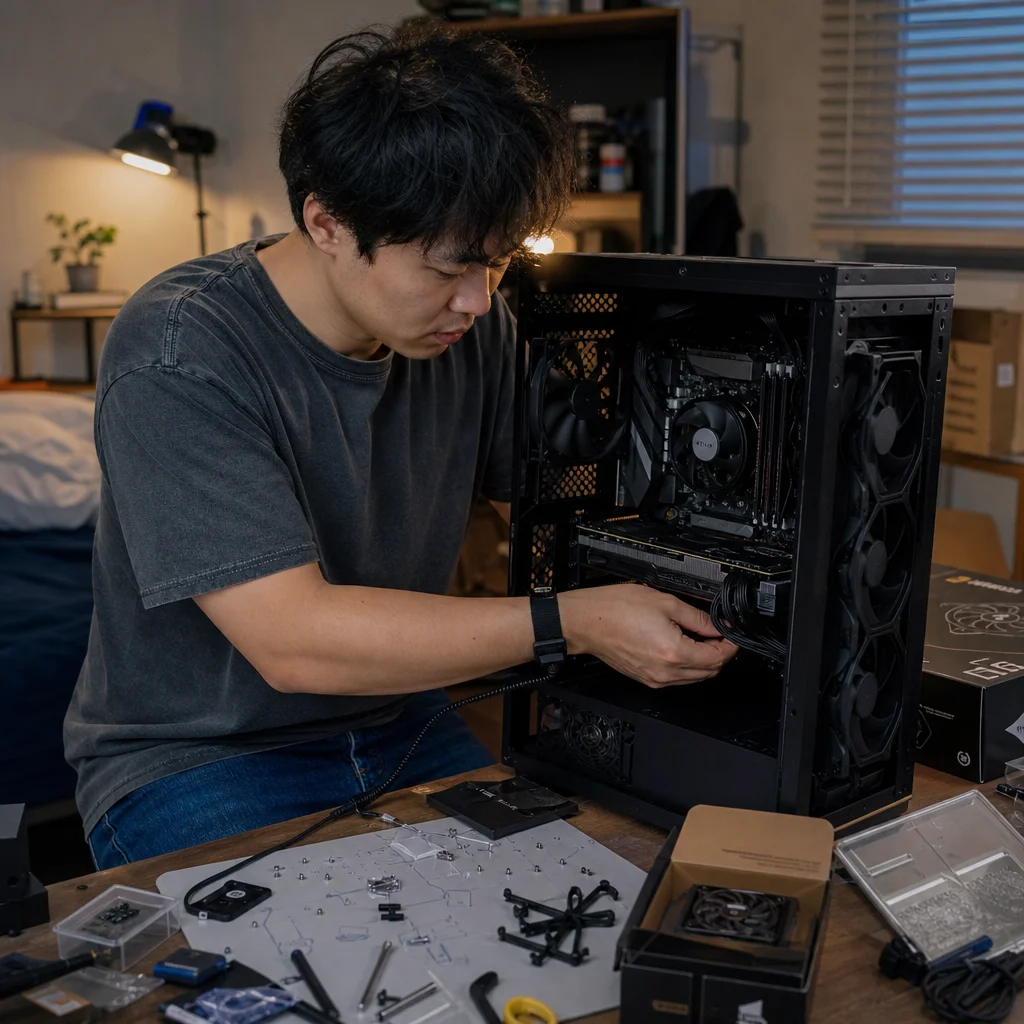
Winter can make an otherwise ordinary PC upgrade feel unusually risky. Dry air lets static charge build on clothing, carpets, chairs, and your body, so touching a component or the case may produce a visible spark—or a discharge too small to notice. That doesn't mean every zap destroys hardware, but careless handling can add avoidable risk.
The useful goal isn't to create a perfectly static-free room. It’s to control the conditions that make charge buildup likely, give charge a safe path away from your body, and respond calmly if something does go wrong.
Start with the room and workspace
A dry room is more likely to produce static because moisture in the air helps charge dissipate from surfaces. Cold winter weather often brings low indoor humidity, especially when heating systems are running. You don’t need to treat a particular humidity reading as a hard pass-or-fail limit, though. The important clues are frequent shocks from doorknobs, clingy clothing, crackling blankets, and sparks when you touch metal.
If the room is uncomfortably dry, a properly maintained humidifier can reduce static buildup. Use it according to the manufacturer’s instructions, keep it away from the computer and power strips, and prevent mist from settling on electronics. More humidity isn't automatically better: condensation, leaks, and damp surfaces create a different set of problems. A basic room hygrometer can help you understand the conditions, but it isn’t a substitute for keeping the work area dry and clean.
Choose a hard, stable work surface rather than a bed, upholstered chair, or thick carpet. A wooden or laminate desk is usually more predictable than a fabric-covered surface. Move the PC case onto the desk before opening it, and keep loose plastic packaging, foam, blankets, and synthetic clothing away from the parts. Anti-static bags are useful for storing components, but the outside of a bag isn’t automatically a safe work surface; follow the bag or component manufacturer’s handling guidance.
Wear ordinary clothing that doesn’t generate a lot of static, and avoid shuffling across carpet immediately before touching hardware. If you do cross a carpeted room, discharge yourself by touching a suitable bare-metal part of the grounded case before picking up a component. This simple pause matters more than trying to work quickly.
Check the room before opening the case
If the space is producing repeated shocks, stop and improve the work area first. Verify that the computer will sit on a dry, stable surface, that no humidifier can spray or drip toward it, and that the floor and clothing won’t keep recharging you as you work.
Give static a controlled path away
The familiar approach is to use an anti-static wrist strap connected to a properly grounded point. The strap keeps your body near the same electrical potential as the case and components, reducing the chance of a sudden discharge when you touch them. It should be snug against bare skin, not over a sleeve, and its cord should connect exactly as its instructions specify.
A wrist strap only helps if its connection point is genuinely suitable. In a typical desktop setup, that may mean connecting to exposed bare metal on the PC chassis while the power supply is connected to a correctly grounded outlet and its rear switch is turned off. Some straps and work mats specify a different arrangement, so read their instructions rather than assuming every grounding method is interchangeable.
If you don’t have a wrist strap, use a consistent manual routine. Before handling a component, touch the unpainted metal chassis. Keep one hand on the case when practical, and repeat the touch after standing up, moving around, or reaching for another item. This is less convenient than a strap because your body can become charged again, but it is much better than handling a memory module or graphics card immediately after crossing a carpet.
Never use a questionable outlet, damaged power cord, water pipe, radiator, or improvised wire as a grounding point. A grounding method that is merely assumed to be safe can introduce electrical hazards. Don't work inside the PC while it is powered, and don’t rely on the power button alone to make an energized system safe.
Prepare the computer before handling parts
Shut the computer down through the operating system, turn off the power supply if it has a rear switch, and disconnect the AC power cord before removing internal components. Press the case power button for a few seconds after unplugging to help discharge some residual energy, but remember that power supplies and other components can retain dangerous voltages. You shouldn't open the power supply itself.
For routine component installation, the case is the useful metal reference point. Remove the side panel, place the case securely on the work surface, and identify a bare-metal area you can touch without reaching across the motherboard. Keep the motherboard, processor, memory, and expansion cards in their protective packaging until you’re ready to install them.
Handle circuit boards by their edges. Avoid touching gold contacts, exposed pins, solder points, and chips. Hold a processor only by its edges and never touch the delicate socket contacts on the motherboard. For memory and expansion cards, align the part before applying pressure; forcing a component because it won’t seat is a mechanical problem, not a static solution.
Don’t slide parts across the desk, stack boards directly on one another, or place them on ordinary plastic, paper, or fabric without considering static buildup. When a component is removed, return it to its anti-static bag or the packaging designed for it. Keep screws and tools away from the motherboard so a dropped metal object doesn’t create a short circuit.
A grounded anti-static mat can make a workstation more consistent, particularly if you build or repair computers often. It isn’t essential for a one-time upgrade, and a mat connected incorrectly isn't safer merely because it is marketed as anti-static. The quality of the connection and the instructions matter more than adding another accessory.
What to do if you feel or see a spark
Don’t immediately assume the component is ruined. A static event can be harmless, damaging, or impossible to assess by appearance alone. A visible spark is a reason to stop and correct the conditions, not proof that every part in the case has failed.
First, stop handling the hardware. Disconnect power if the system is connected, ground yourself before touching the case again, and look for obvious problems such as a loose cable, a dislodged memory module, a damaged connector, or a screw that has fallen onto the motherboard. Don’t continue installing parts while you’re still generating shocks.
If the PC was running when the discharge occurred, shut it down normally if it responds. If it has frozen, powered off, or is behaving abnormally, use the power switch only as needed to make it safe, then disconnect AC power. Give the system a deliberate inspection before attempting another start. Avoid repeatedly cycling power while guessing at the cause.
After an incident during an upgrade, reseat only the components that may have been disturbed, and check the basic connections: motherboard power, processor power, graphics-card power, memory seating, display cable, and front-panel connections. If the system shows no display, start with the same minimal-hardware troubleshooting you would use for any failed build. Remove unnecessary USB devices and expansion cards, then test with the minimum hardware required to reach firmware setup. Follow the motherboard manual for diagnostic LEDs, beep codes, and reset procedures, since those details vary by model and firmware version.
Static damage may not leave a visible mark and may appear as intermittent crashes rather than an immediate failure. If a problem continues, test components systematically instead of blaming the last spark automatically. A loose cable, incompatible memory setting, bent socket contact, unstable overclock, or unrelated failing part can produce similar symptoms.
Use the current manual for recovery steps
Before clearing firmware settings, interpreting diagnostic lights, or testing a power supply, check the exact motherboard and PSU documentation for your model. Connector layouts, indicator meanings, and reset procedures differ, and power-supply manufacturers may specify different safe test methods.
Habits that matter most
The most effective winter precautions are simple: work on a hard surface, reduce carpet and synthetic fabric around the station, keep the room comfortably dry rather than extremely dry or damp, and discharge yourself before every handling session. Use a wrist strap when its grounding arrangement is understood, or touch the bare-metal case repeatedly if you’re working without one.
Keep the PC unplugged while installing parts, never open the power supply, and handle boards by their edges. If a spark occurs, pause and troubleshoot methodically rather than treating it as automatic proof of catastrophic damage. Those habits protect against both electrostatic discharge and the more common mistakes—rushed handling, loose connections, and unsafe power work—that tend to accompany it.
Before your next winter upgrade, prepare the workspace first and gather the case, component packaging, the correct tools, and the relevant manuals. A few minutes spent controlling the environment and planning your handling routine is more useful than buying every anti-static accessory available.