How Winter Air and Indoor Humidity Affect a Desktop PC
Winter changes the air around a desktop PC through temperature swings, dry rooms, heating dust, and occasional condensation. I’ll explain how those conditions affect components and outline sensible habits for safer, cleaner, more reliable computing in cold climates.
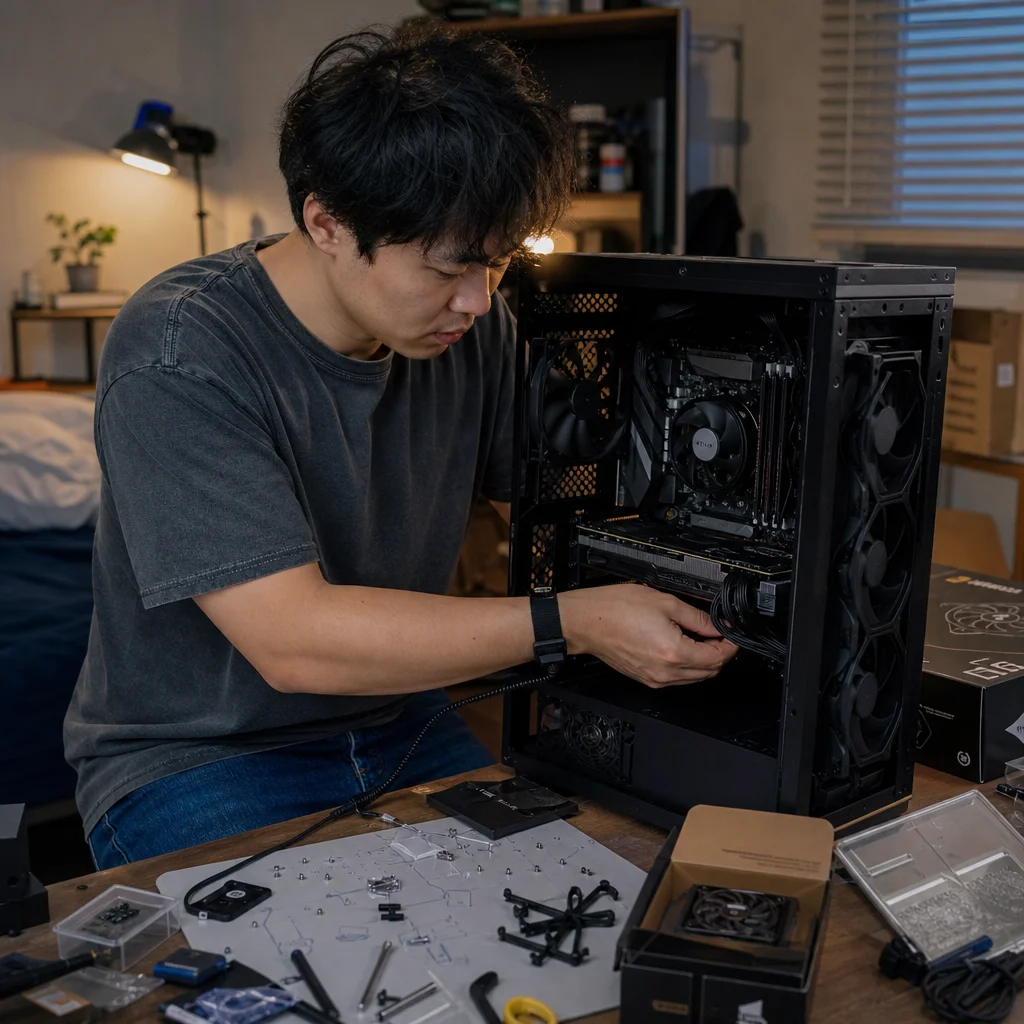
Cold weather itself usually isn’t a problem for a desktop PC. The bigger risks come from what winter does indoors: heating systems dry the air, forced-air heat moves dust, and a computer or component moved between very different temperatures can collect condensation. Static electricity also becomes more noticeable when indoor air is exceptionally dry.
The useful distinction is between a PC operating in a stable room and a PC being exposed to sudden environmental changes. A desktop that stays in a reasonably controlled home office is generally easier to protect than one carried in from an unheated garage, stored beside a radiator, or installed where warm and cold air meet.
Condensation is the main cold-weather concern
Condensation forms when a cool surface meets air that contains enough moisture to reach its dew point. You see the same effect when a cold drink collects water on its outside. Inside a computer, moisture can settle on metal surfaces, circuit boards, connectors, and other parts if the temperature change is large enough.
This is most likely when you bring a cold PC into a warm, humid room. A desktop transported through freezing weather may be cold all the way through, while the room air is much warmer and holds more moisture. If you power it on immediately, condensation may still be present even if the outside of the case looks dry.
The reverse situation can matter too. A warm, humid computer moved into a very cold environment can develop moisture as it cools, especially if it is then brought back indoors before it has fully dried. The risk depends on the temperature difference, exposure time, humidity, airflow, and the computer’s construction, so there isn’t one universal waiting period that guarantees safety.
Let a cold PC acclimate before powering it on: Keep the system unplugged in its final room until it has reached room temperature and any visible or suspected moisture has evaporated. If it was exposed to extreme cold or damp conditions, allow additional time and inspect it rather than relying on a fixed number of minutes.
A sealed case doesn't make a computer immune to condensation. Most desktop cases have vents, openings, fans, and cable cutouts, and the air inside can exchange with the room. A case can slow a temperature change, but it doesn’t eliminate the underlying risk.
If you suspect moisture, disconnect the power cable and leave the system off. Don’t use a hair dryer or place the computer directly against a heater to speed things up. Excessive heat can damage plastics, labels, fans, and components, while moving damp air through the case may spread moisture. Let normal room temperature and gentle ventilation do the work.
Dry winter air and static electricity
Heating a home often lowers its relative humidity. Cold outdoor air contains less moisture than warm air, and once that air is heated indoors without adding moisture, relative humidity can fall further. The exact level varies with the building, ventilation, weather, and heating system.
Dry air makes static shocks more common because charge can remain on clothing, carpets, and your body for longer. A static discharge that you can barely feel can damage a sensitive component before or during installation. This is why opening a PC to replace memory, storage, or a graphics card deserves the same basic ESD precautions in January as in any other season—possibly more if the room is especially dry.
You don’t need to turn your office into a laboratory. Before handling internal parts, shut down the PC, switch off the power supply if it has a rear switch, unplug the power cable, and touch an unpainted metal part of the case. An antistatic wrist strap connected according to its instructions provides a more consistent approach, particularly if you’re working on a carpeted floor or handling several components.
Hold expansion cards and memory modules by their edges. Avoid touching gold contacts, socket contacts, and exposed circuitry. Keep parts in their antistatic packaging until you’re ready to install them, and don’t work while wearing clothing that produces repeated static sparks. If you feel a shock, pause and discharge yourself again before continuing.
A humidifier can reduce static in a very dry room, but more moisture isn’t automatically better for electronics. Excessive indoor humidity can encourage condensation on cold surfaces and contribute to dampness elsewhere in the room. Use a hygrometer to understand the room rather than adjusting a humidifier by guesswork, and follow the humidifier’s cleaning instructions so it doesn’t add mineral dust or biological contamination to the air.
Heating systems can increase dust intake
Winter dust problems are often blamed on dry air, but the heating system and the building’s airflow are usually more direct causes. Forced-air systems move air through ducts, filters, floors, and rooms. Radiators and baseboard heaters create convection currents that can lift settled dust near the floor. Portable heaters may also alter airflow around the computer, even when they aren’t blowing directly at it.
Dust accumulates on filters, heatsinks, fan blades, and vents. A thin layer can reduce airflow; a heavier layer can insulate heatsinks and make fans work harder. The result may be higher temperatures, more fan noise, and a greater chance that a cooling problem remains unnoticed until the system is under a demanding workload.
Keep the desktop away from direct heater airflow and don’t place it so close to a radiator, baseboard heater, or portable heater that warm air is drawn into the case. The computer needs a stable, open path for intake and exhaust. Avoid blocking front, bottom, or rear vents with a wall, curtain, storage box, or thick carpet.
Check the case’s dust filters more often during periods when the heating system is running frequently. Turn the PC off, disconnect it from power, and clean removable filters according to the case manufacturer’s instructions. For internal dust, use short bursts of compressed air while preventing fans from spinning freely. Hold a fan blade in place rather than allowing it to overspeed, and work in a ventilated area where loosened dust won’t simply settle back into the room.
If your home uses a forced-air furnace, replacing or cleaning the household filter on the schedule recommended for that system can help overall air quality and reduce airborne debris. That schedule depends on the filter, building, pets, occupants, and local conditions, so the filter manufacturer or heating-system guidance is more useful than a single universal interval.
Keep the PC away from extreme temperature swings
A desktop performs best in a stable, moderate environment. You don’t need to heat the room specifically for the computer, but avoid locations where the case repeatedly alternates between cold drafts and warm air. Near an exterior door, window, uninsulated wall, radiator, or floor-level vent, the local conditions around the PC may differ significantly from the rest of the room.
If possible, place the case on a solid raised surface with clearance around its vents. This reduces the amount of floor dust it can draw in and makes it less vulnerable to a cold floor or an accidental spill. It also helps keep airflow predictable. A carpeted floor isn’t automatically unsafe, but it can restrict bottom intake, collect dust, and increase static concerns while you work on the machine.
Never cover a running desktop with a blanket or other material to keep it warm. The case should be cooled by moving air, not insulated from the room. If a room is cold enough that you’re concerned about the computer, check the manufacturer’s operating and storage specifications for the specific components. Those limits can differ, and storage conditions aren't the same as powered operating conditions.
The power supply deserves ordinary winter caution as well. Keep its intake clear, don’t operate the PC where moisture can reach the outlet or power strip, and avoid using damaged extension cords or overloaded adapters. Winter storms and heating equipment can also make power interruptions more likely in some areas. A properly rated surge protector may help with certain transient events, while an uninterruptible power supply can provide a controlled shutdown during outages; neither device makes a wet or poorly ventilated setup safe.
Seasonal habits that are worth keeping
A short inspection at the start of the heating season can prevent most problems. Check that the case filters are seated, fans spin without grinding, cables aren’t blocking an intake, and the computer hasn’t been pushed against a new source of heat. Look for unusual dust buildup and listen for a fan that has become louder than usual.
Keep a small hygrometer in the room if humidity varies widely. It can reveal whether the air is unusually dry, whether a humidifier is overshooting, or whether a basement office has a dampness problem. Use the readings as a prompt to improve the room, not as a reason to chase a precise number at the expense of ventilation and sensible comfort.
Before installing an upgrade, let newly delivered hardware warm gradually if it arrived from a cold vehicle or unheated delivery area. Leave it packaged while it acclimates; the packaging can slow the temperature change and reduce direct exposure to humid room air. Don’t open a visibly cold package and immediately install the part. When in doubt, wait until the package and component feel fully at room temperature and are dry.
Finally, pay attention to symptoms rather than assuming every winter issue is environmental. A system that crashes under load may have a failing fan, an unstable overclock, a loose cable, or a driver problem. A PC that repeatedly shocks you may point to an electrical or grounding issue that deserves attention beyond ordinary ESD precautions. Seasonal conditions can expose weaknesses, but they aren’t an explanation for every fault.
A sensible winter routine
Keep the computer in a stable location, away from direct heaters and cold drafts, with clear intake and exhaust paths. Clean filters as they load up, manage room humidity without over-humidifying, and use basic ESD precautions whenever you open the case. Most importantly, never power on a computer that has just come in from freezing conditions until it has acclimated and you’re confident there is no condensation.
Those habits address the real winter risks without treating cold air as an enemy. A clean, dry, well-ventilated room and gradual temperature changes are usually enough to keep a desktop reliable through the heating season.