How to Maintain a PC in a Home With a Wood Stove or Fireplace
I’ll clarify how wood smoke, ash, dry winter air, and changing room temperatures affect a PC, then show you where to place the system, how often to inspect its filters, and when cleaning is actually worthwhile.
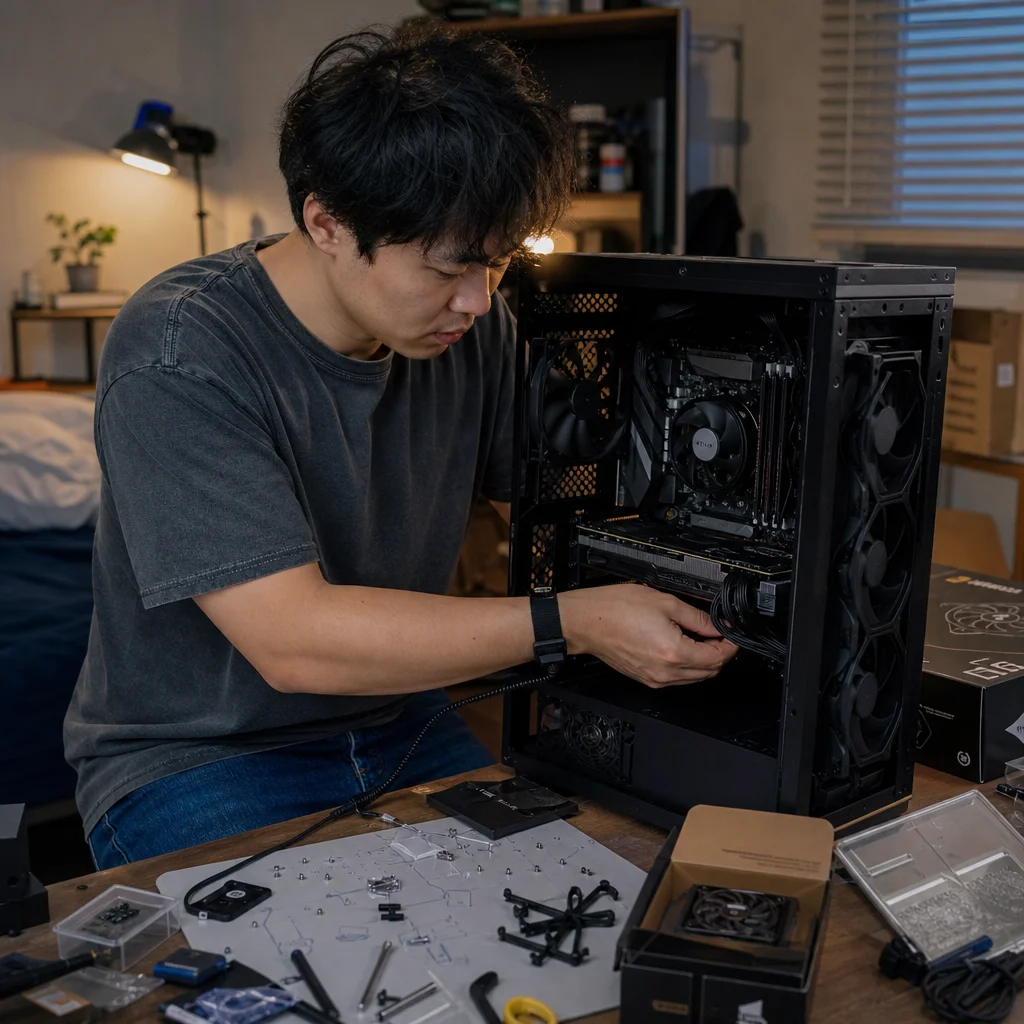
A home heated by a wood stove or fireplace can be comfortable for people while being a demanding environment for a PC. Fine smoke particles, ash, dust, dry air, and frequent cleaning around the appliance can all affect a computer’s cooling system. That doesn’t mean every temperature change is dangerous or that you need to treat the PC like laboratory equipment.
The sensible approach is to reduce what the computer draws in, keep combustion byproducts away from its intake, and inspect the system often enough to catch problems early.
Keep the PC away from the main pollution sources
Placement is the most effective maintenance decision you can make. Don’t put the computer beside the stove or fireplace, directly above it, or in a location where warm air and smoke naturally collect. A nearby hearth can expose the case to ash, soot, and repeated bursts of heat even when the room as a whole feels comfortable.
A desktop should also be kept away from areas where firewood is stacked, split, or carried. Wood debris and bark create ordinary dust, while ash can contain very fine particles that settle on surfaces and enter through ventilation openings. If the PC sits on the floor, it will generally encounter more dust, pet hair, and debris than it would on a stable desk or stand. Raising it is useful, but don’t place it so high that it becomes unstable or blocks the case’s airflow.
Leave clear space around every intake and exhaust vent. A case pressed against a wall, curtain, cabinet, or pile of belongings has less opportunity to move air, so its fans may run faster and pull harder against a dirty filter. Follow the case manufacturer’s clearance guidance where it provides one, and keep cables from sagging across ventilation openings.
A room that occasionally becomes warmer while the fire is burning isn't automatically harmful. The greater concerns are sustained heat, blocked airflow, direct radiant heat, and contamination from smoke or ash. If the side panel, rear exhaust, or nearby furniture becomes noticeably hot, move the computer rather than trying to compensate with more fans.
Understand what smoke and ash do inside a computer
Wood smoke contains fine particles and gases. In a computer, those particles can settle on dust filters, fan blades, heatsinks, and circuit boards. A light film may not cause an immediate failure, but it can make filters restrictive and coat cooling surfaces that need to transfer heat into moving air. Soot or smoke residue can also be difficult to remove cleanly once it becomes mixed with ordinary dust.
The most visible ash isn't the only concern. Opening the stove or fireplace, removing ash, sweeping the hearth, and bringing in firewood can all disturb small particles. A PC with a strong intake fan may draw some of that material into the case. This is one reason a case with easily removable intake filters is especially useful in a wood-heated home.
Smoke entering the room is also a sign to address the heating system, not merely a computer-cleaning issue. Check that the appliance is operating as intended, that doors and seals are in good condition, and that the chimney or flue receives the required inspection and cleaning for your installation. A computer can't be made reliable by cleaning it more often if the room continues to fill with smoke.
Avoid using a household vacuum directly on exposed components. Vacuum cleaners can create static and their nozzles can damage small parts or overspin fans. For routine PC cleaning, shut the computer down, disconnect power, move it to a suitable ventilated area if possible, and use short bursts of clean, moisture-free compressed air while preventing each fan from spinning freely. Hold the fan blades in place with a finger or an appropriate nonconductive tool, without pressing hard on the blades or circuit board.
Inspect filters before you choose a cleaning interval
There is no universal calendar interval that fits every wood stove or fireplace home. The right schedule depends on how often the appliance runs, whether the PC is near the living area, how dusty the room is, whether the case has filtered intakes, and how quickly the filters become loaded.
Start with a visual inspection every few weeks during the heating season. You may need to check more often during periods of frequent firewood handling, ash removal, or visible smoke. Look at the front, bottom, and side intake filters, as well as the area around the power supply intake. A thin layer of ordinary dust is a prompt to clean; a gray, dark, sticky, or smoke-smelling deposit is a reason to investigate the room conditions and clean the system more carefully.
If a filter is visibly coated, remove it according to the case instructions and clean it outside or in a utility area rather than shaking the debris beside the PC. Many plastic mesh filters can be washed, but they must be completely dry before reinstallation. Don't wash a power supply, fan, graphics card, motherboard, or any other electronic component unless its manufacturer specifically provides a method for doing so.
After cleaning, check whether the filter sits flat and seals reasonably well around its frame. A filter that is missing, warped, or left partly open allows air to bypass the intended filtering surface. If the case uses magnetic filters, make sure they haven’t shifted during cleaning or cable work.
As a practical starting point, inspect monthly during the heating season and adjust from there. A clean rural home with the PC in a separate room may need less frequent intervention; a system near a busy hearth may need weekly checks. The filter itself gives you better information than a fixed schedule.
Clean the inside when buildup is affecting airflow
Filter cleaning should be your first line of defense. Internal cleaning becomes more important when you can see dust on the heatsink fins, fans, graphics card, or power-supply intake; when fan noise has increased; or when temperatures are higher under the same workload. Monitoring software can help you compare temperatures with your usual baseline, but don’t treat one brief reading as proof of a problem. Room temperature, workload, fan curves, and software updates can all change results.
Before opening the case, shut down the PC and unplug it. Press the power button briefly after disconnecting it to help discharge the system, then work on a solid, non-carpeted surface if practical. Touching the bare metal of the case before handling components can reduce static buildup, but avoid working while wearing clothing that generates a lot of static. Keep the cleaning area away from the stove, fireplace, ash bucket, and active fire.
Use short air bursts to move dust out of heatsinks and vents. Direct the airflow so debris exits the case rather than being driven deeper into it. Pay attention to the front intake, CPU cooler, graphics card cooler, rear exhaust, and power-supply filter. Don’t remove a power supply’s cover; dangerous electrical components can remain hazardous even when the PC is unplugged.
Smoke residue changes the situation. If surfaces have an oily or sticky film, or if the computer smells strongly of smoke after cleaning, repeated compressed-air cleaning may not be enough. Avoid spraying household cleaners inside the case. A contaminated system may need careful professional cleaning, particularly if residue has reached connectors, fans, or the power supply.
Check the heating system before blaming the PC: If you notice recurring smoke, soot deposits, headaches, dizziness, or a carbon-monoxide alarm, stop using the appliance as appropriate for your situation, leave the affected area if needed, and follow local emergency and appliance-safety guidance. Have the stove, fireplace, flue, and alarms inspected by qualified professionals according to the requirements where you live.
Manage dry air without creating a new problem
Wood heat often makes winter air feel dry, and low humidity can increase static-electricity discomfort. That matters most when you open the case or handle components, not because normal dry indoor air automatically damages a running PC. Static risk is reduced by sensible handling: power the system down, unplug it, discharge yourself against the case, and avoid shuffling across carpet before touching components.
A humidifier can improve comfort, but don’t direct mist toward the computer or place the PC beside it. Mineral deposits from an ultrasonic humidifier can become airborne and settle on electronics and furniture. Any humidifier should be maintained according to its instructions, and the room shouldn't become damp enough for condensation to form on cold surfaces.
You don’t need to chase a precise humidity number for the computer alone. Aim for a comfortable, stable indoor environment, keep moisture away from the case, and use a clean, properly maintained humidifier if one is appropriate for your household. If you see condensation on windows or other cool surfaces, reduce moisture and improve ventilation rather than adding more.
Treat temperature changes proportionately
Moving a PC from a cold place into a warm room is different from allowing a computer to operate in a room that gradually warms as the fire burns. The first situation can create condensation if the computer is cold enough and the surrounding air is warm and humid. The second is usually just a change in operating conditions, provided the room and the PC remain within the limits specified by the manufacturers.
If a computer has been stored in an unheated shed, vehicle, porch, or other cold location, leave it powered off until it has warmed to room temperature and any condensation risk has passed. Don’t use a space heater or place the case beside the stove to speed this up. Let it warm naturally in a dry area.
For a PC that stays indoors, monitor symptoms rather than reacting to every seasonal fluctuation. Unexpected shutdowns, thermal throttling, persistent fan noise, visible moisture, or temperatures that are consistently higher than usual deserve attention. A modest increase in fan speed when the room is warmer is normal; it doesn’t necessarily indicate damage.
Compare conditions before changing parts: When temperatures or fan noise seem different, check the room temperature, filter condition, workload, and case airflow first. Then compare your readings with the CPU, graphics card, case, and power-supply manufacturer’s published operating guidance rather than relying on a generic temperature limit.
Build a simple seasonal routine
At the start of the heating season, move the PC away from the hearth if necessary, clean the external filters, inspect the cable and vent clearance, and confirm that smoke and carbon-monoxide alarms are present and maintained as required locally. Check for dust around the rear exhaust and power-supply intake, since those areas are easy to overlook.
During the season, inspect the intake filters regularly and clean them when they show meaningful buildup. Keep ash removal and firewood handling as separate from PC maintenance as you can. If the computer must remain in the same room, close the case promptly after inspection and avoid cleaning it while the stove or fireplace is actively producing airborne debris.
At the end of the season, clean the filters again and consider an internal inspection if the PC has been exposed to substantial dust or smoke. Record any unusual temperatures or fan behavior so you have a baseline for the next winter. This small amount of observation is more useful than replacing fans or thermal paste on a fixed schedule.
The safest arrangement is straightforward: place the PC away from direct heat and smoke, give its intakes clear filtered airflow, inspect filters based on what you actually see, and clean buildup before it restricts cooling. Normal indoor temperature changes don’t require panic. Persistent smoke, condensation, excessive heat, or repeated temperature changes do require investigation—of both the computer and the heating environment.