Choose a Cooler for a PC That Runs Long Compiles
A compact air cooler may be quiet and dependable, while a larger tower or liquid loop can sustain heavier workloads with more room to spare. I’ll help you compare capacity, noise, clearance, installation, and maintenance for long compile runs.
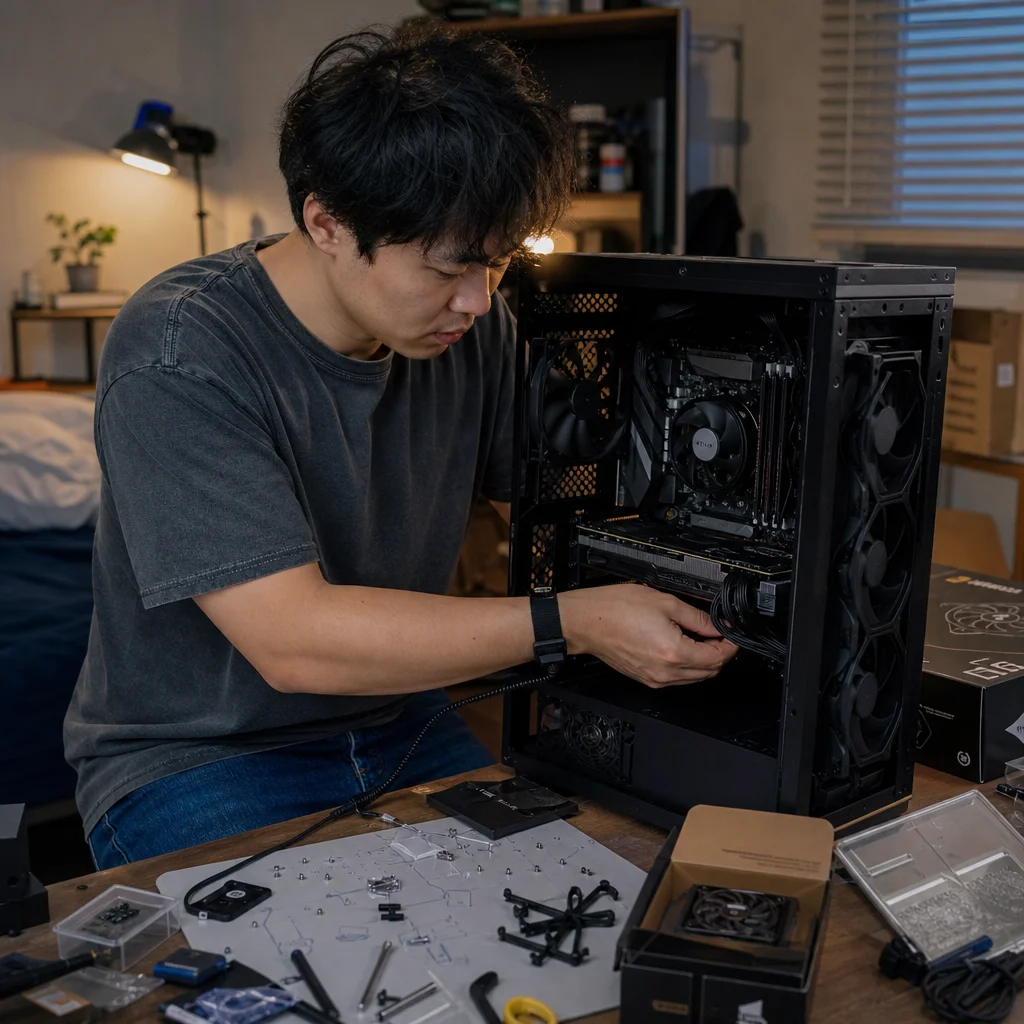
Long compiles expose cooler choices that short benchmark runs can hide. A cooler may handle a brief burst perfectly well yet become loud, thermally limited, or inconvenient after an hour of sustained all-core CPU use. For a development or workstation system, the right choice is less about the biggest cooler you can fit and more about matching sustained capacity to your processor, case, and tolerance for noise and maintenance.
Start with sustained CPU behavior, not peak wattage alone
Your processor’s advertised power figure is a useful starting point, but it doesn’t fully describe what happens during a long compile. Modern CPUs can raise clocks and power when temperature, motherboard limits, firmware settings, and cooling capacity allow it. Two systems with the same processor can therefore produce different temperatures, noise levels, and compile times.
Think in terms of the workload you actually run. A small project that finishes in a few minutes may mostly test boost behavior. A large C++, Rust, Android, or game-engine build can keep many cores busy for much longer. Repeated local builds, code generation, virtual machines, and other developer tools can create a similar pattern. If your work keeps the CPU near full utilization for extended periods, sustained cooling performance matters more than a cooler’s ability to absorb a short spike.
A stronger cooler doesn’t automatically make compilation faster. Once the processor reaches its intended thermal and power limits, extra cooling may provide little benefit. It can still be worthwhile if it reduces fan noise, avoids repeated thermal limits, or gives the system more headroom as the room warms or the workload changes. The useful target is stable performance at an acceptable noise level, not the lowest possible temperature at any cost.
Compare cooler types by their long-session trade-offs
A large tower air cooler is often the simplest option for a compile-focused PC. It uses a heatsink and one or more fans, has no pump or liquid loop, and usually needs little attention after installation. A good tower can provide substantial sustained capacity, particularly when the case has a clear front-to-back airflow path. Its main drawbacks are physical size, weight around the CPU socket, and possible interference with tall memory modules or motherboard heatsinks.
Dual-tower air coolers increase fin area and often include two fans. They can be an effective choice for high sustained loads, but they occupy more space and may make access to memory slots or the top edge of the motherboard difficult. Their fans are replaceable, and a fan failure generally leaves you with a straightforward mechanical part to diagnose or replace.
An all-in-one liquid cooler, commonly called an AIO, moves heat from the CPU to a radiator mounted elsewhere in the case. This can help when socket-area clearance is tight or when you want to keep a large heatsink away from memory slots. A larger radiator can also offer more surface area for dissipating sustained heat. In exchange, an AIO adds a pump, tubing, radiator placement decisions, and more potential failure points than a basic air cooler. Pump noise can also be noticeable even when radiator fans are spinning slowly.
A liquid cooler isn’t automatically quieter. At a given workload, the pump and fans together may produce a smoother or lower-pitched sound than a small CPU fan, but the result depends on the specific design, fan curve, case, and mounting position. For a workstation that needs to remain dependable for years, choose liquid cooling for a clear space or performance reason rather than assuming it is the premium answer.
Size capacity for the workload you sustain
Cooler specifications are useful for narrowing choices, but published thermal ratings aren't perfectly comparable between manufacturers. Test methods, allowable temperatures, fan speeds, and processor power settings can differ. Instead of treating a claimed rating as a precise limit, use it to identify a sensible class of cooler and then look for independent testing with a CPU and power level similar to yours.
For a modest processor with restrained power behavior, a capable single-tower air cooler may be enough. A higher-power desktop CPU, unlocked processor with generous motherboard limits, or system that compiles for hours deserves a larger tower, a stronger dual-tower design, or an appropriately sized AIO. If you expect to use the workstation for rendering, simulation, local machine learning, or virtual machines as well as compiling, size for the broader sustained workload rather than for compilation alone.
Leave some capacity in reserve. A cooler that must run its fan near maximum throughout every build has little room for a warmer room, a dusty filter, a future processor upgrade, or a more aggressive motherboard power profile. Reserve capacity also makes fan-curve tuning easier: you can allow the CPU to operate normally without turning every compile into a conspicuous burst of fan noise.
The case and room matter as much as the heatsink. A cooler can't reject heat efficiently if the case recirculates warm air or sits in a cramped location. Favor a case with a reasonably open intake path, an exhaust route near the CPU cooler, and enough fan positions to maintain steady airflow at modest speeds. More fans aren't always better; balanced airflow and sensible curves usually matter more than filling every mount.
Confirm your platform and case fit: Before ordering, check the cooler’s supported socket list, maximum CPU cooler height, radiator lengths and thicknesses, fan clearance, memory height, and motherboard layout against the exact parts you intend to use. Socket support and case specifications can change between product revisions, so use the current manufacturer documentation rather than a retailer summary alone.
Treat sustained noise as a performance requirement
For long compiles, noise should be evaluated over the entire session, not by the first minute after you press Build. A CPU may begin quietly and then ramp its fan as the heatsink saturates. A cooler with more thermal mass or radiator capacity may take longer to reach that point, while a more capable design may maintain lower fan speeds once the workload settles.
Look for test results that report noise and temperature after a sustained load, ideally at a defined CPU power level. Pay attention to whether the test uses an open bench or a closed case. Open-bench results can make a cooler look quieter and cooler than it will be in your workstation. Also consider the character of the sound: a steady low-speed airflow may be less distracting than repeated fan ramps, while a pump’s consistent hum may be more noticeable in a quiet room.
You can often improve the experience through firmware settings after installation. A gradual fan curve can prevent rapid changes during short bursts, and a reasonable sustained-load limit can trade a small amount of peak performance for lower noise. Make changes cautiously, monitor temperatures and stability, and keep in mind that motherboard controls differ. Avoid disabling protective thermal behavior simply to force a lower reported temperature.
If compile time is important, measure it rather than relying only on temperature. Run a representative build more than once, allow the system to reach its normal operating condition, and compare completion time, average noise, and sustained CPU behavior. A cooler that is a few degrees warmer but much quieter may be the better workstation choice; so may a louder cooler if it prevents a meaningful performance drop on your particular processor.
Check installation complexity before choosing liquid cooling
Air coolers usually involve securing a backplate or mounting brackets, applying thermal interface material, and fastening the heatsink and fan. Large models can be awkward because the heatsink blocks access to screws or memory slots. Installing the fan after the heatsink is secured, when the design permits it, can make the process easier. Confirm the correct bracket orientation and avoid overtightening fasteners.
An AIO adds radiator and tubing routing to the installation. You need a compatible mounting position, enough clearance for the radiator and fans, and a plan for keeping tubes away from excessive bends or obstructions. Radiator thickness can be the deciding detail: a case may support the stated radiator length but not the combined thickness of the radiator, fans, and nearby motherboard or memory components.
Mounting orientation deserves attention. Follow the cooler maker’s current instructions for radiator placement and pump position, since recommendations depend on the design and case. If the pump or radiator is installed in a way that encourages air to collect where it shouldn't, noise and long-term behavior can suffer. After installation, check for unusual pump sounds, fan obstructions, leaks, or temperatures that are inconsistent with the workload. Shut the system down if you find a leak or any sign of liquid reaching components.
Include maintenance in the purchase decision
Every cooler needs some maintenance. Dust buildup on heatsink fins, radiator fins, filters, and fans reduces airflow. A compile workstation benefits from occasional inspection, especially if it runs for many hours or sits in a dusty environment. Clean with the system powered down and follow sensible handling practices for fans and compressed air; the exact cleaning method should reflect the manufacturer’s guidance and your equipment.
Air coolers are mechanically simple. Over time, you may replace a noisy fan or renew thermal interface material if temperatures change, but there is no pump or liquid loop to monitor. This simplicity is valuable when a workstation must remain available and you want failures to be easy to isolate.
An AIO normally requires less routine intervention than a custom loop, but it still contains a pump and sealed fluid path. The pump can wear, and the cooler may eventually need replacement rather than a simple refill or repair. Check the current warranty terms and support policy before buying, because coverage, service procedures, and expected product life vary by model and region.
Make the choice from your priorities
For many developers, a quality single- or dual-tower air cooler is the sensible default: it offers predictable sustained performance, straightforward installation, and low maintenance. Choose the larger class when your processor draws substantial power during all-core work, your motherboard allows high power limits, or you want quiet operation without running the fan aggressively.
An AIO becomes more compelling when a large heatsink conflicts with memory or motherboard clearance, when the case is designed around radiator mounting, or when independent testing shows a useful sustained-noise or performance advantage for your processor. It should be a deliberate trade, not a requirement created by appearance or marketing.
Before buying, write down your CPU model and expected power behavior, the longest workload you run, your case’s exact clearance limits, your memory height, and how much maintenance you’re willing to accept. Then compare sustained-load results from credible tests, not just peak temperature screenshots. Install the cooler carefully, verify temperatures and noise during a representative long compile, and adjust the fan curve only after you know how the system behaves. That process will usually lead to a quieter, more reliable workstation than simply choosing the most expensive cooler that fits.