When a Low-Profile Graphics Card Is the Right Compromise
I’ll explain how to judge whether a low-profile graphics card is a sensible compromise for your small desktop, focusing on the details that most affect fit, performance, cooling, noise, power, and long-term usability.
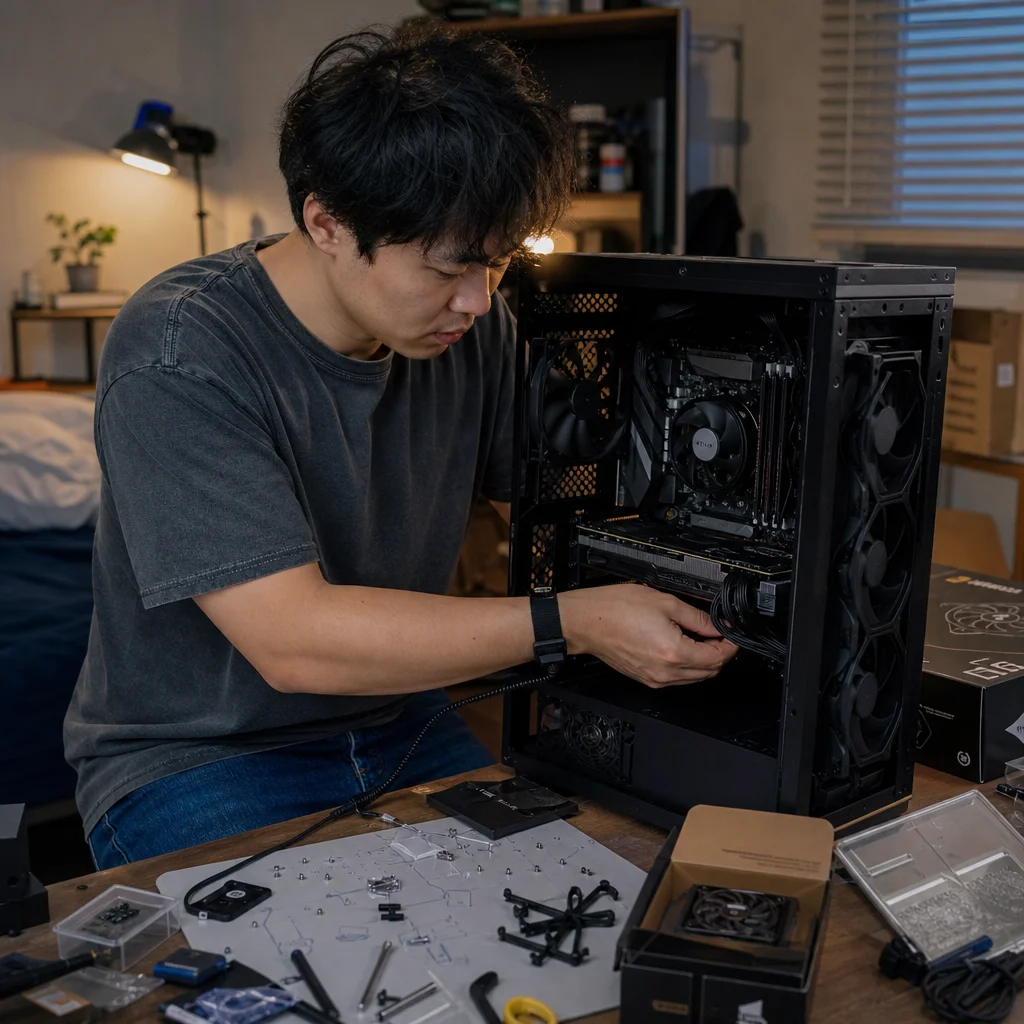
A low-profile graphics card can make a small desktop far more capable, but it rarely behaves like a full-size card with a shorter bracket. The compact design affects the cooler, power budget, noise level, upgrade path, and sometimes even the performance you can expect from the same GPU.
For a small-form-factor build, the right question isn’t simply whether a card fits. You need to decide which limitation matters most in your system and whether the card’s compromises are acceptable. A modest low-profile card may be exactly right for an office-style desktop, living-room PC, or compact workstation. It can also be a poor choice if you expect high-resolution gaming, sustained rendering, or quiet operation in a poorly ventilated case.
Start with the case, not the graphics card
“Low-profile” usually describes the card’s bracket height, not every dimension that determines compatibility. A card can use a low-profile bracket and still be too long, too thick, or too tall for your case. Some models occupy two expansion slots, while others are close to single-slot thickness. The cooler and fan shroud can extend beyond the circuit board, and a power connector may require extra clearance above or beside the card.
Measure the space from the rear expansion opening to the first obstruction in front of it. Check the maximum card length, height, and thickness listed by the case manufacturer, then compare those numbers with the graphics card’s full dimensions rather than only its bracket size. Pay particular attention to drive cages, front-panel cables, side panels, and the location of the power supply. In a very small case, a few millimeters can determine whether the side panel closes without pressing on the card.
The motherboard also needs a suitable PCI Express slot. In some office-style systems, the slot is present but surrounded by a proprietary chassis structure or positioned close to another component. A compact card can still be mechanically incompatible if its cooler collides with a neighboring slot, M.2 heatsink, or unusual motherboard connector.
Check the fit before ordering: Confirm the card’s complete dimensions, included bracket options, slot thickness, connector clearance, and your case’s maximum supported dimensions. Manufacturer specifications can differ between revisions, so verify the exact model number you intend to buy.
Understand what the compromise changes
A low-profile card has less room for a large heatsink and fan. Manufacturers often compensate with smaller fans, tighter fin stacks, lower clock speeds, or a lower power limit. These choices help the card fit and stay within a small system’s power budget, but they can reduce sustained performance or increase fan noise.
The GPU itself is only part of the thermal picture. A card that runs acceptably in an open test bench may behave differently inside a narrow office chassis with a restricted intake and a small exhaust fan. If the card reaches its thermal limit, it may reduce its clock speed during long gaming sessions or compute workloads. Even when it remains within its rated temperature range, a small fan may need to spin quickly to remove heat.
Cooling design matters particularly when comparing cards based on the same GPU family. A longer low-profile model with a larger heatsink may be quieter than a shorter model, even if both have similar advertised performance. A dual-fan design isn’t automatically better, either; two small fans can produce more noise than one larger, slower fan if the case has poor airflow.
For light gaming, media playback, desktop acceleration, and older applications, these differences may be minor. For sustained workloads, they become central to the decision. Consider the performance you need after the card has been warm for an hour, not only its peak result in a short benchmark.
Power is more than the wattage label
Many low-profile graphics cards are designed to draw all their power through the motherboard slot. That makes installation easier and suits systems with limited power supplies. Other models require a six-pin, eight-pin, or newer auxiliary connector. A card that needs an extra connector may be unsuitable for an office desktop even if the power supply has enough total wattage.
Older prebuilt systems can use proprietary power supplies or connectors, so don’t assume that a standard-looking replacement cable will work. You should never force an adapter into a connector simply because it fits physically. A power supply’s available output on the relevant rail, its age, and the condition of its cables matter as much as the headline wattage.
The rest of the computer also contributes to the power budget. A high-core-count processor, several hard drives, USB-powered devices, and a compact power supply can leave less headroom than a graphics card specification suggests. A system that operates close to its limit may become unstable under combined CPU and GPU load, especially if the power supply is old.
A slot-powered card is often the safer option for an office-style upgrade, but it still needs to be compatible with the motherboard and system firmware. It also shouldn’t be treated as automatically cool or quiet. Lower power generally makes thermal management easier; it doesn’t eliminate the effects of restricted airflow.
Match performance expectations to the system
Low-profile cards make the most sense when they solve a specific limitation. If your integrated graphics can’t support the displays, applications, or games you use, a compact card may provide a useful improvement without replacing the entire computer. It can add more display outputs, improve video encoding or decoding support, or enable light-to-moderate gaming at sensible settings.
The compromise is less attractive when you’re trying to maximize performance per dollar. A full-height card with a larger cooler and more generous power limit will often deliver better sustained performance at the same general GPU level. If your case can accept a longer, thicker card, giving up the low-profile constraint may provide more choices and better value.
Resolution and settings are important. A low-profile card may be comfortable at 1080p with a reasonable quality preset, but that doesn’t mean it will provide a good experience at 1440p, with demanding ray-tracing effects, or in a modern title that heavily stresses the GPU. Some cards have enough graphics memory for the display output but not enough for the texture settings you want. Others may support a feature in hardware but lack the performance to use it effectively.
Think about the whole platform, too. A compact graphics card won’t make a slow processor, limited system memory, or a mechanical hard drive disappear as a bottleneck. If the system is primarily for office work, the graphics upgrade may be most valuable for display support and responsiveness rather than frame rates. If it’s for gaming, identify the games and monitor resolution first, then select a card that meets those requirements without exceeding the case’s thermal and power limits.
Avoid the common installation mistakes
One frequent mistake is ordering a card that includes a low-profile bracket but shipping with only the standard-height bracket installed. Many cards include both, but you should confirm this rather than assume it. Swapping the bracket may require removing the cooler or handling small screws, and a replacement bracket isn’t guaranteed to be available for every model.
Another mistake is ignoring the display connectors. A card might physically fit while its ports don’t suit your monitors, or the included low-profile bracket may change which outputs are available. Check whether you need HDMI, DisplayPort, DVI, or an adapter, and confirm the card can drive the number and resolution of displays you plan to use. Adapters can introduce limitations, particularly with refresh rate, audio, or older digital standards.
It’s also easy to confuse a low-profile card with a card that has a low power draw. These traits often overlap, but they aren't the same. Read the card’s power requirements and connector requirements directly. Don’t choose based only on the GPU name or on a retailer’s abbreviated product title.
Finally, don’t block the card’s intake or exhaust. Cable routing, a nearby expansion card, or a dust filter pressed against a small fan can substantially reduce airflow. Keep cables away from the fan blades, make sure the bracket is secured, and check that the case panel closes without contacting the cooler.
Verify the current model details: Before installation, check the exact card’s power connector, recommended power supply, dimensions, supported display outputs, driver support, and included accessories on the manufacturer’s product page. Retail listings may combine specifications from similar variants.
When the compromise is worthwhile
A low-profile graphics card is usually the right compromise when the case is genuinely restrictive, the power supply is modest but suitable, and your workload benefits from a dedicated GPU without demanding maximum performance. It can extend the useful life of an office desktop, add modern display capability to an older system, or provide a balanced graphics upgrade for a compact home computer.
It’s less compelling when the card is being used to avoid addressing a larger problem. A cramped case with no usable airflow may need better ventilation first. An aging proprietary power supply may make a complete platform refresh safer than an isolated upgrade. If the only compatible card is expensive, noisy, or barely faster than integrated graphics, saving for a case or system that accepts a wider range of hardware may be the more efficient path.
Before buying, write down the system’s actual constraints: available card dimensions, slot location, power supply details, display requirements, expected workload, and acceptable noise. Then compare complete card specifications rather than relying on the low-profile label. If those constraints point toward a modest, well-cooled, slot-powered model, the compromise can be sensible. If they expose too many limitations at once, the smallest card may not be the smallest problem.