Why a PC Can Pass a Quick Test but Fail After Several Hours
When a PC boots, games, and completes a short benchmark but crashes hours later, I’ll help you separate heat soak, memory instability, storage behavior, power delivery, and software faults into a diagnostic plan instead of replacing parts at random.
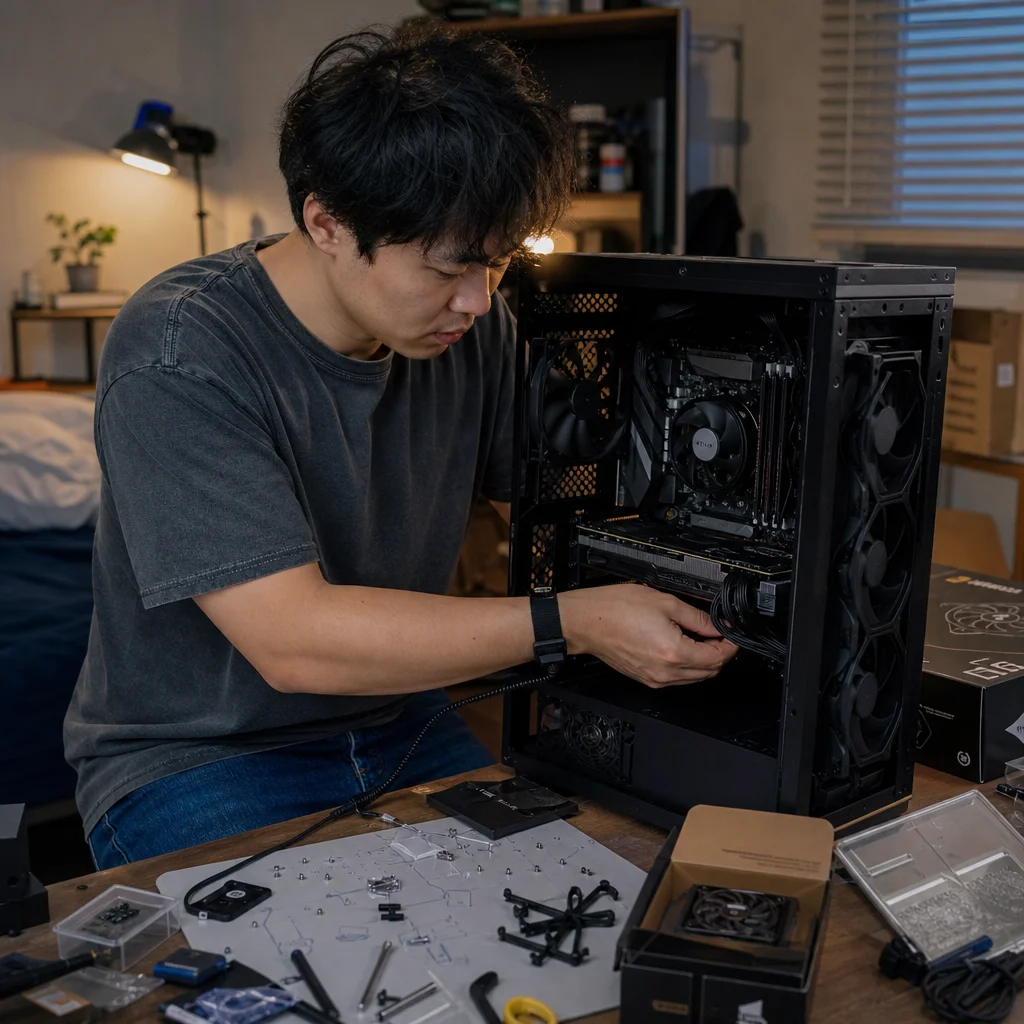
A PC that passes a quick test can still fail later because some faults need time to develop. Temperatures may climb gradually, memory errors may appear only after sustained allocation, an SSD may slow or disconnect under extended activity, or a power problem may emerge only when several components remain busy at once.
That pattern is frustrating, but it is also useful evidence. It suggests the system isn't failing under every condition. Your goal is to identify what changes between a short successful test and a long failed session, then reproduce that change in a controlled way.
Start by defining what “fails” means
A crash, freeze, reboot, shutdown, application error, and storage disconnect don't point to exactly the same causes. Before changing hardware, write down what happens and when it happens. Note the workload, approximate runtime, temperatures if available, whether audio continues, and whether the system recovers without pressing the power button.
A sudden restart can indicate power delivery, firmware behavior, or an operating-system failure configured to reboot automatically. A complete freeze may involve memory, overheating, a driver, or a device that has stopped responding. A blue screen gives you a stop code, while a single game closing may be caused by the game, its driver, or corrupted data rather than the whole PC.
The timing matters as well. “After three hours” is more informative than “randomly,” especially if the failure occurs during a familiar workload. If the PC fails during a long game but not during an overnight idle period, the graphics card, cooling, power, or game software deserves attention. If it fails while copying files or installing applications, storage and memory move higher on the list.
Reproduce the failure without changing several variables
A useful diagnostic test changes one major condition at a time. If you update the BIOS, replace the memory profile, reinstall a driver, and move the system to a different outlet in one evening, a later improvement won't tell you which change mattered.
Begin with a baseline using the system as it currently operates. Record idle temperatures, temperatures during the workload, fan behavior, and the time until failure. If the PC has monitoring software, log temperatures and clock speeds to a file rather than relying on a reading taken after the crash. A post-crash temperature reading can look normal because the load has already stopped.
Then shorten the suspected scenario into repeatable tests. Run a CPU-focused workload, a GPU-focused workload, a combined CPU-and-GPU workload, a memory test, and a storage-heavy operation separately. You don't need to run every possible benchmark. The point is to learn whether the failure follows heat, memory activity, graphics load, or storage traffic.
Use reasonable test durations and watch the system while testing. Stress software can create unusually high loads that don't match normal use, and a test that produces an immediate failure may reveal instability without proving that ordinary workloads are safe. Avoid treating one successful run as a clean bill of health; intermittent faults often require repeated or extended testing.
Check for heat soak, not just peak temperature
A quick test may end before the case, cooler, or graphics card reaches its sustained operating condition. Heat soak describes the gradual warming of surrounding components and internal air. The processor may reach its peak temperature quickly, while the motherboard area, graphics card memory, voltage-regulation components, storage device, and case interior continue warming for much longer.
Look for a temperature curve rather than a single maximum value. A temperature that rises steadily until the failure is more suspicious than one that reaches a plateau early. Also check whether clock speeds fall, fans suddenly accelerate, or the system becomes unstable shortly after a fan-control change.
Inspect the physical cooling path with the PC powered down and disconnected. Confirm that intake and exhaust fans are oriented sensibly, filters aren't blocked, and the CPU cooler is firmly mounted. Make sure the graphics card’s fans can spin freely and that cables aren't obstructing a fan. If the computer was recently assembled or moved, cooler mounting pressure and thermal-paste application are worth revisiting.
A useful comparison is to run the same long workload with the side panel temporarily removed, while keeping hands, loose objects, and cables away from moving fans. If the failure takes substantially longer or disappears, airflow is a strong suspect. This is a diagnostic comparison, not a permanent cooling solution; an open panel can change dust exposure, noise, and airflow in ways that don't represent normal use.
Confirm your thermal limits: Compare logged temperatures with the processor, graphics card, motherboard, and storage manufacturer’s current specifications rather than relying on a universal “safe” number. Sensor names and limits differ between components, and sustained operation near a limit may trigger throttling without causing an immediate shutdown.
Test memory beyond a short boot check
Memory instability is a common reason a PC appears healthy at first. A brief benchmark may use only part of the installed memory or may not exercise the same addresses and patterns as a longer test. Errors can also become more likely as the system warms or as the memory controller remains under load.
If you use an overclocked memory profile such as XMP or EXPO, return the memory to conservative default settings for diagnosis. This doesn't mean the profile is unusable; it separates a marginal memory configuration from a fault elsewhere. Test with the correct number of modules installed according to the motherboard manual, and reseat them if there is any doubt about their connection.
Run a bootable memory diagnostic or a sufficiently thorough operating-system memory test. One clean pass isn't definitive for every intermittent problem, so repeat testing when the symptom is difficult to reproduce. If errors appear, test modules individually and use different motherboard slots as appropriate. This can distinguish a faulty module from a slot, channel, or configuration problem.
Don't continue normal use as though memory errors are harmless. Corrupted data can affect compressed files, application installations, saved games, and the operating system itself. If a memory test reports errors, return settings to defaults and investigate the module, slot, firmware, and memory compatibility before trusting later results.
Examine storage under sustained activity
Storage problems may not appear during a short boot or application launch. An SSD can behave normally while its cache is empty, then slow sharply during a long write. A drive can also become unstable when it reaches a high temperature, runs low on spare space, or encounters connection problems. A hard drive may develop read errors that only appear when a large area is scanned.
Check the drive’s health information with a reputable diagnostic utility and review the operating system’s storage-related event logs. Look for controller resets, communication errors, bad-block reports, filesystem warnings, or repeated timeouts. Back up important data before running repair operations or extended tests, especially if the drive is already disappearing or producing read errors.
Check both ends of a replaceable data cable and the drive’s power connection. For an M.2 drive, confirm that the module is secured correctly and that its heatsink or thermal pad is making appropriate contact. If the drive fails only during large transfers, compare behavior with another drive or with a read-focused test that doesn't put your data at risk.
A storage fault can also look like a system freeze. Windows or another operating system may wait for a device to respond, making the desktop appear unresponsive even though the CPU is still running. If the machine eventually recovers and reports an application or disk error, that timing is an important clue.
Separate power problems from ordinary load instability
A PC that fails after hours doesn't automatically have a bad power supply. Still, power delivery deserves attention when the failure occurs during combined CPU-and-GPU use, when the system reboots without a blue screen, or when the graphics driver crashes under changing loads.
Confirm that the power supply has appropriate capacity and that the required motherboard and graphics-card connectors are fully seated. Use the cables supplied for that power supply; don't mix modular cables from different units, even when the connectors appear to fit. Inspect connectors for looseness, discoloration, or heat damage, and stop using damaged hardware until it has been assessed.
Compare separate workloads. If a CPU-only test and GPU-only test pass but a combined test causes a restart, the problem may involve total power demand, power-supply behavior, cabling, motherboard power delivery, or a firmware setting. If reducing the graphics card’s power limit makes the failure disappear, that is evidence about the operating condition, not proof that the graphics card is defective.
Avoid repeatedly forcing shutdowns during a suspected storage or power problem. Save diagnostic notes between tests, and keep backups current. Electrical safety details can vary by region and equipment, so use the power supply and component manufacturers’ instructions when checking connectors, grounding, and permitted operating conditions.
Use software logs after the next failure
Logs rarely provide a complete answer by themselves, but they help confirm whether the operating system saw a hardware timeout, driver failure, unexpected power loss, or application crash. Review the system log around the exact failure time, then compare it with the symptoms you observed.
An unexpected-power-loss entry often means only that the system didn't shut down normally. It doesn't prove that the power supply caused the problem. A display-driver reset supports investigation of the graphics driver, GPU temperatures, cable connections, and graphics-card stability, but it can also result from broader system instability. Application-specific errors should first be tested with the application’s files, settings, and plugins isolated.
Install operating-system and driver updates selectively rather than changing the entire software environment during diagnosis. If the problem began after an update, rolling back the relevant driver can be a useful controlled comparison. If system files or the filesystem may have been corrupted by earlier crashes, repair them only after backing up important data.
A sensible recovery sequence
Start by restoring conservative firmware settings, including default memory behavior, and remove any CPU or GPU overclock while testing. Then verify cooling and airflow, run separate CPU, GPU, memory, and storage checks, and record temperatures and logs during each one. This sequence reduces the chance that an aggressive setting will disguise a hardware diagnosis.
If one component-specific test reproduces the failure, focus there before replacing parts. Test alternate cables, slots, or settings where the hardware design permits it. If only a combined workload fails, investigate power, heat inside the case, and motherboard firmware. If no synthetic test fails but a particular application does, reproduce the issue with a clean configuration and compare another application using the same component.
Once the system completes extended testing at conservative settings, restore one performance feature at a time and repeat the workload. A reliable PC isn't the one that passes a five-minute test; it is the one that remains stable under the way you actually use it. Taking a little longer to isolate the condition is usually cheaper than replacing several parts and hoping one of them was responsible.