Which Maintenance Tasks Matter Most on a Five-Year-Old Desktop
I’ll compare the maintenance tasks that make the biggest difference on a five-year-old desktop, from backup checks and dust removal to storage health, cooling behavior, firmware, and parts worth replacing.
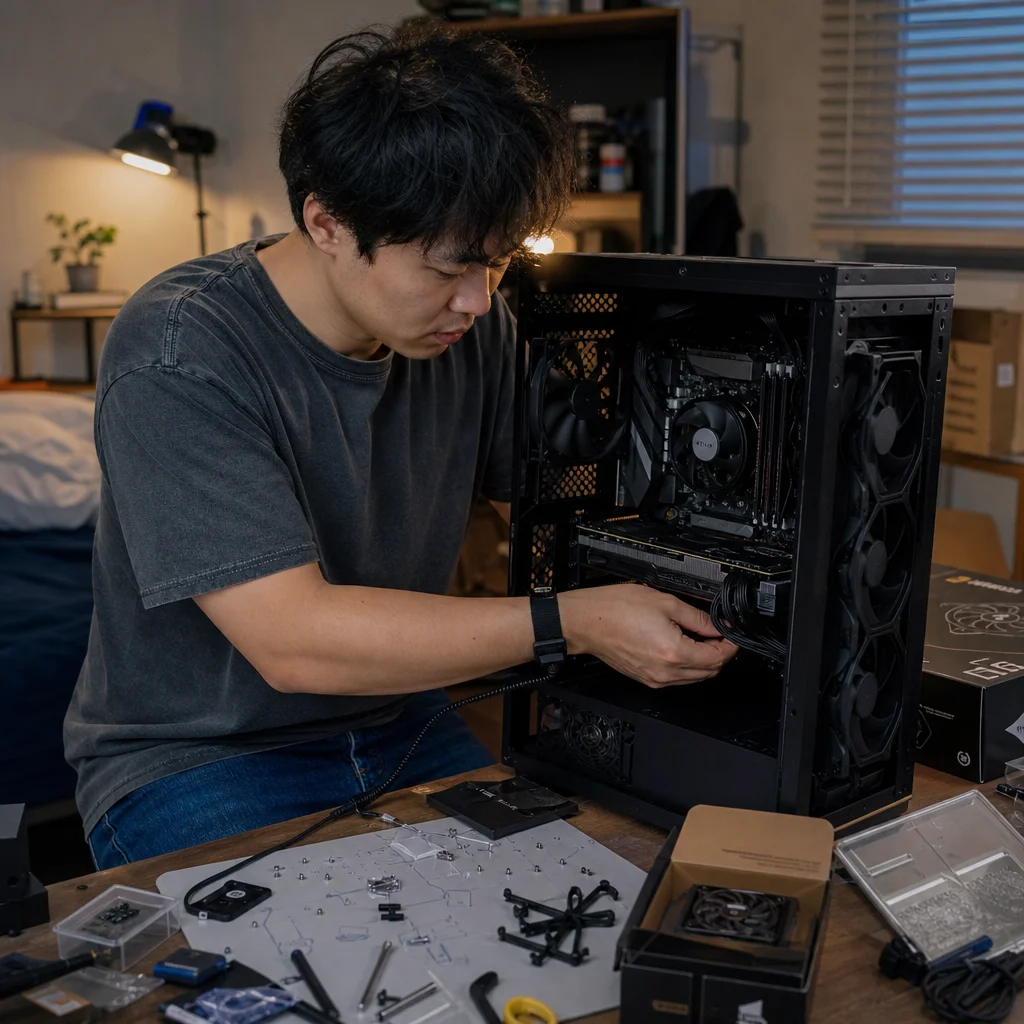
A five-year-old desktop doesn’t automatically need a rebuild. Many systems remain dependable for years when you address the few maintenance tasks that prevent data loss, overheating, and avoidable failures instead of replacing parts simply because they’re old.
The most useful approach is to work from risk and evidence. Protect your data first, then inspect cooling and storage, review firmware and software support, and replace only components showing clear signs of wear. Cosmetic tidying and upgrades can wait.
Start with backups you can actually restore
A backup that has never been tested is an assumption, not a recovery plan. For an aging desktop, verifying your important files should come before opening the case. Hardware can fail without warning, and maintenance itself creates small risks if a cable is disturbed or a drive is already unstable.
Make sure important documents, photographs, project files, saved games, and other irreplaceable data exist somewhere separate from the computer. A second internal partition doesn't provide meaningful protection if the desktop’s drive fails. An external drive, network storage, or reputable cloud service can provide separation, and using more than one destination is sensible for especially valuable data.
Restore a few files to a different folder or device to confirm that the backup is readable. If you use backup software, check its last successful run rather than assuming the schedule is working. Pay attention to whether it reports skipped folders, disconnected destinations, full storage, or encryption keys you might need during recovery.
You don’t need to create a complicated backup system to make progress. A reliable copy of your important data, plus a way to reinstall or recover the operating system, matters more than backing up every temporary download.
Clean dust without turning maintenance into a risk
Dust restricts airflow and coats heatsinks, filters, fans, and power-supply intakes. The result may be higher temperatures, more fan noise, and reduced cooling capacity. Cleaning is one of the few maintenance tasks that is broadly worthwhile even when the computer appears to work normally.
Shut the computer down, disconnect its power cable, and move it to a well-ventilated area. Hold fans still while cleaning them so they don’t spin freely from the air stream. Use short bursts of compressed air or an electric air duster designed for electronics, keeping the nozzle far enough away to avoid contact and damage. A soft brush can loosen stubborn dust, followed by controlled air to move it away.
Concentrate on the front and bottom intake areas, CPU cooler, graphics card heatsink, case exhaust, and power-supply grille. If the case has removable filters, wash them only if the manufacturer’s instructions allow it, and let them dry completely before reinstalling them. Don’t open the power supply; its internal components can retain dangerous electrical charge.
Avoid using a household vacuum directly on components, spraying liquid inside the case, or blowing dust deeper into a cooler. You don’t need a spotless interior. The aim is to restore airflow without creating a new problem.
Check temperatures and fan behavior before replacing cooling parts
A five-year-old desktop may need cooling attention, but age alone doesn’t prove that its thermal paste, fans, or cooler must be replaced. Start by observing symptoms: sudden fan surges, unusually loud operation, shutdowns under load, performance that drops after several minutes, or temperatures that are substantially higher than they used to be.
Use a monitoring tool appropriate to your processor and graphics card, then compare idle behavior with temperatures during a normal demanding task. Software readings vary by sensor and motherboard, so look for sustained patterns rather than treating one number as an absolute pass-or-fail boundary. A temperature briefly reaching a component’s designed operating range is different from repeated thermal throttling or emergency shutdowns.
Inspect whether each fan starts reliably, spins smoothly, and changes speed when the system becomes warm. Listen for grinding, rattling, clicking, or a repeating tick. Check that cables aren’t touching fan blades and that the cooler is firmly mounted. Cleaning may solve a problem that initially sounds like a failing fan.
Replace a noisy or unreliable fan with a compatible model before it stops completely. Replacing thermal paste is reasonable when a cooler is removed, mounting pressure has changed, or cleaning and airflow improvements don’t resolve a clear thermal problem. If temperatures and noise are normal, taking the cooler apart is unnecessary risk for little benefit.
Check the cooling limits first: Before judging a temperature or choosing replacement paste and fans, confirm the processor, graphics card, and cooler guidance from their manufacturers. Sensor labels, recommended limits, and fan-control behavior vary by model and firmware.
Treat storage health as an early-warning system
Storage deserves priority because a drive can become unreliable while the desktop still boots normally. Check the health information for every SSD and hard drive, not just the drive containing the operating system. Look for warnings, rapidly increasing error counts, bad or pending sectors on hard drives, and a history of unexpected failures or disconnects.
Drive-health tools are useful indicators, not guarantees. A “healthy” report can't promise that a drive won't fail tomorrow, and a percentage or wear estimate isn't a universal replacement deadline. Repeated operating-system errors, corrupted files, disappearing volumes, very slow access, or unusual clicking from a hard drive deserve more attention than a reassuring summary label.
If a drive is showing warning signs, stop treating it as the only copy of anything important. Back up or clone it before experimenting with repairs, and avoid repeatedly stressing a failing hard drive with unnecessary scans. Replace it with a compatible drive after your data is safe. For an SSD, check whether its firmware tool reports an update or a documented issue, but don’t interrupt a firmware process or rely on an unverified utility.
Five-year-old hard drives used for bulk storage deserve particular scrutiny because mechanical wear and vibration accumulate over time. An older SSD may still be perfectly serviceable, especially if its health indicators and performance are stable. Evidence should determine the decision.
Review firmware and software support selectively
Firmware maintenance matters when it addresses a known stability, compatibility, security, or hardware-support issue. Review the motherboard’s current BIOS or UEFI version, graphics-card firmware where the manufacturer provides a supported tool, storage firmware, and the drivers that are relevant to a problem you’re actually experiencing.
A newer BIOS isn't automatically better for every system. Read the release notes, confirm the exact motherboard revision, and understand whether an update changes processor support, memory behavior, security settings, or recovery requirements. Save important settings or record them before updating because an update can reset boot mode, fan curves, memory profiles, or virtualization options.
Operating-system and application support changes over time, and the correct upgrade path depends on your region, edition, hardware, and the software you need. Keep the system receiving supported security updates where possible. If the desktop can’t meet the requirements of a current operating system, that is a compatibility and security decision—not a reason to install a random workaround without understanding its limitations.
Confirm support before updating: Check the exact motherboard model and revision, the component manufacturer’s current instructions, and your operating system’s present support requirements. Download firmware only from the official source, keep power stable, and don’t update hardware that is working well unless the release addresses a relevant issue.
Inspect the parts that can fail quietly
With the system powered off and unplugged, look for swollen or leaking components, scorch marks, damaged connectors, loose expansion cards, and cables under tension. Check that the 24-pin motherboard connector, processor power connector, graphics-card power connector, and storage cables are seated properly. Don’t force a connector; investigate its orientation and latch first.
Look at the power supply’s age, model, operating environment, and behavior rather than replacing it solely because the desktop is five years old. A quality unit used in a clean, cool environment may continue working reliably, while an overloaded, poorly ventilated, or electrically stressed unit deserves earlier attention. Random restarts, shutdowns under load, burning smells, or unstable graphics can justify professional diagnosis and replacement.
If the power supply is modular, use only cables made for that exact power-supply model or series. Modular cables aren't universally interchangeable, even when the plugs appear to fit. Reusing the wrong cable can damage drives or other components.
The small motherboard coin-cell battery is another inexpensive item that can eventually lose charge. Symptoms include a clock that repeatedly resets, firmware settings that don’t persist, or boot warnings about the system time. Replace it only with the specified type, with the computer disconnected from power and the replacement procedure confirmed for your motherboard.
Decide what not to maintain yet
Minimalist maintenance means leaving healthy parts alone. You probably don’t need to replace working case fans, apply new thermal paste on a schedule, install every optional driver, or change a stable SSD because it has reached an arbitrary age. Those actions consume time and can introduce installation mistakes.
You also don’t need to open the power supply, polish components, or remove a graphics-card cooler just to inspect it. If a part is difficult to access, has fragile connectors, or requires removing a heatsink, first ask what problem the work is meant to solve. Maintenance is valuable when it reduces a measurable risk, not when it creates activity for its own sake.
A sensible priority order is straightforward: verify backups, inspect storage health, clean dust and filters, check fans and temperatures, look for physical or cable problems, and then review firmware and operating-system support. Replace a fan, drive, battery, or power supply when symptoms, test results, or clear physical damage justify it.
After that, record what you found: drive health, unusual temperatures, firmware versions, backup results, and any part that needs watching. Recheck the system after a few weeks of normal use rather than continually tuning it. A five-year-old desktop doesn’t need constant attention; it needs its important risks noticed before they become emergencies.