How to Create a Safe Maintenance Log for a Shared or Family PC
I’ll show you how to build a useful maintenance log for a shared or family PC while keeping passwords, private documents, and unnecessary personal details out of it.
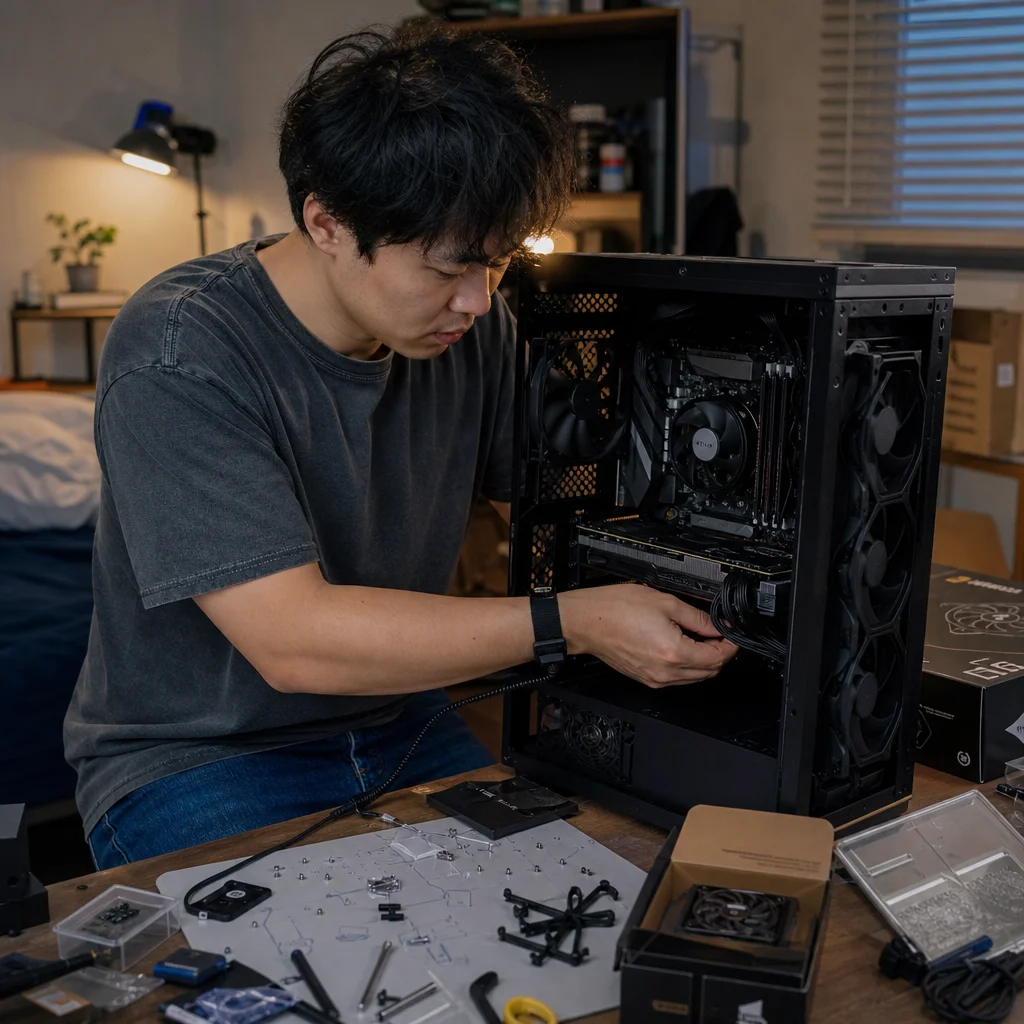
A shared PC can develop a long memory of small problems: an occasional freeze, a printer that disappears, a fan that becomes noisy, or a repair that someone remembers only as “we changed something.” Without a simple record, each new problem starts with guesswork. You may repeat a fix, overlook an earlier warning, or remove a part that was working perfectly.
A safe maintenance log gives everyone a common history without becoming a diary of the people who use the computer. The goal is to record the machine, the work performed, the symptoms observed, and the checks that reduce future trouble—while leaving out passwords, private files, and identifying details that don't belong in a technical record.
Decide what the log is for
A useful log should help you answer four questions:
- What computer is this?
- What changed, and when?
- What problem was observed before the change?
- What should someone check next if the problem returns?
That sounds straightforward, but shared computers often have several possible identities. One person may call it “the study computer,” another may refer to its room, and a small office may have several similar systems. Start with a neutral asset name such as FAMILY-DESKTOP-01 or RECEPTION-PC-02. If the computer has a manufacturer serial number or an internally assigned asset number, record that separately so the machine can be identified without relying on a person’s name.
Record the basic hardware and software configuration once, then update it when something changes. Useful details include the processor family, installed memory, storage drive type and capacity, graphics hardware, operating system edition and version, and the monitor or dock connected to the machine. You don’t need to document every minor accessory. The purpose is to make future troubleshooting easier, not to create an inventory of every cable in the building.
For a small office, include the computer’s general location and its role, such as “front desk scheduling” or “shared accounts.” For a family PC, a room or purpose is usually enough. Avoid recording names of children, visitors, customers, or other users unless there is a genuine operational reason to do so.
Separate stable information from event records
Keeping everything in one growing paragraph makes a log difficult to use. Divide it into a short equipment profile and a dated history.
The equipment profile contains information that remains mostly stable:
- Log or asset ID
- General location and purpose
- Major hardware components
- Operating system and important driver or firmware versions
- Date the profile was last checked
- Location of recovery media or documentation, if applicable
The event history contains individual entries for maintenance, repairs, symptoms, and verification. Each entry should stand on its own. Someone who didn't perform the work should be able to understand what happened without asking the original person to reconstruct it.
A practical entry format is:
Date and time:
Computer ID:
Reported symptom or reason for work:
Observed conditions:
Action taken:
Parts, tools, or software used:
Result:
Follow-up needed:
Recorded by:
“Computer runs slowly” is a starting point, not a useful diagnosis. A stronger description might say that applications took longer to open after the computer had been running for several hours, or that the system became unresponsive when several browser windows and a video call were open. Describe what the user saw rather than assigning a cause too early. “Possible failing drive” can mislead later readers if no evidence supports it; “storage check reported an error” is more precise.
The same principle applies to repairs. Instead of writing “fixed printer,” record that the printer connection was removed and re-added, the test page printed successfully, and the issue should be watched for recurrence. The log should preserve the reasoning and the result, not just the final verdict.
Check the entry before saving it: Remove passwords, recovery codes, personal account names, private filenames, document contents, and any other detail that someone wouldn't need to repeat the maintenance task. Keep technical identifiers only when they help identify the computer or component.
Record maintenance without exposing private information
Cleaning and routine checks deserve entries even when nothing is wrong. A dust-cleaning note can establish when the case, filters, vents, and cooler were last inspected. It can also explain later why a fan sounds different or why a panel was removed.
Keep the description factual and modest. “Powered down, disconnected external power, cleaned accessible vents and filters, and confirmed fans spin freely after restart” is more useful than “deep cleaned the PC.” If compressed air or another tool was used, record the general action rather than a brand or unnecessary shopping detail. Don't imply that cleaning solved a problem unless the result was actually tested.
Backup checks should be recorded as checks, not as guarantees. An entry might state that the designated backup process completed, that the expected destination was available, and that a sample file or restore test was performed if one was part of the routine. Don't copy backup passwords, encryption keys, cloud tokens, or lists of sensitive files into the maintenance log.
For firmware and software changes, record the component or application, the version before and after the change when known, the reason for the update, and whether the computer was tested afterward. If the update came from a manufacturer or operating-system tool, recording the source at a general level can help future troubleshooting. There is no need to paste a full download URL that may become obsolete.
Keep passwords and personal data out of the record
A maintenance log is often shared more widely than the computer itself. It might be stored in a household folder, handed to a repair technician, or accessed by several employees. Treat it as an operational document, not a secure vault.
Never use the log to store:
- Account passwords or PINs
- Recovery codes or authentication secrets
- Encryption keys or private certificates
- Full payment information
- Personal identification numbers
- Private medical, school, employment, or financial details
- The contents of personal documents or messages
- Detailed browsing history unless a narrow technical issue requires a temporary record
If a task depends on an account, record a neutral reference such as “the designated administrator account” or “the approved backup account.” Store the credentials in the appropriate password manager or account system instead. If a technician needs access, use the organization’s normal process for temporary access rather than writing a password into the log.
Be careful with screenshots, too. A screenshot of a settings window may reveal an email address, device name, license key, folder path, notification preview, or account identifier. Crop or redact it before attaching it, and ask whether the screenshot is necessary at all. A short written description is often safer and easier to search.
Make the log useful for troubleshooting and recovery
A recovery-friendly log should show what was known before an action and what changed afterward. This is especially important when several people use the PC and a well-intentioned fix may create a new problem.
When a problem occurs, note whether it is repeatable, when it began, and what was happening at the time. Record obvious conditions such as whether the PC was waking from sleep, connected to a particular display, running a specific application, or experiencing a power interruption. Avoid turning the log into a detailed surveillance record of users. You usually need the technical circumstances, not a person’s full schedule or activity history.
After making a change, test the function that originally failed. If a display problem was reported, test the display at the usual resolution and connection. If an application crashed, open it and perform the affected task. If a backup was the concern, verify the backup according to the household or office’s normal process. Write down what was tested and whether the issue was resolved, reduced, or still uncertain.
Use “not confirmed” when you don't know the cause. That phrase protects the next person from treating a guess as fact. You can also add a follow-up date or condition: “If the system freezes again, check whether the event occurs only after sleep” is a useful next step. “Monitor” by itself isn't.
Choose storage and access carefully
The best format is one the people responsible for the computer will actually maintain. A plain text file, spreadsheet, shared document, ticketing system, or equipment-management tool can all work. Searchability and consistent access matter more than elaborate formatting.
Give the log a clear filename based on the computer ID, not a user’s name. Keep an original copy and a backup according to your normal document-protection practices. Limit editing access when practical, while allowing the people who perform routine checks to add entries. If several people can edit the file, dated entries and a “recorded by” field make accidental changes easier to understand.
For a family, a shared household document may be sufficient, provided it is protected in the same general way as other non-public household records. For a small office, follow the organization’s existing rules for access, retention, and disposal. Those rules can vary by workplace and location, so check the current policy rather than assuming that a home-style arrangement is appropriate.
Avoid keeping the only copy on the PC being documented. If the computer won't start, the log should still be available. At the same time, don’t scatter multiple unofficial copies across desktops, USB drives, and email threads. Choose one primary location and state where it is in the equipment profile.
Start small and review the record
You don’t need to reconstruct every past repair. Begin with the computer’s current identity and configuration, then add the next maintenance event. If you remember an older change, label its date as approximate rather than presenting an estimate as exact.
Review the log occasionally for stale information. Update the profile after a component replacement, major software change, or move to another location. Close follow-up items when they are tested, and remove temporary notes that no longer help with maintenance. Retain meaningful history, but don’t let years of irrelevant detail bury the information someone needs during a failure.
A safe maintenance log is ultimately a troubleshooting aid with boundaries. It records enough technical context to prevent repeated mistakes, enough history to support recovery, and little enough personal information that sharing it doesn't expose the people who use the PC. Give the computer a neutral identity, describe symptoms and actions precisely, keep secrets elsewhere, and record the result of every important change. Those habits make the next repair faster without turning routine maintenance into a privacy risk.