How to Choose Storage for a PC That Holds Photos, Games, and Backups
I’ll help you choose storage for photos, games, and backups without treating one large drive as a complete safety plan. You’ll learn how to separate everyday speed, bulk capacity, and duplicate copies so your PC remains practical to use and easier to recover.
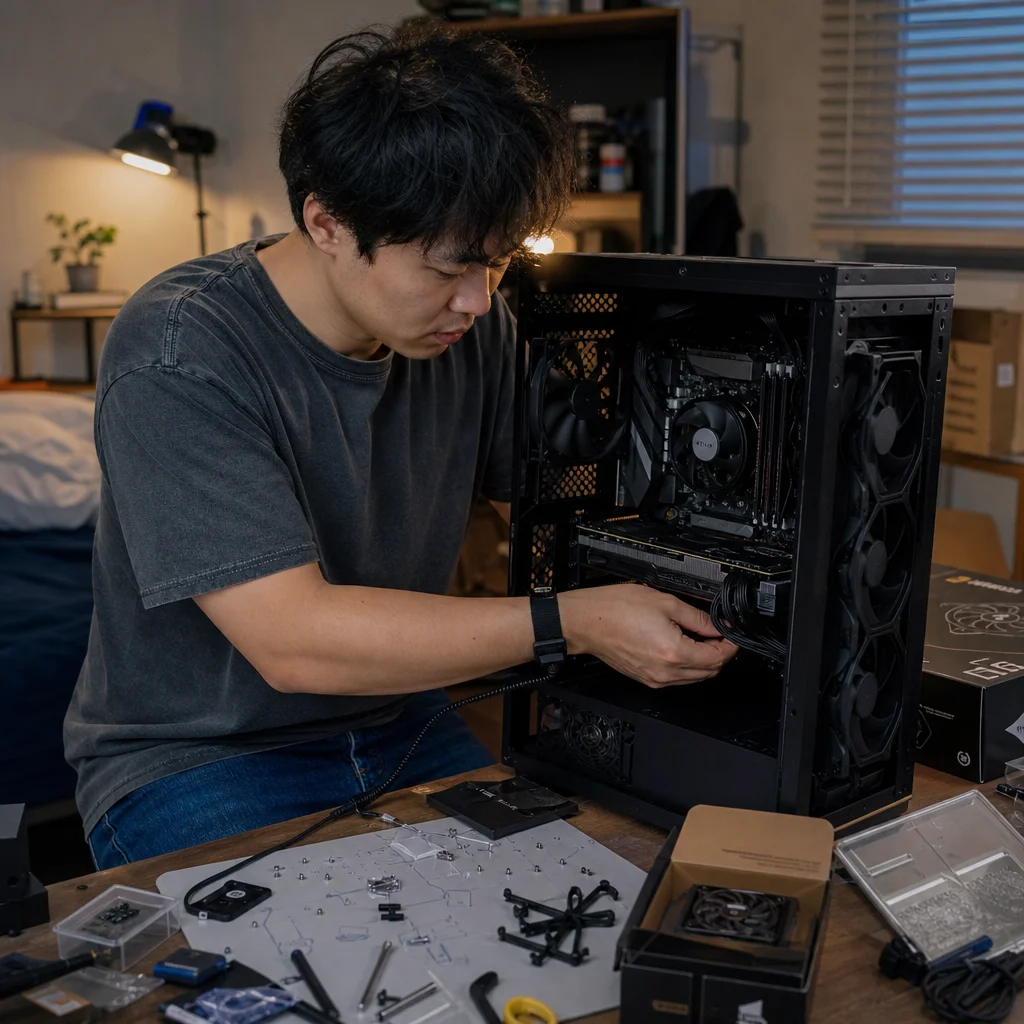
Choosing storage for a family or home-office PC is less about finding the biggest drive and more about deciding what each type of data needs. Your game library can often be downloaded again, while family photos, scanned documents, and personal records may be impossible to replace. Putting everything on one large drive creates a tidy-looking system with a serious weakness: one failure, accident, or mistake can affect it all.
The most reliable approach is to separate active files, replaceable installations, and backups before you buy. That usually means choosing fast storage for the operating system and applications, adding capacity for games and media, and keeping at least one separate copy of important data.
Start by separating your data
Think about your files in three groups. The first is data you use regularly and expect your PC to access quickly: Windows, applications, current work, and perhaps a photo library that you edit often. The second is large but replaceable content, such as games, launchers, downloaded video, and software installers. The third is irreplaceable or difficult-to-recreate data, including original photographs, family videos, financial documents, and personal projects.
These groups can share a drive, but they shouldn't all be treated as though they have the same value. A game installation may take a lot of space but can normally be installed again. A photo collection might be smaller yet deserve more protection. Storage capacity and backup capacity are related decisions, but they solve different problems.
Make a rough inventory before shopping. Check how much space your current photos, videos, documents, and game libraries use, then allow room for growth. A drive that is nearly full is inconvenient and can leave little flexibility for updates or temporary files. You don't need to predict the next decade precisely, but you should avoid buying only enough capacity for today's folders.
Choose SSD storage for the parts you actively use
An SSD is usually the sensible foundation for a modern PC. It has no moving parts, makes little noise, and generally provides much quicker access than a mechanical hard drive. Put the operating system and everyday applications on an SSD, and the PC should feel responsive during startup, programme launches, and routine work.
For a family or home-office computer, an NVMe SSD installed in an M.2 slot is often the simplest primary drive if the motherboard supports it. A 2.5-inch SATA SSD is also a useful option, especially when you already have one available or your motherboard has limited M.2 space. For ordinary desktop use, both are far more important as solid-state storage choices than as an opportunity to chase the highest advertised sequential speed.
Capacity matters more than extreme performance once the PC already has a reasonably capable SSD. A smaller system drive can work, but it requires regular housekeeping when games, photo libraries, and downloads compete for space. A larger primary SSD may cost more, yet the convenience of not constantly moving files can be worthwhile. Compare the total cost and usable capacity rather than choosing solely by the interface name or the largest speed number on the box.
If you edit large photo or video files regularly, a second SSD can make a useful working drive. It gives active projects room without forcing the operating-system drive to hold every temporary file. That is a workflow improvement, not a backup: if the second SSD fails, the files on it still need another copy.
Use hard drives for capacity when speed isn't the priority
A mechanical hard drive can still make sense for large collections, local archives, and backup copies. It generally offers more capacity for the money than an SSD, although exact prices and capacities change over time. Its slower access is less troublesome for files you browse occasionally than for an operating system or frequently launched applications.
For example, you might keep current documents and regularly edited photos on an SSD, while storing older photo folders and a local backup on a larger hard drive. Games that you play often can live on an SSD; less frequently used games can move to a hard drive if loading times are acceptable to you. Modern games vary considerably, so treat this as a usability choice rather than a rule.
A hard drive isn't automatically a safe archive. It can fail, be dropped, be affected by a power problem, or be erased by a mistake. Internal drives are also vulnerable to the same event as the rest of the PC. If your only copy of a photo folder is on a hard drive inside the computer, it is storage, not a backup.
Plan the backup separately from the main storage
The most common mistake is buying one very large drive and calling the problem solved. A large drive gives you room, but it doesn't protect against drive failure, theft, fire, malware, accidental deletion, or an unwanted overwrite. Backup is the process of keeping an additional copy that you can restore when the original is unavailable or damaged.
For important family data, aim to keep at least one backup separate from the PC. An external USB drive is a straightforward starting point. Connect it when you need to back up, or use backup software that manages scheduled copies, then disconnect it when the backup is complete if your routine allows. A permanently connected drive is convenient, but it remains exposed to some of the same electrical, malware, and user-error risks as the computer.
Cloud storage can provide an off-site copy, which is valuable if the PC and local backup are in the same home. It can also make files accessible across devices. However, check the storage limit, recurring cost, upload and download arrangements, retention features, and whether the service synchronises changes immediately. Synchronisation is useful for access but isn't always a complete backup: a deletion or corrupted file may be synchronised too.
A NAS can be useful for several computers or a large household media collection, but it shouldn't be treated as magic protection. Multiple drives in a NAS can improve availability if one drive fails, depending on the chosen arrangement, but they don't by themselves protect against theft, fire, ransomware, or accidental deletion. A NAS still needs a separate backup of the data that matters.
Check the recovery copy: Before you rely on a backup drive or cloud service, open a few restored files and confirm that your photos and documents are readable. A backup you have never tested is an assumption, not a recovery plan.
Match capacity to how you use the PC
Photos are usually manageable at first, but video clips and phone backups can grow quickly. If your household regularly imports original images, keep those originals rather than relying only on smaller edited exports. Organise folders consistently by year, event, or person so that you can find files when you need to restore them. Good organisation reduces the temptation to delete the wrong copy when space becomes tight.
Games are different. Their size can be substantial, but most are replaceable through a launcher or physical media. You may still want enough SSD capacity for the games you play most, especially if long loading times would be irritating. Keep installers and saved games in mind: saved games may be stored separately from the main installation, and some depend on the launcher or a cloud-sync setting. Don't assume that reinstalling a game will recreate every local save.
Documents often need less space but more care. Create a backup routine that includes the folders where family members actually save files, not just the default location used by one account. If several people use the PC, check each user profile and any shared folders. A backup that misses a second user's documents can look successful while leaving important data untouched.
Check compatibility before buying drives
For an internal SSD, check the motherboard manual for supported M.2 sizes and interfaces, available PCIe lanes, and whether installing a particular slot disables or shares another connector. Most builders don't need to solve every lane-sharing detail from memory, but the manual can prevent a drive from being installed in an unsuitable slot or a SATA port from becoming unavailable.
Also check the case's mounting points and the power and data cables required for 2.5-inch SATA drives or internal hard drives. M.2 drives usually need no separate data cable, but they do need a compatible motherboard slot and a small retaining screw or mechanism. If you're adding several drives, confirm that the power supply has the required connectors and that the case has adequate mounting space and airflow.
For external storage, consider where the drive will live and how often it will be connected. A portable drive is easy to move but also easy to knock over or misplace. A desktop external drive may need its own power supply. Neither should be left in an exposed location where children, pets, or a hurried cable pull can damage it.
A sensible arrangement for many home PCs
A balanced setup might use a primary SSD for Windows, applications, current documents, and active photo work; a second SSD or hard drive for games and larger working files; and an external drive or cloud service for backups. If the collection is valuable, use both a local backup and an off-site copy rather than relying on only one method.
You don't have to buy every part at once. Start with a primary SSD sized for comfortable everyday use, then add capacity when your actual files show where the pressure is. But establish the backup destination early, especially before importing years of photos. It is much easier to build a routine before a drive begins reporting low space or a family member asks where an old folder went.
When comparing products, look beyond capacity and headline speed. Check the drive's physical format, motherboard and case compatibility, warranty terms, endurance information where relevant, and the practical cost of the backup you intend to maintain. Product specifications and service terms can change, so confirm those details with the manufacturer or provider at the time you buy.
The key decision isn't whether you need an SSD, a hard drive, cloud storage, or a NAS in isolation. It is which device will hold the working copy, which will hold replaceable bulk data, and which will provide a separate route back after a failure. Once those roles are clear, you can choose capacity and performance without asking one drive to be fast, enormous, permanent, and indestructible—all at once.