Choosing Between a Larger SSD and a Faster SSD
I’ll clarify when extra SSD capacity matters more than headline speed, and help you compare interfaces, sustained performance, endurance, thermals, and workload benefits so your storage choice remains reliable as your PC and data needs grow.
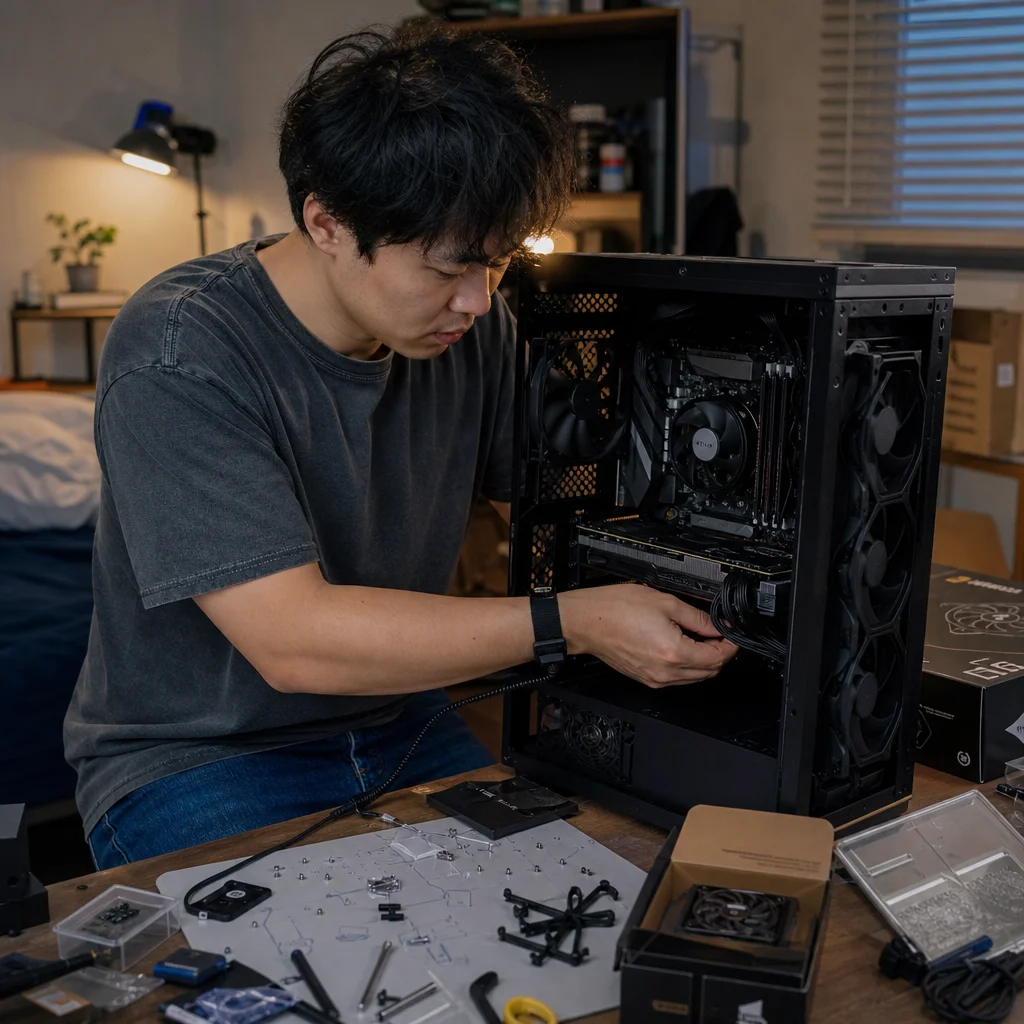
When you’re choosing between SSDs, a faster model can look like the obvious upgrade. Sequential read and write figures are easy to compare, while capacity feels like a less exciting compromise. In everyday use, though, the larger SSD is often the better long-term choice—especially if the faster drive leaves little free space or doesn’t match your workload.
The right decision depends on more than the maximum speed printed on the box. You need to consider how much storage you’ll use, how the drive behaves during long transfers, whether your system supports its interface, and how heat and sustained workload affect reliability.
Start with capacity and your actual storage pattern
An SSD should have enough room for the operating system, applications, games, projects, personal files, and future growth. If you’re regularly deleting files to make space, moving a game library to another drive, or postponing updates because the system drive is full, capacity is already affecting your experience. A larger SSD can solve that problem without being faster in any benchmark.
Free space also gives an SSD room to work. NAND flash can't simply overwrite every existing block in place. The controller has to manage data movement, garbage collection, and wear leveling, and it benefits from having unused blocks available. As a drive fills, write performance may become less consistent, particularly during large transfers or workloads that keep writing and deleting data.
There isn’t one universal free-space percentage that applies to every SSD and workload. A lightly used secondary game drive can behave differently from a nearly full system drive used for video projects or virtual machines. As a sensible starting point, avoid planning to fill the drive completely. Leave enough headroom for normal updates, temporary files, and the way you use the computer.
Capacity also reduces maintenance. You won’t need to constantly relocate large files, uninstall applications, or use an external drive simply to keep the system operational. That convenience is part of the value of a larger SSD, even though it won’t appear in a sequential-speed chart.
What “faster” actually means
SSD speed claims usually describe sequential throughput: how quickly the drive can read or write a large, continuous block of data under favorable conditions. This matters when you move very large files, load substantial project assets, edit high-bitrate media, or work with datasets that exceed available system memory.
Many everyday tasks are more dependent on small random operations, latency, CPU activity, application behavior, and the rest of the platform. Starting an application or booting an operating system may feel faster with a modern SSD than with a hard disk, but the difference between two capable NVMe SSDs can be modest in ordinary desktop use. A faster interface doesn't automatically make every program open proportionally faster.
The quoted maximum is also commonly a short burst result. An SSD may use a fast temporary write cache, often based on a portion of its flash memory, to absorb incoming data. Once that cache is exhausted, the drive may write directly to slower flash at a lower sustained rate. The size of the cache and the post-cache speed can vary by capacity, temperature, remaining free space, and firmware behavior.
For long-term reliability, sustained performance is more informative than the largest peak number. If you frequently copy hundreds of gigabytes, render or record media, build software, or maintain virtual machines, look for independent tests that show performance after the cache is full. If you mostly browse, play games, use office software, and manage photos, capacity and consistent everyday behavior will usually matter more than a premium sequential rating.
Check the workload, not just the headline: Before choosing the faster SSD, identify whether your regular tasks involve long, continuous writes. Then compare sustained results, not only the manufacturer’s peak sequential figures.
Interface compatibility comes before speed
A fast SSD can only deliver its advertised interface performance when the motherboard, processor platform, slot, and firmware support that standard. NVMe drives commonly use PCI Express, with the available generation and number of lanes affecting the connection. A newer drive installed in an older compatible slot may work, but it will operate within the older connection’s limits.
The physical M.2 shape doesn’t tell you everything. You still need to check whether the slot supports NVMe rather than only SATA, which PCIe generation and lane width it provides, whether installing a drive disables shared ports, and whether the slot has a heatsink or clearance limitation. On some platforms, different M.2 slots connect through different parts of the system and may not offer identical behavior.
Compatibility information can change with motherboard firmware, platform revisions, and drive models. Before buying, consult the current motherboard manual and the SSD manufacturer’s specification page for the exact model and capacity. Don’t pay for interface performance your system can't use, especially if that premium would have bought a larger drive.
Compare endurance, not just warranty length
SSD endurance ratings are commonly expressed as terabytes written, or TBW. This figure estimates how much data the manufacturer rates the drive to handle under its stated conditions. It can be useful when comparing models, but it isn’t a countdown timer or a guarantee that the drive will fail immediately afterward. Actual service life depends on the flash, controller, workload, temperature, power behavior, and other factors.
A longer warranty can be reassuring, but warranty terms and support conditions differ by manufacturer and region. Some warranties include both a time limit and a written-data limit, whichever comes first. The current terms for the exact model are worth checking rather than assuming that two drives with similar capacities offer identical coverage.
For a typical gaming or general-purpose PC, endurance may not be the deciding factor once you’re comparing reputable consumer drives. It becomes more important when the SSD will handle frequent large writes, a scratch workspace, surveillance recording, a database, a build server, or heavy virtual-machine use. In those cases, a drive with stronger sustained behavior and a suitable endurance rating may be a better investment than a faster consumer model with limited write consistency.
Thermals affect consistency and placement
High-performance NVMe SSDs can produce more heat, particularly during long transfers. When the controller reaches a thermal limit, the drive may reduce performance to protect itself. Brief bursts may be unaffected, while extended writes or repeated workloads expose the difference.
A motherboard heatsink can help, but its fit and airflow matter. Make sure the thermal pad contacts the SSD’s controller and that any label or thin film is handled according to the drive and motherboard instructions. Avoid stacking components in a way that blocks airflow, and check whether a graphics card or other expansion card sits directly over the drive.
Thermal throttling isn’t automatically a sign of a defective SSD. It’s a protective behavior. The practical question is whether your expected workload encounters it often enough to matter. For a normal desktop, a cooler, larger SSD with adequate free space may deliver a more dependable experience than a hotter drive whose peak speed is rarely reached.
When the larger SSD is the better choice
Choose more capacity when your current drive is close to full, your library is growing, or replacing the drive later would be difficult. This is particularly compelling for a system drive, because moving an operating system and applications is more disruptive than adding storage to a machine with an available slot.
A larger model can also have performance advantages within the same product family. SSDs often distribute data across multiple flash packages, and higher-capacity versions may offer better parallelism, higher write endurance, or a larger usable cache. This isn’t guaranteed, so compare the specifications and tests for the exact capacity rather than assuming every model scales in the same way.
If the larger drive is from a reputable product line and provides adequate endurance, it can support a less cramped, lower-maintenance system for years. That may be more valuable than reducing a large file transfer by a few seconds once or twice a week.
When the faster SSD is worth choosing
Choose the faster model when your work repeatedly depends on storage throughput or latency and you’ve confirmed that the rest of the system can take advantage of it. Examples include editing large media files directly from the drive, compiling substantial projects, working with large scientific or engineering datasets, moving many gigabytes between fast storage devices, and running several virtual machines.
Even then, compare the performance that persists throughout the job. A drive that begins at a very high write speed but drops sharply after its cache fills may be less suitable than a model with a lower peak and stronger sustained output. Capacity still matters because a drive used for active projects needs room for source files, temporary data, caches, and completed work.
For games, a faster SSD can help in situations designed around high-speed storage, but the benefit depends on the game, operating system, CPU, and graphics pipeline. Loading times may improve, while frame rates usually depend on other components. Don’t sacrifice necessary capacity for a speed increase that your regular games won’t use.
A sensible way to make the decision
First, estimate your current used space and add the files and applications you expect to keep over the next few years. Include space for updates, temporary work, and normal growth. If the faster option would leave you managing storage immediately, eliminate it unless your workload clearly demands its performance.
Next, confirm the platform limits and compare the exact drives on capacity, NAND type, controller, cache behavior, sustained writes, endurance, thermals, and support terms. TLC and QLC flash can both be appropriate, but their performance and endurance characteristics may differ, particularly during long writes. Treat product-family names as a starting point, not a substitute for the specification sheet.
Finally, consider the cost of disruption. A larger drive may let you keep everything in one place and postpone a replacement. A faster drive may be worthwhile if it shortens a repeated professional task. If your workload is mixed, capacity plus consistent sustained performance is usually the safer balance than maximum peak speed.
For most general PC buyers, buy enough capacity first, then choose a reliable SSD with performance appropriate to the platform. Move toward a faster model when your work can demonstrate a real storage bottleneck, not simply because its box has a larger number. Keeping reasonable free space, maintaining backups, and ensuring adequate cooling will do more for long-term dependability than chasing a benchmark advantage you rarely use.