What to Do When a New SSD Is Missing From the Installer
I’ll clarify why a new SSD can appear in firmware but disappear from an operating-system installer, then help you distinguish a connection problem from storage-mode, driver, or partition issues without risking existing data.
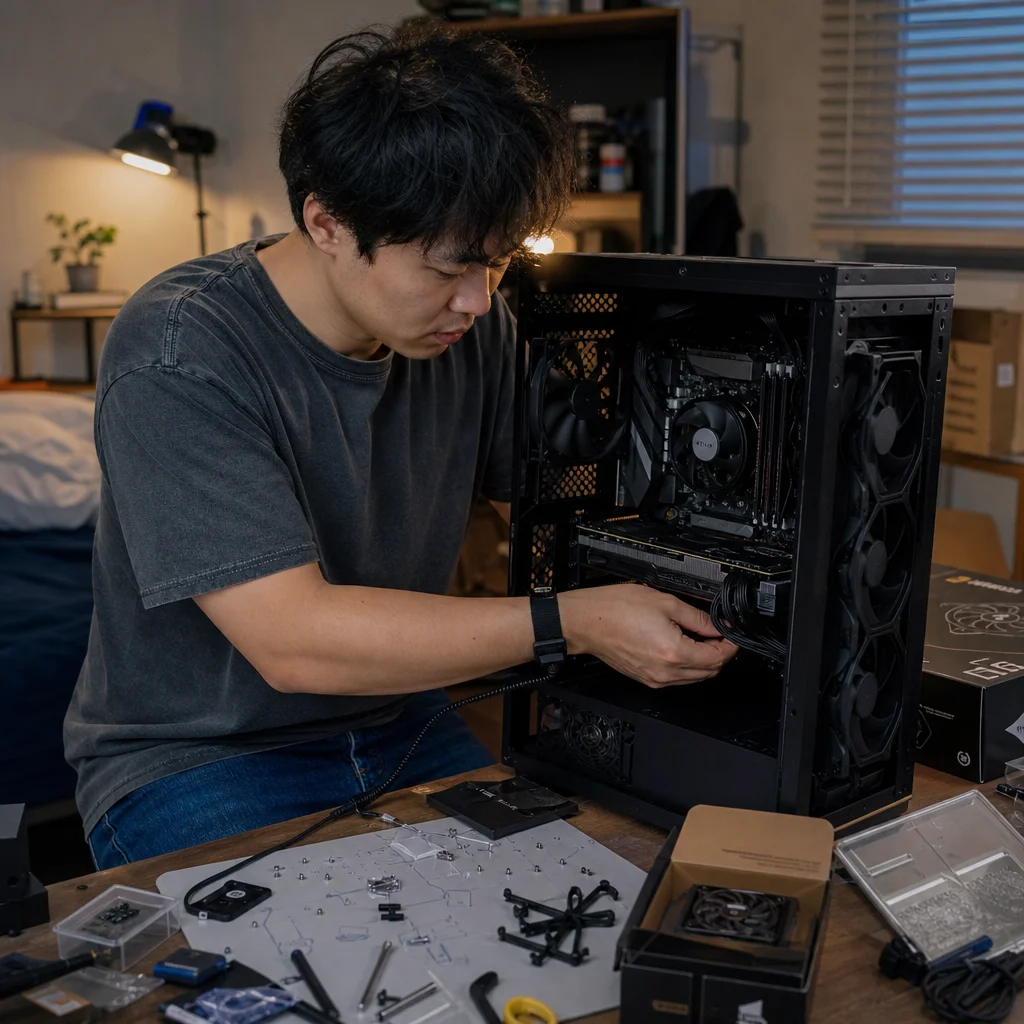
A new SSD that is missing from the installer can make a straightforward build feel broken, especially when the drive appears somewhere else in the system. The useful first question isn't “Which command should I run?” but “At what stage does the computer stop seeing the drive?”
Work through the problem in that order. Confirm the SSD’s physical connection, check whether the motherboard firmware detects it, identify the storage mode being used, and only then consider installer drivers or partition changes. That sequence reduces guesswork and helps you avoid changing a setting that could make an existing installation or data inaccessible.
Start by locating the point of failure
There are three different places where an SSD may or may not appear:
- In the motherboard’s UEFI or firmware setup
- In the operating-system installer’s disk-selection screen
- In the installed operating system after setup
If the SSD is missing from all three, suspect the drive, its connection, the slot, or a firmware compatibility issue. If it appears in UEFI but not in the installer, the hardware is probably connected, and storage configuration or a missing driver becomes more likely. If it appears in the installer but not after installation, the problem may be related to partitioning, initialization, drive-letter assignment, or the installed system’s storage driver.
For a new build, enter UEFI setup before launching the installer. The storage page may list the SSD by model name, capacity, or controller rather than under a simple heading such as “SSD.” NVMe drives are often listed under an NVMe, PCIe, or storage-information menu. A SATA SSD may appear under SATA devices or a chipset storage page.
Check the Current Firmware Layout
Menu names and storage options differ by motherboard and can change with firmware updates. Use the current manual or support page for your exact board to locate NVMe information, SATA-controller settings, VMD, RAID, or storage-controller options before changing anything.
If the SSD is missing from UEFI
Power the computer down completely before inspecting the drive. For a 2.5-inch SATA SSD, check both connections: the narrow SATA data cable runs to the motherboard, while the wider SATA power connector comes from the power supply. A drive can have one connected and still remain invisible. Try another motherboard SATA port and, if practical, another SATA data cable.
For an M.2 SSD, remove and reinstall it with the system unplugged. The module should slide fully into the socket before being secured with the motherboard’s screw or retention mechanism. Don't force it flat if it isn't seated; the retaining screw is meant to hold the module down, not pull a poorly inserted module into place.
Check your motherboard manual for shared lanes and disabled ports. Some M.2 sockets disable one or more SATA ports when occupied. Certain sockets also support only NVMe drives, while others support SATA M.2 drives, and a few may be limited by the processor or chipset configuration. An M.2 drive that fits physically isn't automatically electrically compatible with every M.2 socket.
You can also test the drive in another compatible slot or computer, but interpret the result carefully. If it works elsewhere, investigate the original slot, firmware settings, lane sharing, or motherboard support. If it fails everywhere, the drive or its connection is more suspect. Avoid repeatedly hot-plugging an internal drive unless the hardware and operating system explicitly support that use; shut down first.
A firmware update can resolve compatibility problems, but it isn't the first response to every missing disk. Confirm that the update applies to your exact motherboard model and revision, use the manufacturer’s current instructions, and keep the system on stable power during the process. If the SSD is absent from UEFI, installing an operating-system storage driver won't make the firmware detect a physically disconnected drive.
If UEFI sees it but the installer doesn't
This pattern most often points to the controller mode. Modern platforms may expose storage through standard NVMe or AHCI paths, or through a vendor-managed mode such as Intel VMD, Intel RST, or a firmware RAID configuration. The names vary, but the result is similar: the installer may need the matching storage-controller driver before it can access the disk.
First, determine how the storage controller is configured in UEFI. Look for settings under Advanced, Storage, SATA configuration, VMD, RST, or RAID. Don't change a setting simply because another guide recommends AHCI. If an existing operating system or data volume was installed using VMD, RST, or RAID, switching modes can make that installation fail to boot and can complicate access to an array.
If this is a genuinely empty new system and you have confirmed the desired mode, changing the mode may be reasonable—but it is still better to understand the consequence before doing it. If the computer contains an existing installation or any data you care about, preserve the current configuration and obtain the appropriate driver instead.
For a Windows installer, the storage driver is commonly supplied through the motherboard, laptop, or system manufacturer’s support page. Download the driver for the exact platform, extract it to a USB drive if necessary, and use the installer’s option to load a driver. You may need to browse into a folder containing the relevant controller driver rather than selecting the download’s archive or setup program. The exact package and folder structure vary by manufacturer and Windows release.
Linux installers handle storage controllers differently. Many distributions include broad NVMe and AHCI support, but a firmware RAID volume, unusual controller, or very new platform may require a distribution-specific procedure. If the drive is visible as a raw device in firmware but not in the installer, consult the current documentation for the distribution and motherboard rather than applying Windows-specific driver steps.
Match the Driver to the Controller
Before loading a driver, verify the motherboard or system model, processor platform, installer architecture, and current operating-system release. A storage driver for a similar board—or for a different controller mode—may not reveal the SSD and can add confusion to the setup process.
Check whether the disk is hidden by its current state
If the installer lists the SSD by capacity or model but won't let you select it, the issue is different from a missing drive. It may contain old partitions, an incompatible partition style, a leftover recovery partition, or metadata from another installation. A new-to-you SSD isn't necessarily blank: a returned, reused, or previously tested drive may still contain a partition table.
For a clean installation on a drive with no data to preserve, the installer may be able to delete its existing partitions and create new ones. Read the drive sizes carefully before doing this. Multiple disks can have similar capacities, and deleting partitions from the wrong disk is an easy, irreversible mistake.
If the SSD contains files, stop before deleting partitions or formatting it. Connect it to a working operating system, make a backup, and identify the partitions before deciding whether the disk can be repurposed. If the files are important and the drive is behaving abnormally, avoid repair commands that write to the disk until you have considered data recovery.
Windows Setup also provides a command-line utility, commonly accessed with Shift+F10, for advanced disk inspection. Commands such as diskpart, list disk, and list volume can help establish whether the installer can communicate with the device. However, commands such as clean, delete, and formatting operations change or remove disk structures. They aren't harmless detection tests.
A drive that appears in list disk but not in the graphical installer is being detected at some level, so investigate partition style, controller mode, and installer compatibility before wiping it. A drive that doesn't appear in the command-line disk list is more likely to have a controller, driver, firmware, or hardware problem. This is a diagnostic distinction, not permission to run clean.
Avoid common configuration traps
Some motherboards have more than one M.2 socket, but those sockets may not behave identically. One can support PCIe 5.0 or PCIe 4.0 NVMe drives while another supports fewer lanes, shares bandwidth with expansion slots, or supports SATA M.2 only. Check the board’s storage diagram instead of relying on the socket’s position or appearance.
A PCIe-generation mismatch is usually less dramatic than a protocol mismatch. A newer NVMe SSD will generally negotiate a lower supported PCIe generation when the slot or processor provides one, but the board must still support the drive’s protocol and physical keying. Don't infer compatibility from speed ratings alone.
Firmware RAID is another potential source of confusion. A RAID volume may be presented to the installer as one logical destination, while its member disks are hidden behind the controller. If you intend to use RAID, configure the array deliberately and use the matching installer support. If you don't intend to use RAID, don't enable it as a trial fix—especially when other disks contain data.
Secure Boot and boot order are usually not the reason a storage device is absent from the installer’s disk list. Boot order determines what the computer starts from; it doesn't normally make a correctly detected secondary SSD disappear. Likewise, initializing or assigning a drive letter in an already installed operating system doesn't fix a controller that the installer can't access.
A safer order of operations
Use this decision path when troubleshooting:
- Shut down and verify the SSD’s physical installation, power, cable, slot, and motherboard compatibility.
- Enter UEFI and confirm whether the drive is listed by model or capacity.
- If UEFI can't see it, test another compatible connection or slot before investigating installer drivers.
- If UEFI can see it, record the active storage mode and check whether the installer needs its matching controller driver.
- If the installer sees the disk but rejects it, identify its partitions and contents before deleting or formatting anything.
- Change one setting at a time, and return to the previous setting if the result is worse.
After the SSD becomes available, make sure you select the intended installation disk. During setup, capacity alone may not be enough to identify it, particularly when several drives are installed. Disconnecting unused drives temporarily can reduce the chance of placing boot files on one disk and the operating system on another.
When the drive may be defective
A drive that disappears intermittently from UEFI, reports an obviously incorrect capacity, causes freezes during detection, or fails in multiple known-good systems deserves more suspicion than a simple partition problem. Check for the SSD manufacturer’s current diagnostic utility or warranty procedure, but avoid firmware updates or secure-erase operations unless you understand what they will do to the data.
If the SSD is new and fails basic detection after you have confirmed the correct slot, cable, controller mode, and platform support, replacement may be more sensible than prolonged troubleshooting. Keep the packaging and purchase information until the drive has passed detection and installation checks. For a drive that contains valuable data, stop experimenting and consider professional recovery advice.
The safest fix is the one that identifies the missing layer without destroying information. Confirm the hardware first, preserve a known-good firmware configuration, load a controller driver when the installer needs one, and treat partition commands as data-changing operations rather than routine setup steps. Once you know whether the SSD is absent, inaccessible, or merely unsuitable in its current partition state, the next decision is usually much clearer.