How to Diagnose Crashes That Happen Only When the PC Wakes From Sleep
Sleep-wake crashes usually point to a narrow interaction among drivers, firmware, power settings, memory, or attached devices rather than a failing PC overall. I’ll show you how to prioritize safe, reversible tests and use each result to narrow the cause.
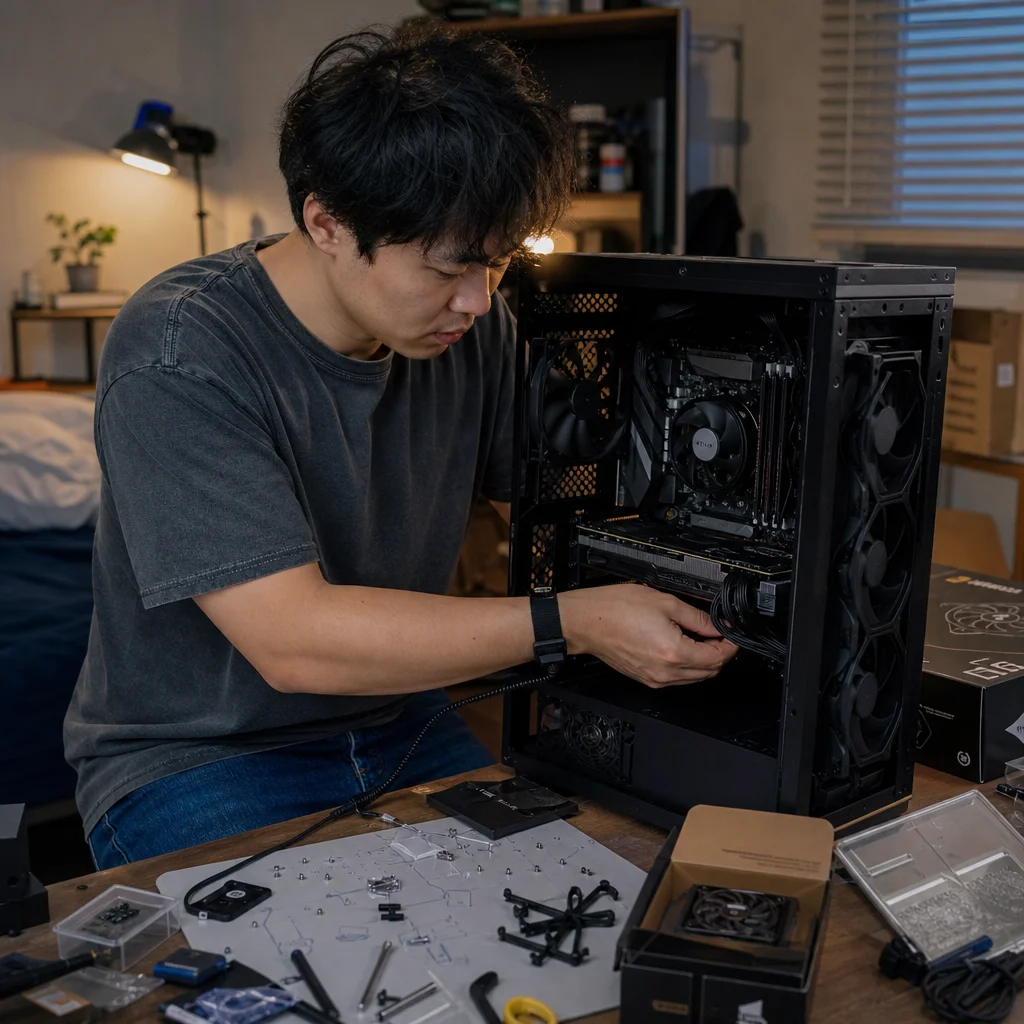
A PC that crashes only when it wakes from sleep can be difficult to diagnose because the machine may run normally for hours under load. The failure occurs during a transition: hardware powers down, the operating system saves state, devices disconnect or change power modes, and then everything has to resume in the right order. One unreliable driver or firmware setting can upset that process without causing ordinary crashes.
The safest approach is to avoid changing several things at once. First record what the crash looks like, then test the least disruptive possibilities before moving toward firmware changes, memory testing, or hardware replacement. Your goal isn’t merely to stop the next crash; it’s to identify which part of the sleep-wake path is failing.
Start with the exact failure pattern
“Crashes on wake” can describe several different events. The PC might restart before the display returns, show a blue screen, freeze with fans still running, wake to a black screen, or appear to wake but ignore keyboard and mouse input. These symptoms don’t prove a cause, but they help you choose the next observation.
Note whether the problem occurs after every sleep cycle or only after a longer period. Check whether it happens with the system idle, after a game, after a monitor has been disconnected, or when a particular USB device is attached. Also record whether the computer wakes by keyboard, mouse, case button, or a scheduled task. A failure that appears only after a graphics-heavy session suggests a different path from one caused by a USB hub or network adapter.
Before testing, save important work and make sure you have a current backup of files you can’t replace. Sleep-related crashes are usually recoverable, but repeated forced restarts can expose an unrelated storage or file-system problem. If the computer is unstable even when it isn’t sleeping, stop treating this as a sleep-only issue and diagnose broader system stability first.
Capture the next wake failure: Before changing settings, note the exact time, wake method, connected peripherals, displayed error, and whether the PC restarted or merely lost video. That record will make later event-log and dump-file evidence much easier to interpret.
Check the evidence before changing settings
On Windows, inspect Reliability Monitor first because its timeline can connect a failed wake with a driver, application, Windows component, or hardware error. Event Viewer may provide more detail under system, kernel-power, display, storage, USB, or device-related logs. A kernel-power entry after an unexpected restart often confirms that the shutdown wasn't clean; by itself, it doesn’t identify the original cause.
If you received a blue screen, look for a stop code and any named driver. A driver name is useful evidence, but it isn’t automatically guilty. Windows can report a component that noticed the failure rather than the component that caused it. A graphics driver, for example, may be the first subsystem to fail when the display doesn't resume, while the underlying trigger is a power-state or firmware problem.
Check whether memory dump files were created and whether the operating system is configured to create them. If no dump exists, that doesn’t rule out a driver fault: a hard freeze, sudden power loss, or storage problem can prevent a dump from being written. Avoid installing several third-party “driver updater” or crash-analysis utilities while diagnosing the system. They can add variables and sometimes replace a working driver with an unsuitable one.
On Linux, review the system journal around the sleep and resume timestamps, along with graphics, kernel, USB, and storage messages. Distribution-specific sleep services and kernel versions affect the exact commands and log locations, so use the documentation for your distribution rather than assuming Windows-style event names apply.
Separate drivers from firmware and power-state problems
Drivers are a common cause because sleep changes the operating state of several devices at once. Graphics, chipset, network, audio, storage-controller, and USB drivers can all participate. Start with changes that are easy to undo: install a current driver from the PC, motherboard, laptop, or component manufacturer, or return to the previous version if the problem began immediately after an update.
Graphics drivers deserve particular attention when the PC appears to wake but the screen remains black, the display flashes, or the system crashes after the monitor powers back on. Test with one monitor if possible, temporarily remove display adapters or docks, and reconnect the display directly to the graphics card. These are useful isolation steps, not permanent solutions.
Firmware sits below the operating system and controls how the motherboard, processor, memory, and devices enter and leave low-power states. A BIOS or UEFI update can resolve compatibility problems, but it also carries more risk than changing a Windows setting. Read the motherboard manufacturer’s release notes, confirm the exact model and revision, and follow its power and recovery instructions. Don’t interrupt a firmware update, and don’t start one merely because it is available if the change is unrelated to your symptoms.
Confirm the current firmware path: Check the motherboard or system manufacturer’s support page for the exact model, current BIOS/UEFI notes, and any sleep or resume fixes. Follow the instructions for your specific board rather than relying on a generic flashing guide.
Power-state settings can also distinguish a software interaction from a physical failure. If your operating system offers more than one sleep mode, test an alternative mode temporarily. For example, a modern standby-style system and a traditional suspend-to-RAM system may exercise different device paths. Don’t assume that a setting with “sleep” in its name is equivalent across computers; confirm which sleep states your hardware and operating system actually support.
You can also test whether a shutdown and cold boot are reliable. If shutdown and startup work consistently but sleep and wake don't, the sleep transition becomes more suspicious. If cold starts also fail, investigate firmware defaults, memory stability, storage, and power delivery instead of focusing only on sleep.
Isolate peripherals without losing track of changes
A USB device, dock, wireless receiver, external drive, capture device, or network adapter can block or mishandle resume. Begin with a minimal setup: disconnect nonessential USB devices, external hubs, card readers, and docks, while leaving only the keyboard, mouse, display, and required network connection. Sleep and wake the computer several times, then add devices back one at a time.
If the crash disappears, reconnect devices in a consistent order and test after each change. The first device you reconnect isn’t necessarily defective; it may expose an interaction with a port, hub, driver, or power-management setting. Try a direct motherboard port instead of a front-panel port or unpowered hub, and check whether the device has a firmware update from its manufacturer.
Network adapters and Bluetooth hardware deserve a separate check. Wake-on-LAN, selective suspend, and device power-management options can affect both wake behavior and whether the system wakes unexpectedly. Temporarily disabling a wake feature is a diagnostic test. If it fixes the issue, decide whether you need that feature before leaving the setting changed.
Test memory and overclocking after the simple checks
Unstable memory settings can remain invisible during ordinary use and fail during a transition between power states. This is especially relevant when you’ve enabled XMP, EXPO, manual timings, undervolting, processor overclocking, or aggressive motherboard “optimized” settings. As a controlled test, load the motherboard’s default settings or disable memory overclocking, then test sleep and wake repeatedly.
If the crashes stop, the system may not be stable at the previous memory settings even if games and benchmarks seemed fine. You can later try a less aggressive memory speed or more conservative settings, but first establish a stable baseline. Don’t change memory voltage or timings casually; use the memory and motherboard documentation, and change one group of settings at a time.
A proper memory test is worthwhile if crashes continue or if you see unrelated application failures, corrupted archives, installation errors, or blue screens with varying stop codes. Run a reputable bootable memory test for multiple passes, ideally with the system at default settings. A clean result reduces suspicion but doesn’t prove that memory is innocent, particularly when the fault depends on a specific temperature, slot, or power transition.
Use controlled substitutes to narrow hardware causes
If driver, firmware, peripheral, and memory tests provide no answer, substitute one component or connection at a time. Try another display cable or monitor, remove a discrete graphics card only if your processor and motherboard support the required integrated graphics path, or test without an expansion card. On a desktop, check that the graphics card and power connectors are firmly seated, but shut the system down, switch off the power supply, and disconnect the power cable before opening the case.
A laptop gives you fewer substitution options. Test with and without the dock, external display, and USB-C accessories, then compare battery and AC operation. Use the manufacturer’s support tools for system firmware and chipset components. Avoid opening a laptop or disconnecting an internal battery unless you’re following a model-specific service procedure and understand the risks.
Don't replace the power supply solely because a wake crash feels like a power problem. A failing or marginal power supply is possible, but sleep-only symptoms more often require evidence from broader instability, voltage behavior, hardware errors, or failures under load. If the PC also shuts down during gaming, loses power randomly, or shows burning smells or damaged connectors, stop testing and address the electrical safety issue first.
Decide when the test is meaningful
One successful wake doesn’t establish a fix. Repeat the same test several times, preferably using the same wake method and roughly the same workload beforehand. If you changed a driver, use the PC normally and test sleep across different sessions. If you disconnected a peripheral, reconnect it only after the minimal configuration has remained stable.
Keep a short change log with the date, setting or component changed, number of successful sleep cycles, and any new symptoms. This prevents circular troubleshooting and helps you recognize combinations that matter. For example, a system may wake reliably with one monitor and no dock but fail when both are attached, pointing toward a display or USB-C path rather than general memory instability.
Once you identify a likely cause, keep the reversible workaround if it meets your needs, but look for a targeted permanent fix: a vendor driver, firmware release, different port, less aggressive memory profile, or replacement for a demonstrably faulty peripheral. If the issue remains after a clean software baseline, default firmware settings, minimal peripherals, and a passing memory test, professional hardware diagnosis may be more efficient than continuing to swap parts at random.
The useful result isn't simply “sleep works now.” It’s knowing which change made the difference and what evidence supports it. Start with observations, reduce the system to a safe baseline, and move toward higher-risk changes only when the earlier tests point in that direction. That method protects your data and keeps a frustrating wake crash from turning into several new problems.